Our neighbor, who had a wet basement two springs ago, looked at the downspout we’d aimed onto the new melon bed and asked how long we planned to keep ours dry. After the first storm, the block wall behind the bed was dark and damp, and the downspout got a 10-foot extension the next morning.
You’ll also love: How to Grow Red Onions in Egg Flats Along the House, How to Build a Fence Gutter Garden with Three Tiers, How to Build a 5-Tier Wooden Pyramid Raised Bed for Vegetables.
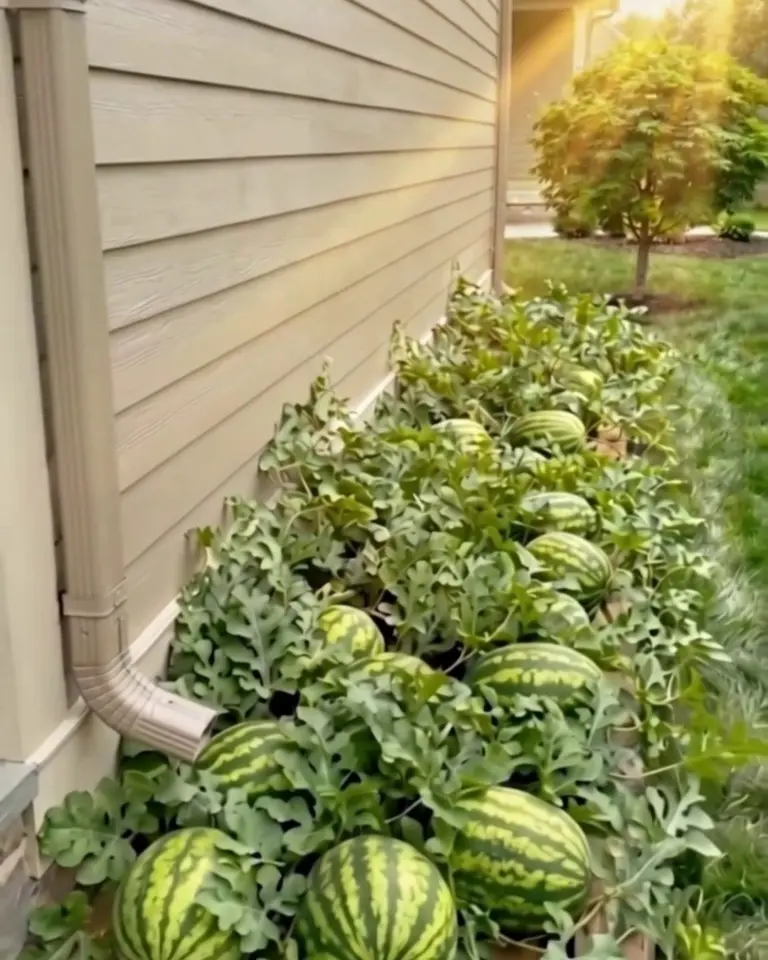
Our side yard watermelon garden is a 16-foot strip of compost along the house, sown with four hills of small icebox melons and covered with four pallets that hold the fruit up off the soil.
Wet compost in the sun smells sweet and a little sour, like a bag of grass clippings left in the shed. The vines find the gaps between the boards on their own.
Why the Pallets Lie Flat
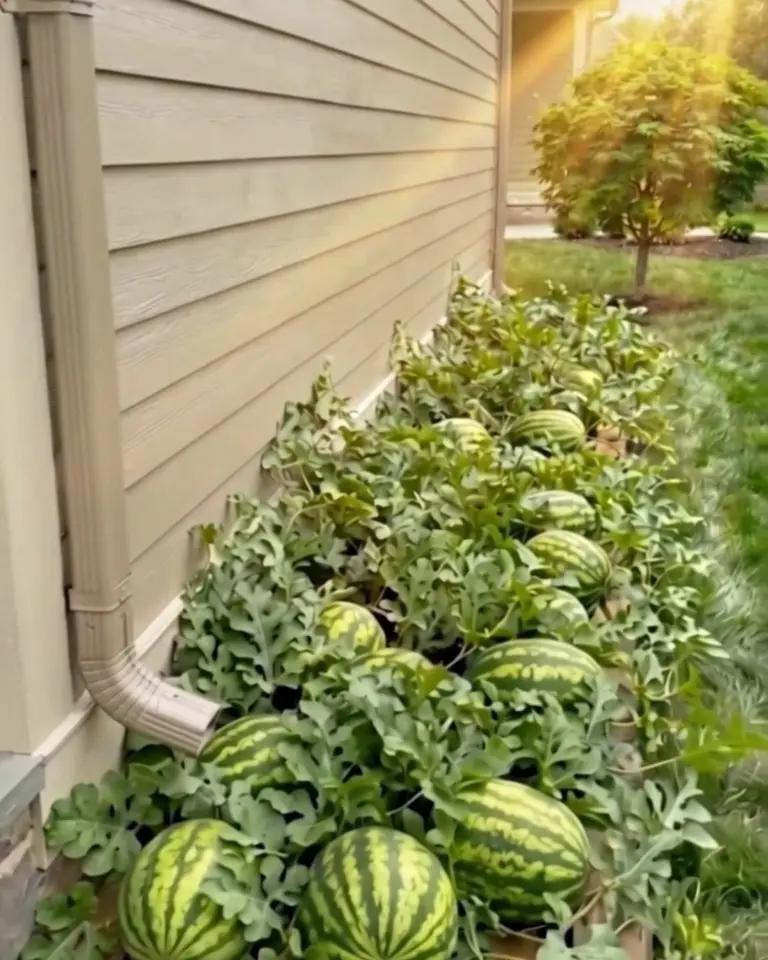
Laid flat over the bed, a pallet works like a slatted floor for the melons. Vines grow up through the gaps, and the fruit sits on dry wood instead of wet soil, where it rots and gets chewed.
We expected the downspout to be the clever part. It turned out to be the risky part; the pallets did all the real work.
Watermelons want heat. A south- or west-facing wall gives them extra warmth in the evening.
Materials & Tools
Not in the $220: a flat spade, a rake and a drill.
Keep roof water away: University of Maryland Extension recommends sending downspout water at least 5 feet from a house with a crawlspace and 10 feet from one with a basement. A bed against the wall gets a soaker hose instead.
Edge the bed: a 6-inch strip of gravel between the melons and the lawn keeps the mower off the vines, laid the way we did our white gravel garden path.
Watch the Build
Step by Step
Step 1Strip the grass
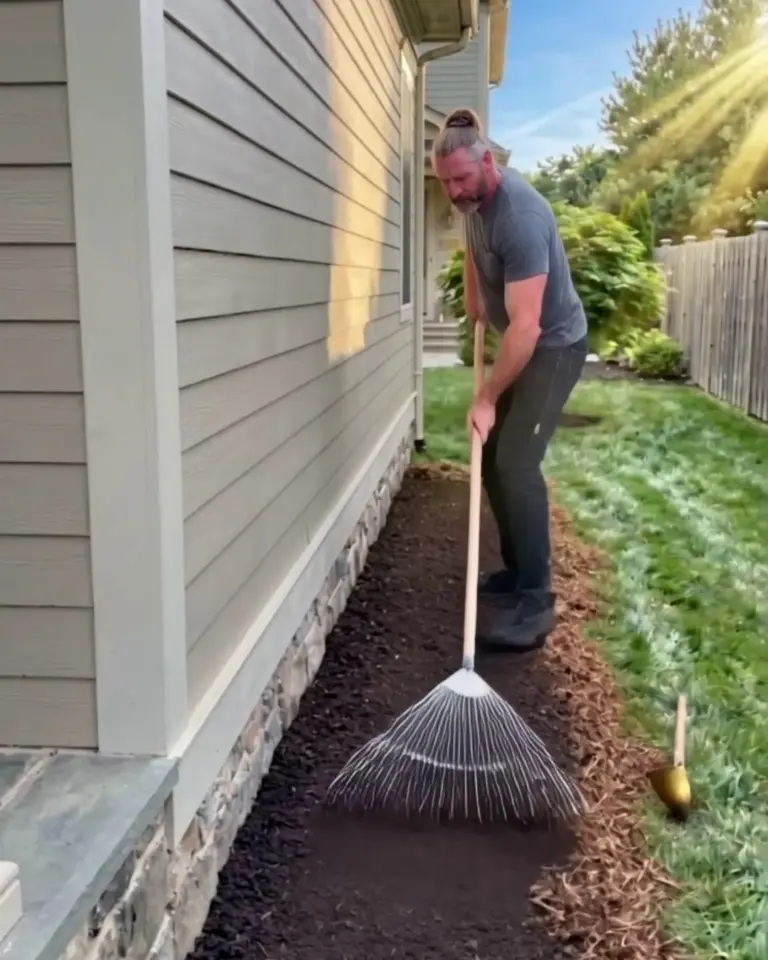
Mark a strip 40 inches wide and 16 feet long along the wall, and slice the sod off with a flat spade. Rake the soil so it slopes slightly away from the house, an inch or so across the width.

Step 2Spread the compost
Spread compost 3 inches deep over the strip and rake it into the top few inches of soil. Keep it at least 6 inches below the siding.
Nine bags cover the strip 3 inches deep. Watermelons are heavy feeders, and compost is most of what they’ll get.
Step 3Sow four hills
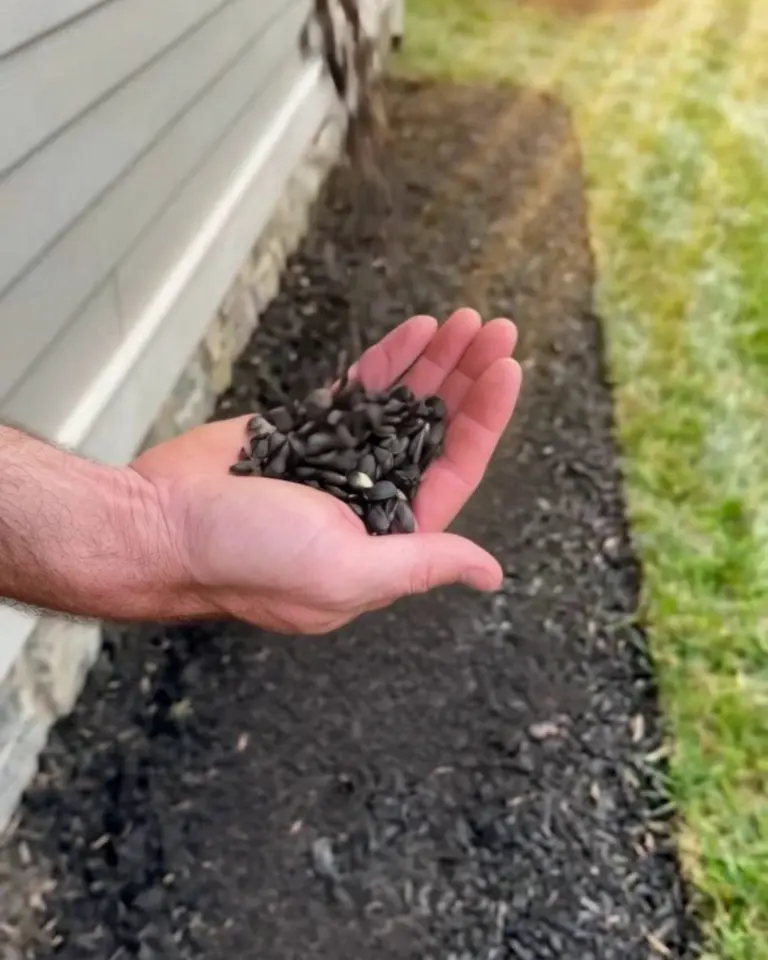
Wait until the soil has warmed to about 70°F, a couple of weeks after the last frost. Make four low mounds 4 feet apart down the middle of the bed and push three seeds an inch deep into each.
Mounds warm up faster than flat soil, and melon seeds rot in cold, wet ground.
Step 4Lay the pallets
Lay a pallet flat over each hill, deck side up, shifting it until the hill sits in a gap between two boards. Push a short stick into each hill first so you can find it under the pallet.
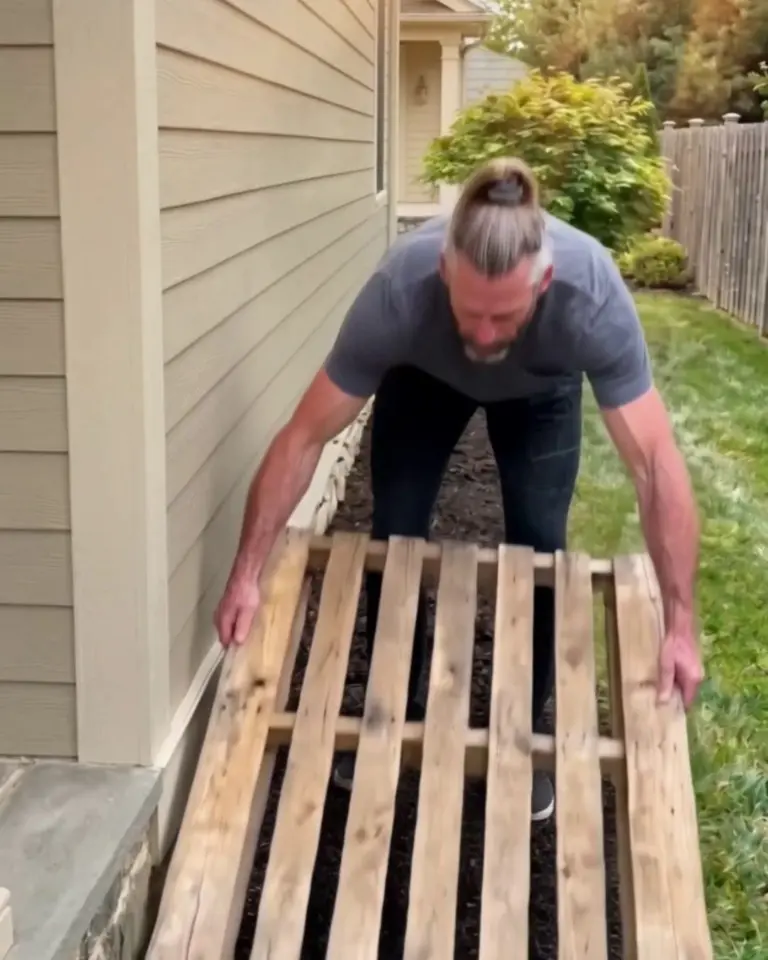
Step 5Finish the row
Butt the four pallets end to end. Snake the soaker hose under them along the hills and pin it down with landscape staples.
Run the timer once with the pallets off, to see that every hill actually gets wet.
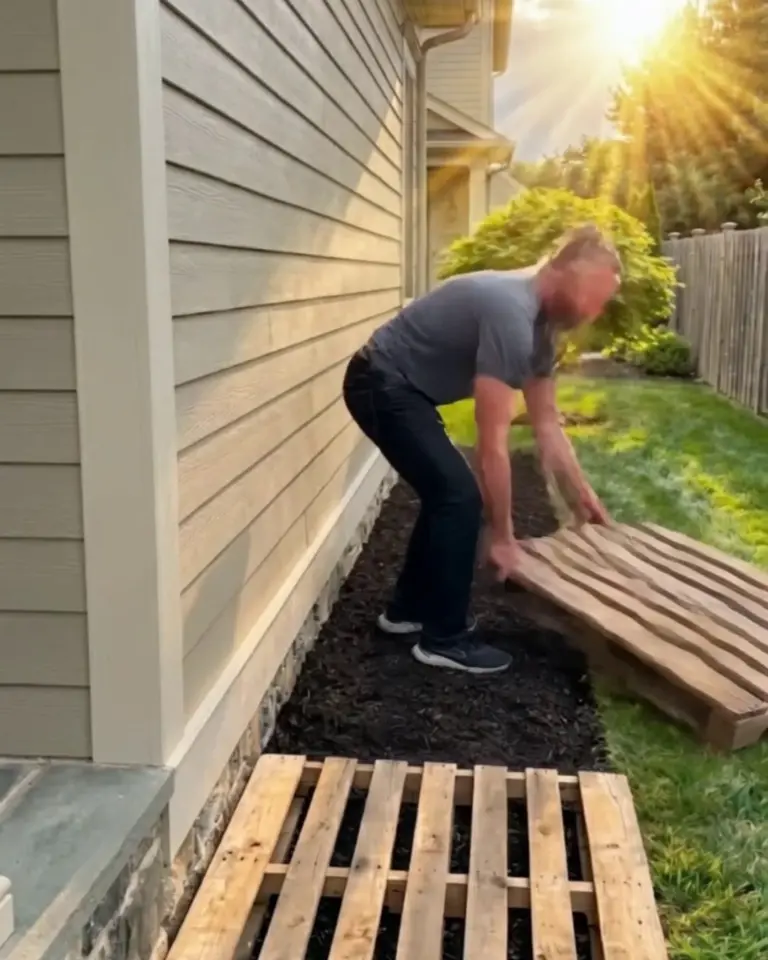
Step 6Send the downspout away
Fit the 10-foot extension to the downspout elbow and screw a strap bracket to the wall to hold it, then run it out across the lawn, away from the bed and the house. Set the splash block at the end so the water doesn’t dig a hole.
Run a hose into the gutter first and watch where the water goes.
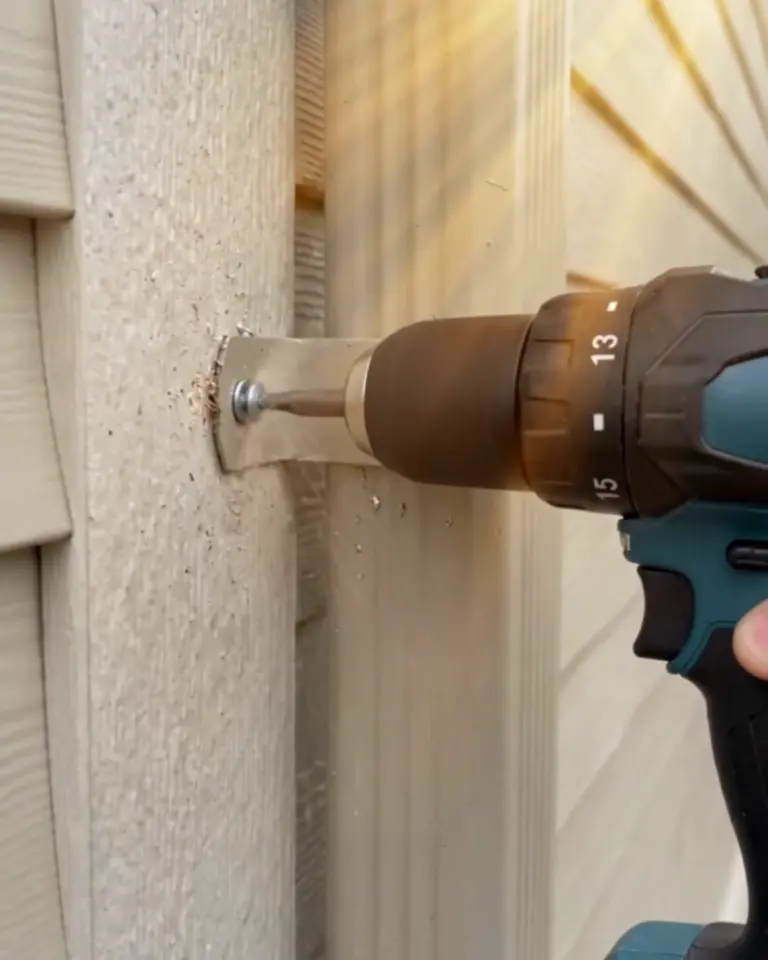
Step 7Water, thin and mulch
Set the timer for about an inch of water a week, more in hot spells. When the seedlings have two true leaves, keep the strongest in each hill and snip the rest at soil level.
Tuck straw around each hill once the vines start to run, and steer stray tips back onto the pallets.
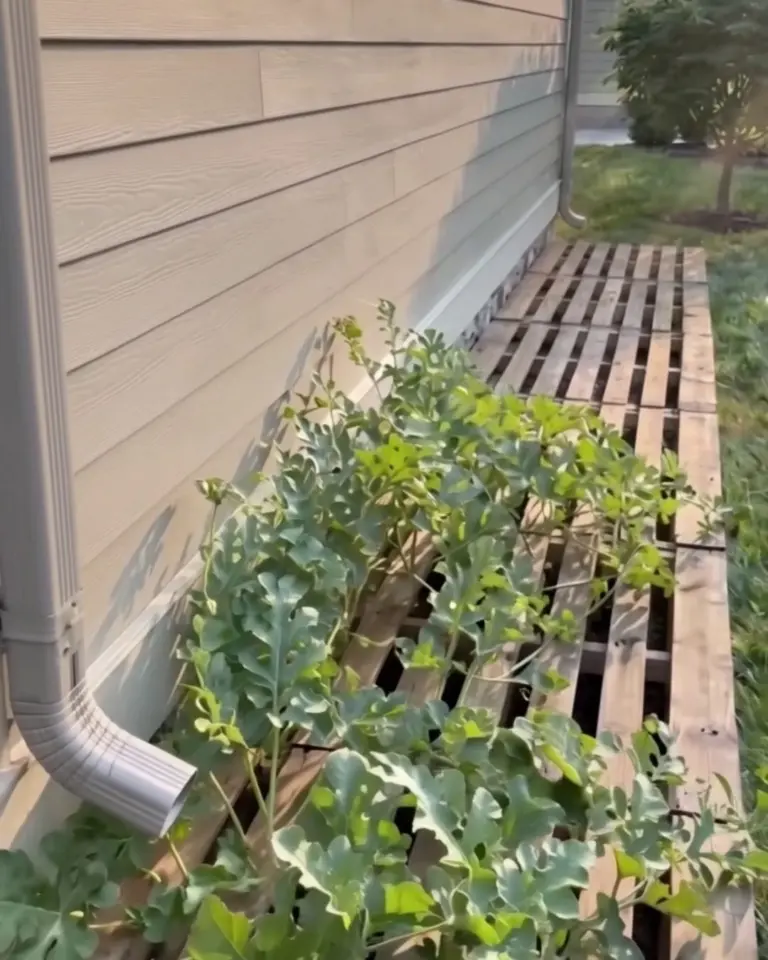
Step 8Pick them ripe
A melon is ready when the curly tendril nearest it has turned brown and dry, and the patch where it rests has gone from white to creamy yellow. Cut it off with an inch of stem. Small icebox types run 6 to 10 pounds each, and a healthy vine gives two to four of them.
Ease off the watering in the last week or two before picking; the melons taste sweeter.
How the Side Yard Watermelon Garden Holds Up
Pallets sitting on damp soil rot from the bottom in two or three seasons. Lift them in fall, stack them somewhere dry, and they’ll do another year.
Move the melons to a different spot next year, with beans or lettuce in their place, so diseases in the soil don’t build up. Top the strip with fresh compost each spring.
FAQ
A seedling came up under a board
Lift that end of the pallet and slide it an inch so the seedling is in a gap. Young vines bend toward the light and recover quickly.
Melons are rotting where they touch the pallet
The boards are staying wet. Slip a piece of tile or a pad of straw under each melon, and water in the morning so the wood dries by night.
Can I still use the downspout water?
Yes, through a rain barrel. Set the barrel at the downspout, send its overflow away from the house, and water the bed from the barrel’s spigot.
The vines grow but no melons set
Early flowers are mostly male, and the female ones, with a tiny melon behind the petals, come a week or two later. If bees are scarce, dab pollen from a male flower onto the female with a small brush.
Will this work on the north side of the house?
We haven’t grown melons on a north wall. They want 8 hours of direct sun or more, and a north side rarely gets that.
Our basement stayed dry this year. The neighbor says the melon we brought over had nothing to do with it.