Until the base under it was packed with a hand tamper, every slate paver rocked like a loose tooth. Slate this thin, about an inch, cracks across the middle if it rocks long enough, and a 10-inch-square tamper fixes that in a few minutes per stone.
You’ll also love: How to Build Cinder Block Deck Stairs with Cedar Treads, How to Make Lighted Stepping Stones from Giant Leaves, How to Turn a Weedy Strip into a Side Yard Paver Walkway.
The first stretch went down the quick way, on loose soil spread over landscape fabric. After a week of being walked on, three pavers had sunk at one corner.
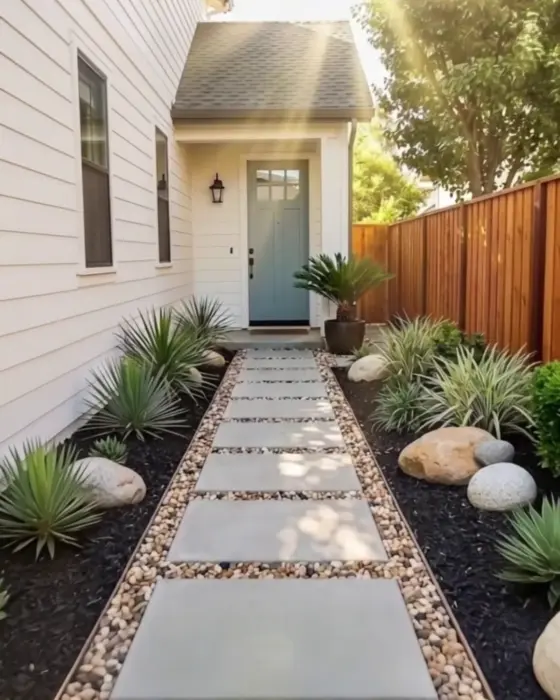
Our slate stepping stone path runs 30 feet down the side yard: eighteen slate pavers in black pebbles, with a timber edge and a flower bed along the fence. A neighbor said it looked like a hotel walkway, then asked who’d be weeding the pebbles.
Slate clinks when two pieces touch.
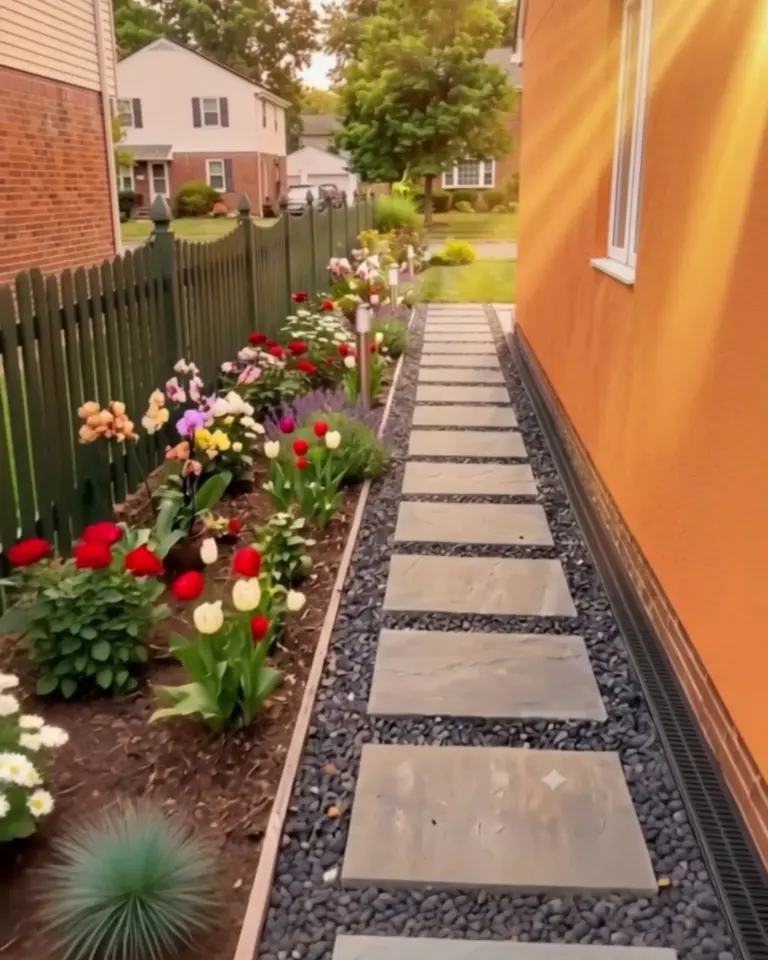
Why the Path and the Bed Get Different Ground
Stone and plants want opposite things underneath. Pavers need a hard, packed base that doesn’t move; flowers need loose soil their roots can get into.
We expected one layer of fabric under everything to save weeding. Under the pebbles it helps, but under the bed it would have kept the mulch from ever feeding the soil.
A timber edge between the two keeps pebbles out of the bed and mulch off the path.
Materials & Tools
Not in the $815: base delivery, a spade, a rake, a 4-ft level and a wheelbarrow.
Fabric only under stone: Illinois Extension points out that mulch on top of landscape fabric can’t work its way into the soil as it breaks down. Under the pebbles the fabric earns its keep; under the flower bed, leave it out.
A softer version: for a path without pavers, the same edging and fabric hold the loose stone of our white gravel garden path.
Watch the Build
Step by Step
Step 1Strip the sod
Cut and lift the grass across the whole side yard. Stack the sod upside down somewhere it can rot, or give it to a neighbor with bare spots.
Call 811 a few days before digging. Side yards often hide gas and cable lines running to the meters.
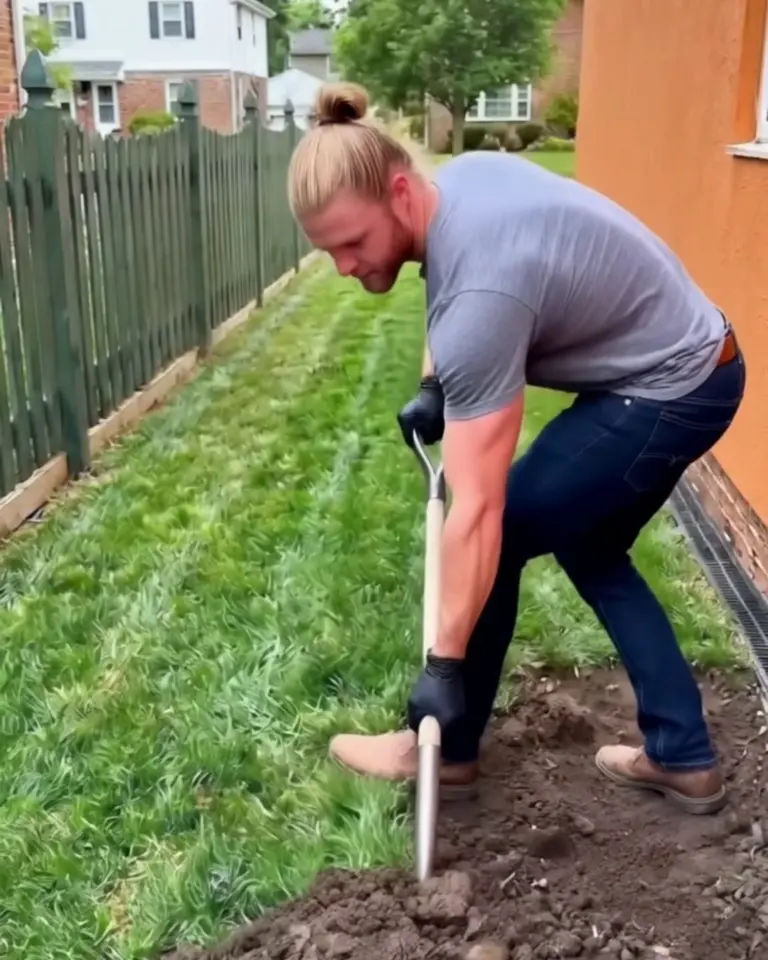
Step 2Dig the path deeper than the bed
Along the house, dig the 3-foot path strip 5 inches below the finished height. Leave the bed side along the fence at grade and loosen it with a fork.
Rake the path bottom so it falls slightly away from the house, about ¼ inch per foot.
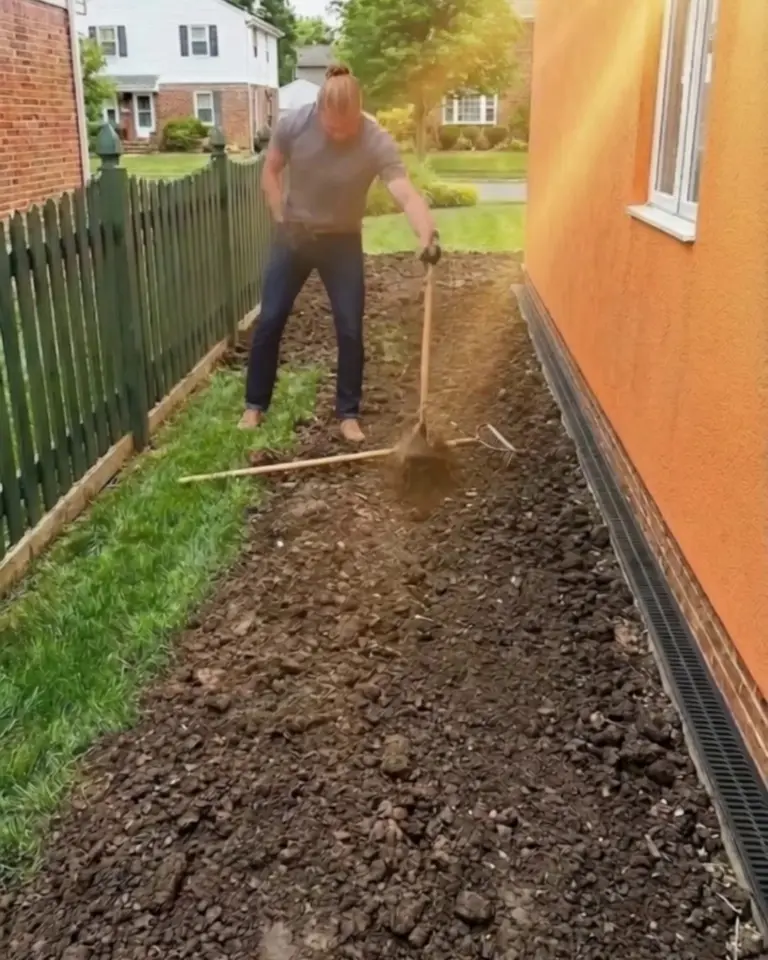
Step 3Set the edge and lay the fabric
Stake the 2×6 boards on edge down the line between path and bed, tops at the finished height. Lay landscape fabric in the path strip only and pin it every few feet.
Run the fabric an inch or two up the face of the edge board and the house foundation, so soil can’t creep in at the sides.
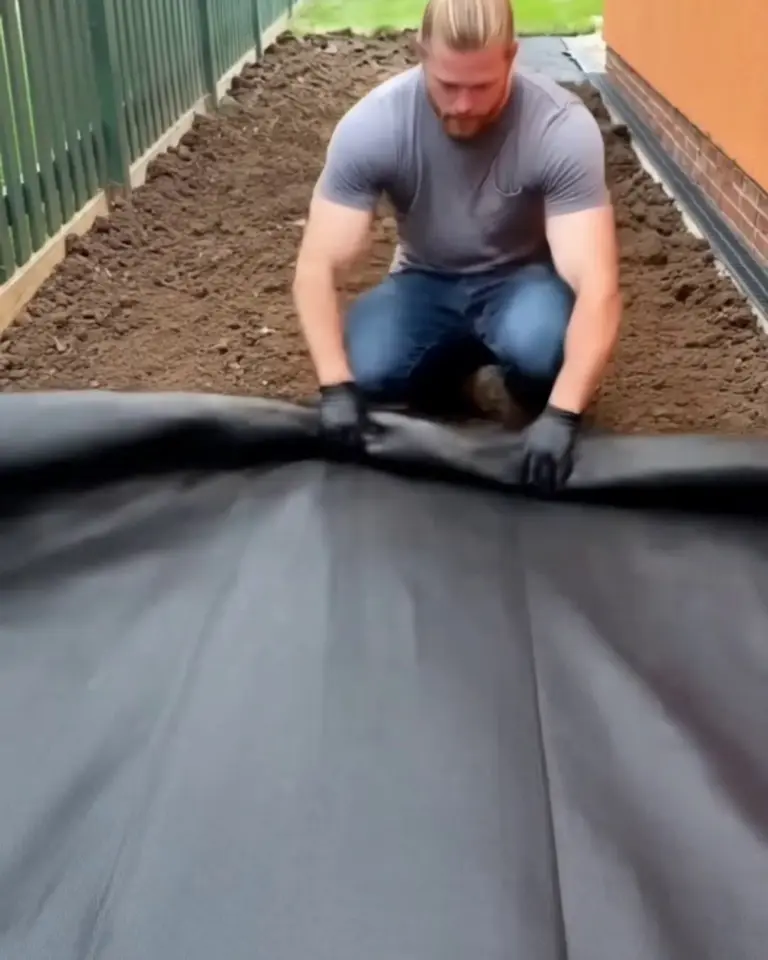
Step 4Build the base
Spread 3 inches of crushed paver base over the fabric in two layers, tamping each one hard. Check it with the level as you go.
Damp base packs harder than dry. Mist each layer lightly with the hose before tamping.
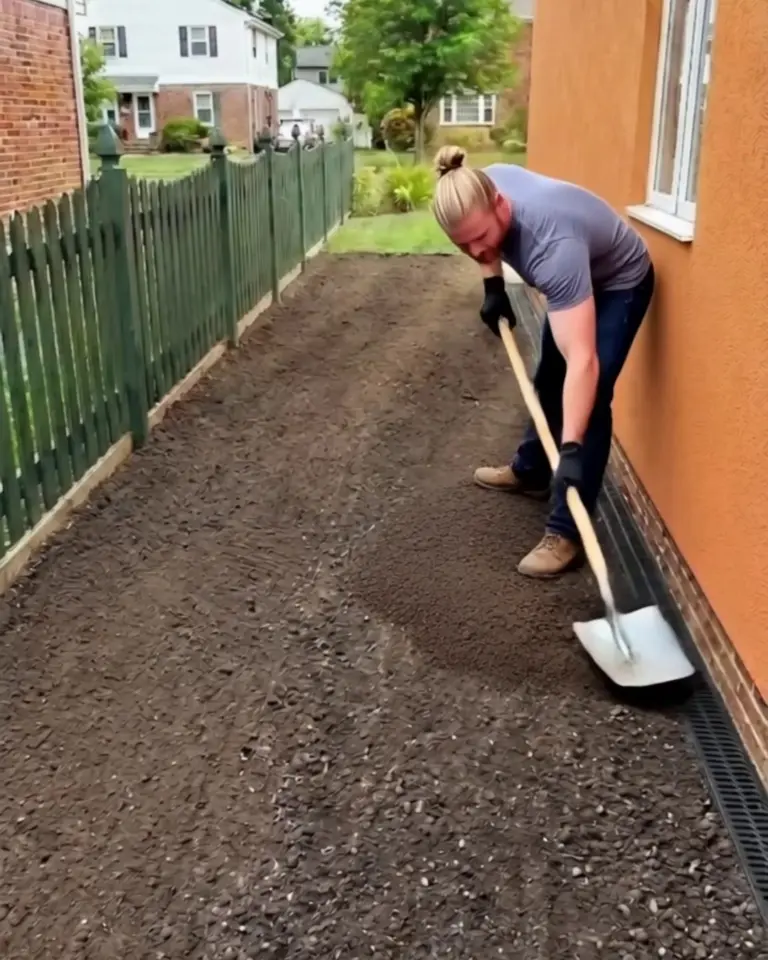
Step 5Mark the paver spacing
Lay a straight board along the path as a guide and mark every 20 inches: 16 inches of paver and 4 of pebbles. Spread an inch of sand where each paver goes and screed it flat.
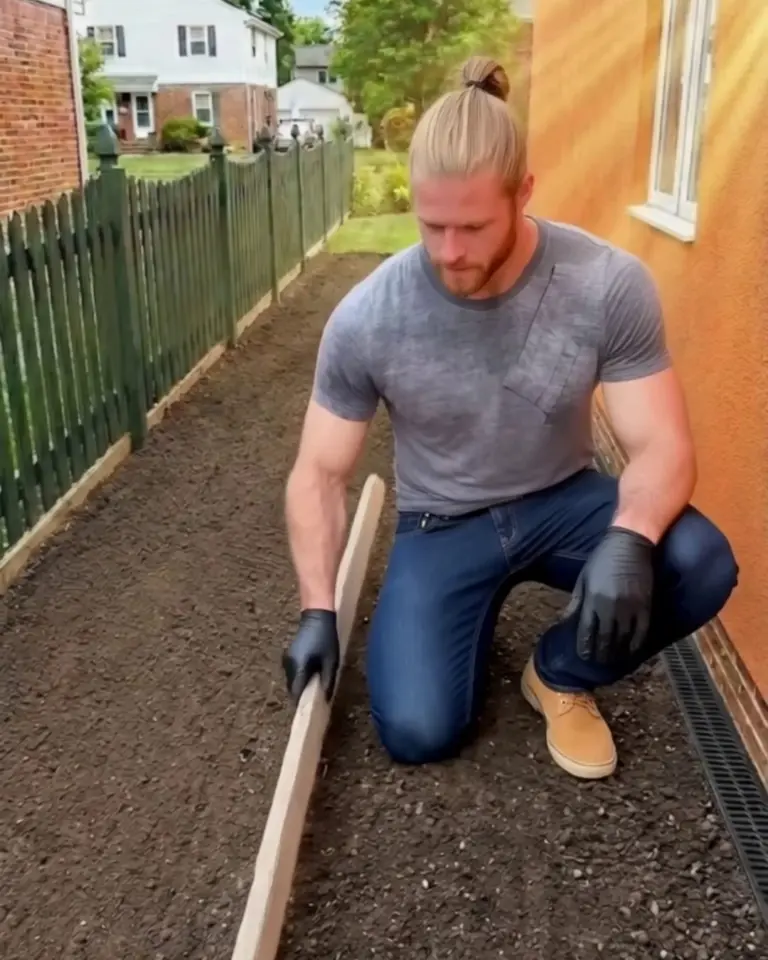
Step 6Set the pavers
Lay each paver across the path on its sand bed and tap it down with the mallet until it’s flush with the edge board and doesn’t rock. Lay the level across neighbors to keep them even.
Slate varies a little in thickness from piece to piece; add or scrape sand under each one rather than forcing it with the mallet.
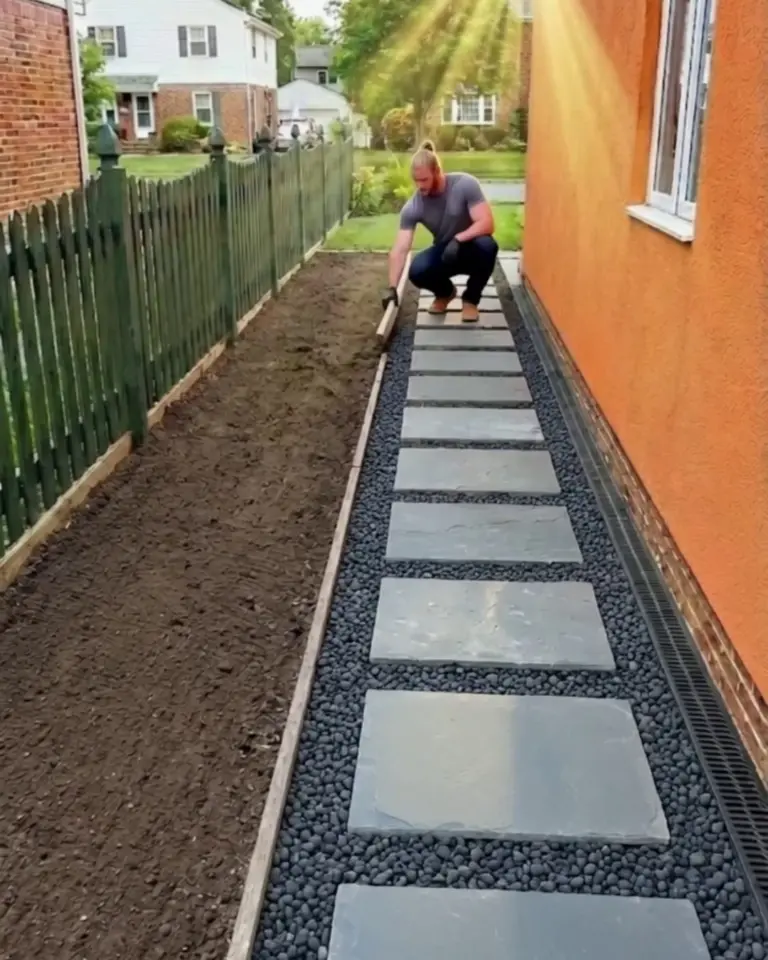
Step 7Fill with pebbles
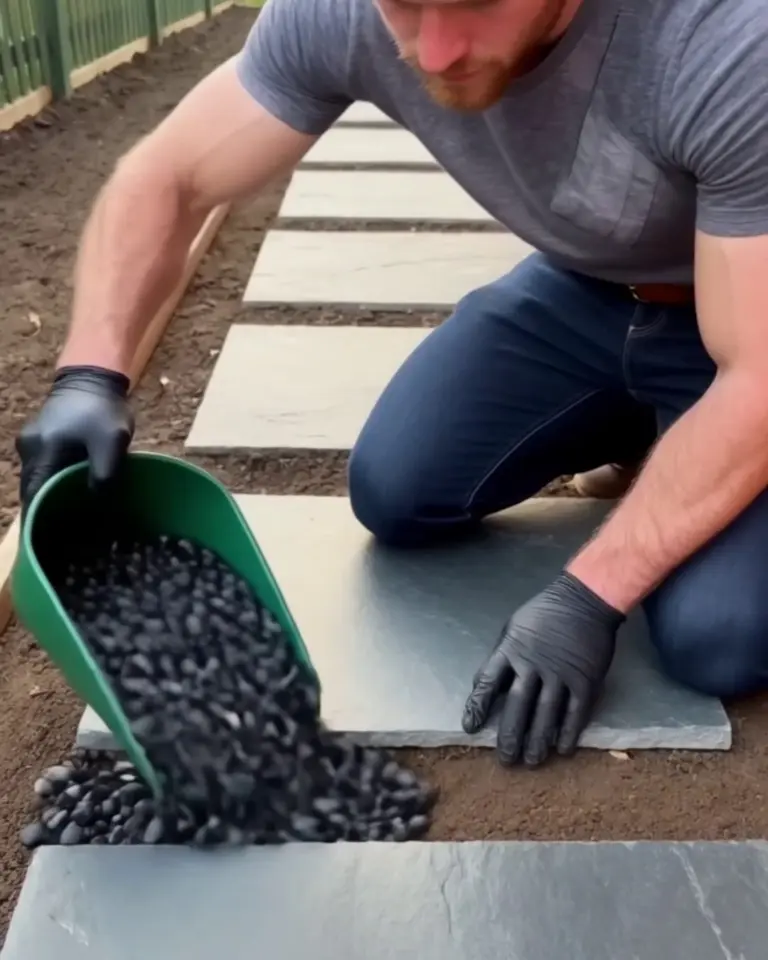
Pour the black pebbles into the gaps and along both sides of the pavers, about 2 inches deep, and rake them a little below the stone tops.
Hose the pebbles off once they’re down. Black stone comes out of the bag dusty and only shows its color wet or clean.
Step 8Check the whole run
Walk the full length twice. Any paver that moves underfoot comes up for a little more sand, then goes back down.
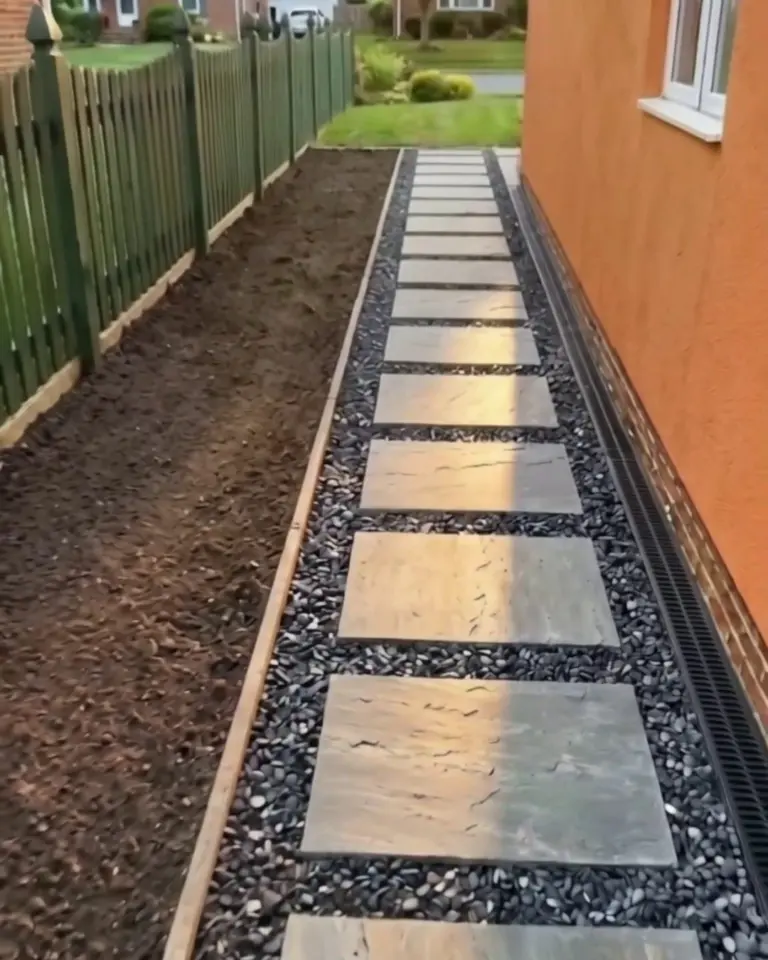
Step 9Mulch the bed
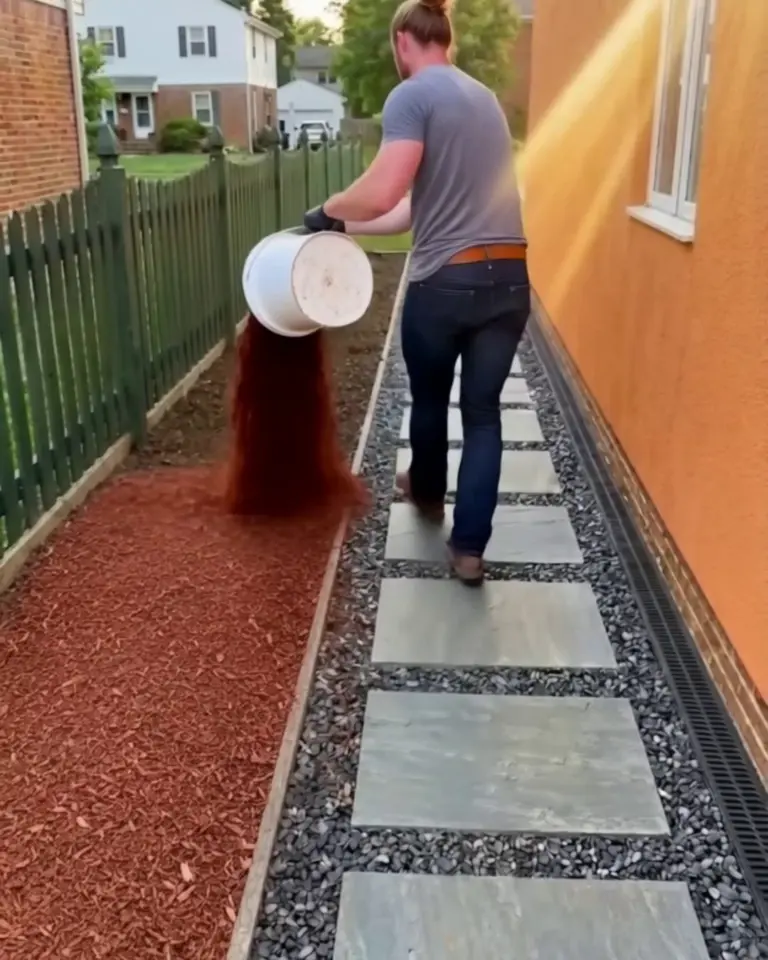
Work 2 inches of compost into the bed side, then spread 3 inches of shredded mulch. Keep it below the top of the edge board.
Step 10Plant
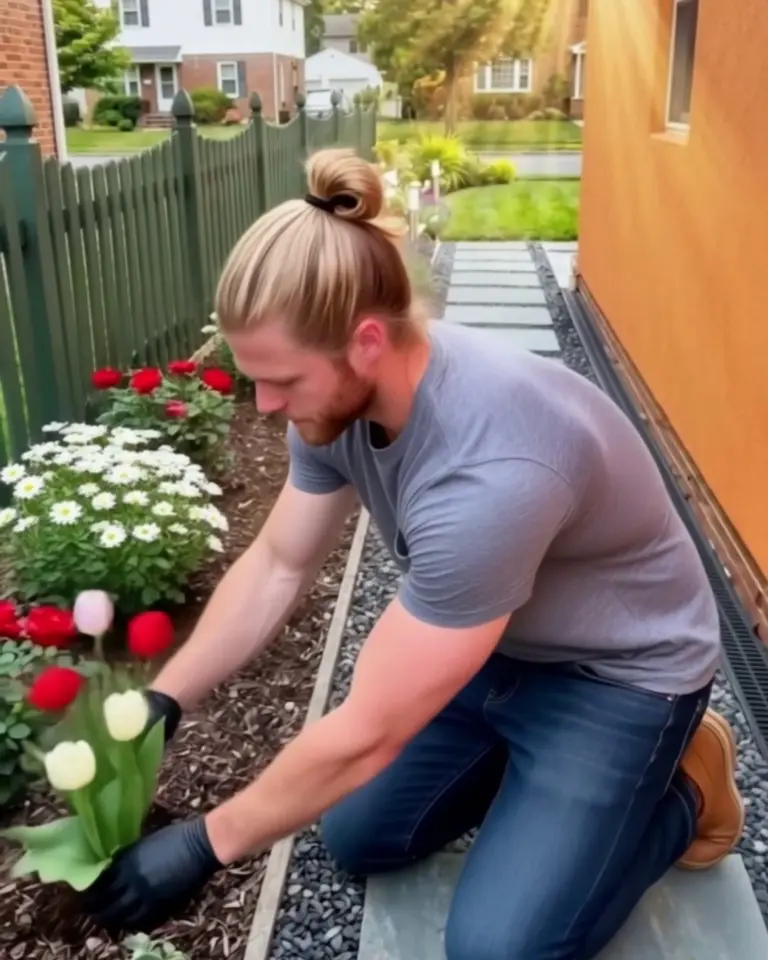
Set the plants about 18 inches apart, taller ones toward the fence and low ones along the path, and water each in well.
How the Slate Stepping Stone Path Holds Up
Leaves and seeds settle into the pebbles, and after a couple of years weeds start on top of the fabric. A leaf blower each fall and a quick weeding in spring keep it clean.
Slate flakes at the edges where a shovel or a mower catches it. Top up the mulch in the bed every spring.
FAQ
A paver cracked across the middle
The sand under it wasn’t flat, so it rocked. Lift the pieces, level the bed, and set a new paver; keep a spare or two from the original order.
The pebbles keep spilling onto the pavers
They’re raked too high. Pull them back so they sit about ½ inch below the stone tops.
Can I use concrete pavers instead of slate?
Yes. Concrete pavers are thicker and less likely to crack, and they set the same way on base and sand.
Is slate slippery when wet?
Natural cleft slate has some grip; honed or polished slate is slick. Choose the rough-faced kind for a path.
Do I need fabric under the pebbles at all?
It keeps them from sinking into the soil. We haven’t tried this path without it.
The neighbor hasn’t weeded a single pebble. The three sunken pavers from the first try are the stepping stones by the gate now.