Our neighbor’s son lent us his bicycle pump and asked, fairly, why stepping stones need air. The old inner tube goes back inside the tire, pumped just firm, so the concrete can’t run into the tire and lock it on.
You’ll also love: How to Make River Rock Stepping Stones Cast Face-Down, How to Build a Natural Stone Retaining Wall with Mortar, How to Build Cinder Block Garden Steps with Wood Treads.
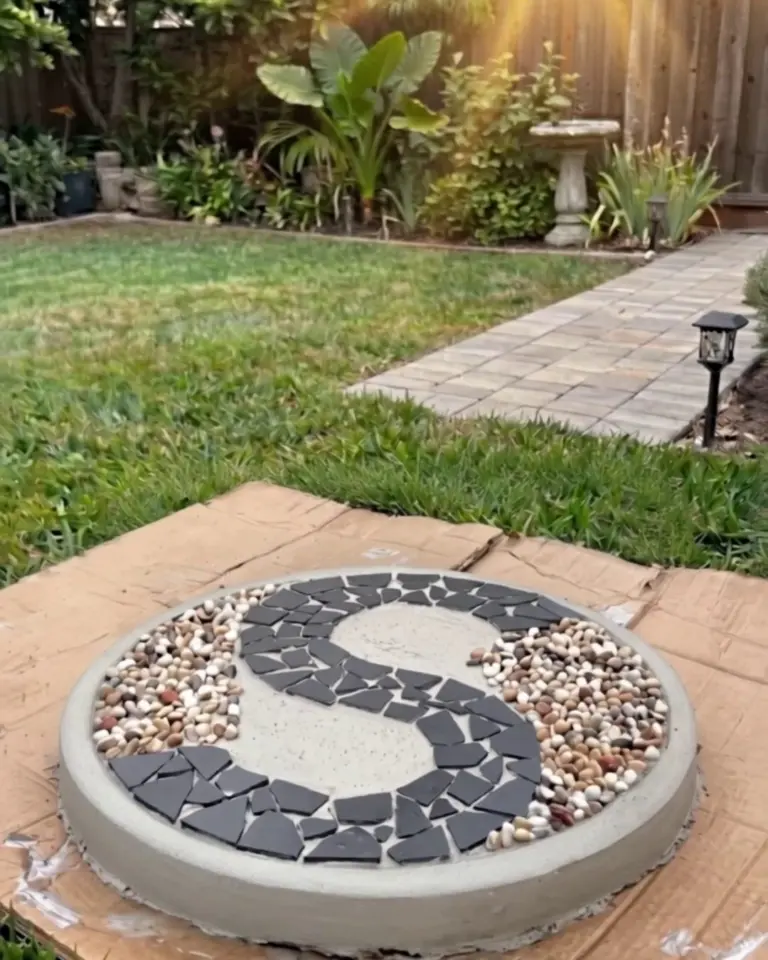
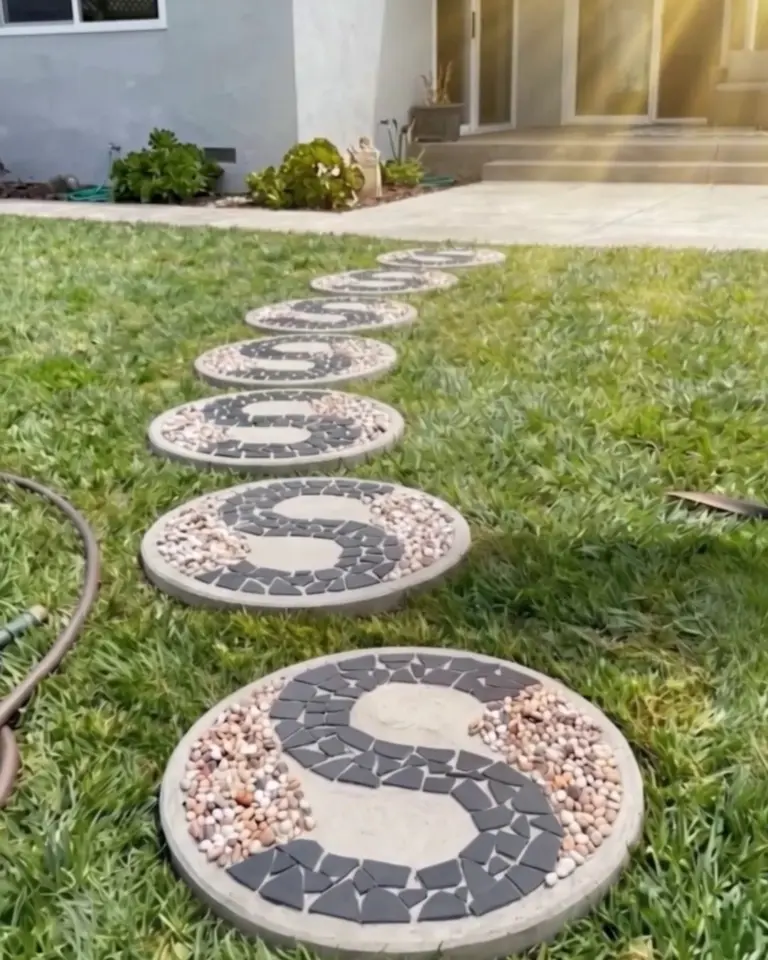
These mosaic stepping stones are cast one at a time inside a 26-inch mountain bike tire: 21 inches across, about 2¼ inches thick, with an S of broken black tile through a field of pale pebbles.
The first one went in without the tube. We cut that tire off in strips with a utility knife and bought another.
Porcelain breaks under a towel with a dull crack, nothing like a dropped plate. The boy hopped across the finished path and called the pebble halves the slippery side, which is backwards; wet porcelain is the slick part.
What a Tire Does as a Mold
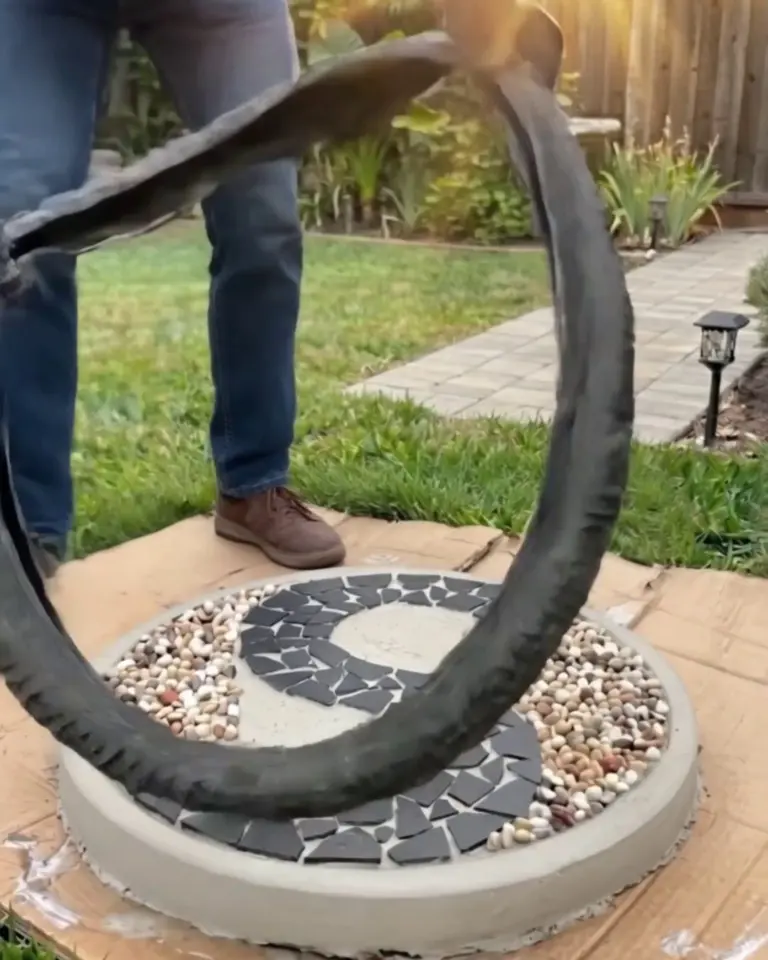
A tire lying flat is a ring with an open channel on its inside edge. Fill that channel with concrete and the tire won’t come off; fill it with an inflated tube and the tire peels away.
We expected the tile to be the hard part. Timing is: press the pieces in too early and they sink, too late and the concrete won’t grip them.
Porcelain floor tile runs about ⅜ inch thick, close to the size of small pebbles, so both finish at one height.
Materials & Tools
Not in the $195: the hammer, an old towel, a bicycle pump and a mixing tub.
How much mix: each stone takes about 0.45 cubic feet, and one maker’s data sheet puts an 80-pound bag at about 0.66, so five bags cover six stones.
Tile: use matte porcelain. Glossy tile looks better in the box and turns slick in the rain.
Other household molds: a round everyday object made the bowl of our concrete outdoor sink, too, with a basketball instead of a tire.
Watch the Build
Step by Step
Step 1Break the tile first
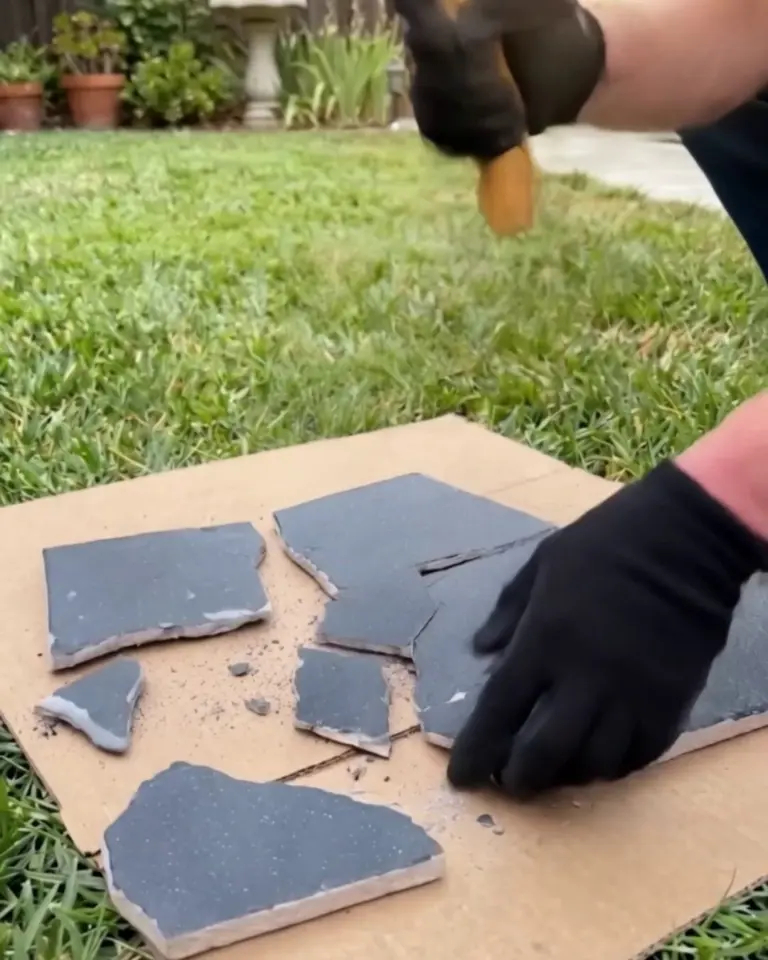
Wrap one tile at a time in an old towel and tap it with a hammer until the pieces are 1 to 3 inches across. Do it before you mix anything, because the concrete won’t wait for you.
Wear the glasses; a towel slows the shards down but doesn’t stop all of them.
Step 2Set up the tire and pour
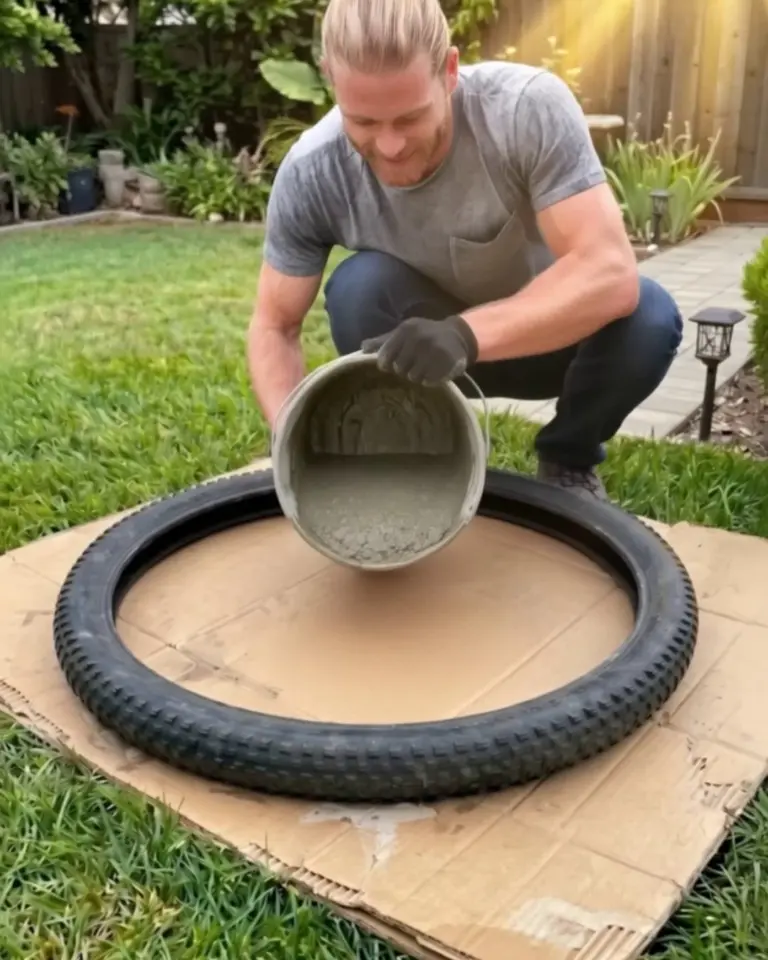
Cover the plywood with plastic and lay the tire flat on it, with the inner tube inside, pumped just firm enough to round out. Mix one stone’s worth, about 54 pounds of sand mix with 6 to 7 pints of water, and pour it in to half the depth.
Step 3Lay in the mesh
Cut an 18-inch circle of wire mesh with snips and press it flat onto the wet concrete. It should sit at least an inch in from the tire all the way around.
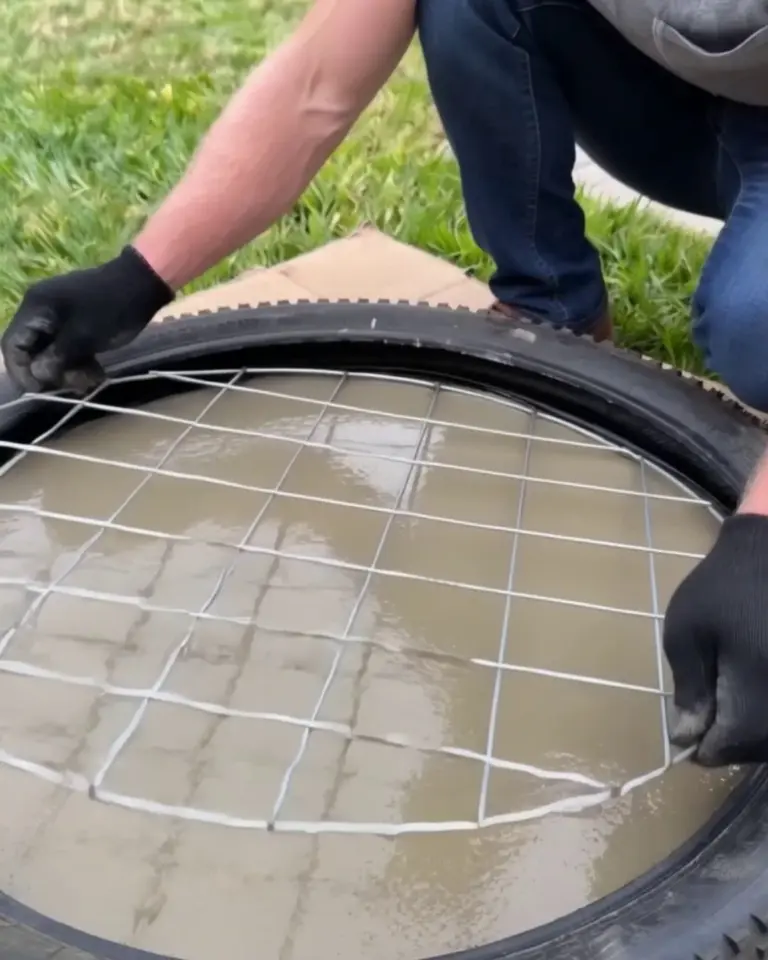
Step 4Fill and float
Pour in the rest of the batch to the top of the tire and tap the plywood all around the edge with your palm to bring up the air bubbles. Float the surface flat in long arcs.
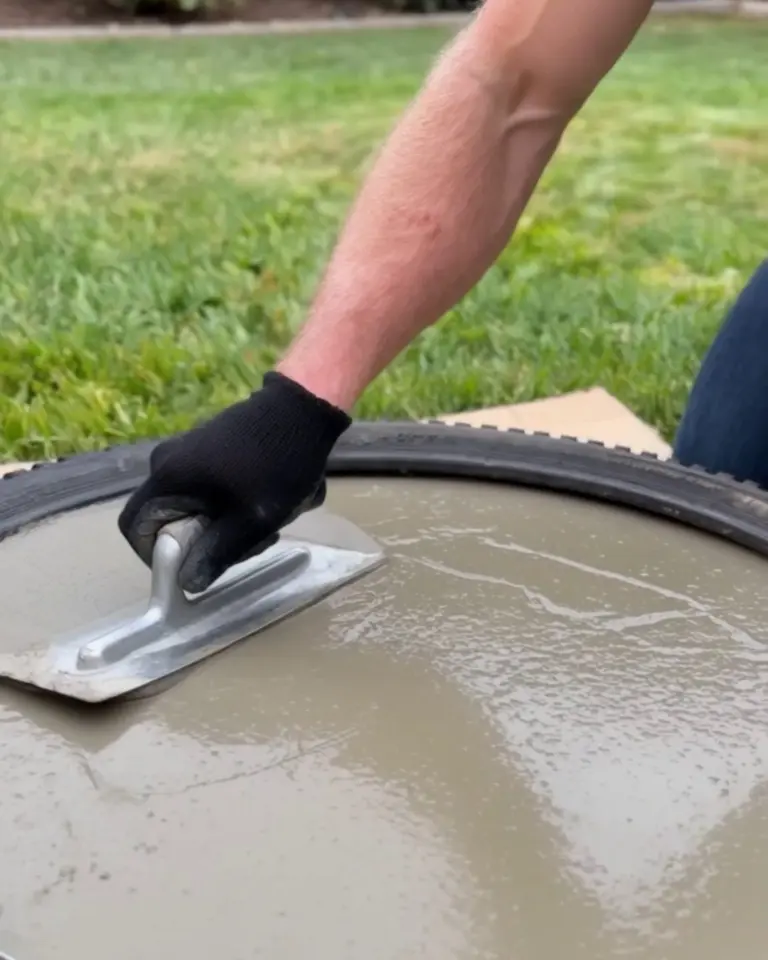
Step 5Press in the tile S
Wait until the shine goes off the surface and a fingertip leaves a dent without water rising into it. Mark a 3-inch-wide S across the stone with the trowel tip, leaving a 1½-inch plain border, and press the tile pieces in along it, edges ⅛ inch apart.
Push each piece down flush, then pat the whole band with the float so the tops line up. A raised edge is a trip waiting to happen.
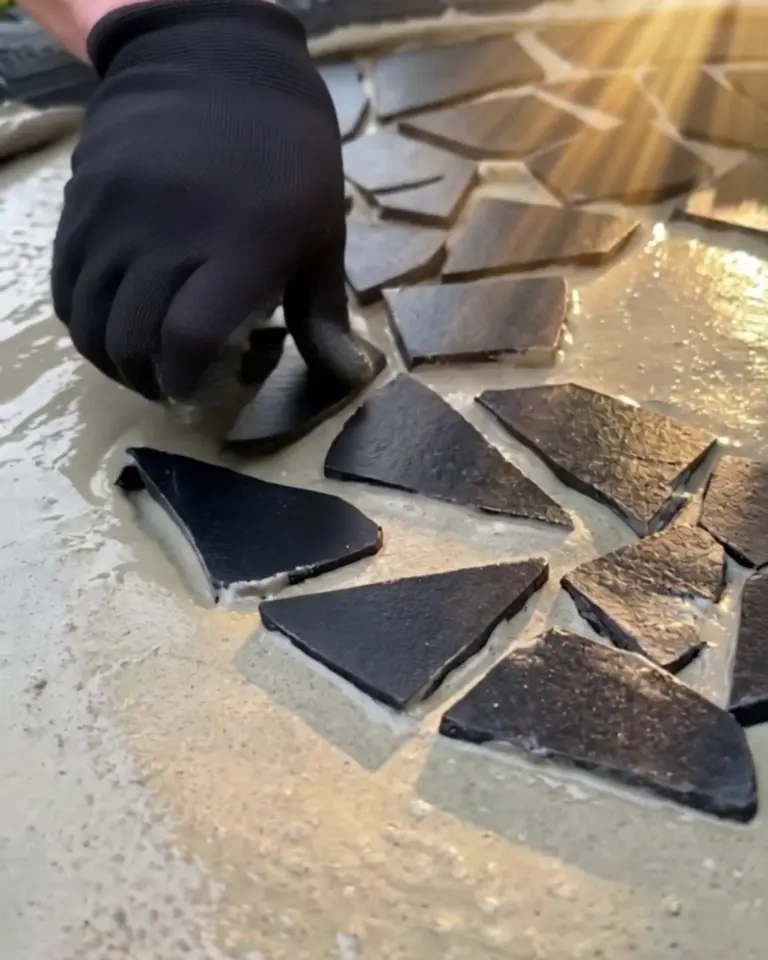
Step 6Fill with pebbles
Fill the two pockets outside the curves of the S with pebbles, pressed in until about half of each one is buried. A few hours later, once the concrete is firm, wipe the cement film off the tile and pebbles with a damp sponge.
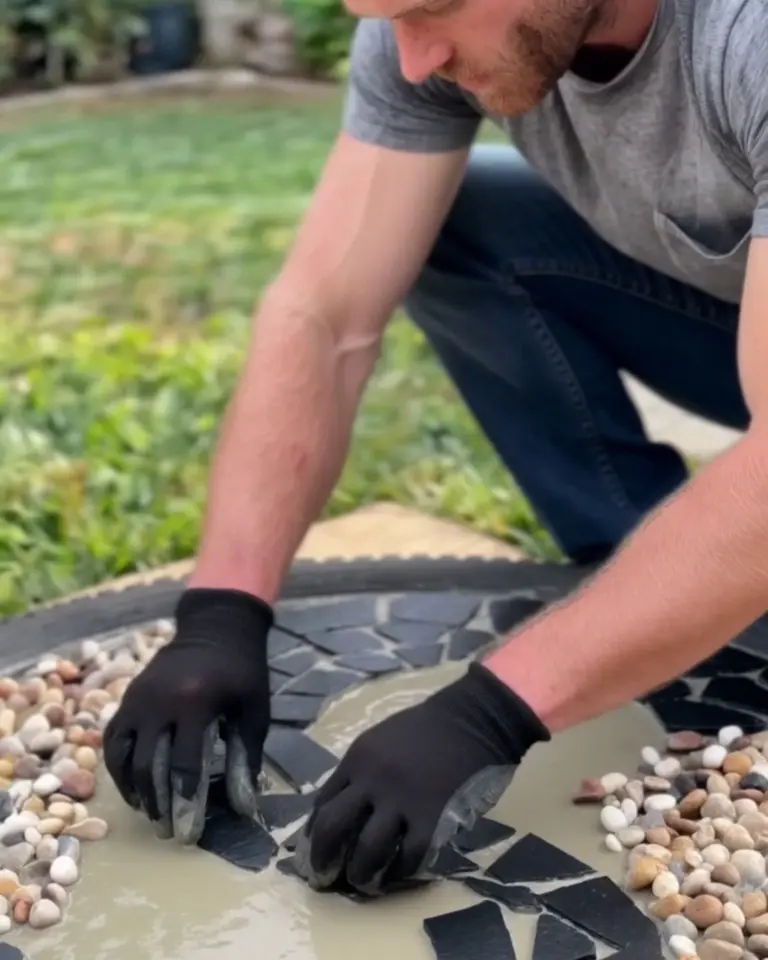
Step 7Cure and demold
Cover the stone with plastic for 2 days. Let the air out of the tube and peel the tire off; the stone stays on the board for the rest of the week.
A finished stone weighs about 65 pounds. Roll it on its edge or get a second person to carry it.
Step 8Set the path
Lay the stones on the lawn 24 inches apart, center to center, and cut around each one with a spade. Dig out the turf 2¾ inches deep, add ½ inch of paver sand, and set each stone flush with the soil so the mower rolls right over it.
How Mosaic Stepping Stones Hold Up
The weak spots are the edges of the tile pieces, where water can work underneath. Seal the stones once the concrete has dried out, about a month after the pour, and again each year.
Mow over them if they’re set flush, but keep the string trimmer off; it chips the border.
FAQ
The tire won’t come off
Concrete got into the channel of the tire. Let the air out of the tube first; if it still won’t budge, cut the tire off with a utility knife and use a new one for the next stone.
Some tile pieces popped out
They went in after the concrete had started to set, so nothing gripped them. Glue them back with exterior construction adhesive, and set the next stone’s pieces a little sooner.
I don’t have porcelain tile
Broken ceramic tile, old plates or flat stones all work. Keep the pieces close to one thickness so the top stays flat to walk on.
The stones rock when we step on them
The sand bed under them isn’t flat. Lift the stone, rake the sand level, press it down with your hand, and reset the stone; a twist as you set it beds it in.
Do they survive freezing winters?
We haven’t had a set through a hard winter yet. Water that gets under a tile piece and freezes can lift it, and we don’t know how often that will happen here.
The pump went back next door with a bag of leftover pebbles. He has asked for a stone with his initials in it.