Cutting the round edge with a circular saw went badly. Soft cedar splinters along the grain, and the first quarter of the curve came off in long strips; the rest got a jigsaw.
You’ll also love: How to Build a Round Pallet Swing Bed with a Timber Frame, How to Turn Broken Plates into a Mosaic Patio Table, How to Build a Gabion Fire Pit Grill from an Old Car Wheel.
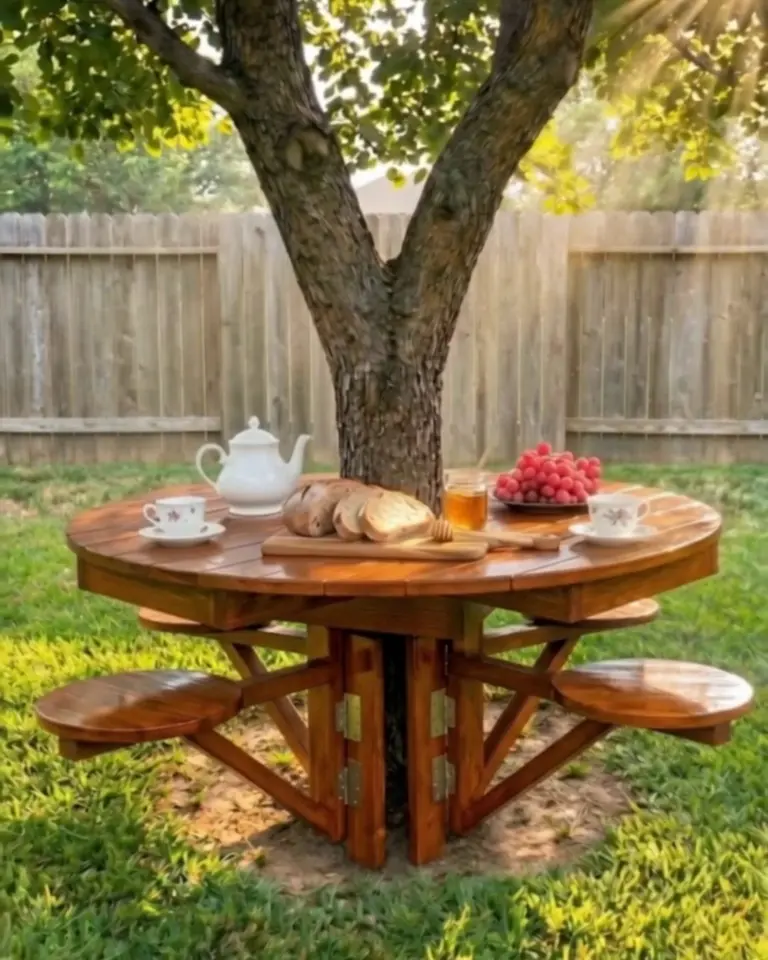
Our picnic table around a tree is a 5-foot round cedar top on a frame that bolts together around the trunk, standing on four legs of its own, with four seats that swing out from underneath.
A friend sat down, looked up into the branches, and said it was lovely until the first bird. Then he asked for more tea.
Fresh cedar sawdust smells sharp and sweet. Under a tree it lands in everything, the teapot included.
Why the Table Never Touches the Tree
A trunk keeps getting thicker. Leaving 3 inches all around the center hole buys years before anything rubs, and nothing gets screwed into the bark.
We expected to need posts set in concrete. Legs on pavers at the surface hold it just as steady, and nobody digs through the roots.
The frame bolts together in two halves, so the table can come apart again if the tree ever needs the room.
Materials & Tools
Not in the $720: a jigsaw, drill, socket wrench and level.
Cheaper lumber: pressure-treated pine costs a good deal less than cedar and works the same way. Let it dry out for a few weeks before it gets stain.
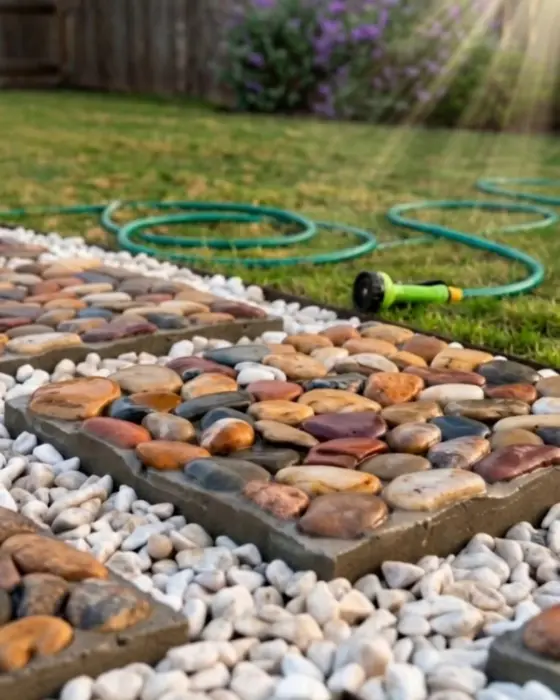
Under the table: bare soil under a tree turns to mud where chairs and feet go. A ring of gravel, laid like our white gravel garden path but without digging into the roots, keeps it dry.
Watch the Build
Step by Step
Step 1Build the frame around the trunk
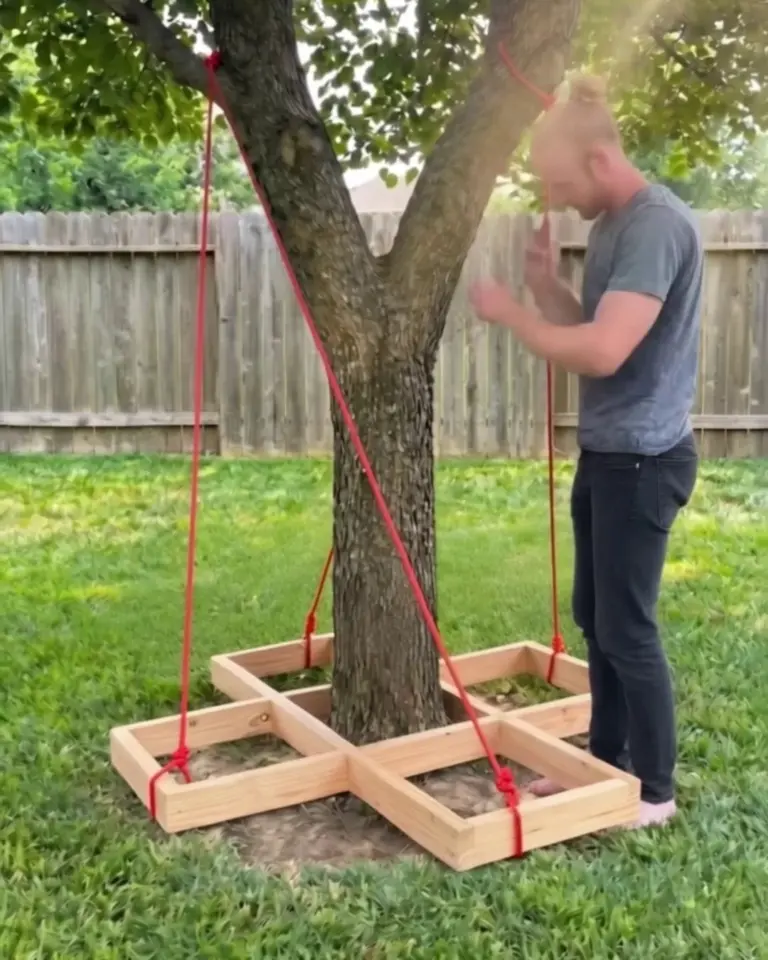
Measure the trunk at table height and add 6 inches; that’s the inner square. Build a # shaped grid of 2×6s on edge, 60 inches across, in two halves that meet around the trunk, and bolt the halves together with four carriage bolts.
Drill every bolt hole first, and keep holes at least 2 inches from board ends; cedar splits easily there.
Step 2Hang it at height
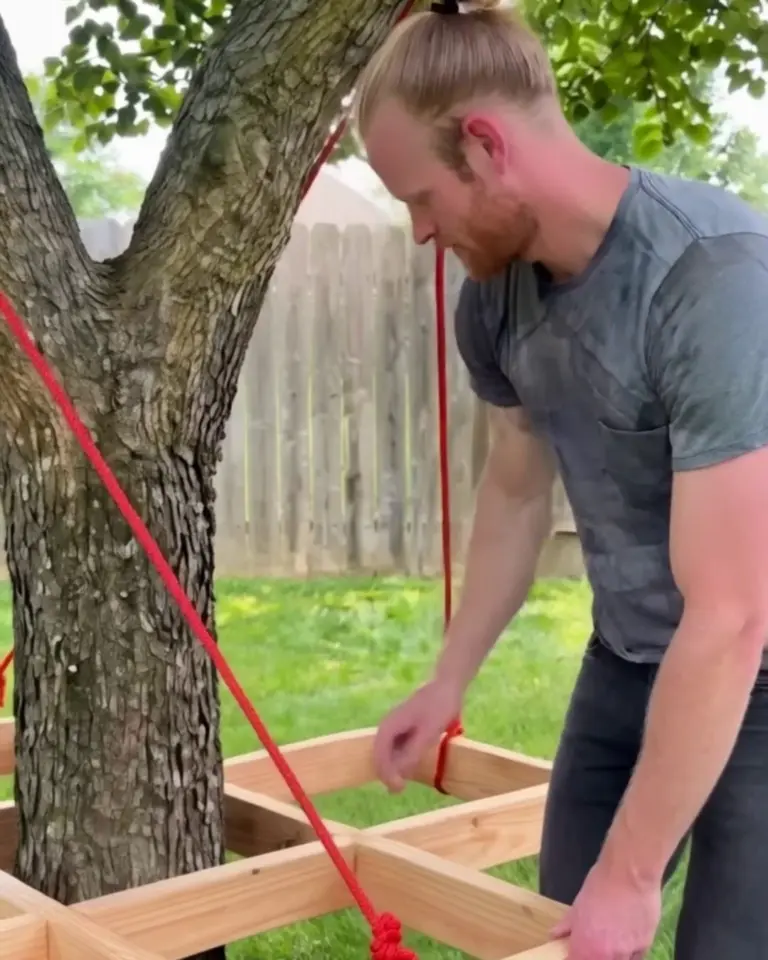
Loop a rope over a sturdy branch above each corner and tie it to the frame. Pull it up until the top edge sits 27½ inches off the ground, then level it both ways by adjusting the ropes.
The ropes are only there for an afternoon. Loop them over the branch rather than knotting them tight against the bark.
Step 3Set the legs
Set a paver at each inside corner of the frame, level on the soil surface, without digging. Cut four 4×4 legs to reach from the pavers to the top of the frame, about 25½ inches, and bolt each one to the frame with two carriage bolts.
Iowa State Extension notes that most tree roots sit in the top 12 to 18 inches of soil, which is why the pavers sit on top instead of in footings.
Step 4Build the top panels
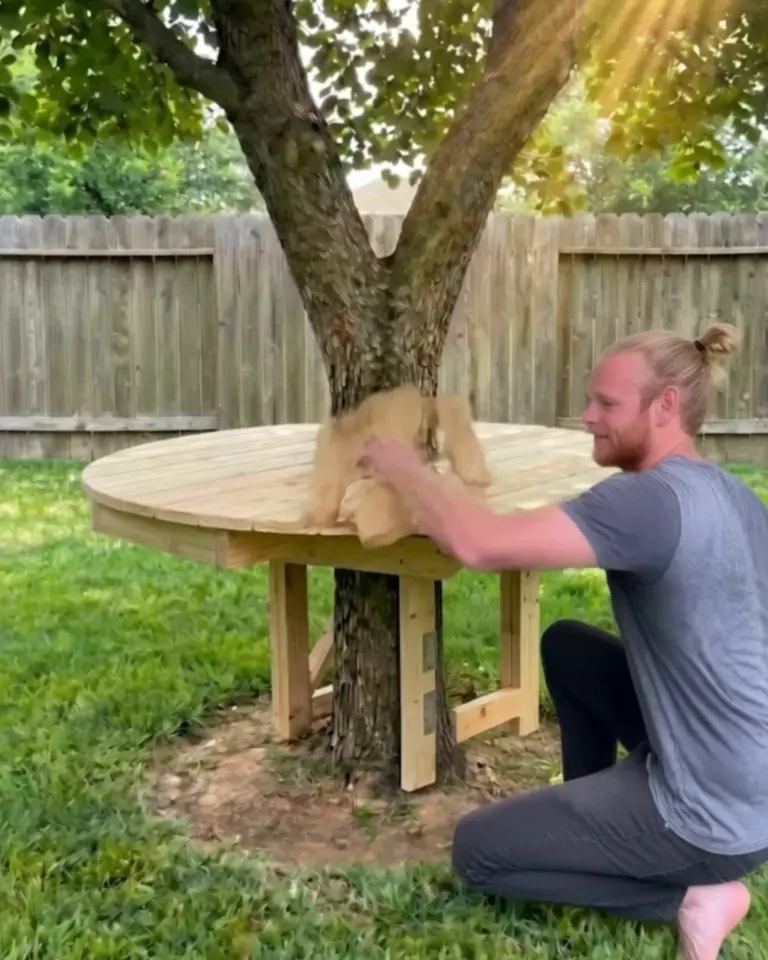
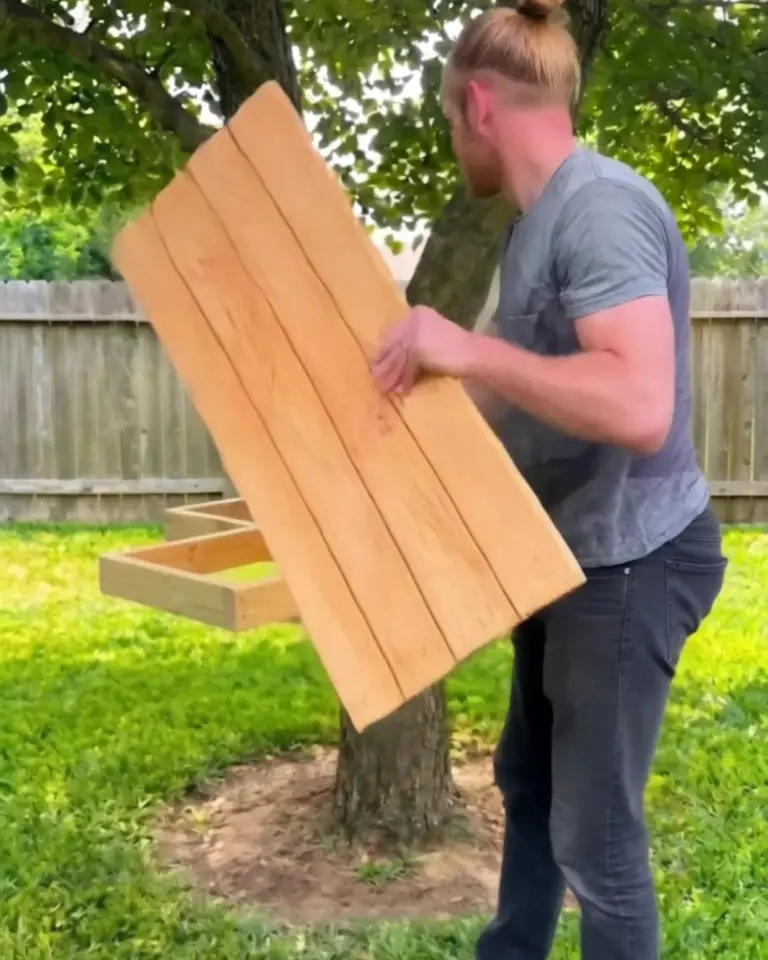
Cut 2×6s to 60 inches and lay them across the frame with ¼-inch gaps, notching the ones that meet the trunk so the center hole comes out 18 inches across. Screw each plank down with two screws at every frame member it crosses.
Step 5Take down the ropes
With the legs carrying it, untie the ropes and check the top with a level once more. Shim under a paver if one corner sits low.
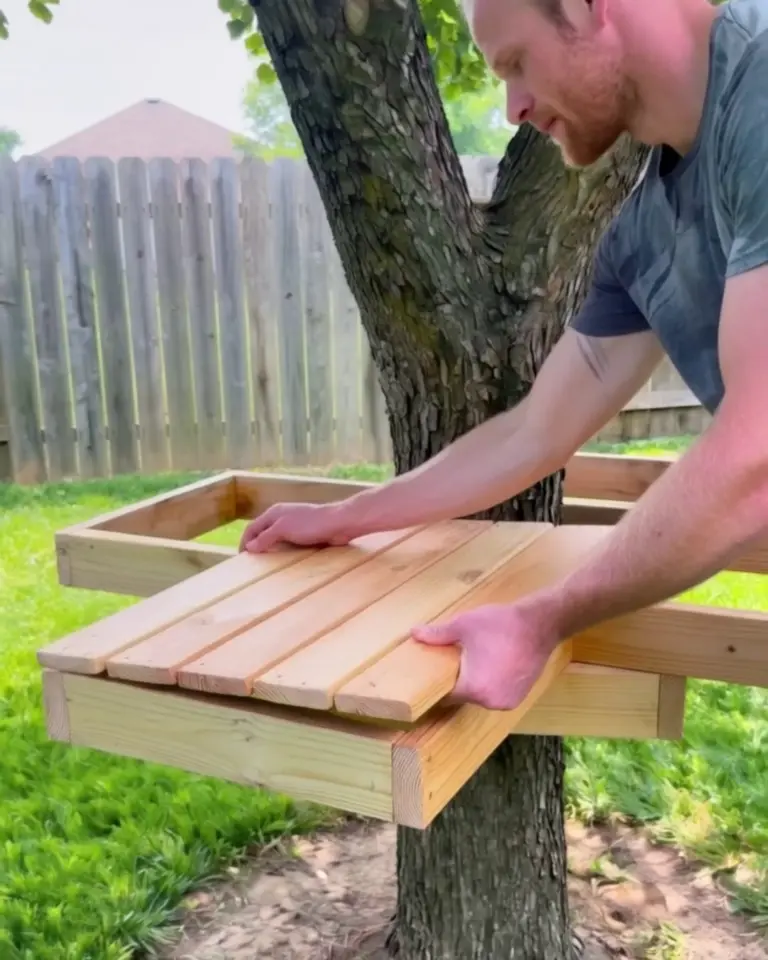
Step 6Cut the circle
Tie a pencil to a string 30 inches from the trunk’s center and draw the circle on the top. Cut it with a jigsaw and a fine-tooth blade, then round over the edge with sandpaper so it doesn’t catch forearms.
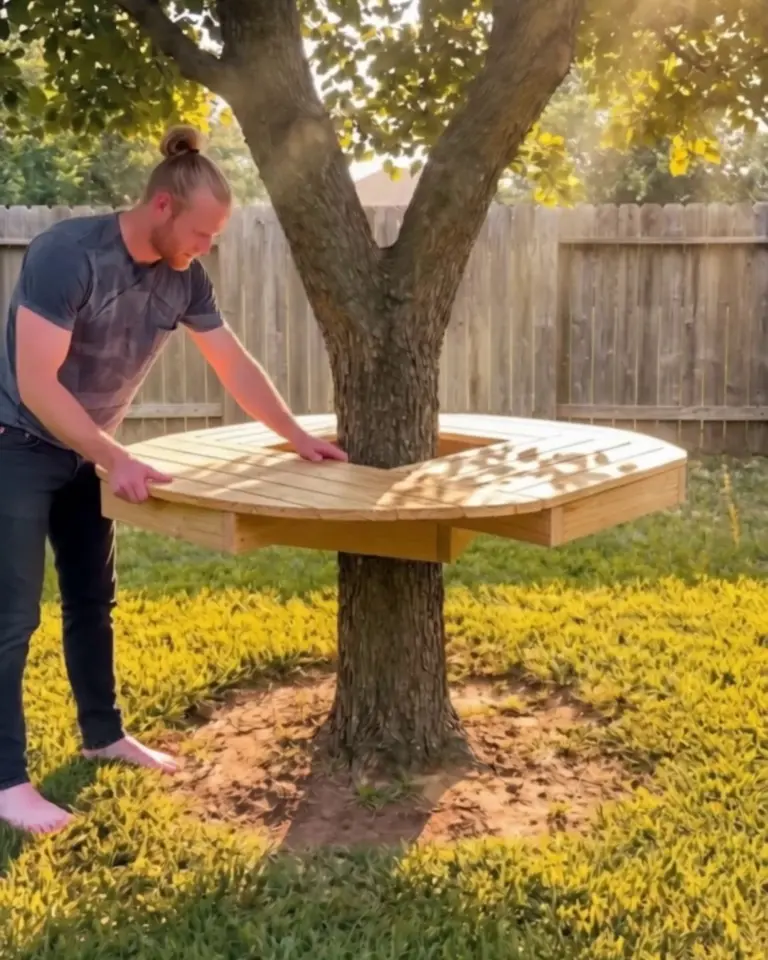
Step 7Build the swing-out seats
For each seat, make a triangle bracket from a 2×6 upright, an 18-inch 2×4 arm at 17 inches high and a 2×4 brace, and screw a 15-inch round seat cut from 2×6 offcuts onto the arm.
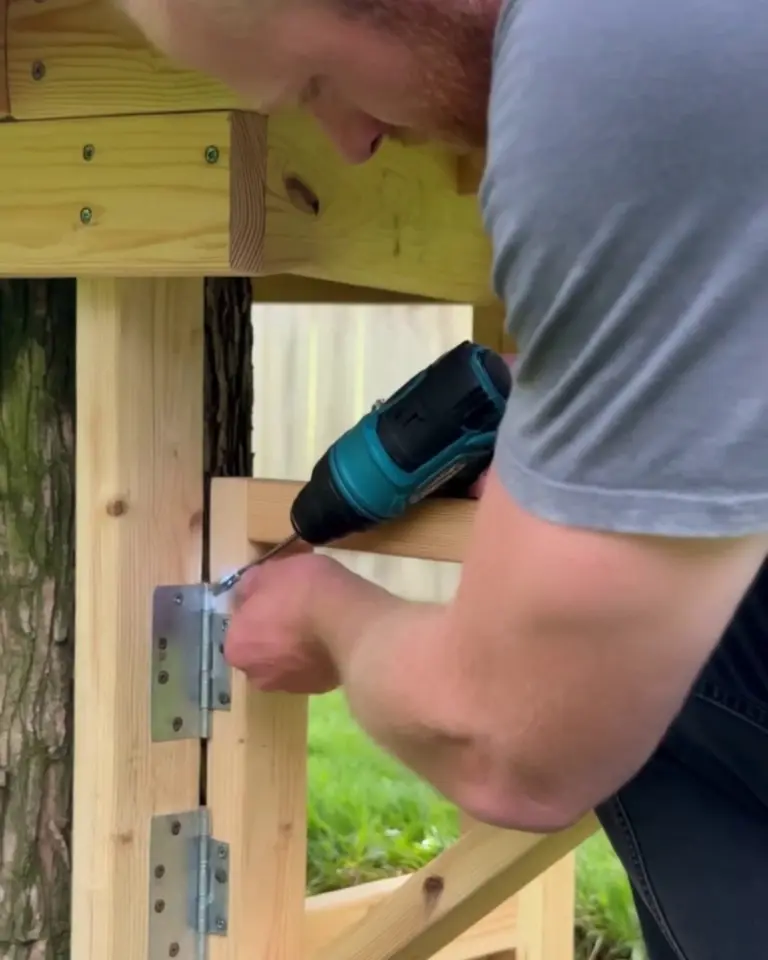
Step 8Hang the seats
Fix each bracket to a leg with two gate hinges, through-bolted rather than screwed, so the seat swings out to sit and tucks under the table when you’re done. Screw a stop block to the leg so it can’t swing past square.
A seat on a hinge carries a full grown adult on a short lever. Bolts hold that; wood screws pull out.
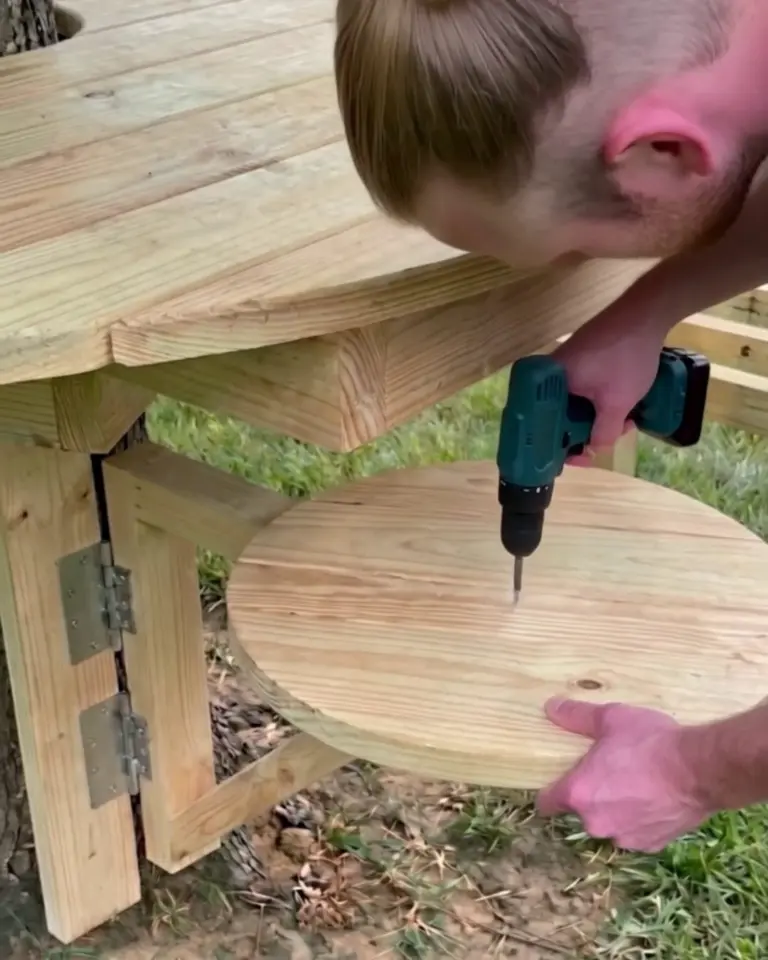
Step 9Stain it
Brush on walnut penetrating stain, top, edges and seats, and wipe off what doesn’t soak in after 15 minutes or so. Give it as long as the can says before anyone puts a cup down.
Don’t skip the underside and the cut edges. End grain drinks rain, and that’s where the wood goes gray and soft first.
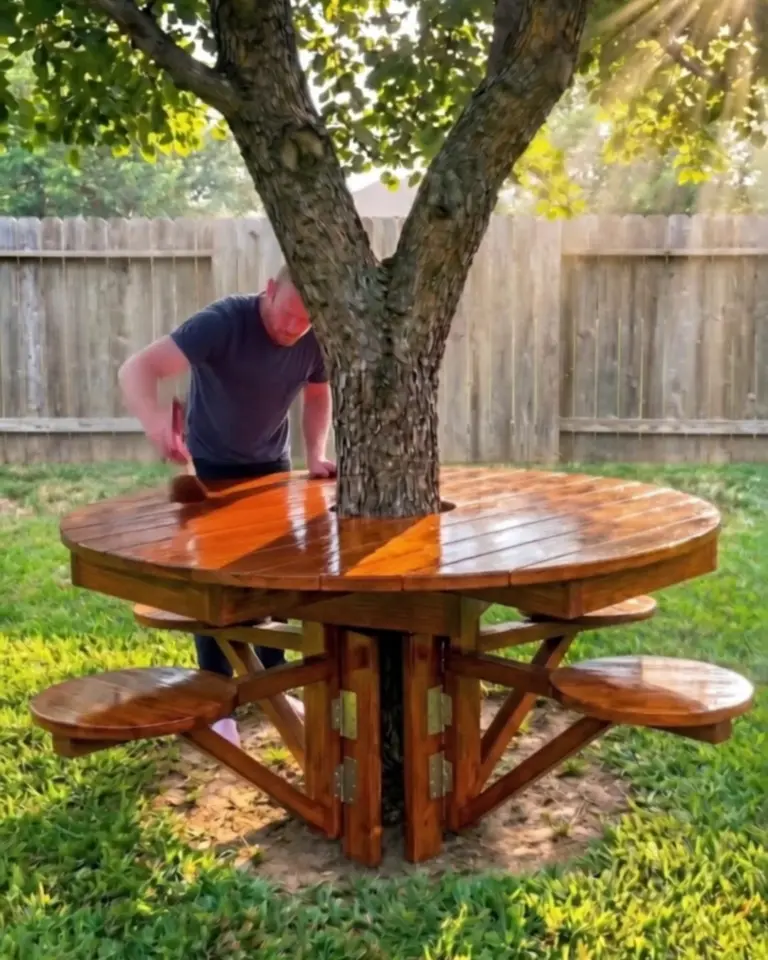
How the Picnic Table Around a Tree Holds Up
Sap, leaves and bird droppings land on it all year, so the stain wears fastest on the top. Scrub it and re-stain every year or two.
Check the gap at the trunk every spring, and widen the hole before bark touches wood. The seat hinges loosen before anything else does, so snug their bolts at the same time.
FAQ
The table rocks on one leg
A paver has settled. Lift that corner with a pry bar, add a little sand under the paver, and check it with the level again.
A seat sags when someone sits down
The hinges are pulling out of the wood. Replace the screws with through-bolts, and add a third hinge if the upright is long enough.
My trunk splits low, in a Y
Build the frame high enough to sit above the split, or make the center opening an oval that fits both stems. Leave the same 3-inch gap all around either way.
Can I build it around a young tree?
A young tree grows fast, and the hole would need widening often. We haven’t built one around a tree that small, and we’d want a much bigger gap than 3 inches if we did.
Does it need to come in for winter?
No, but the seats should be folded under and the top cleared of leaves. Wet leaves left on the stain all winter leave dark marks.
The friend’s bird arrived on the second day, on the far side, away from the teapot. He took it as a win.