Our niece held the spray can for the last coat, about 4 inches from the concrete, and green ran into every groove between the segments. From 12 inches, in quick passes, it doesn’t.
You’ll also love: How to Make a Concrete Flamingo Statue Around a Coconut, How to Make a Concrete Lace Floor Lamp with Cement and Cloth, How to Make a Concrete Candle Holder in a Plastic Bucket.
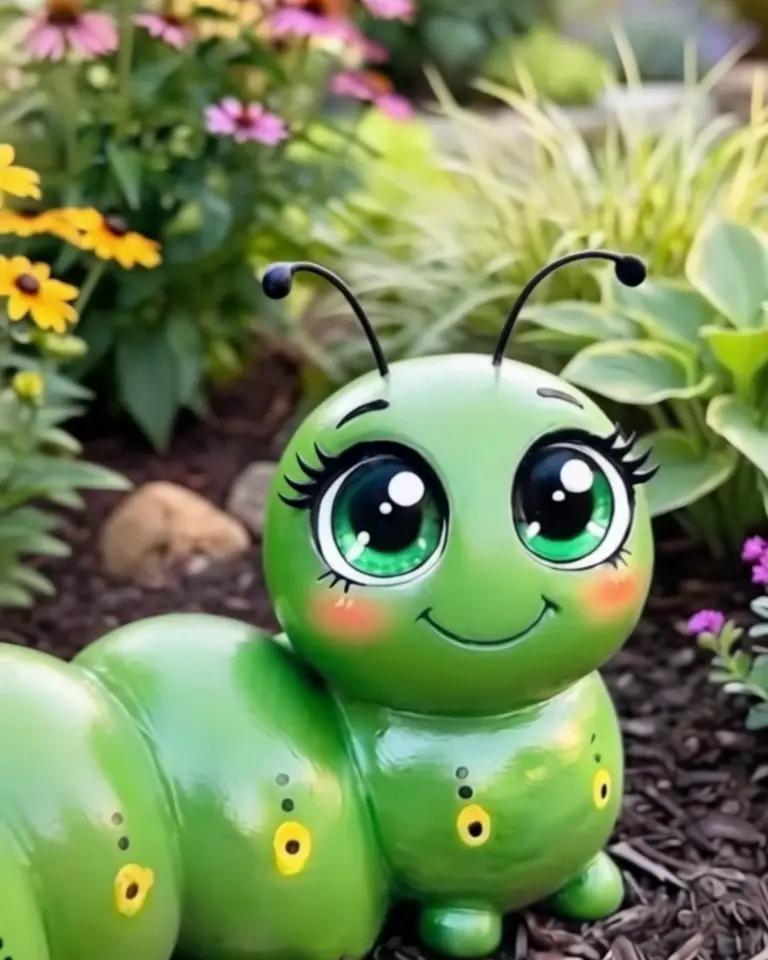
Our concrete caterpillar is one leg of a pair of pantyhose filled with sand mix, tied into six round segments with jute twine, cured on a board and painted: about 30 inches long and 35 pounds.
She said the drips made it look like it was melting, and that she liked it better that way.
Wet mix in a stocking feels like a cold, heavy water balloon. Gray water beads through the nylon while you tie it.
Why a Stocking Makes a Good Mold
Nylon stretches around wet mix and lets the extra water out. The cement paste that seeps through leaves a fine knit pattern on every segment.
We expected the twine to cut the segments apart. Tied snug instead of tight, it pinches a neck about 2 inches thick between each ball, and that holds once it cures.
Laid on its side, each segment flattens a little underneath, so it doesn’t roll.
Materials & Tools
Not in the $75: a scrap of plywood and plastic sheeting, a funnel, scissors, and a drill with a ⅛-inch masonry bit.
How much mix: one maker’s data sheet puts a 40-pound bag at about 0.33 cubic feet, enough for six 5½-inch segments with a little left over.
Other fabric molds: in our draped concrete planters, the cloth stays inside the concrete for good instead of peeling off.
Watch the Build
Step by Step
Step 1Mix the concrete
Pour about 34 pounds of sand mix into a tub and add roughly 4½ pints of water, a little at a time. You want it like thick pancake batter, loose enough to pour through a funnel but not runny. If it spreads flat in the tub, stir in a handful of dry mix.
Gloves on before your hands go near it.
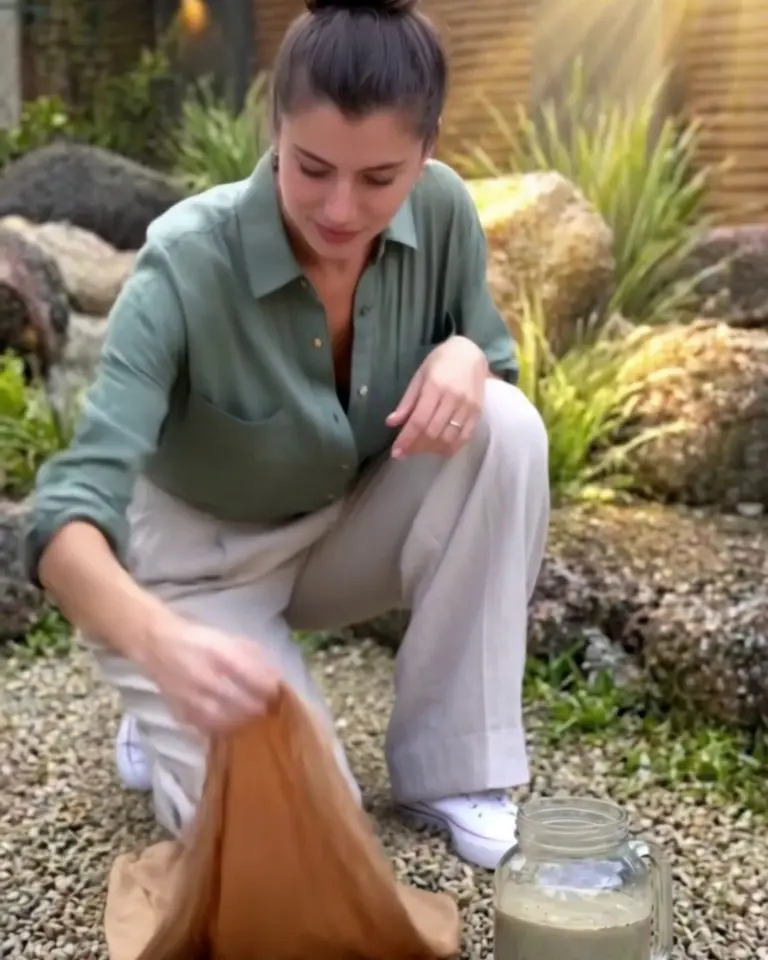
Step 2Cut and stretch the leg
Cut one leg off the pantyhose at the top of the thigh. Stretch it lengthwise and around a few times so it opens up evenly.
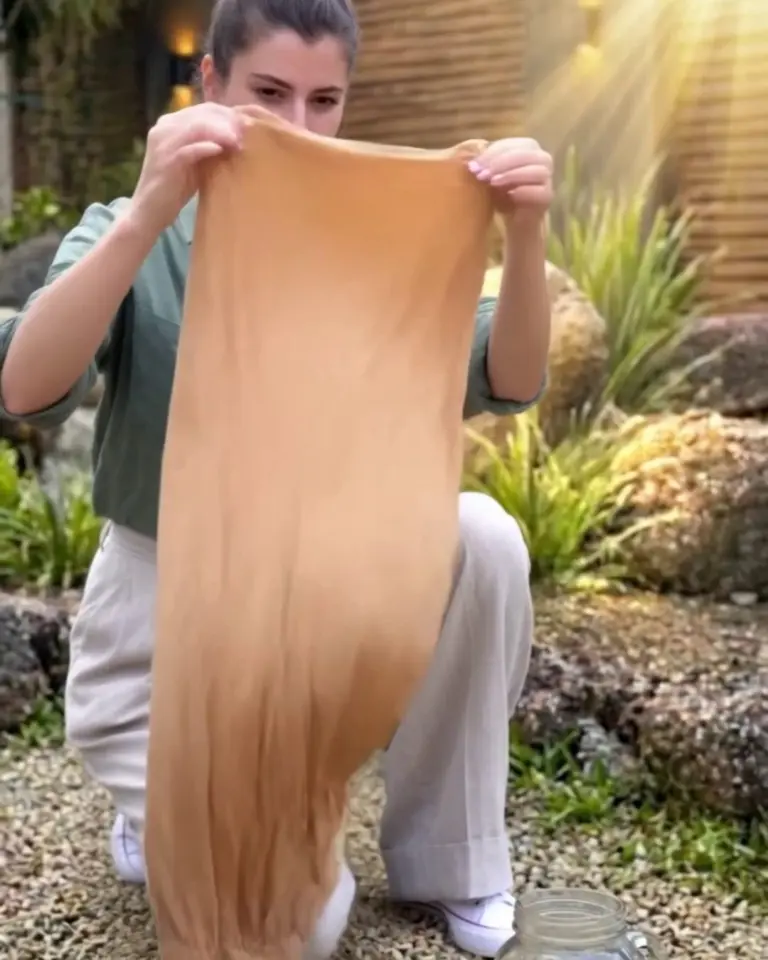
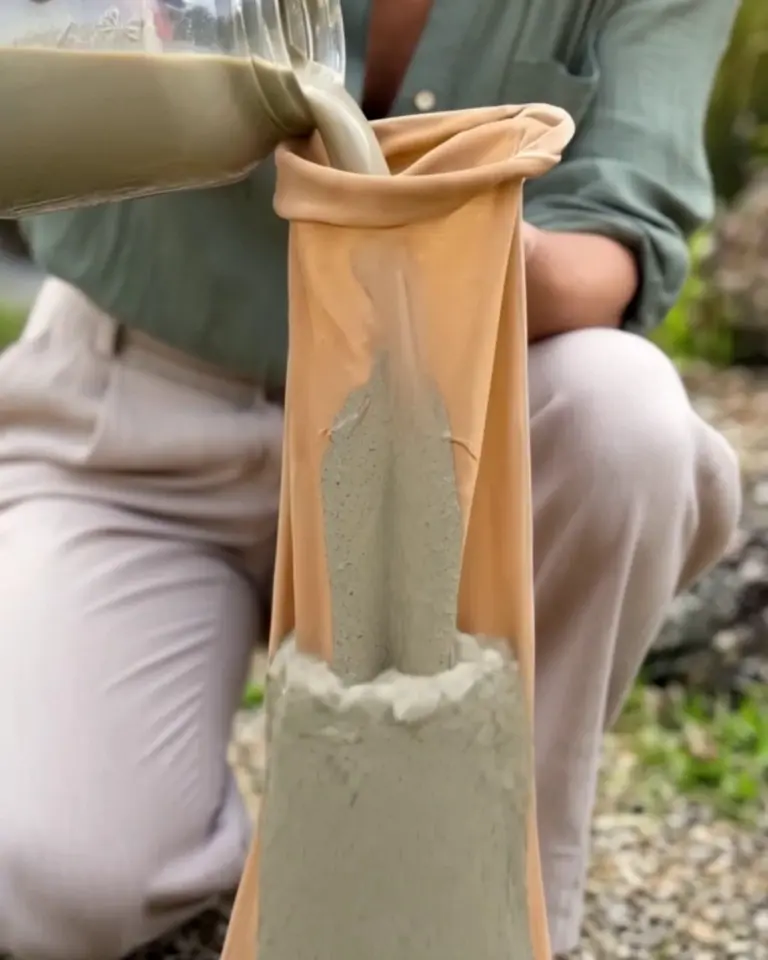
Step 3Fill the stocking
Stand the leg toe-down in a bucket, pull the open end over a funnel, and pour the mix in a cup or two at a time. Stop with about 8 inches of empty nylon at the top.
A funnel cut from the top of a 2-liter bottle has a wide enough neck for this mix.
Squeeze the stocking every few pours to settle the mix into the toe; air pockets become holes in the finished caterpillar.
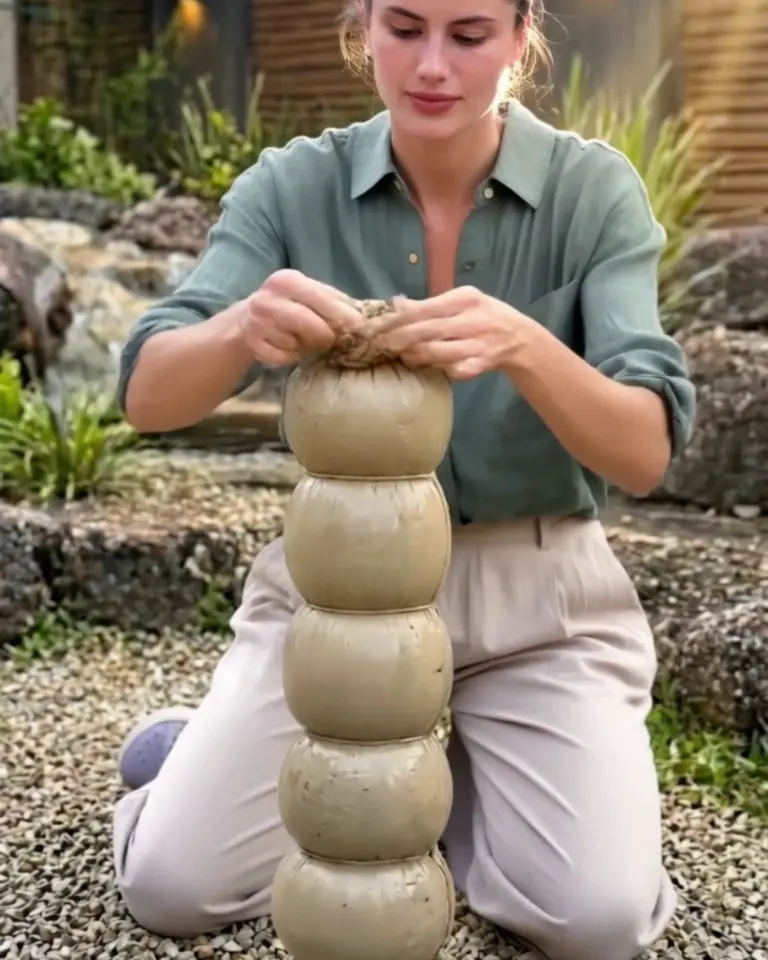
Step 4Tie the segments
Starting at the toe, wrap twine around the filled leg every 5½ inches and tie it snug, not hard. Six ties make six segments; knot the open end shut above the last one.
Six segments at 5½ inches each need about 33 inches of filled leg, so check the length before the first tie. If it comes up short, make the head the smallest segment.
Step 5Lay it down to cure
Lay it on its side on a plastic-covered board in a gentle S. Bend the last two segments up against a brick so the head cures sitting up.
Cover it with plastic and leave it for 2 days. On hot days, lift the plastic once and mist it.
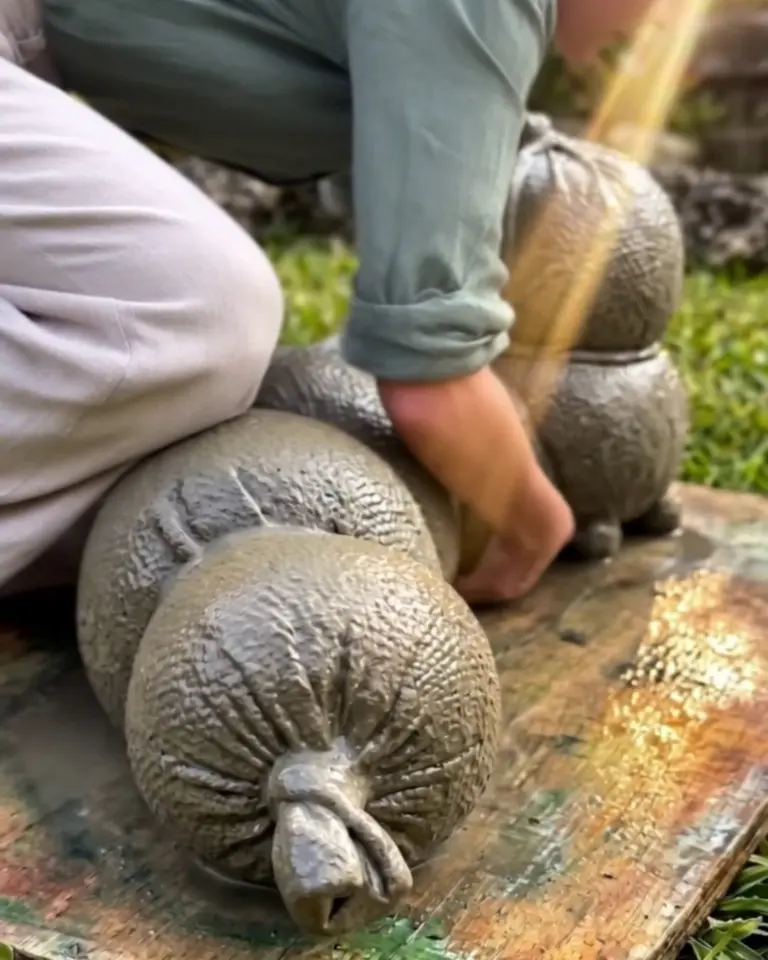
Step 6Peel off the stocking
Snip the twine and slit the nylon down the back with scissors, then peel it off. Mist the bare concrete, cover it again, and keep it damp for the rest of the week.
The knit pattern stays on the surface, faint but there, and it shows through the paint later.
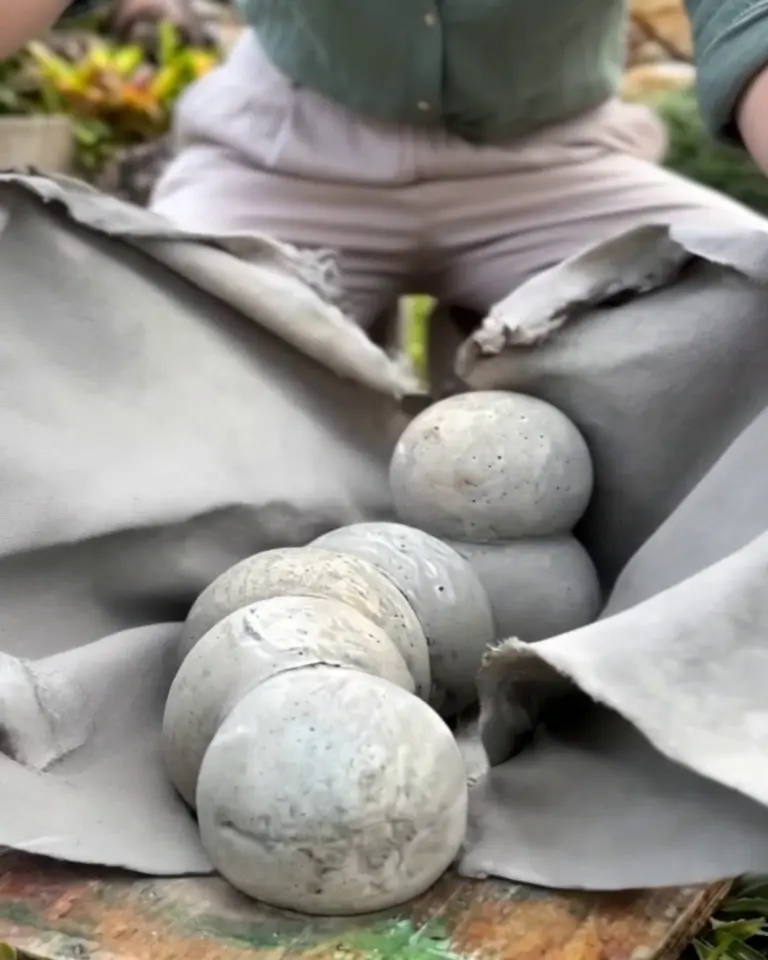
Step 7Paint it green
Once 30 days have passed since the pour and the concrete is dry and pale, spray it green from about 12 inches away. Light, quick passes, three coats, 15 minutes or so between them.
Spray outside on a still day, with cardboard propped behind it; the overspray drifts farther than you think.
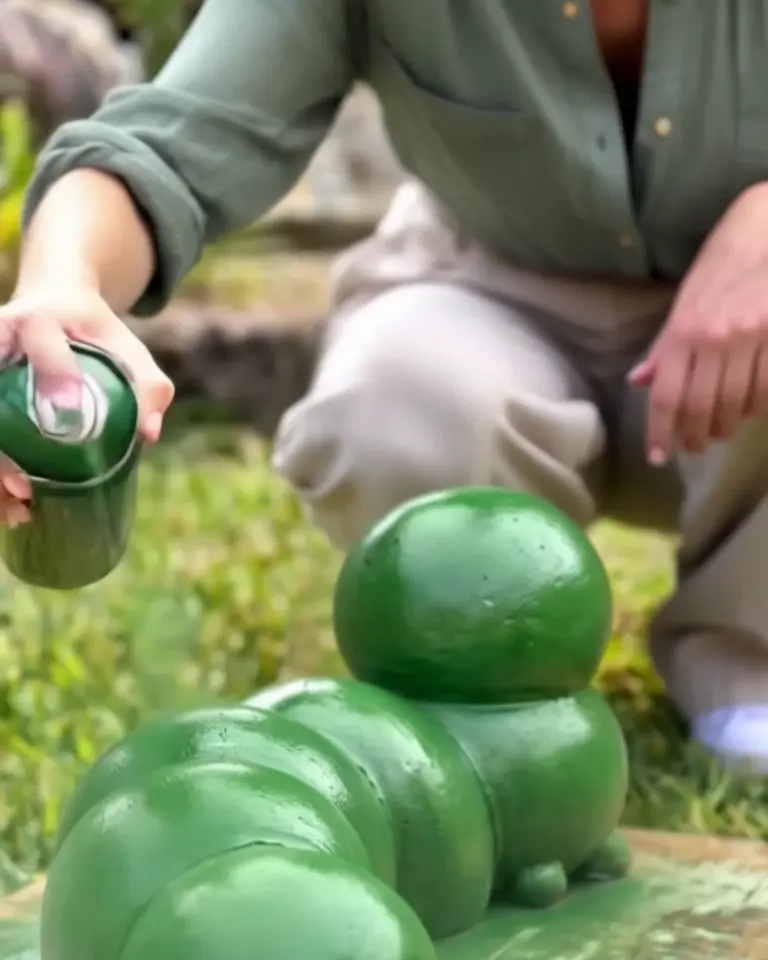
Step 8Give it a face
Paint two big white circles for eyes, black pupils with a white dot in each, a black smile and pink cheeks. Drill two ⅛-inch holes, ½ inch deep, on top of the head, bend a bead onto the end of each 6-inch wire, and set them in with epoxy.
Keep the face out of the rain and sprinklers for 3 days before it gets sealed.

Step 9Seal it and set it out
Spray two light coats of clear sealer over everything, let it dry, then nestle it into mulch at the front of a bed, where it’s low enough not to get kicked. A spot with some afternoon shade keeps the green from fading as fast.
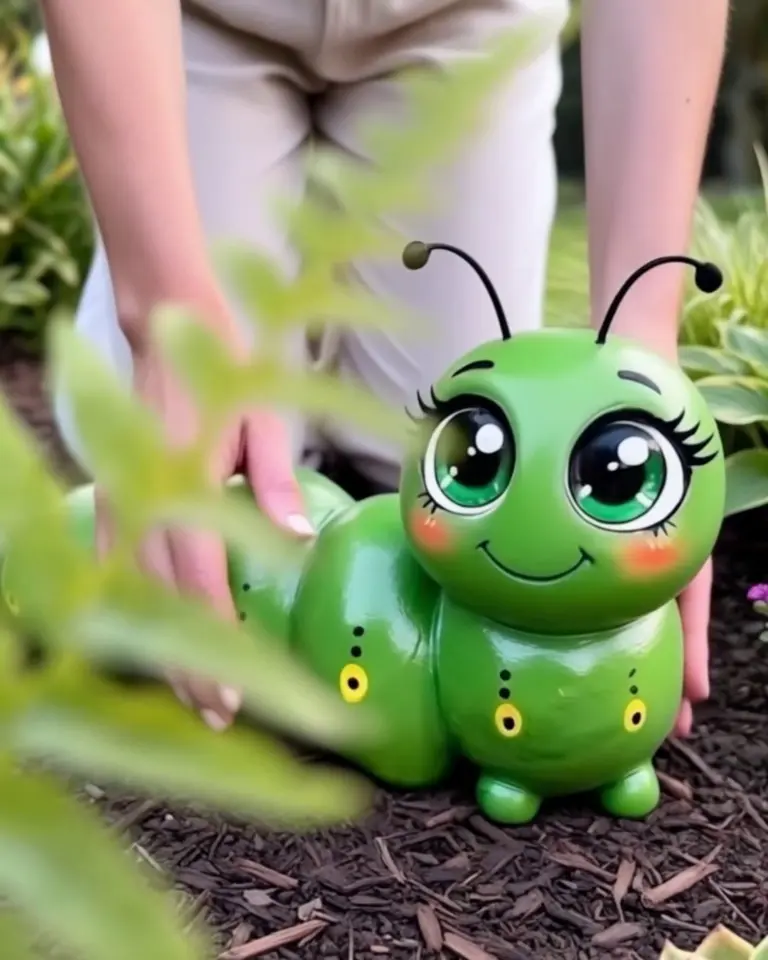
How the Concrete Caterpillar Holds Up
Spray paint fades first on the side that gets afternoon sun. A fresh coat of clear sealer every spring slows it down, and the eyes, painted in thin acrylic, need it most.
The necks between segments are the weak spot, so lift it from underneath, never by the head.
FAQ
A segment broke off at the neck
The twine was cinched too hard, so that neck came out thin. Glue the piece back with exterior epoxy, and tie the next caterpillar snug rather than tight.
Gray paste leaked out everywhere
That’s cement paste coming through the nylon, and some is normal. A slightly stiffer mix leaks less, and the plastic under the board catches what does.
Can I use a tube sock instead of pantyhose?
A long cotton tube sock works for a shorter caterpillar, about four segments. Cotton grips the concrete harder, so plan on cutting it off in strips.
The green paint is peeling
Usually the concrete was still damp or too new when it was painted. Scrape off the loose paint, let it dry out for a few weeks, and recoat with a paint labeled for masonry.
Will it survive winter outside?
We haven’t left one out through a hard freeze. Water sitting in the necks between segments is where we’d expect trouble, and we don’t know how many winters it would take.
The drips stayed. Our niece checks on them every time she visits, and she has asked for a caterpillar of her own, to paint by herself.