Concrete carved at four hours tears like wet sand; the first vine we cut came away in crumbs along both edges. The same mix at 24 hours cuts in clean curls.
You’ll also love: How to Make Concrete Mushroom Garden Stakes in Eggshells, How to Make a Concrete Candle Holder in a Plastic Bucket, How to Make a River Rock Concrete Planter from a Milk Crate.
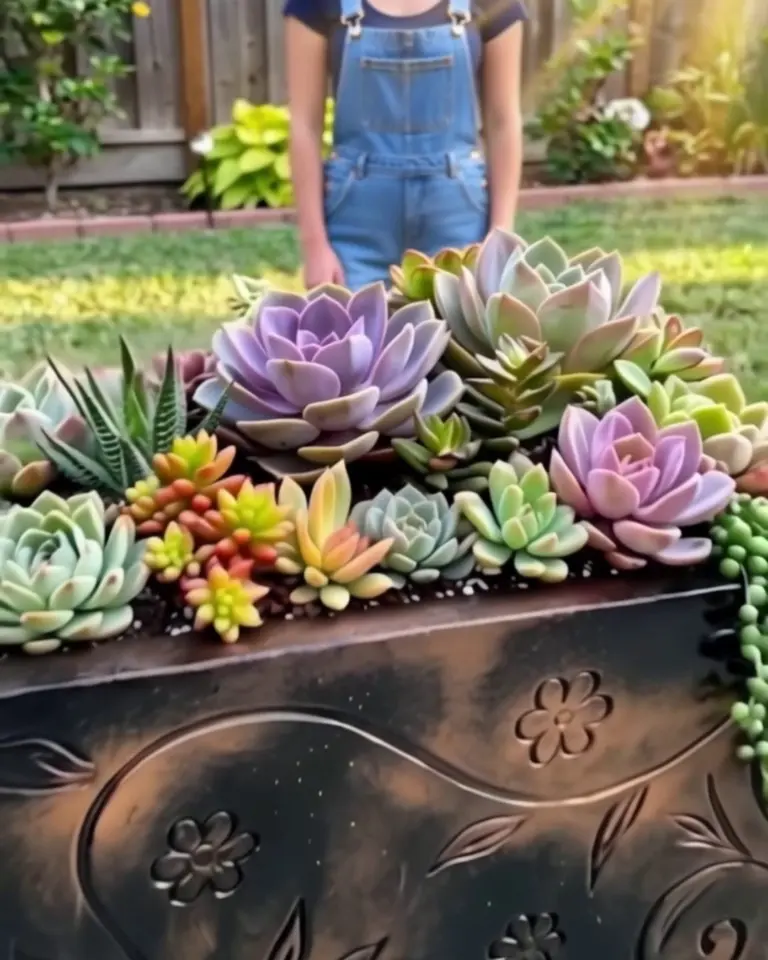
This carved concrete planter is a plastic crate coated inside and out with sand mix, the crate left in as its skeleton, then carved with vines, painted black and touched with copper on the raised lines.
The carving tool scratches like a pencil on sandpaper, and the dust settles in the line you just cut.
A neighbor asked if it was cast iron and knocked on it to check. Then asked why anyone would carve something that heavy.
Why the Crate Stays Inside
Pulling a crate out of a shell this size takes a split mold or a lot of luck. Left in, its plastic lattice works like a mesh inside the walls, holding the inner and outer coats together.
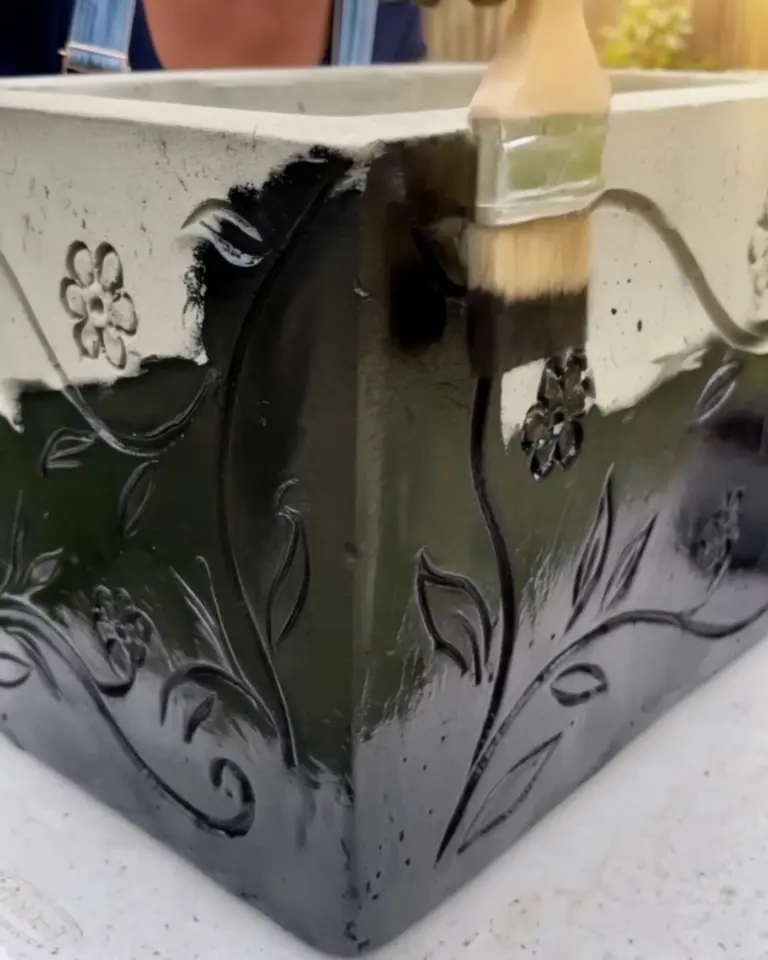
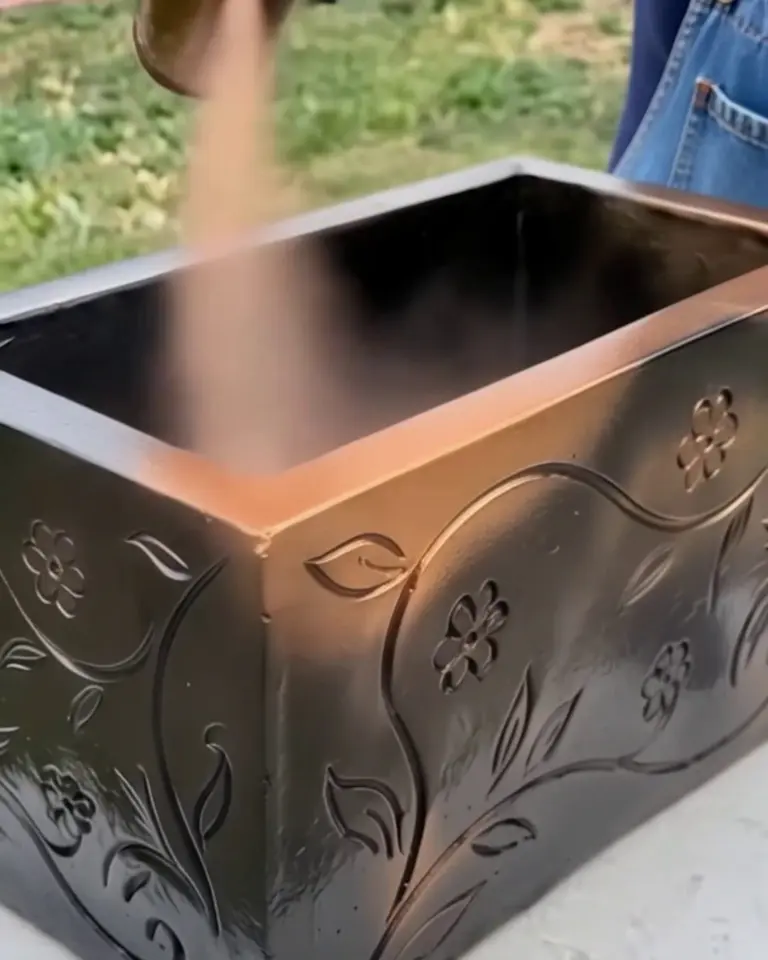
We expected the black paint to hide the carving. It does the opposite: paint pools darker in the cuts, and the copper on the high edges makes every line stand out.
The lines don’t need to be neat. Wobbly vines look hand-cut, which they are.
Materials & Tools
Not in the $80: the succulents, the soil and the gloves.
Weight: empty, it comes to about 120 pounds. Build it on a board near where it will live, or have a second person lined up.
Pattern: draw it full size on paper first and trace through with a nail. Freehand vines tend to drift uphill.
Lighter option: cement-soaked cloth over a pot weighs a fraction of this, the way our draped concrete planters are made, though cloth won’t take carving.
Watch the Build
Step by Step
Step 1Coat the outside
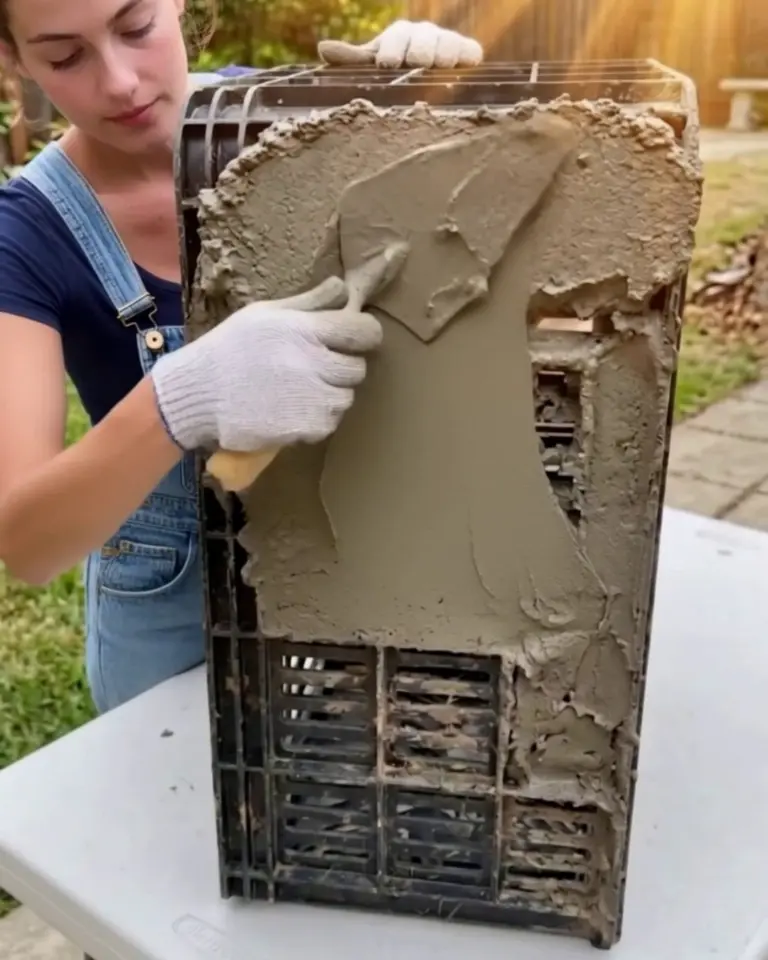
Mix one bag of sand mix with 8 pints of water, the starting amount on Quikrete’s sand mix data sheet, adding more only until it holds on the trowel sideways. Stand the crate upright and press mix onto each outside face, an inch thick, working it into the lattice.
Push it in with your fingertips at the corners, where the lattice has its biggest openings.
Gloves on: wet mix burns skin.
Step 2Line the inside
Press a ¾-inch layer over the inside walls and the floor of the crate, so the mix pushes through the lattice and meets the outer coat. Push the three PVC scraps straight down through the floor coat, spaced along the center.
Keep the inside walls roughly straight. Nobody sees them but the roots.
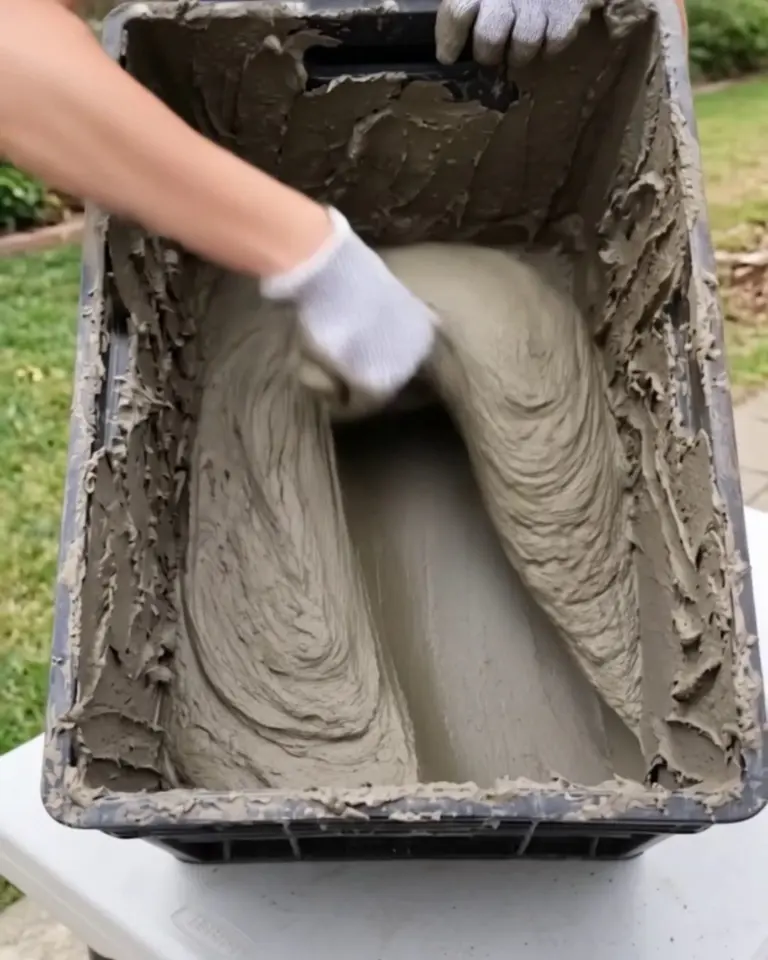
Step 3Close up the rim
Mix the second bag, pack the top edge of the crate so the inner and outer coats join, and round it over with the trowel. Check every face for an inch of cover; the plastic must not show anywhere.
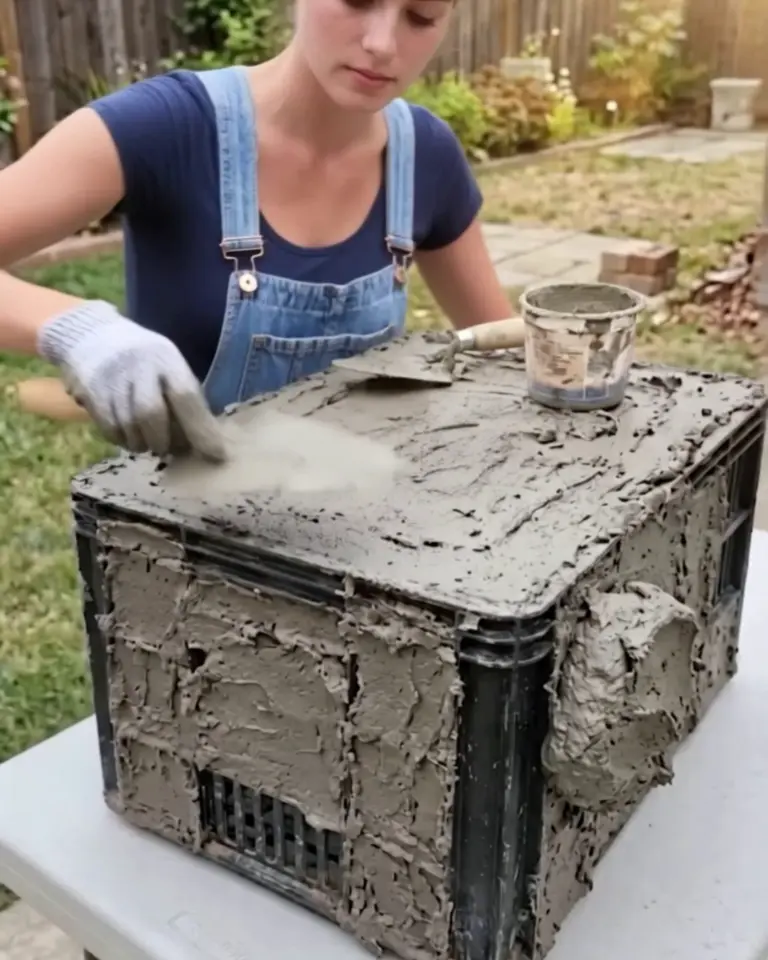
Step 4Smooth it and wait a day
Smooth the faces with long strokes of the trowel and cover the planter with plastic. Leave it about 24 hours; in cool weather it may need a few more.
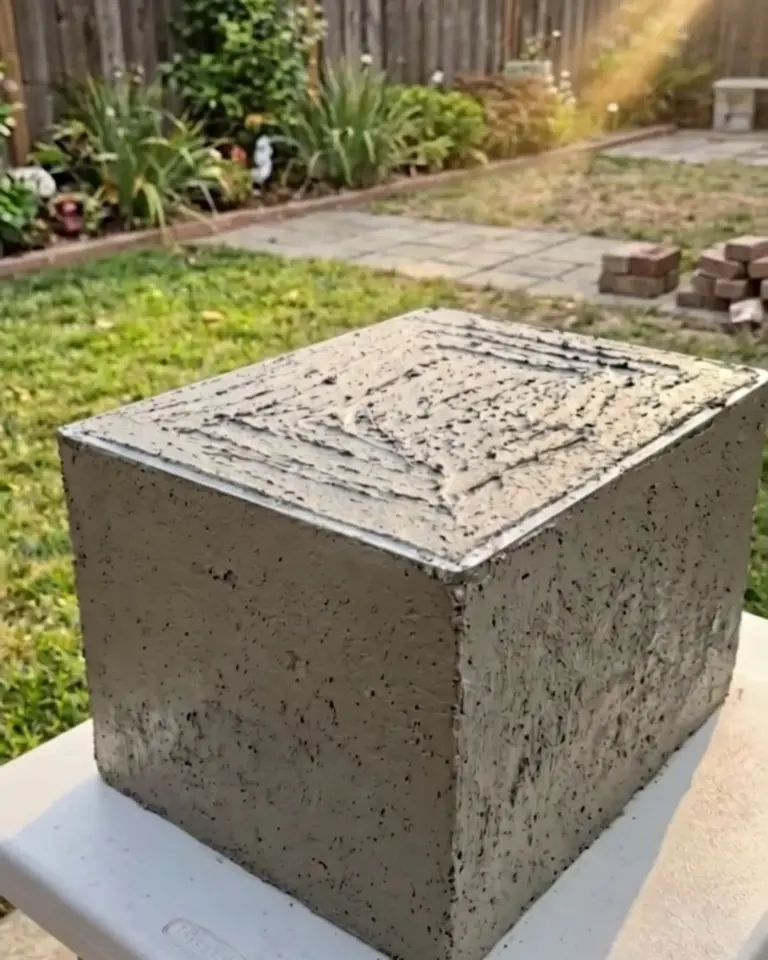
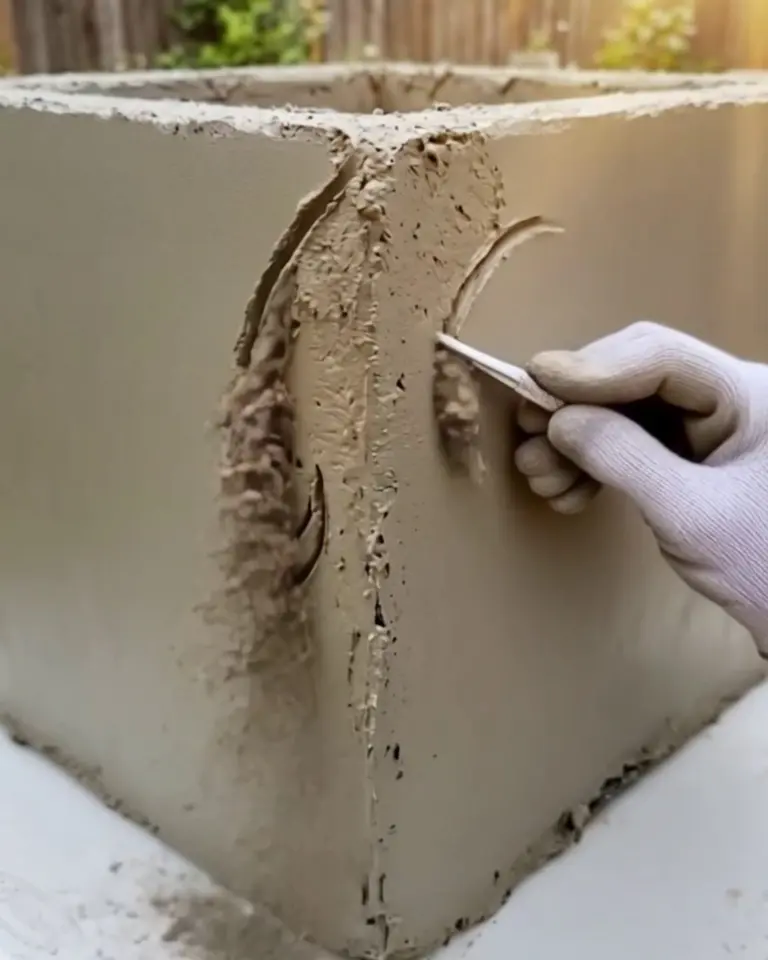
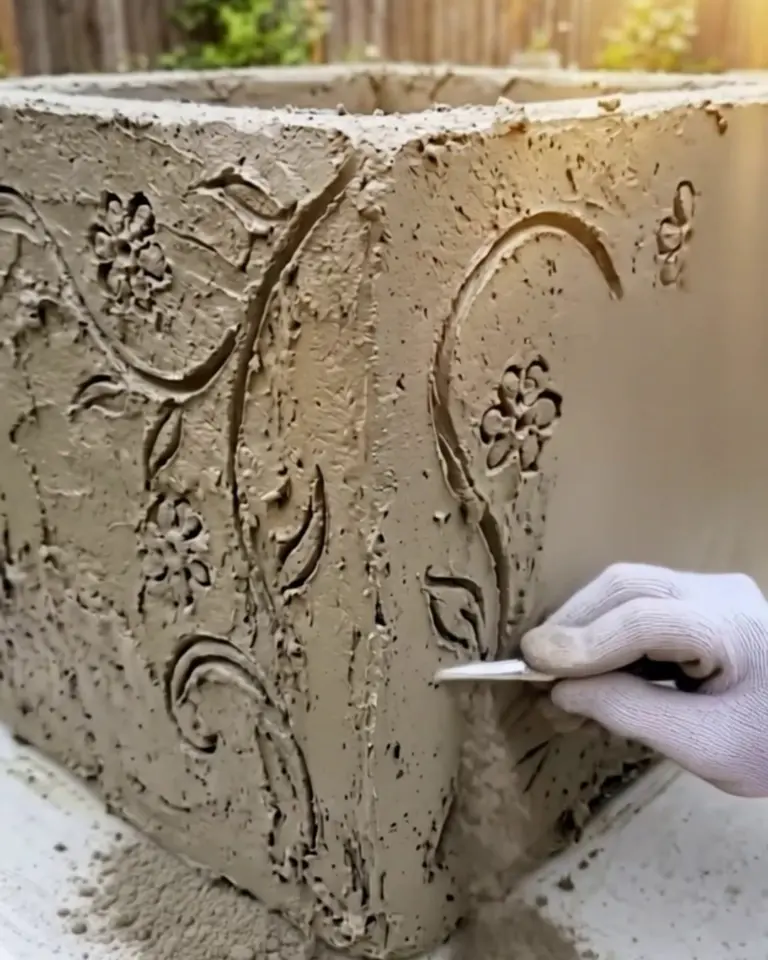
Step 5Carve the vines
Sketch the vines and flowers lightly with a nail, then cut along the lines with a loop tool, about ⅛ inch deep. Test a corner first: crumbs mean it’s still too soft, and a tool that skates without biting means it’s past the window.
Simple shapes read best from a few feet away: a wavy main stem, leaves in pairs, a five-petal flower every 8 inches or so.
Pull the PVC scraps out while the mix is still this soft.
Step 6Cure it for a month
Keep it under plastic for a week, misting it if the weather is dry, then let it stand uncovered. Masonry paint wants new concrete about 30 days old and dry.
A face that darkens when splashed is still damp inside, and paint waits until it doesn’t.
Step 7Paint it black
Brush the black masonry paint into the carved lines first, then over the flat faces. Two coats, 4 hours apart; a 2-inch angled brush gets into the curves without flooding them.
Step 8Add the copper
Hold the copper can about 12 inches off and mist across the raised lines from a low angle, so the paint lands on the high edges and misses the grooves. Light passes are better than one heavy one.
Step 9Plant it
Move the planter into place before it’s filled.
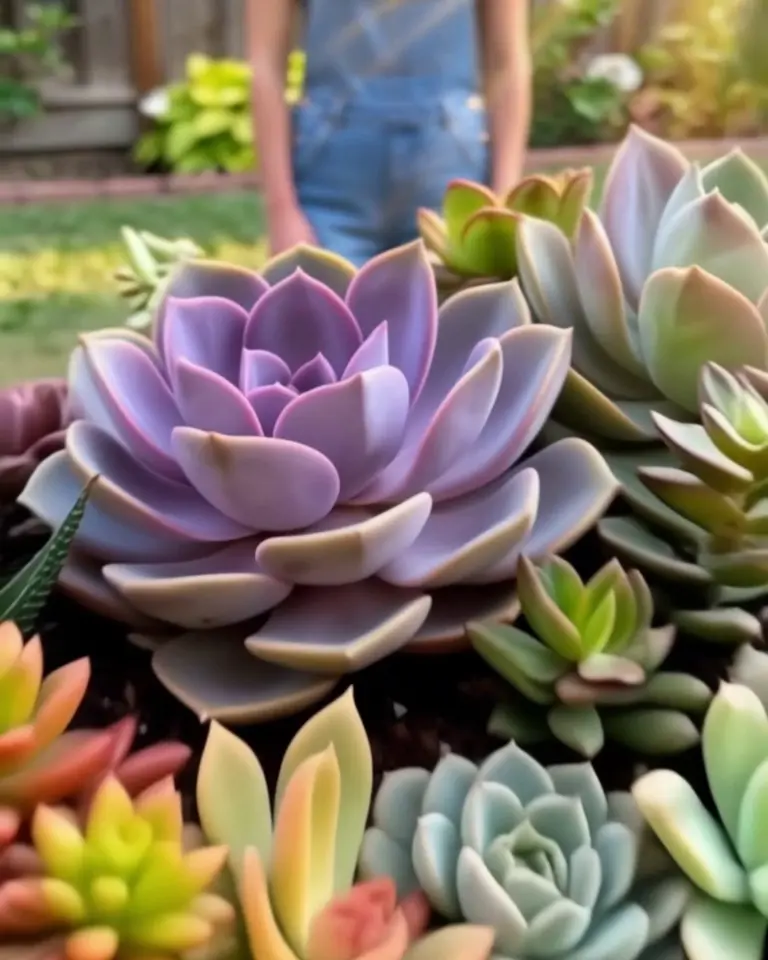
Lay a square of window screen over each drain hole so the mix stays in. Pour in the cactus mix, about a cubic foot, and set the succulents close together with the tallest toward the back.
How a Carved Concrete Planter Holds Up
The copper wears off the sharpest edges first, which mostly looks like age. A light pass of spray brings it back.
Water sitting in the bottom is the bigger worry in a freezing winter, so keep the three drain holes clear and lift the planter on pot feet.
FAQ
The carving crumbles as I cut
It’s too early. Cover it and try again in a few hours; a cut that leaves a clean curl is the signal.
The plastic shows through in one spot
The coat got thin over a corner of the crate. Dampen the area and press on a thin patch of fresh sand mix, then cure it under plastic for a few days.
Can I skip the paint?
Yes; plain gray concrete shows the carving through light and shadow alone. The copper only works over a dark base.
The black paint is peeling
Usually it went on before the concrete was old enough or fully dry. Scrape the loose paint, let it dry a few sunny days, and recoat.
Could I carve letters instead of vines?
We haven’t tried lettering on one. Straight lines show every wobble in a way vines hide.
The crumbled first vine is still on the back side, facing the fence.
Nobody has seen it but us.