A neighbor’s first question was whether the cardboard would smother the onions. Not these; the egg flats are paper pulp, and pulp softens under wet soil within a few weeks.
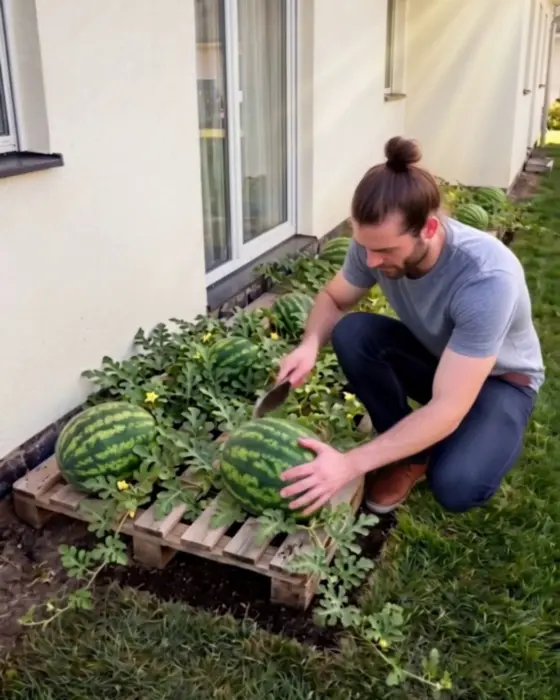
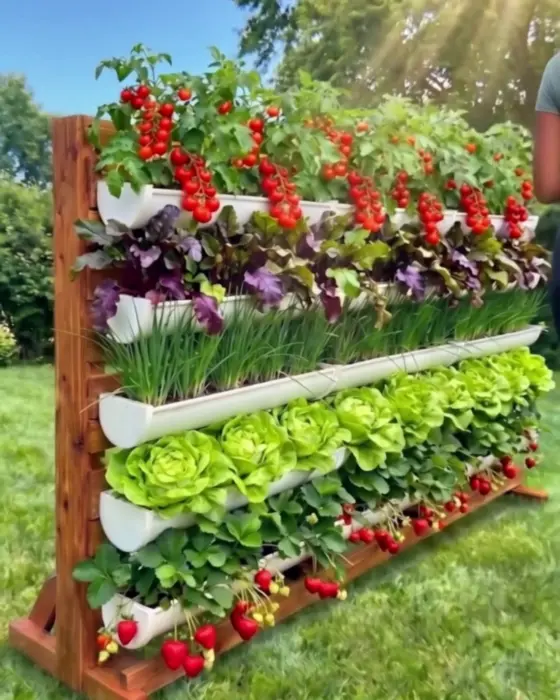
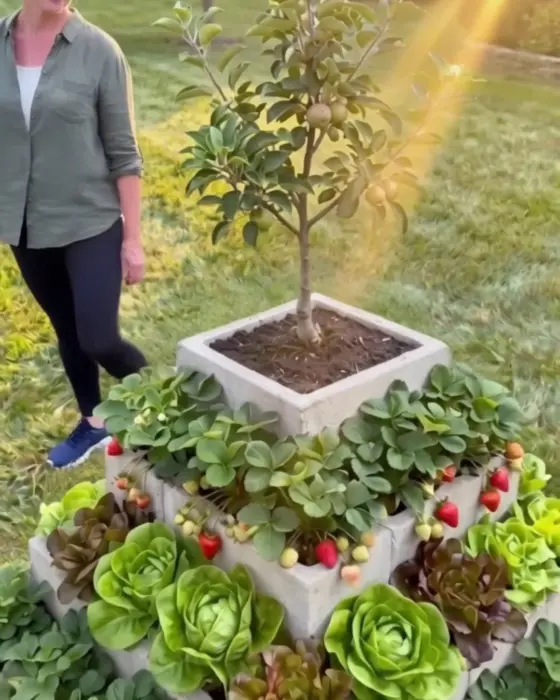
You’ll also love: How to Grow a Pallet Watermelon Garden in a Side Yard, How to Build a PVC Pipe Vertical Garden on a Cedar Frame, How to Build a Cinder Block Pyramid Garden in Four Tiers.
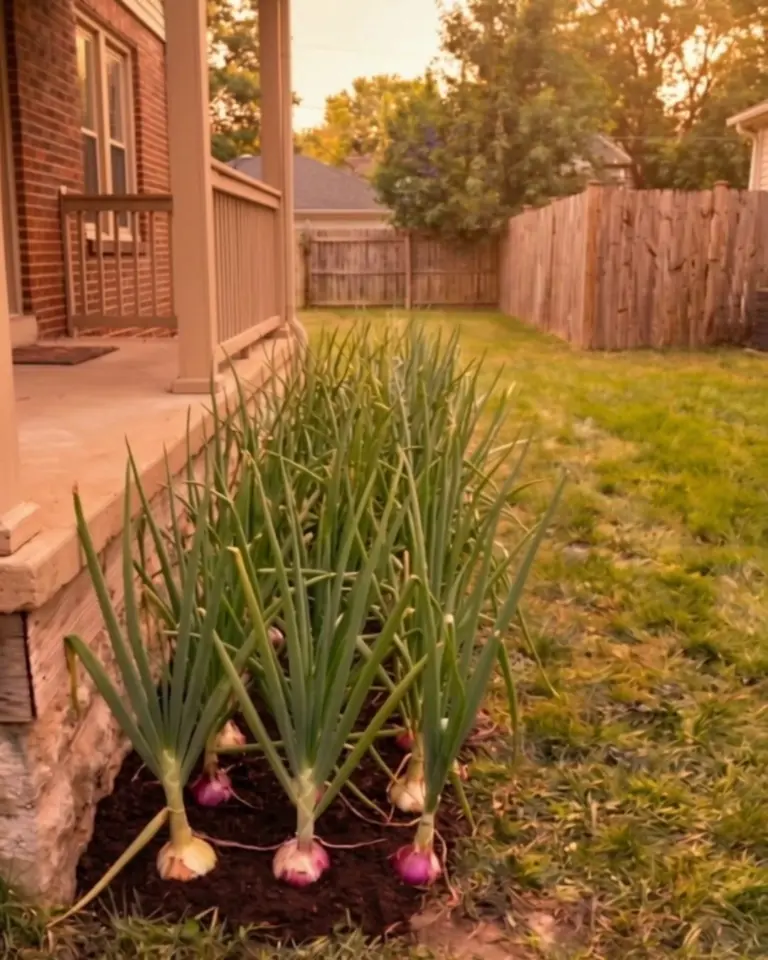
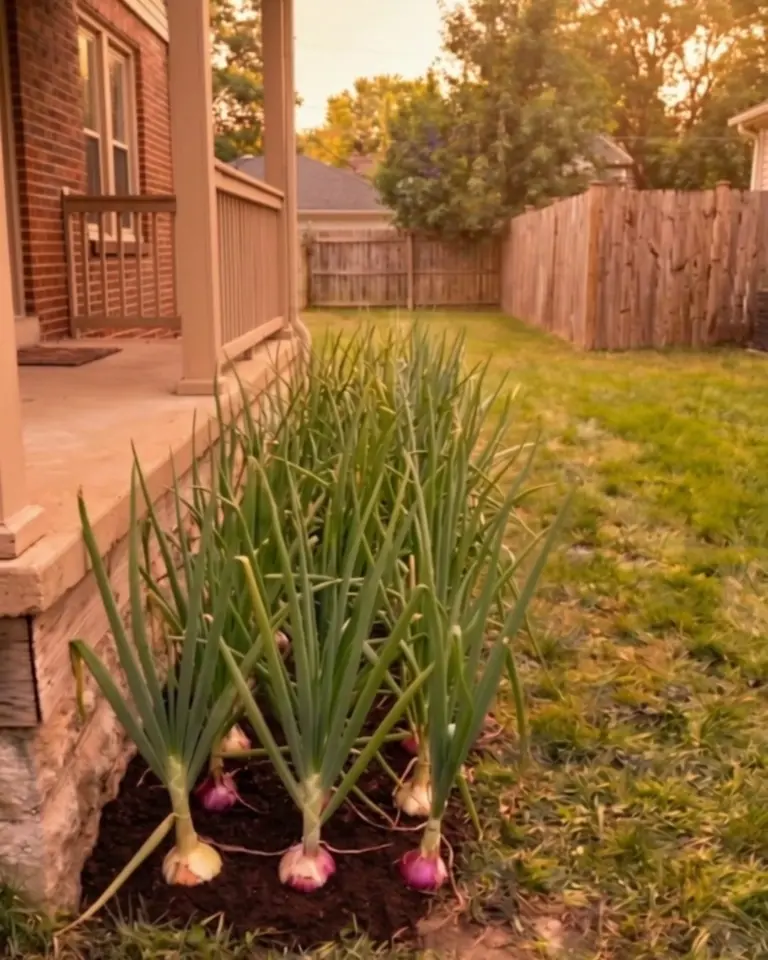
Our onions in egg cartons run 15 feet along the porch foundation: fifteen 30-cell flats laid end to end, a red onion set in every cell, and one 2-cubic-foot bag of soil over the top.
We brought home foam cartons first, because they were free. Foam never breaks down, so they went to the recycling.
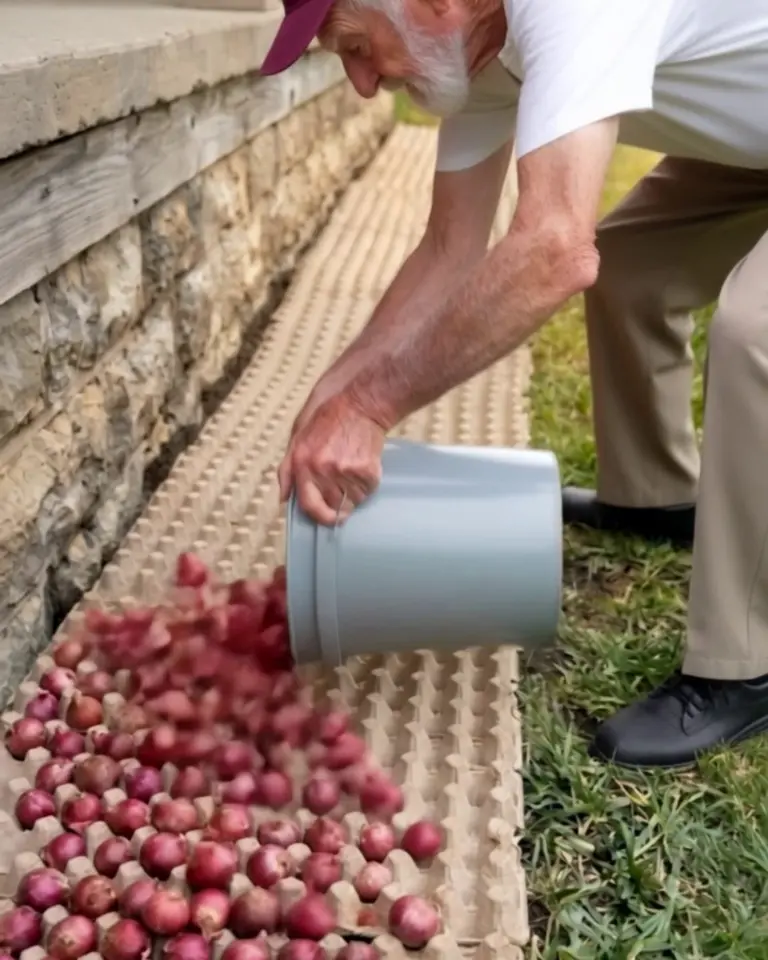
Onion sets pouring out of a bucket sound like dried beans in a pan. The neighbor still thinks 450 onions is too many for two people, and is probably right.
What the Egg Flats Do
A 30-cell flat puts its cells 1⅞ inches apart, center to center, in a neat grid. That spacing does the measuring a string line and a ruler usually do.
We expected the cardboard to show for months. By the time the first shoots were up, it had gone soft and dark and was hard to find in the soil.
Planting every cell is too tight for big bulbs, which is why every other onion comes out early as a green onion, the first harvest, about a month in.
Materials & Tools
Not in the $60: the tools and gloves.
Which sets: sort them by size before planting. Sets smaller than a nickel make the best bulbs; the bigger ones tend to send up a flower stalk, so plant those where you’ll pull green onions.
Paper, not foam: only pulp flats break down. Foam and plastic cartons stay in the soil for good.
More room: a wider, sunnier bed opens up more crops, like the tiers of our cinder block pyramid garden, which hold onions as easily as strawberries.
Watch the Build
Step by Step
Step 1Loosen the strip
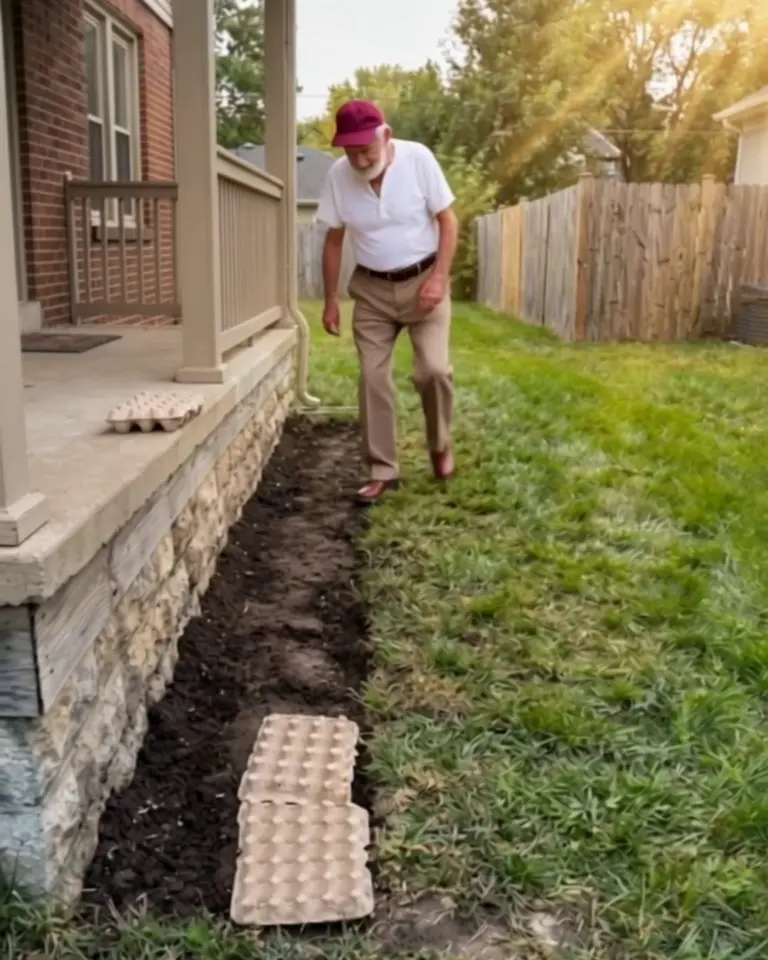
Pick a strip that gets at least 6 hours of sun.
Loosen it 6 inches deep with the cultivator, pull out stones and roots, and rake it level about 12 inches wide. Cut a clean edge on the lawn side with a spade so grass doesn’t creep in.
Hard clay needs an inch of compost worked in first; onions bulb poorly in tight soil.
Step 2Lay the flats
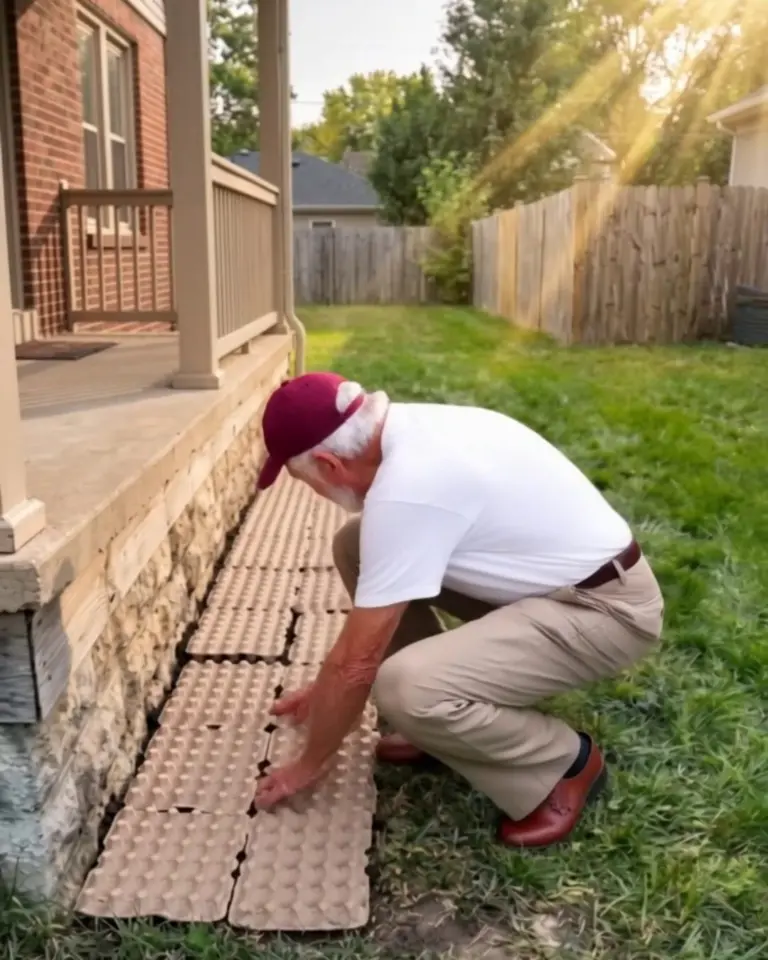
Set the 15 flats end to end along the strip, cups facing up, and press each one down so the bottoms touch the soil. Fifteen flats cover about 15 feet.
Overlap the ends a little so no gap opens between flats.
Step 3Fill the cells
Pour the sets slowly along the flats and nudge them so each cell holds one. One per cell is plenty, since two crowd each other. Turn the ones that land on their sides pointed end up; a sideways set still grows, just a little crooked.
Step 4Cover them
Pour the soil over the flats and spread it 1½ inches deep, so the tips of the sets sit about an inch under. The one bag just covers the strip; save the last few scoops for low spots that show after the first watering.
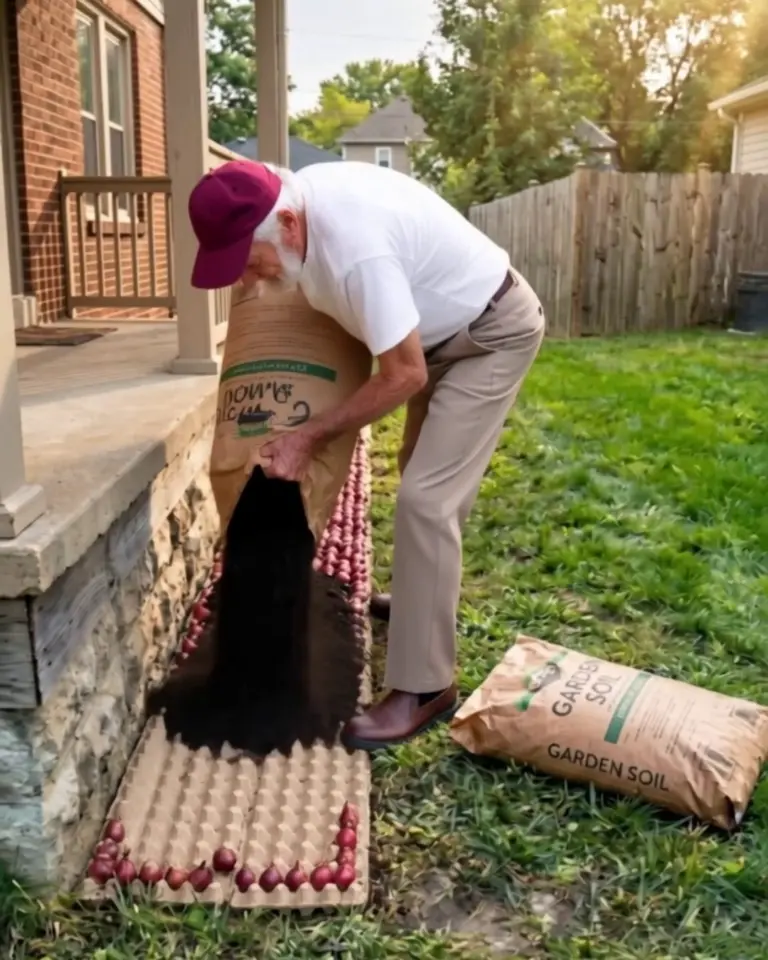
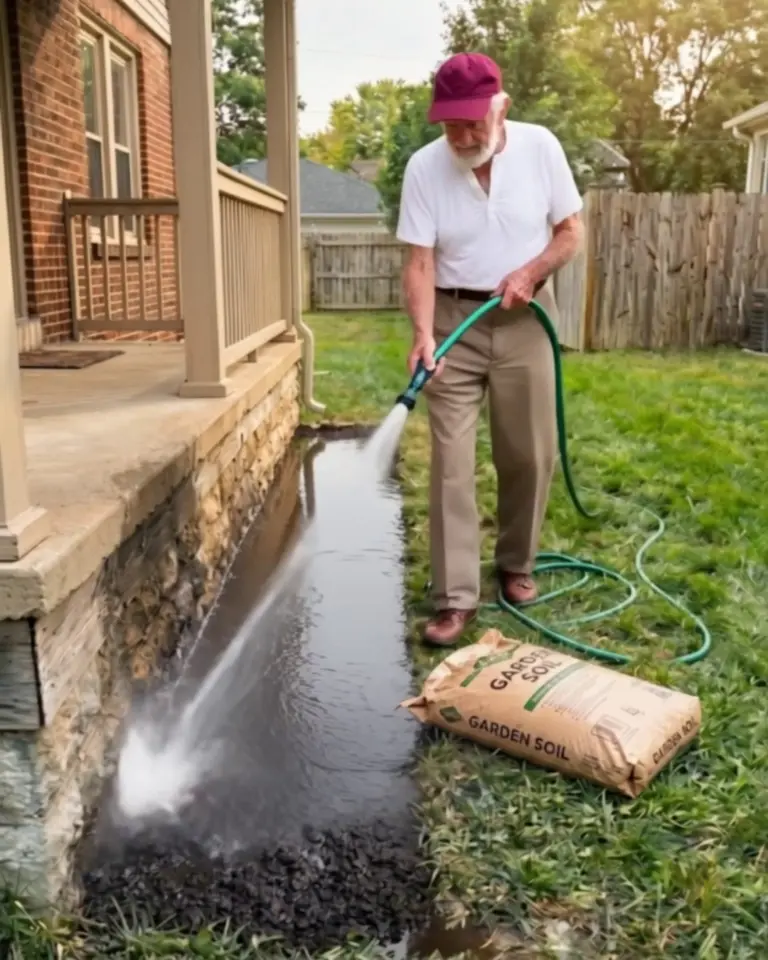
Step 5Water it in
Soak the strip slowly with the wand until water stands for a moment before sinking in. After that, about an inch of water a week, more when it’s hot.
Water in the morning, so the leaves dry before night.
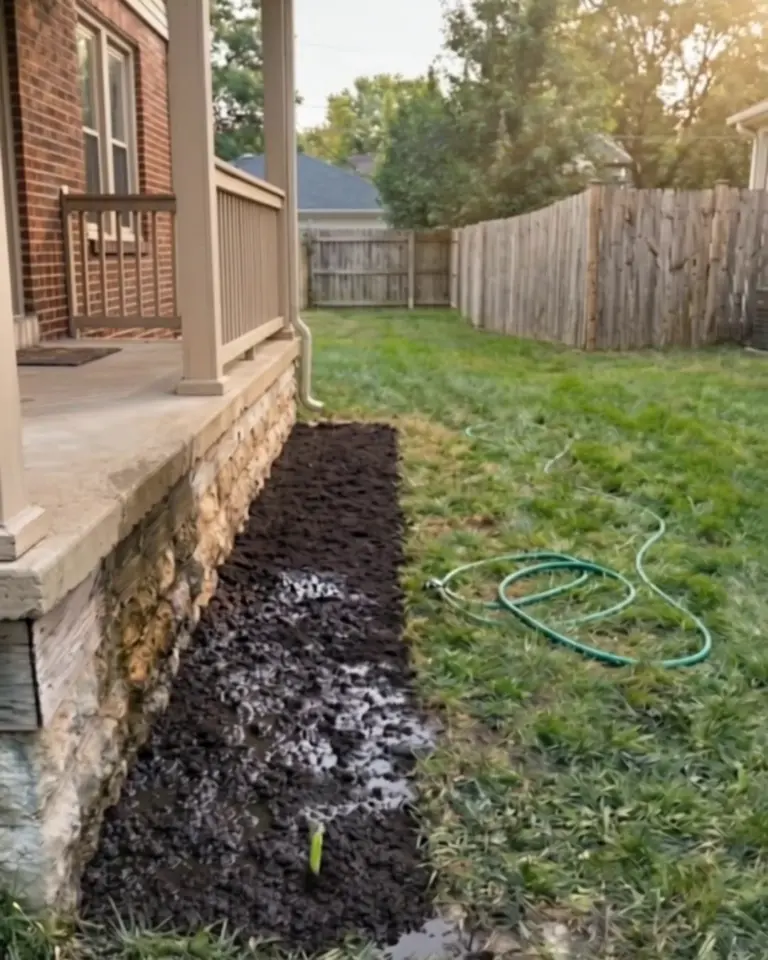
Step 6Pull every other one
At four to six weeks, when the shoots are pencil-thick, pull every other onion along each row of cells as a green onion. The ones left stand about 3¾ inches apart, the spacing Utah State’s vegetable guide gives for bulbs, 3 to 4 inches.
Pull them straight up after a watering, when the soil lets go easily. Use them like scallions; at this size the white ends are mild.
Step 7Feed and mulch
After thinning, side-dress the rows with a nitrogen fertilizer at the rate on the bag and water it in. A thin layer of straw between the onions keeps the soil moist and the weeds down.
Pull the straw back from the bulbs once they start to swell; they like their shoulders in the sun.
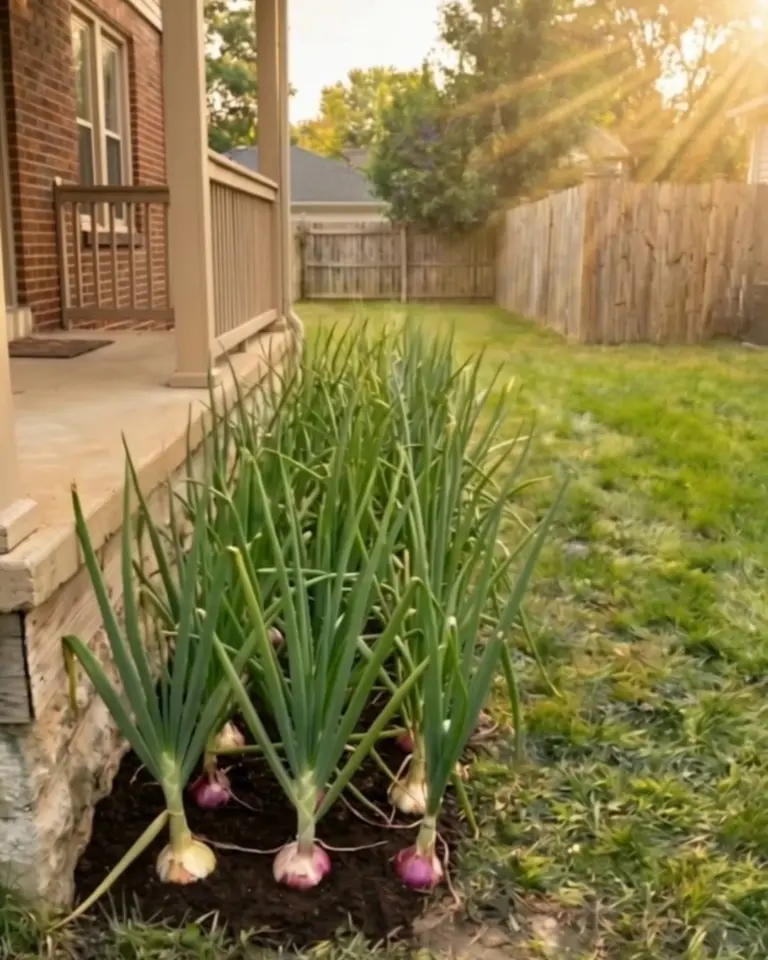
Step 8Harvest the bulbs
When most of the tops yellow and fall over, usually around three months in, pull the onions and lay them in a dry, shady spot. Two weeks there firms the skins for storing.
Stop watering once the tops start to fall. Dry soil helps the necks close.
How Onions in Egg Cartons Hold Up
The cardboard is gone by harvest, worked into the soil. Next season the strip needs only fresh flats and a little compost.
Weeds come up through the soil cover too, but between rows of onions they’re easy to spot and pull. Onion maggots build up where onions grew the year before, so give the strip a year of something else now and then.
FAQ
The onions came up crooked
They landed sideways in the cells. They still bulb; the crook straightens out as they grow, and a few stay a little bent.
My bulbs stayed small
Either they never got thinned or the strip is too shady. Thin to every other cell and give them at least 6 hours of sun; sets sold locally are also more likely to suit your latitude than mail-order ones.
Can I use seeds instead of sets?
Seeds are too small for the cells to space. Sets or transplants work, one transplant per cell; seed is better sown thinly in a row.
Do the cartons need to be soaked first?
No. The soil and the first watering soften them within days, and a soaked flat flops apart as you lay it.
Will this work for garlic?
We haven’t tried garlic this way. A clove needs about 6 inches of room, a lot more than one cell.
The foam cartons from the first trip are holding seed packets in the garage.
The neighbor took a dozen green onions and asked for more the next week. Nobody has mentioned the cardboard since.