When a pallet’s top boards sit tight together, a watermelon vine has nowhere to come up. The first one we dragged home went back to the curb.
You’ll also love: How to Build a PVC Pipe Vertical Garden on a Cedar Frame, How to Plant Onions in Egg Cartons Along the House Foundation, How to Build a Cinder Block Pyramid Garden in Four Tiers.
Our pallet watermelon garden is four standard 48 × 40 pallets with 2- to 3-inch gaps, laid flat over a 4-foot strip of soil along the house, with one ‘Sugar Baby’ plant under each.
A ripe melon on dry wood thumps lower than a green one, like knocking on a closed door instead of a cabinet. The slats stay warm in the evening long after the soil has cooled.
A neighbor asked if we were storing firewood. A few weeks later she asked for a melon.

What the Pallets Do for the Melons
A melon sitting on wet soil rots where it touches; on a slat it stays dry and clean. The wood also shades the soil, which holds water longer between waterings.
We expected to train the vines up through the gaps. They found the light on their own within a week.
The boards make the strip walkable, too, between the vines, and the soaker hose stays put underneath.
Materials & Tools
Not in the $120: the pallets, which most stores let go for free, and the gloves.
Which pallets: look for HT on the stamp, for heat-treated. Skip any marked MB, the fumigant methyl bromide, and any with no stamp at all; the UC master gardeners’ pallet guide walks through the codes.
Shady side: a strip with less than 8 hours of sun suits a path better than melons, like our white gravel garden path.
How many plants: one per pallet, 40 inches apart. More than that crowds the vines, and crowded vines set fewer melons.
Watch the Build
Step by Step
Step 1Work the strip
Pick a strip that gets at least 8 hours of sun; a north wall won’t do. Spread the compost 2 inches deep and fork it into the top 8 inches of soil, then rake it level.
Check the drainage while you’re at it: a 12-inch hole filled with water should empty in a few hours. If it still holds water the next morning, mound the strip higher with more compost.
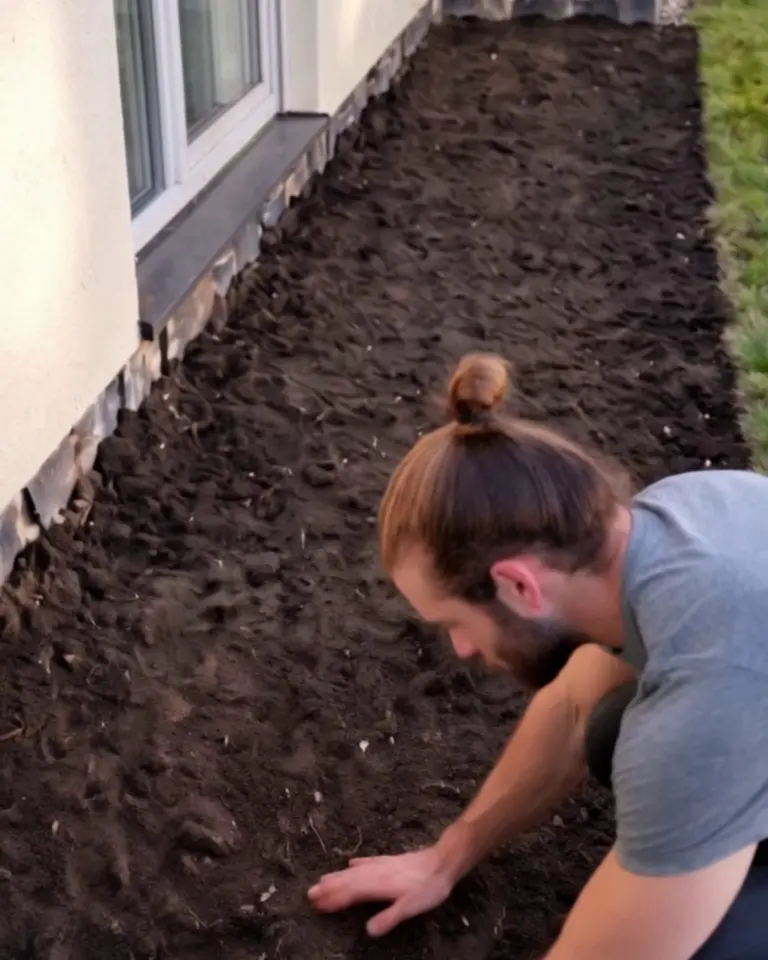
Step 2Mark the planting spots
Set each pallet in place for a moment and scratch a mark on the soil at the gap nearest its center, then move the pallets aside. Carry the seedlings out to the marks while they’re still in the tray.
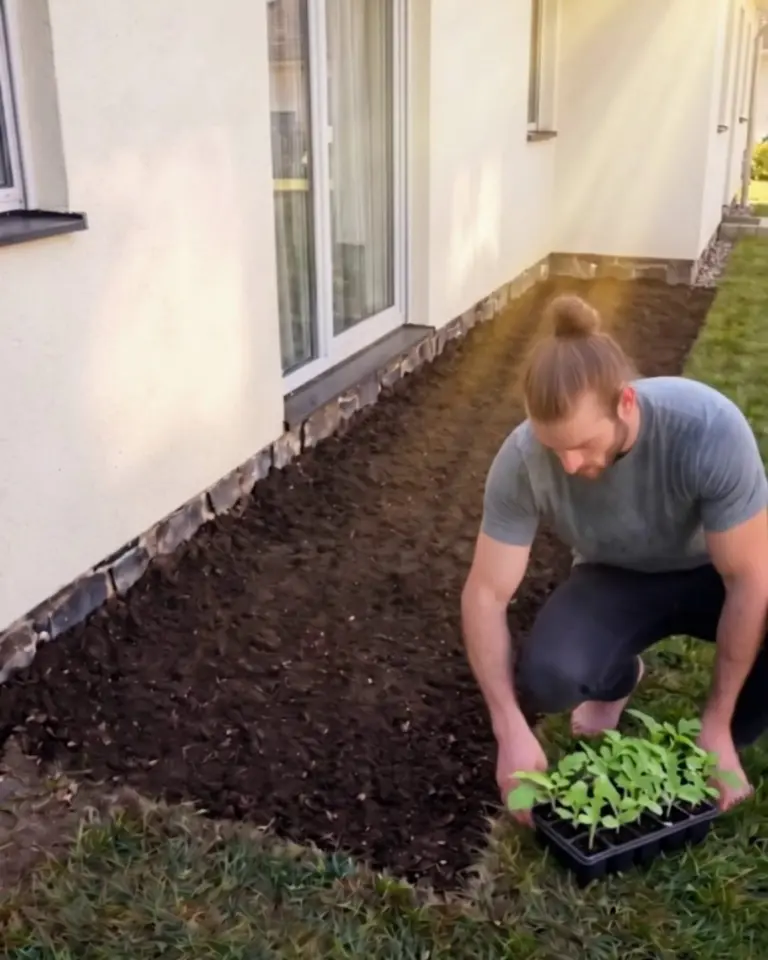
Step 3Plant under the gaps
Plant one seedling at each mark, 40 inches apart, at the same depth it sat in its pot, and water each one with about a quart.
Soil should be at least 70°F at planting; melons stall in cold ground.

Step 4Lay the hose and the first pallet
Run the soaker hose down the middle of the strip and back, pinning it every few feet; once the pallets go on, there’s no getting at the soil without lifting them. Lower the first pallet flat over its seedling so the plant sits in a gap, about 4 inches out from the house wall.
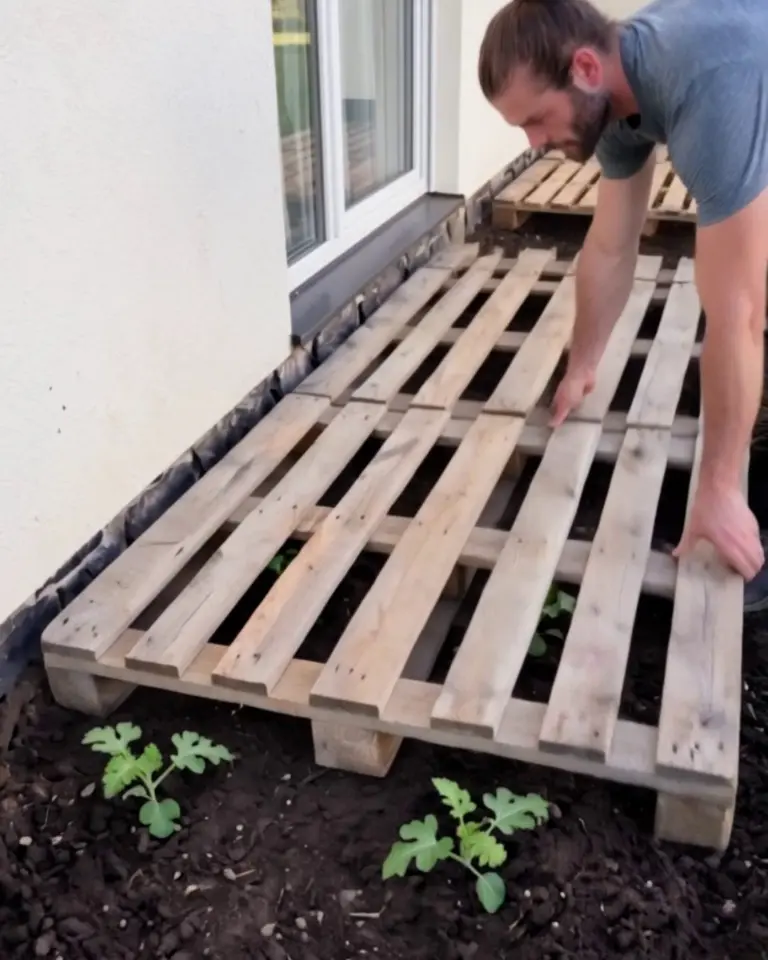
Step 5Cover the strip
Lay the other three end to end, the 40-inch sides butted together, until the strip is covered, about 13 feet in all. Step on each one to bed it down so it doesn’t rock.
Pallets vary by an inch or two, so line them up along the lawn side and let any gap fall against the wall.
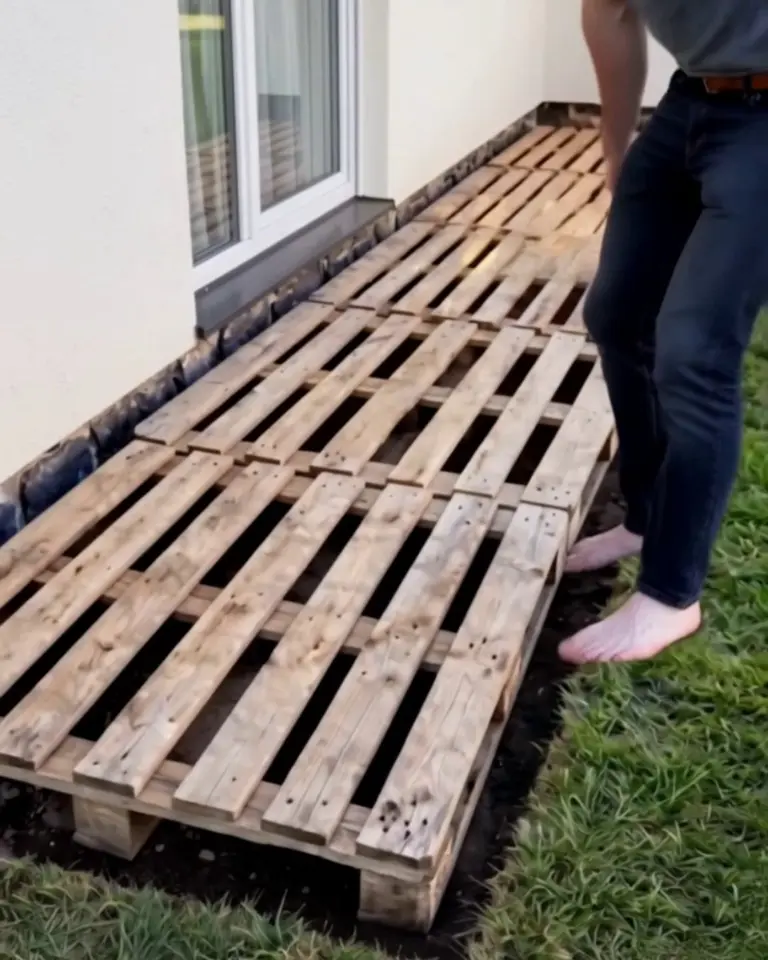
Step 6Let the vines come up
Water through the soaker hose, about an inch a week, more in a hot spell. Within a week the vines reach the light through the gaps and start running across the boards.
Weeds come up the same way and pull out easily through the gaps.
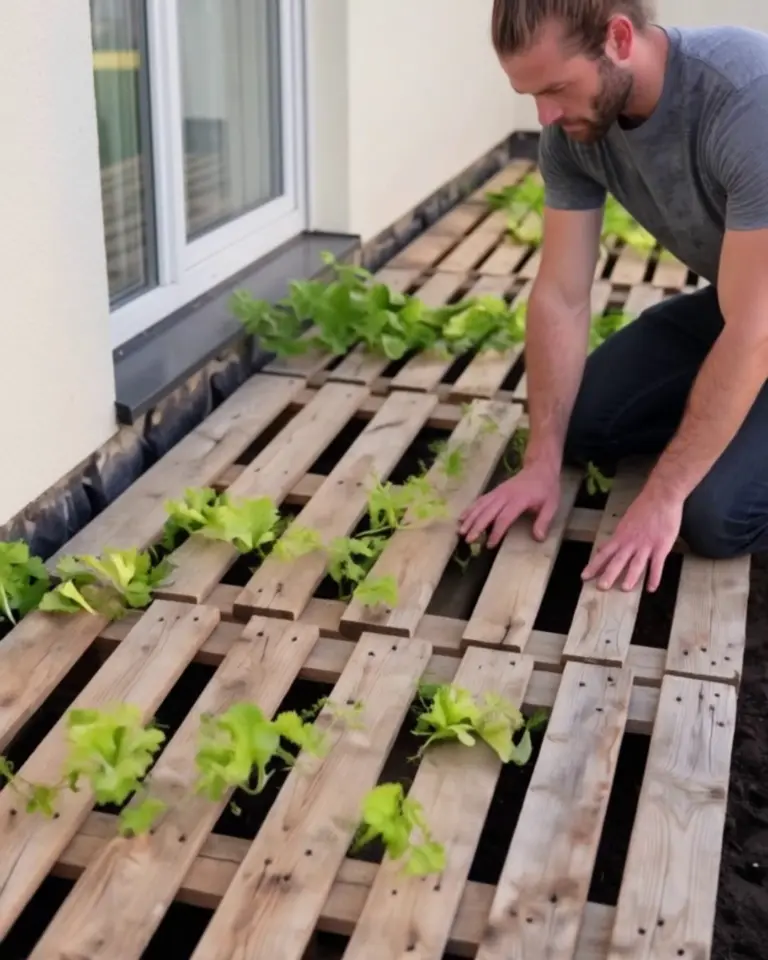
Step 7Keep the fruit on the wood
When melons start to swell, nudge any that set off the edge back onto the slats while they’re still small. Cut the water back by half in the last two weeks; the melons taste sweeter for it.
Each plant carries 1 to 3 melons. Once two have set, pinching off the later flowers puts the plant’s effort into those two.
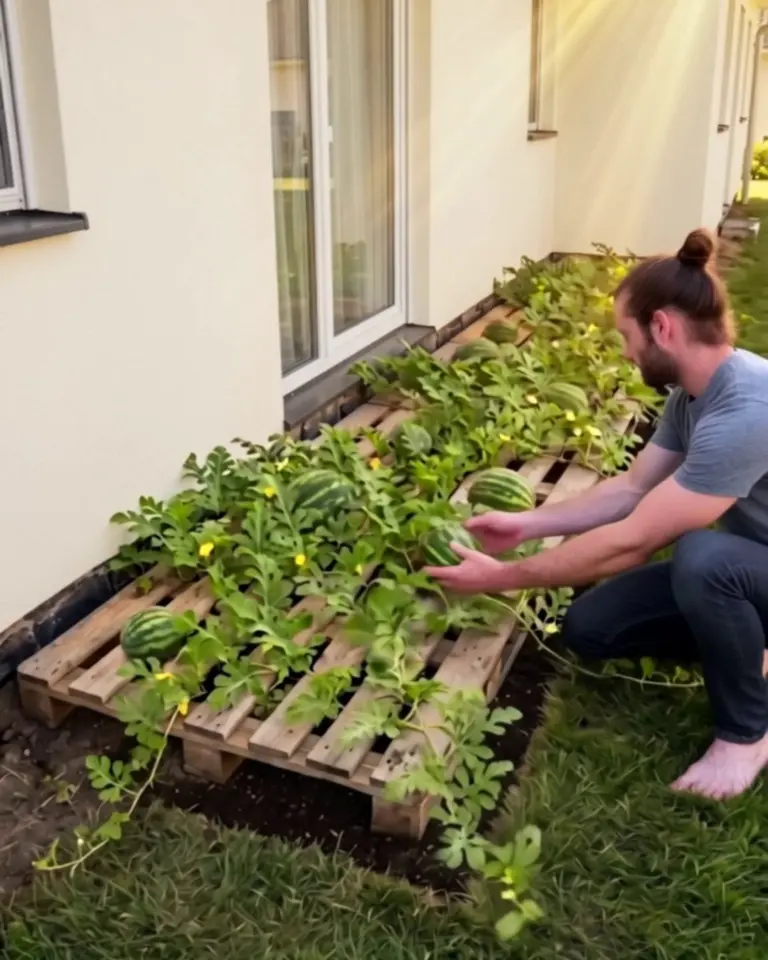
Step 8Pick them ripe
A ‘Sugar Baby’ is ready 75 to 80 days after planting, at 8 to 10 pounds, when the curly tendril nearest the melon has dried brown. Cut the stem with a knife; pulling tears the vine.
The patch where the melon rests also turns from white to creamy yellow. On the slats it still shows, just paler.
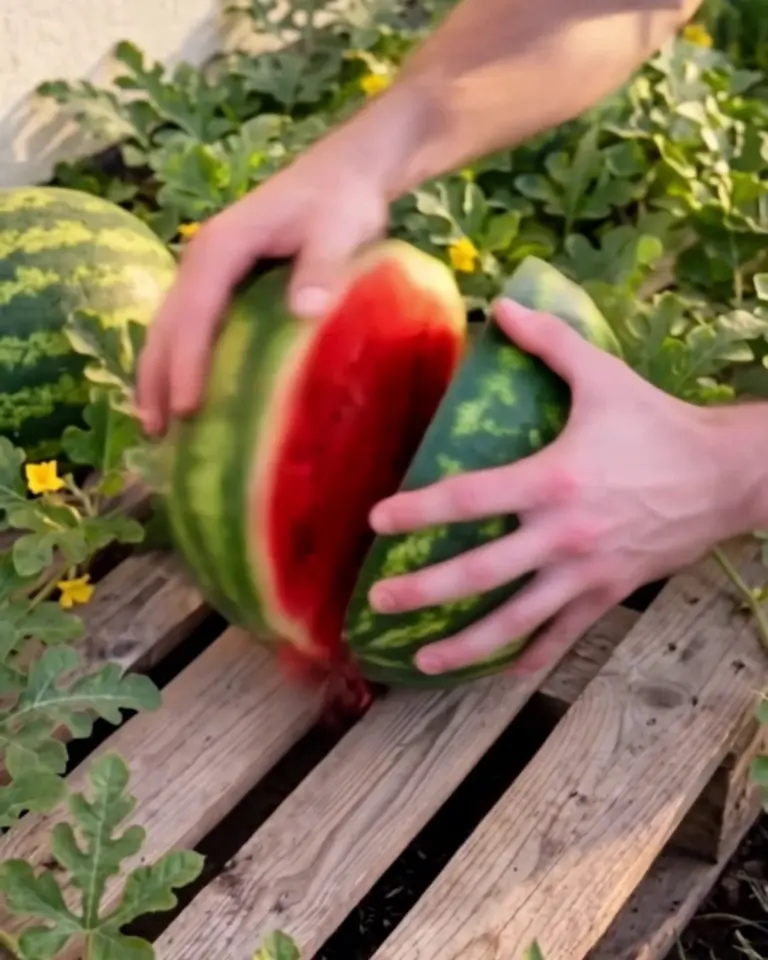
How a Pallet Watermelon Garden Holds Up
Pallets on bare soil rot from the bottom up, usually within two or three seasons, and the bottom boards go first. Pull them each fall to let the soil dry, and the next spring’s batch goes down fresh.
Keep them off the house siding; damp wood against a foundation invites termites.
FAQ
The vines aren’t finding the gaps
The plant ended up under a board. Lift that pallet, slide it a few inches so the plant sits in a gap, and set it back down.
Flowers but no melons
Early flowers are mostly male, and the female ones, with a tiny melon behind the petals, come a week or two later. If they keep dropping, bees aren’t getting to them; a small paintbrush moving pollen does the bees’ job.
Can I use a bigger variety?
Yes, but a 20-pound melon needs a sturdier board under it and more room than one plant per pallet. ‘Sugar Baby’ fits the slats.
Do pallets leach anything into the soil?
Heat-treated ones are just wood, which is why the HT stamp matters. Unstamped and MB pallets are the ones to skip.
Can I grow squash this way?
We haven’t tried squash under pallets. Pumpkins and winter squash run the same way, so the idea should carry over.
One melon grew half under the wall side of a pallet and came out flat on one face.
It tasted the same.