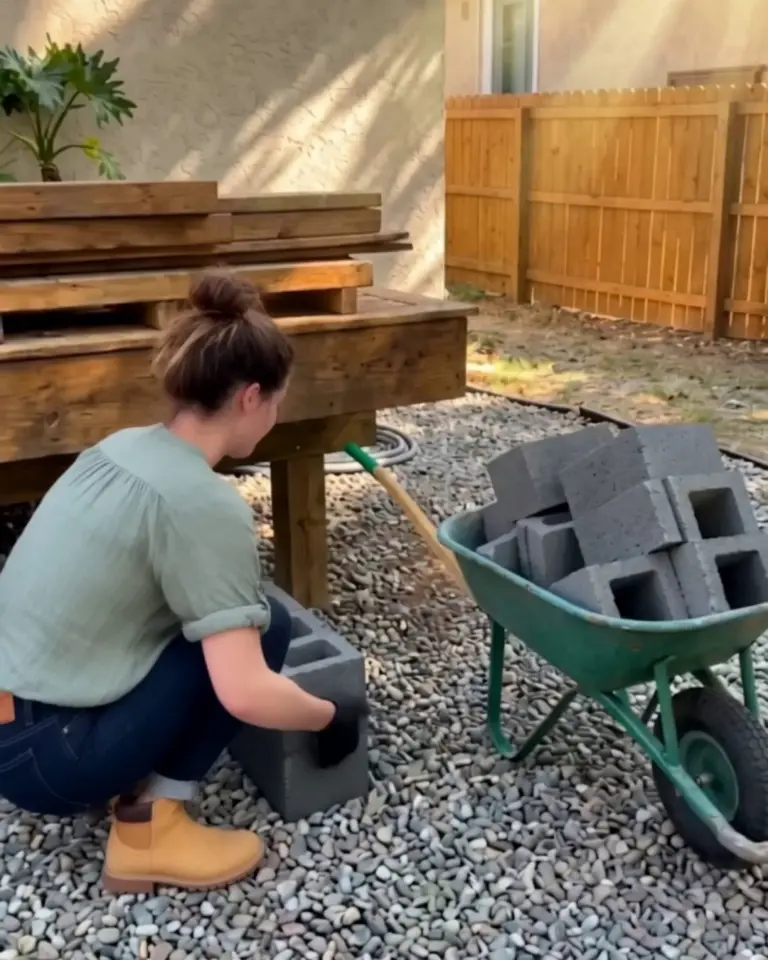
Tamping the gravel under the first course took longer than stacking every block above it. Twenty minutes with a hand tamper, and the first block still rocked on one corner.
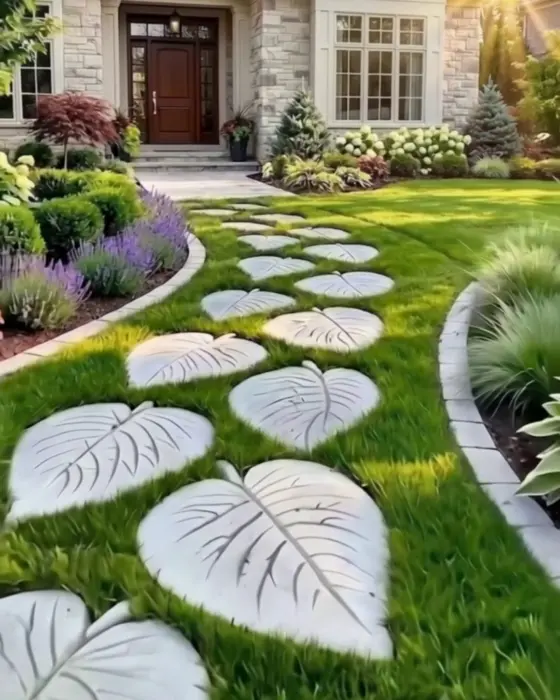
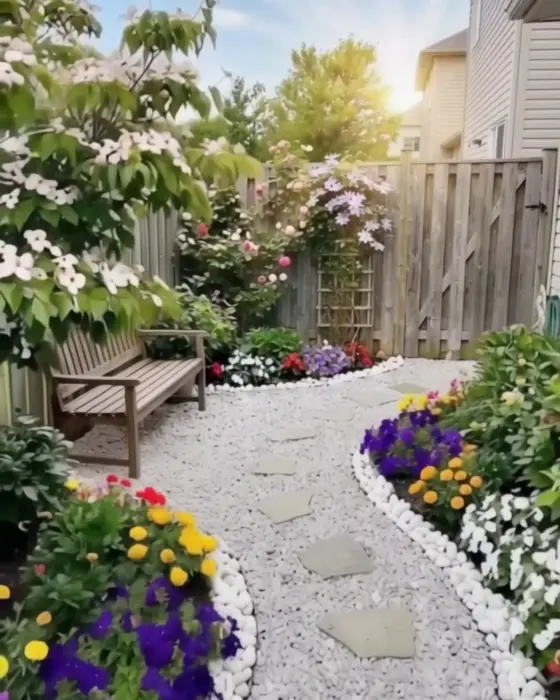
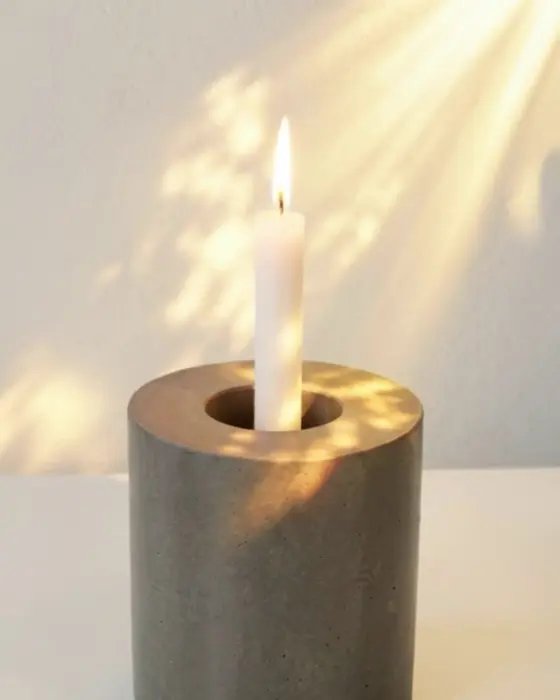
You’ll also love: How to Make Concrete Leaf Stepping Stones for a Garden Path, How to Lay a White Gravel Garden Path with River Rock Edges, How to Make a Concrete Candle Holder in a Plastic Bucket.
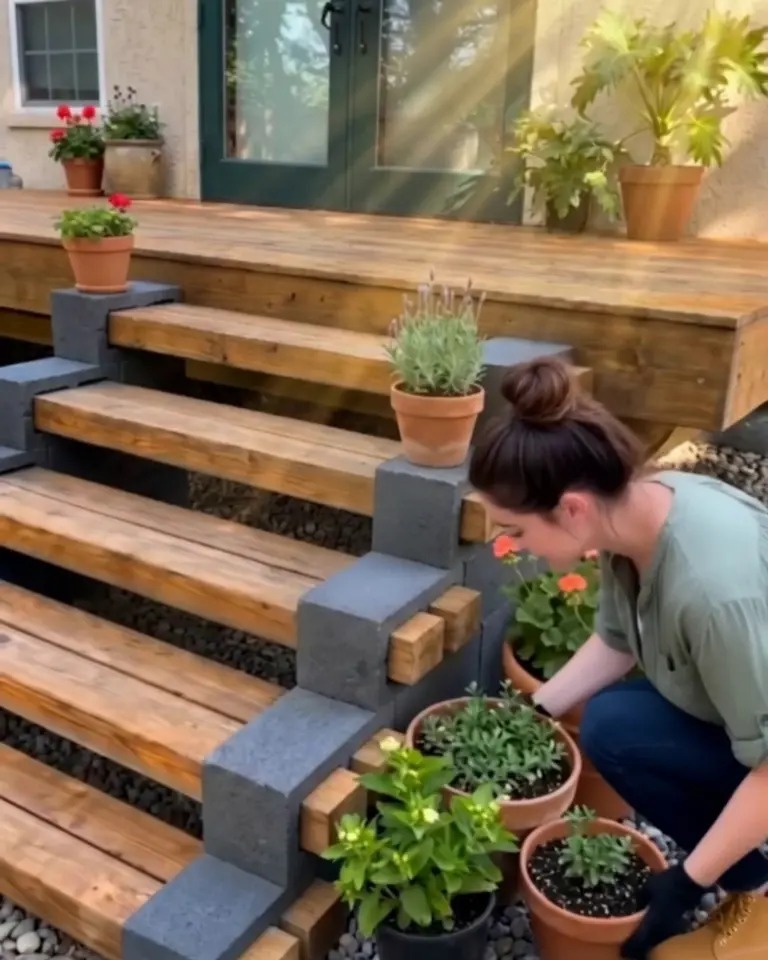
These cinder block garden steps climb from the gravel to a deck 30½ inches up in four even rises of 7⅝ inches, built from 30 blocks set without mortar and topped with cedar treads.
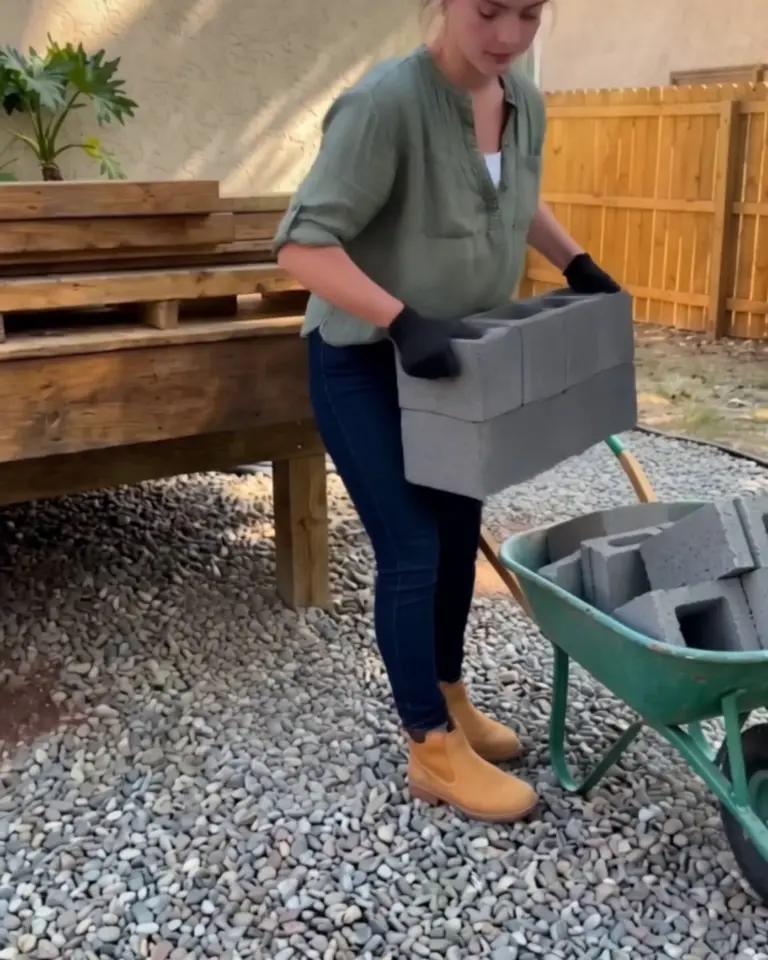
A concrete block dragged across gravel sounds like a shovel on a driveway. The wheelbarrow tire went flat on the eleventh trip.
A neighbor said they looked like something from a restaurant patio, then asked whether they’d hold her.
Why the Blocks Don’t Need Mortar
Nothing pushes sideways on a stair the way soil pushes on a retaining wall, so weight does most of the holding. A bead of landscape-block adhesive between courses keeps any one block from creeping.
We expected the cedar treads to look tacked on. Once the blocks were painted charcoal they faded into the shade under the deck, and the wood is all anyone notices.
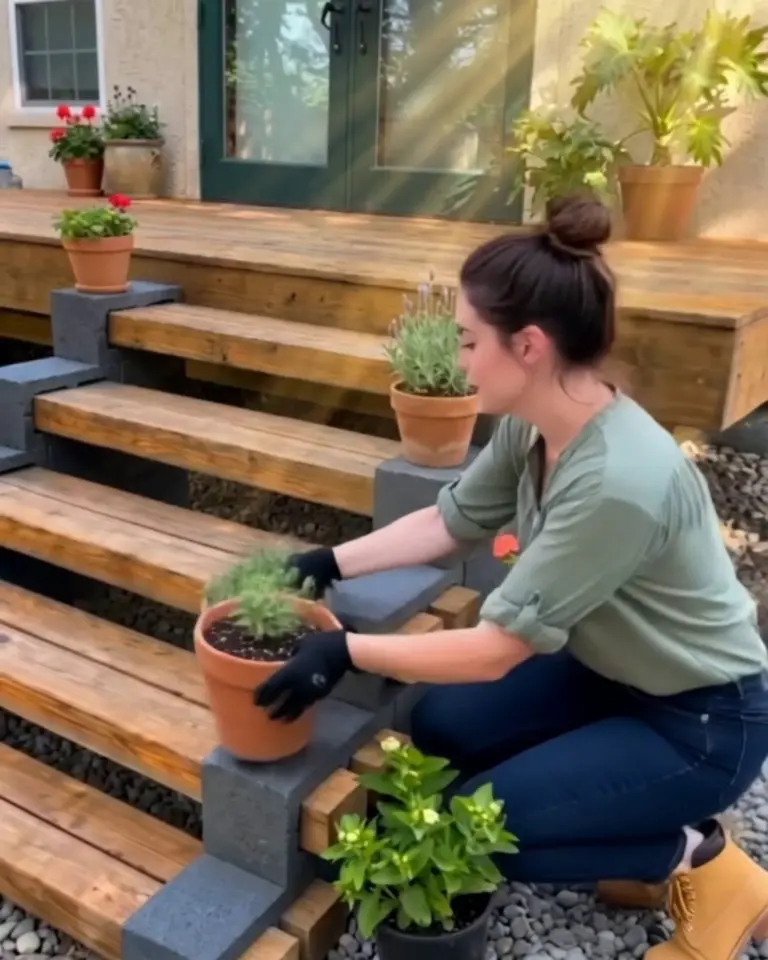
Pots fit on the 15⅝-inch treads with room left to walk.
Materials & Tools
Not in the $280: the pots and plants, the tamper, the level, the gloves and a little wood sealer for the cut ends.
Rise and run: each step rises one block, 7⅝ inches, and runs one block length, 15⅝ inches, inside the limits most codes set for stairs to a deck: a 7¾-inch rise and a 10-inch tread (one city’s stair handout quotes both). Four risers or more usually means a handrail on one side, too.
Same blocks, different job: these are the 8 × 8 × 16 blocks our cinder block pyramid garden stacks into planting tiers.
Watch the Build
Step by Step
Step 1Dig and tamp the base
Mark three strips at the foot of the deck, each 8 inches wide and 64 inches long, running straight out from the deck: one at each side and one down the middle.
Dig them 5½ inches deep, add 4 inches of paver base in two layers, and tamp each layer until the tamper bounces. The base ends up 1½ inches below the gravel.
Step 2Lay the first course
Set four blocks end to end on each strip, the first one against the deck. The base sits 1½ inches low on purpose, the thickness the treads will add on top.
Level each block both ways before the next one goes down.
Set the course at grade instead and the bottom step comes out 1½ inches taller than the rest, which is exactly the step people trip on.
Step 3Stack the steps
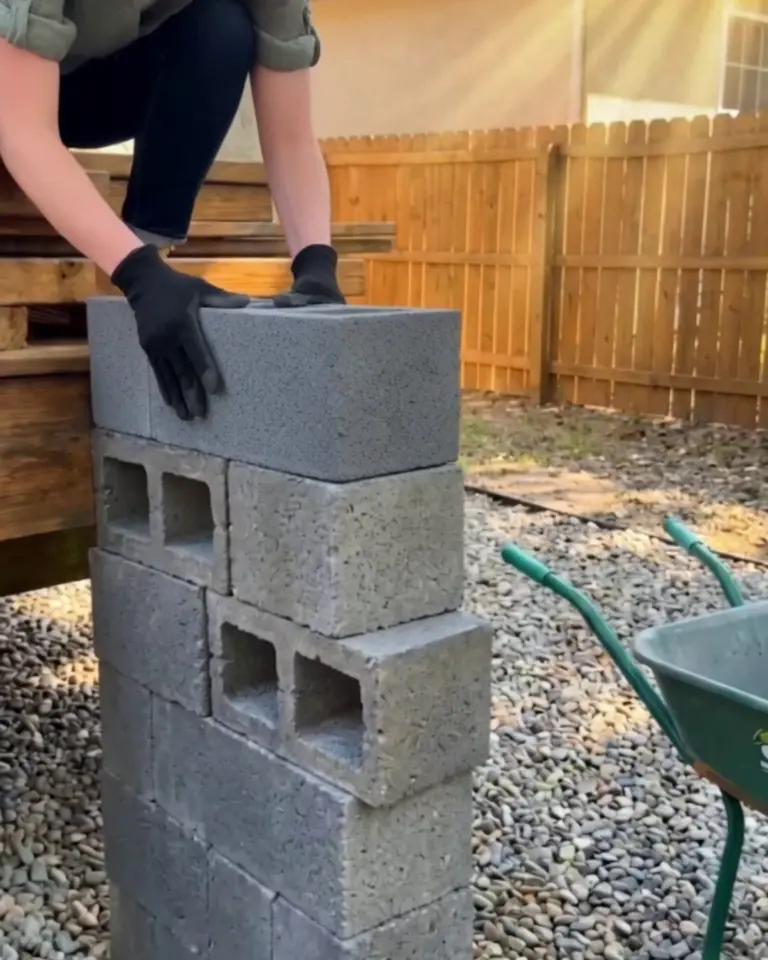
Run a zigzag bead of adhesive along each block and stack the next course one block shorter at the front: three, then two, then one, against the deck. Each stack ends up as a staircase of its own, 10 blocks.
Wipe off adhesive that squeezes out before it skins. Under paint, a lump shows.
Step 4Check the three stacks together
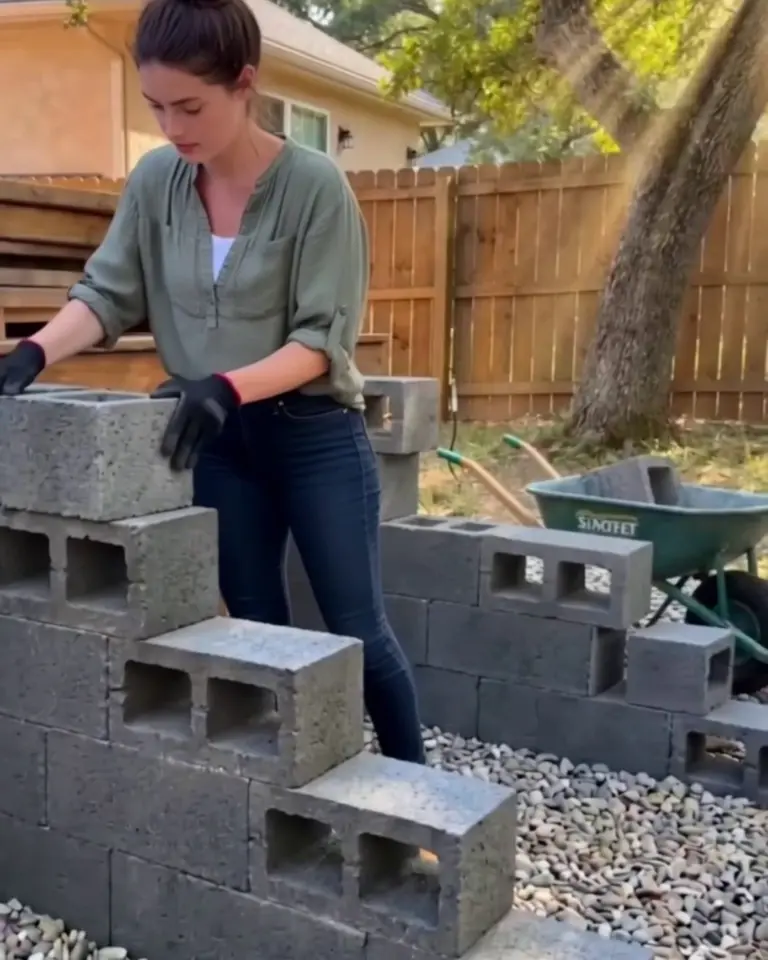
Lay the level across all three stacks at every step. The middle stack carries the treads at their center and has to match the sides within ⅛ inch; shim a low block with a sliver of slate under it before the glue sets.
Step 5Paint the blocks
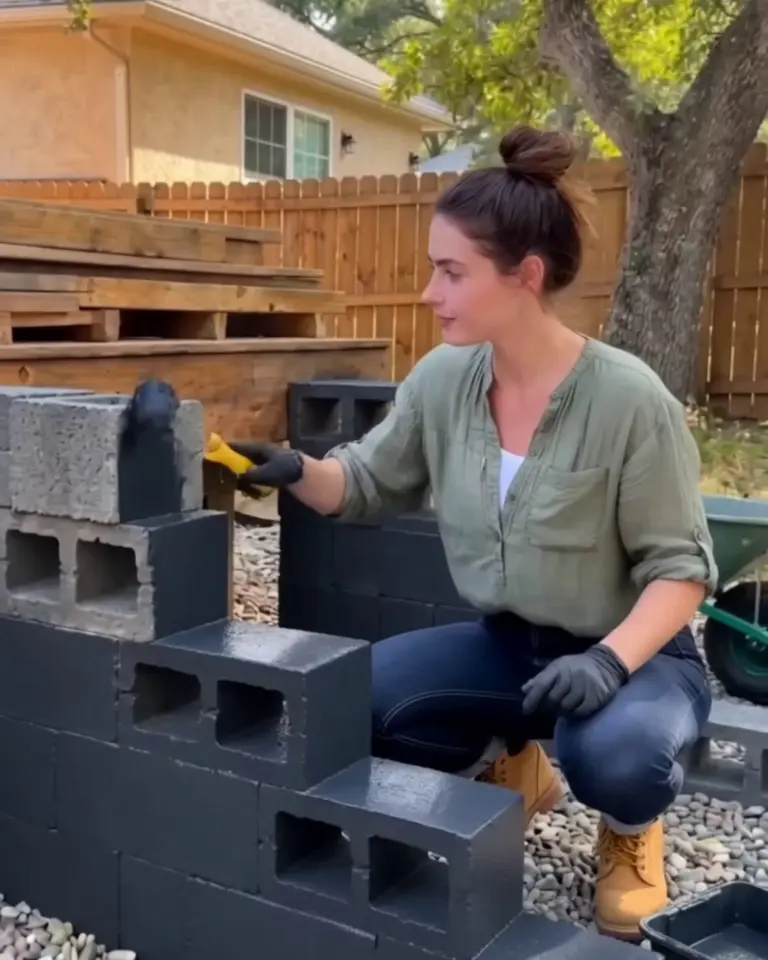
Brush the charcoal masonry paint over every face that shows, working it into the rough texture. Two coats, 4 hours apart.
Paint before the treads go on; cutting in around the wood afterward takes three times as long.
Step 6Cut the treads
Cut each 2 × 8 in half, for eight boards 48 inches long, and lay two per step, covering the blocks from side to side with about an inch to spare at each end. Brush exterior wood sealer on the cut ends so they don’t drink water.
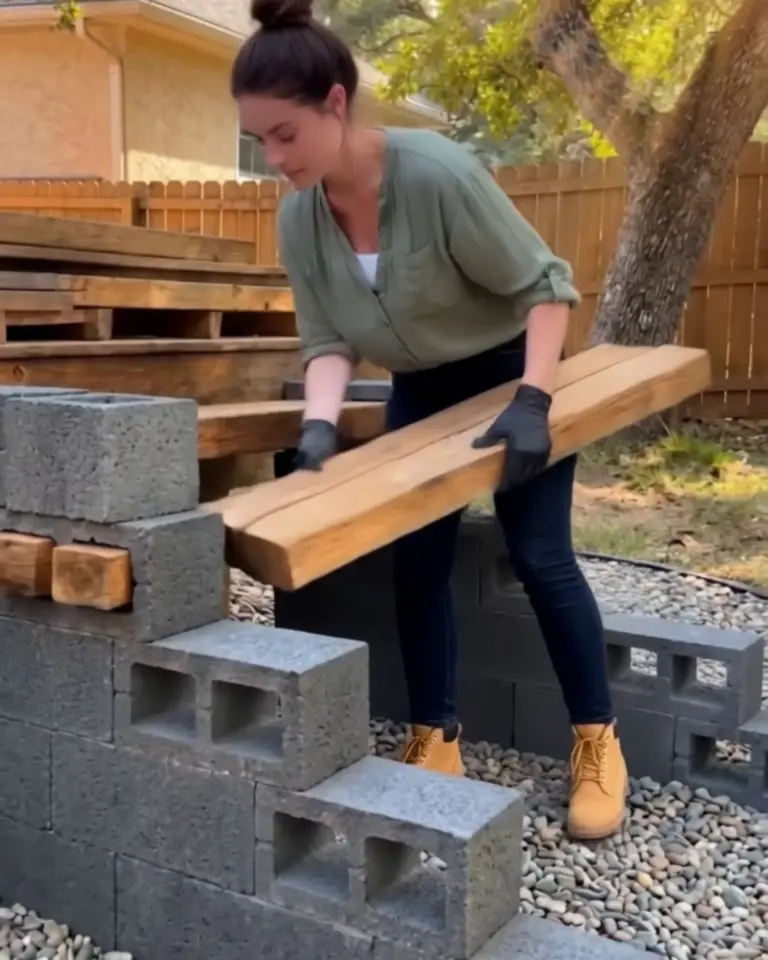
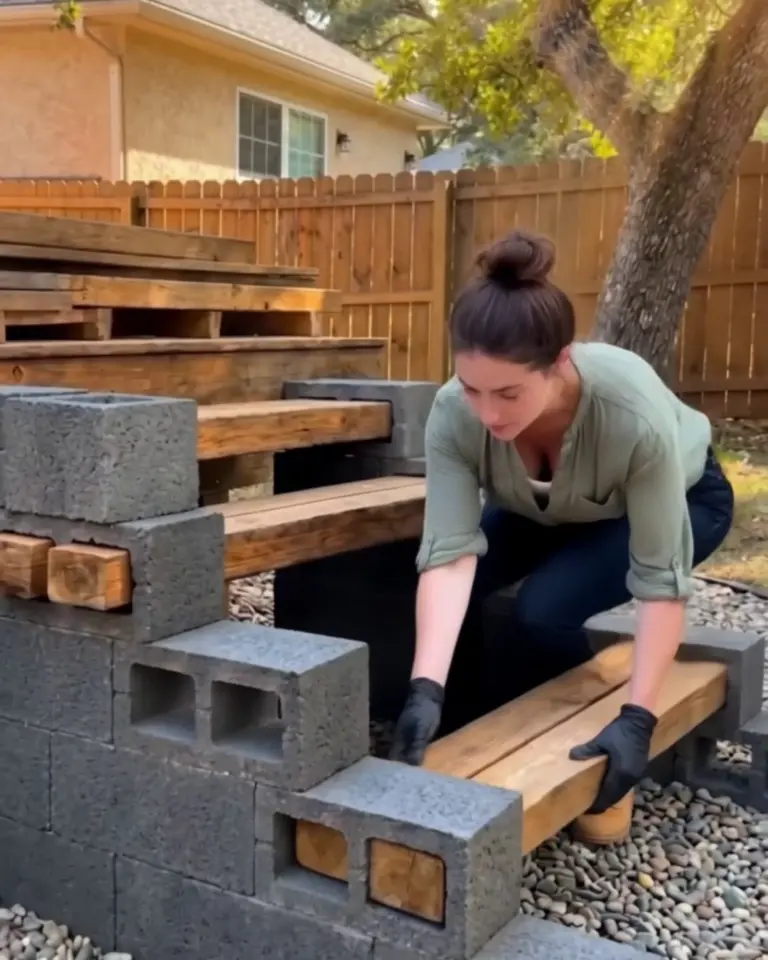
Step 7Set the treads
Run two beads of adhesive along the top of each stack and press the boards down, front board overhanging the riser by about an inch. Leave a ¼-inch gap between the two boards on each step so rain runs through.
Give the glue a full day before anyone climbs.
Step 8Add the pots
Line the pots along one side of each tread and leave the other side clear for walking. The two lowest steps take the heaviest pots, and saucers under them keep the cedar from staining.
How Cinder Block Garden Steps Hold Up
The treads go first. Cedar grays and starts to check at the ends after a few years outside, and a board that splits gets replaced without touching the blocks.
The paint chips at the front edges where shoes hit, and a touch-up each spring covers it.
FAQ
One tread rocks when I step on it
The three stacks aren’t level at that step. Lift the board, add a thicker bead of adhesive on the low stack or shim it, and weigh the board down overnight.
My deck is higher than four blocks
Add a course and a step for every 7⅝ inches of height, with one more block on each stack’s bottom course. Past four risers, plan on a handrail; many towns require one.
Can I use pressure-treated boards?
Yes, and they’ll outlast cedar; buy boards rated for ground contact if they’ll sit near wet gravel. They take a few months to dry before they’ll hold a stain.
Do the hollow blocks need filling?
Not for a stair this size. The adhesive and the weight above keep them in place.
Could I build this on a lawn?
We haven’t built one on grass. Sod settles unevenly under weight, which is what the 4 inches of tamped paver base is there to stop.
The first block, the one that rocked, sits at the bottom left with a sliver of slate under one corner.
Nobody has noticed, including the neighbor who asked whether they’d hold her.