Measure a block before you buy thirty of them. The 8 × 8 × 16 on the shelf tag is really 7⅝ × 7⅝ × 15⅝ inches, and each tier of a cinder block pyramid garden steps in by exactly one cell of that, 7⅝ inches a side.
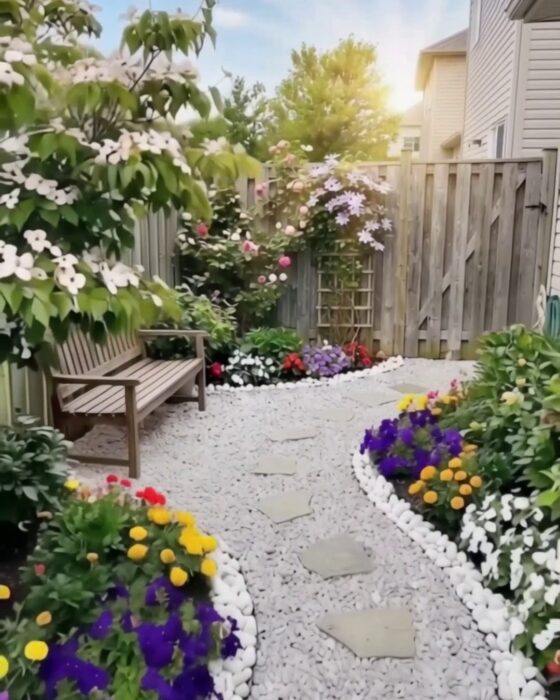
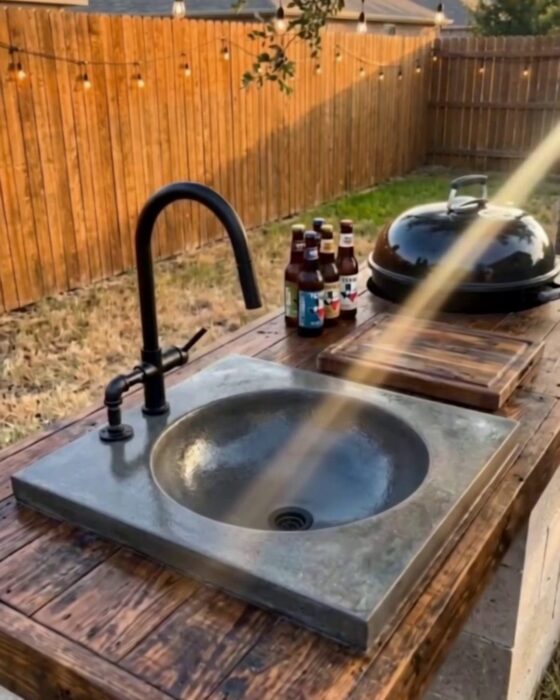
You’ll also love: How to Make Draped Concrete Planters Over Nursery Pots, How to Lay a White Gravel Garden Path with River Rock Edges, How to Make a Concrete Outdoor Sink with a Basketball Mold.
Plan it in round 8s and the second tier hangs a little over the cells it should leave open. By the crown it’s off by more than an inch.
Our first wagon load tipped on the slope by the patio. Two blocks lost a corner each.
Dry blocks squeak when they slide against each other, like chalk on a board. The neighbor asked if we were building a temple for slugs.
Why a Stepped Block Pyramid Stands Without Mortar
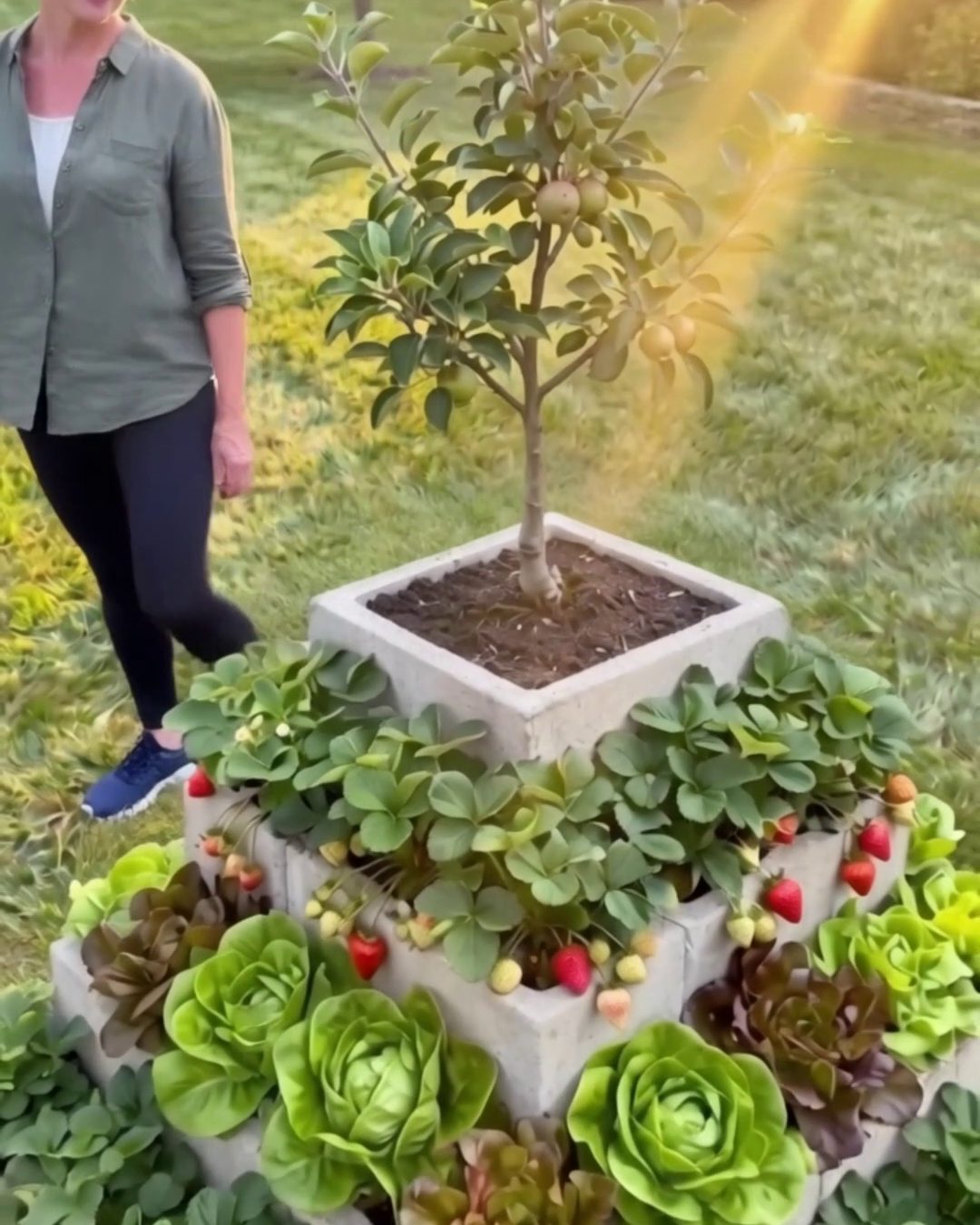
Every block above sits squarely on blocks below, and the cells of each tier line up with the cells under them. Nothing hangs over an opening, so nothing tips.
That alignment also means the soil in the middle runs deep. The cells around the second tier are two blocks deep, about 15 inches, and the top cells three.
We expected the corner cells of the bottom tier to be the poor ones, cut off and shallow. The strawberries there sent out runners first.
Materials & Tools
The crown block: a half block, not a full one. A full block on top covers two of the four top cells and sits off center.
Where it goes: full sun, six hours or more; on ours the south face ripened about a week ahead of the north. Strawberries in shade make leaves instead of fruit, so a shady side yard is better spent on something like a white gravel garden path.
Not in the $135: the plants and the tools. Twenty strawberries cost about $20 as a bare-root bundle or well over $100 in pots, and the lettuce and tree come on top of that.
Watch the Build
Step by Step
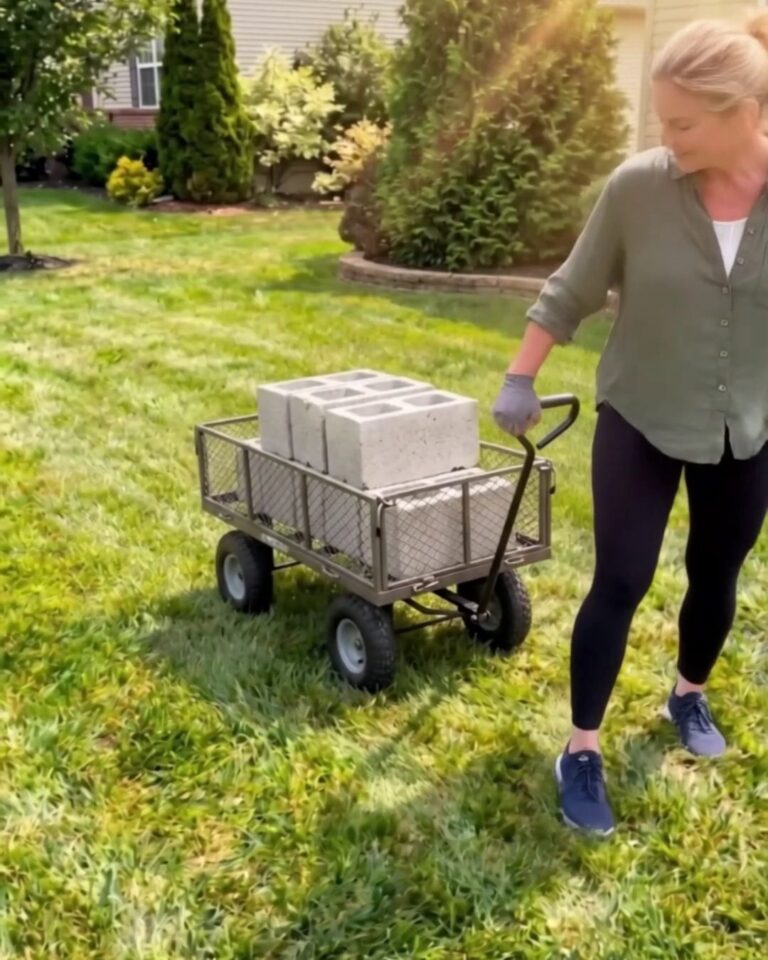
Step 1Haul the blocks
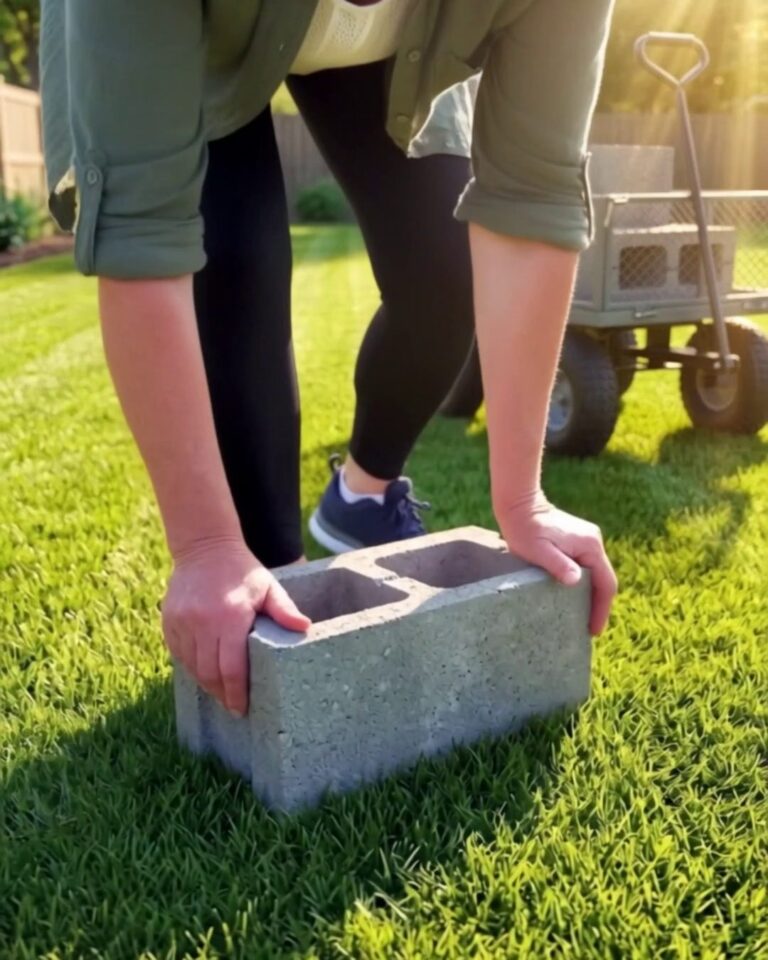
Twenty-eight blocks and the half block weigh about 1,000 pounds, six wagon loads of five or so. Lift them by the hollows, not the edges, and keep a full wagon off slopes.
Step 2Make a flat pad
Scrape the grass off a 54-inch square and tamp the dirt with your feet. Spread about ¾ inch of sand and drag the 2×4 across it until the level reads flat in both directions.
Grass compresses unevenly, and a lean of ⅛ inch at the bottom is easy to see by the top tier.
Step 3Lay the bottom tier
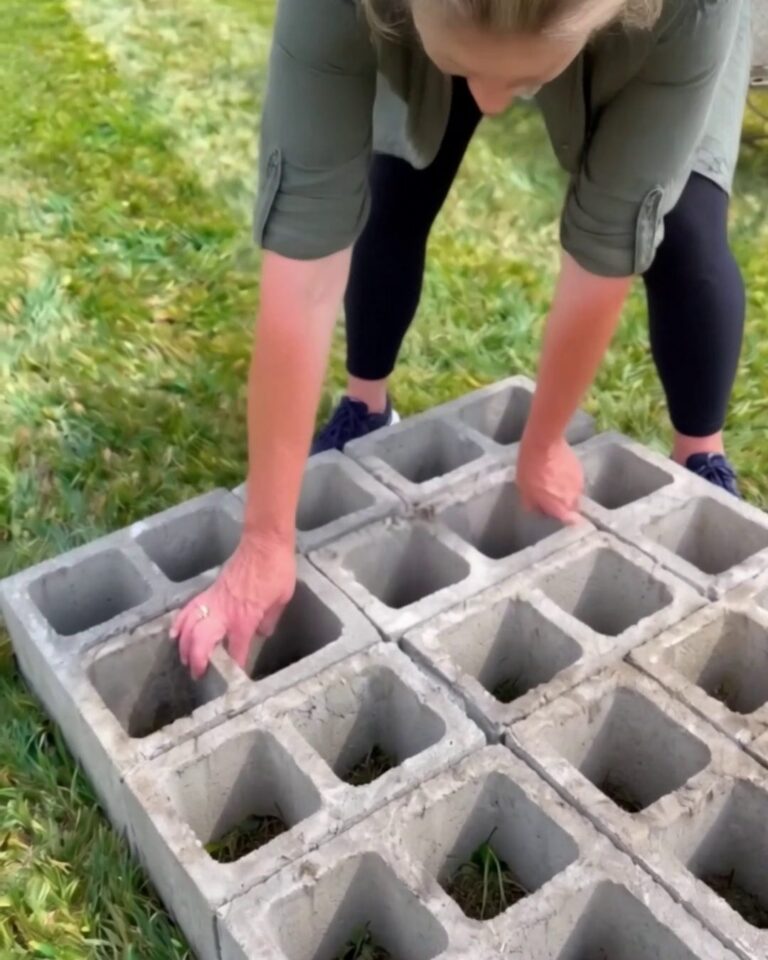
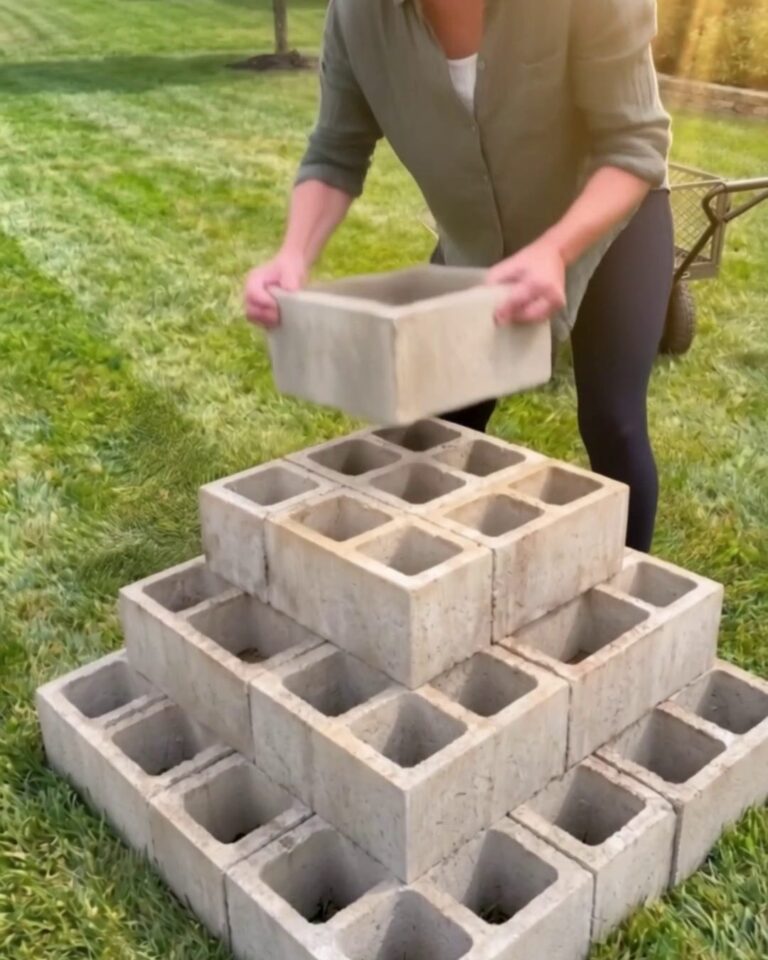
Set 18 blocks in six rows of three, hollows up and ends touching, for a square about 47 inches on each side with six cells by six. Tap each block down with the mallet and check every row with the level.
Step 4Stack the second tier
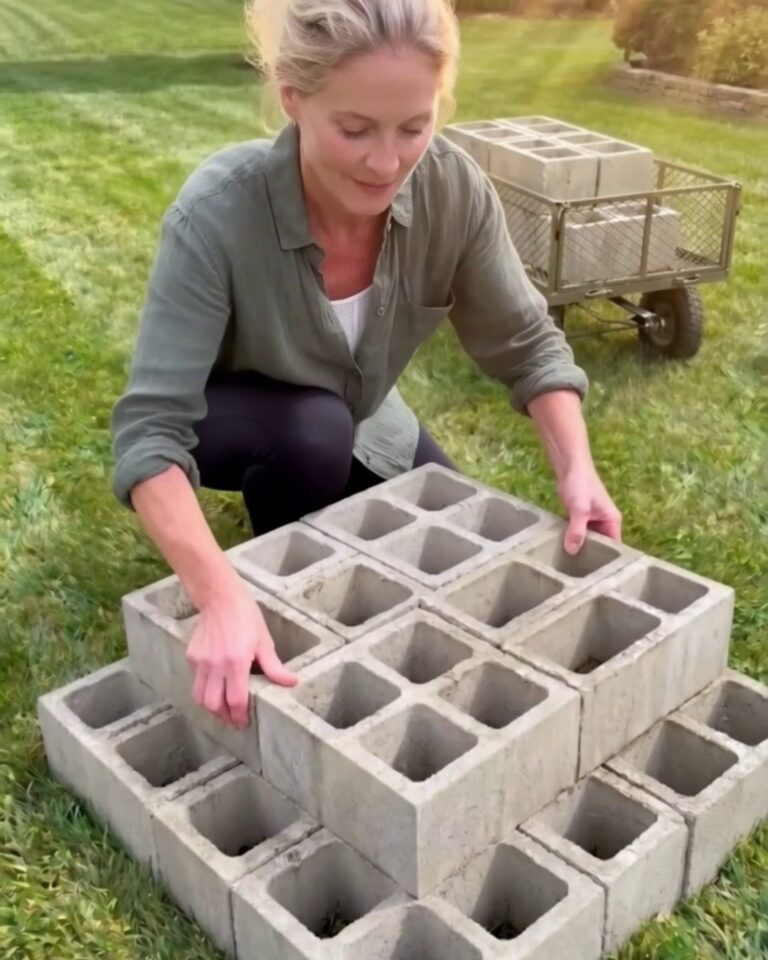
Center 8 blocks in four rows of two on top. They should step in exactly one cell on every side, leaving a ring of 20 open cells around the bottom tier.
Look down through the second-tier cells: you should see the cells below, not the solid web between them. If you see web, the tier is shifted.
Step 5Add the third tier and the crown
Set 2 blocks side by side in the middle of the second tier, again one cell in, then the half block centered on top. The pyramid now stands 30½ inches tall.
Step 6Fill the cells
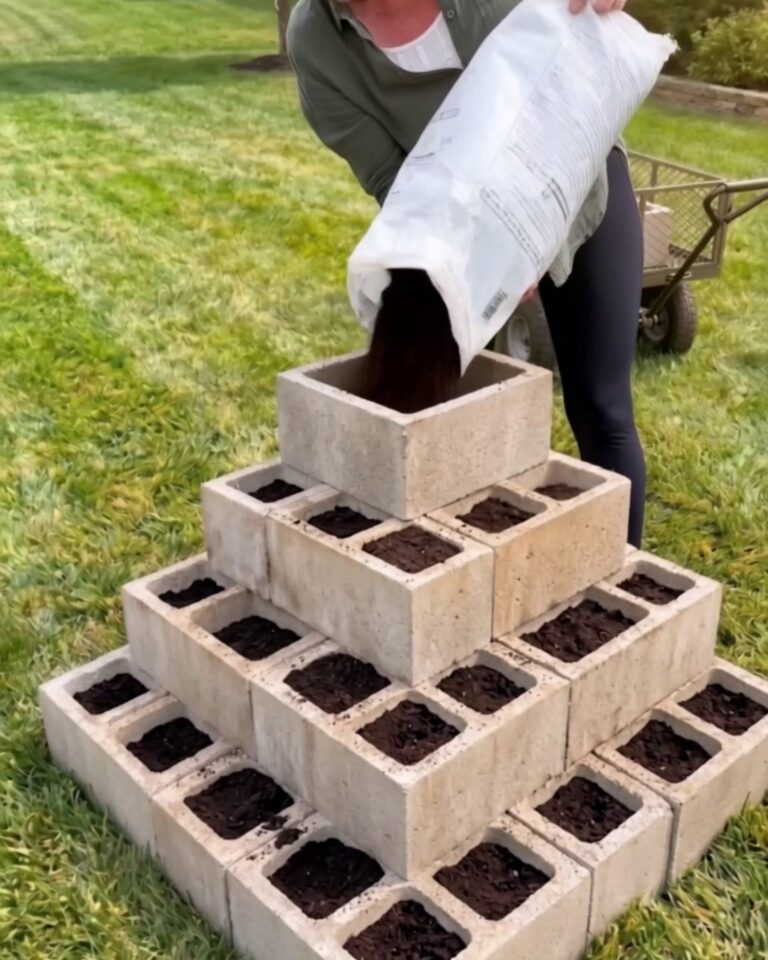
Pour soil into every open cell, top tier first so it fills the deep columns in the middle, and push it down with your fingers. All 57 cells together take about 7 cubic feet.
Water slowly until it drains out the bottom, let it settle overnight, and top up whatever sank.
Step 7Plant the strawberries
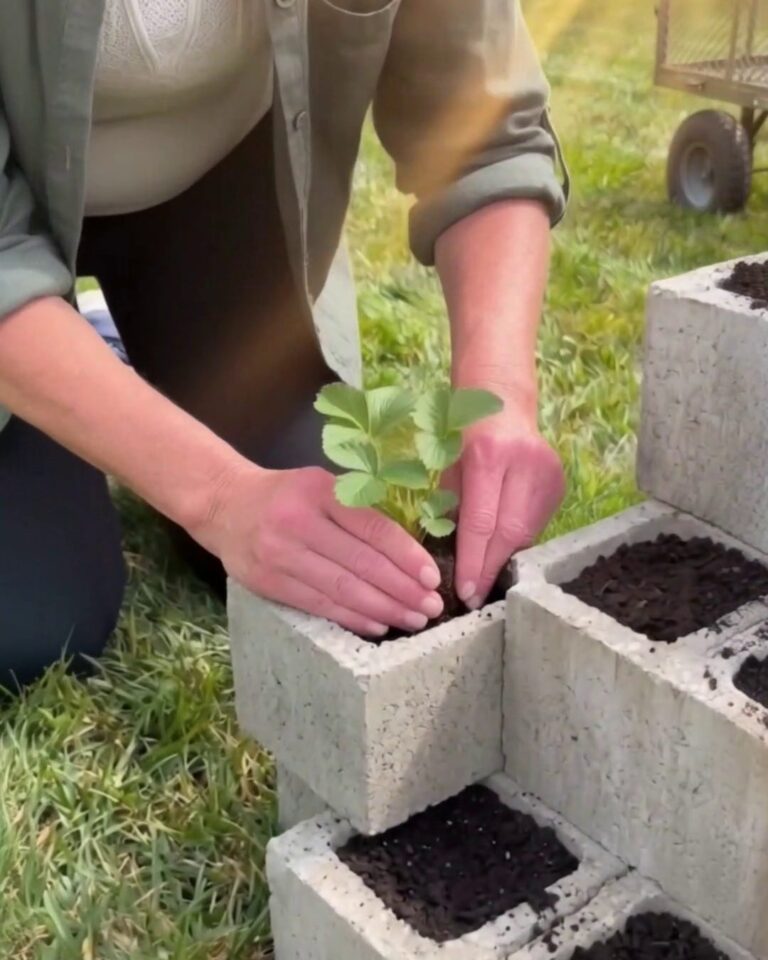
One strawberry per bottom-tier cell, 20 in all, with the crown sitting exactly at the soil line. Buried crowns rot; crowns left high dry out.
Step 8Plant the lettuce
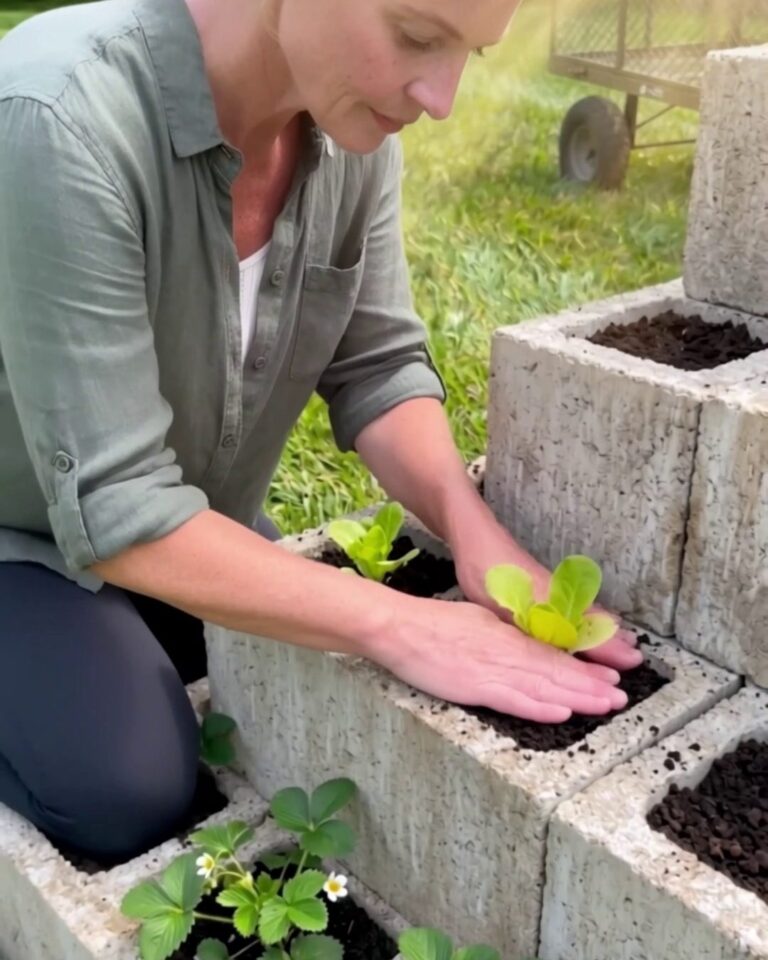
Twelve starts around the second tier and four in the third. Lettuce bolts fast in a hot cell, so the side facing the afternoon sun is the one you’ll resow first.
Step 9Plant the tree
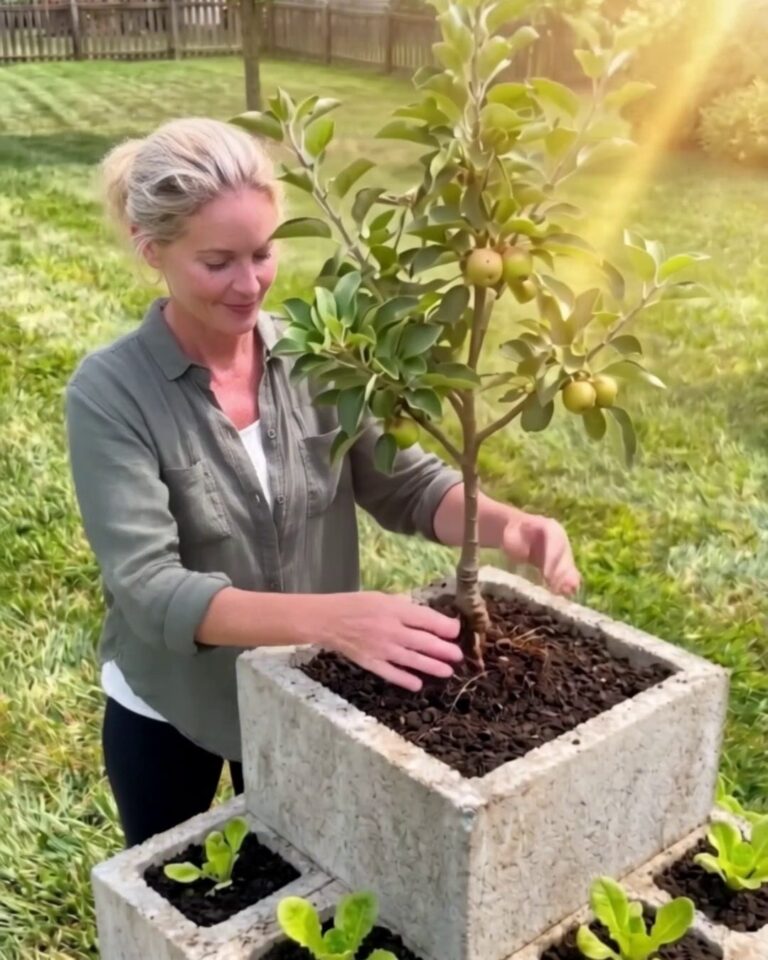
The crown cell opens only about 5 inches square, smaller than a 1-gallon root ball. Tease the outer roots loose, work the ball down into the cell and pack soil around the trunk.
Water it slowly; dry concrete beside wet soil pulls moisture out of it for the first few days.
How a Cinder Block Pyramid Garden Holds Up
The blocks will outlast everything planted in them. The small cells dry fast, though, and in midsummer the top tiers want water every day.
The tree is the part that doesn’t last: its cell holds under a gallon of soil, so it moves to the ground or a half barrel after one season.
FAQ
The second tier wobbles when I lean on it
The base isn’t flat. Lift the high block, scrape out a little sand and tap it back down until the level reads flat both ways.
Soil washes out of the cells every time I water
Pack it firmer and water with a gentle rose on the can, not a hose. A pinch of shredded mulch over each cell slows it down too.
Can I use the smaller 6-inch blocks instead?
The layout works the same, one cell in per tier, but every cell holds about half the soil. We haven’t grown strawberries in cells that small.
Are concrete blocks safe for growing food?
Modern blocks are sand, gravel and cement. Very old ones made with coal ash are a different story, so if yours came out of a barn with no label, use them for flowers.
What happens to it in winter?
The blocks don’t care about frost, and the lettuce is done. Strawberries in the bottom tier usually come back under a few inches of straw, though the corner cells freeze hardest.
The first ripe strawberry showed up on the north corner, the cell nobody expected much from.
A robin got it about an hour before we did.