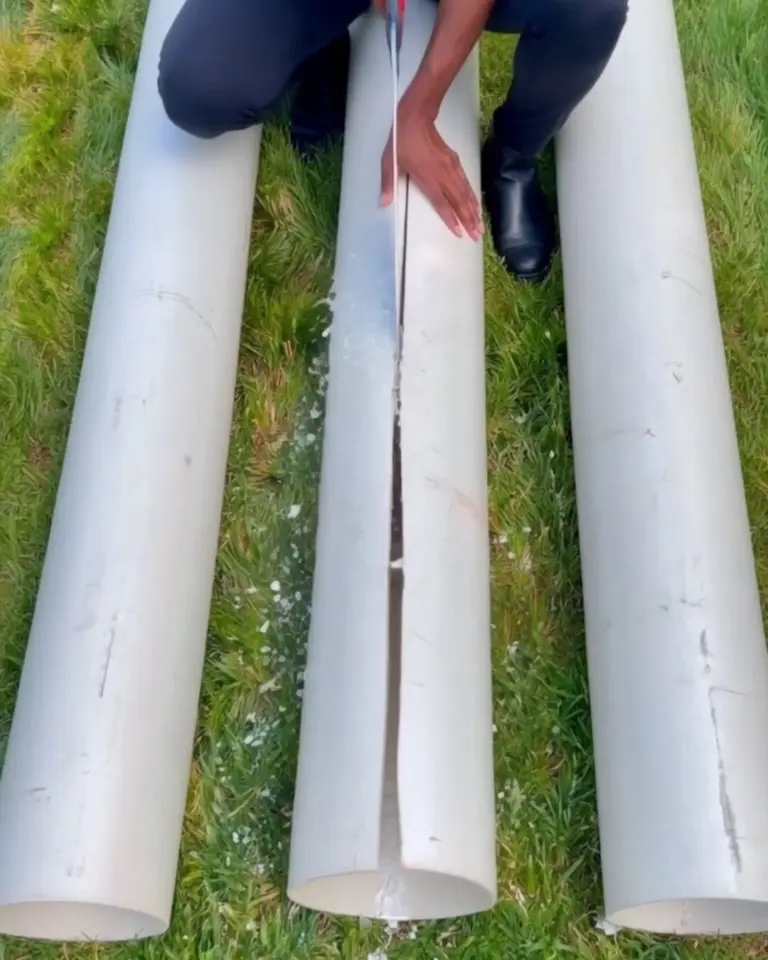
The first 5-foot cut went wrong: the jigsaw ran so fast that the PVC melted and welded itself shut behind the blade. Slower speed, second try, clean edge.
You’ll also love: How to Build a Cinder Block Pyramid Garden in Four Tiers, How to Make Concrete Leaf Stepping Stones for a Garden Path, How to Make Concrete Mushroom Garden Stakes in Eggshells.
Plastic shavings cling to everything by static, gloves and shoelaces included, and they smell like a hot extension cord when the blade heats them.
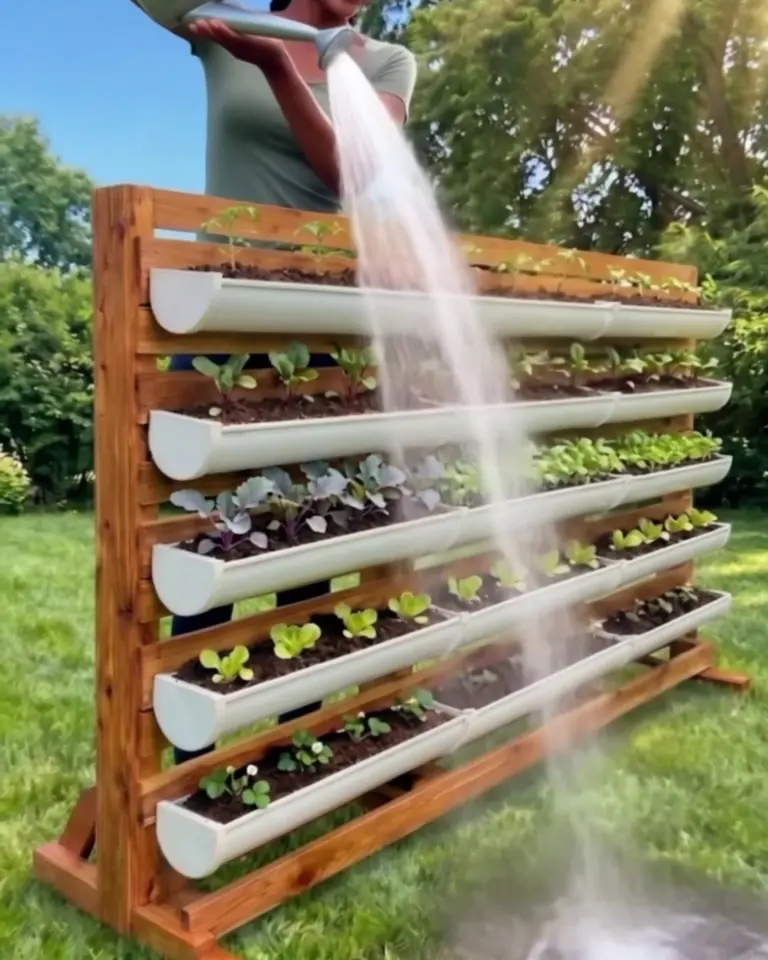
Our PVC pipe vertical garden is six of those half-pipes, each 5 feet long, hung in rows on a cedar frame 6 feet tall. Strawberries fill the bottom row and lettuce the middle.
A neighbor said it looked like the gutter aisle at the hardware store. Then asked when the strawberries would be ready.
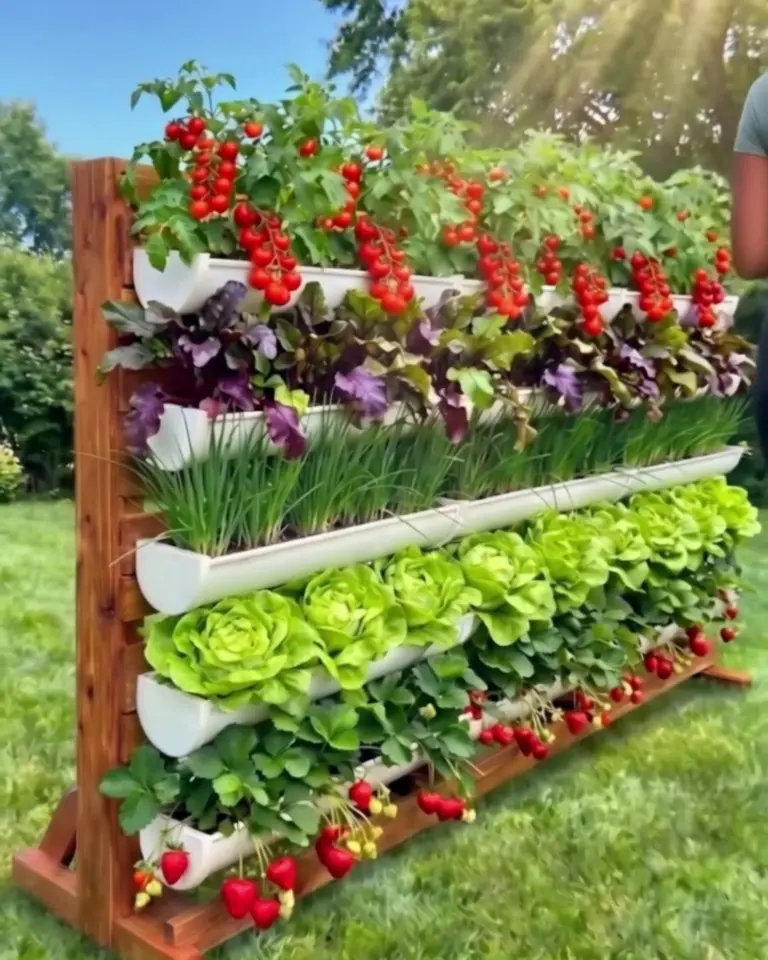
What Half a Pipe Can Grow
Split lengthwise, a 6-inch pipe makes a trough about 3 inches deep and 6 across, holding half a cubic foot of soil per 5-foot row. That’s plenty for lettuce, herbs and strawberries, and tight for anything with deep roots.
We moved the frame twice before the stakes went in, once for sun and once because the hose didn’t reach. The spot it ended up in gives the bottom two rows afternoon shade.
Water poured into the top row drips through the drain holes into the next row down. The bottom row stays the wettest.
Materials & Tools
Not in the $355: the seedlings and the jigsaw.
Pipe: look for NSF-61 (or NSF-pw) printed along the side; pipe marked only DWV isn’t rated for anything near food. Keep PVC cement off the troughs, too, which is why the ends here are screwed and siliconed.
Brackets: the white U-brackets in the photos are 6-inch pipe hangers, about $20 apiece, or $480 for 24. Loops of galvanized hanger strap hold the same troughs for under $20.
Strawberries: they hang their runners over the trough lip much the way they do on the low tier of our cinder block pyramid garden.
Watch the Build
Step by Step
Step 1Split the pipes
Cut each 10-foot pipe into two 5-foot lengths. Snap a chalk line down one side of each length and another exactly opposite, cradle the pipe between two 2 × 4s so it can’t roll, and run the jigsaw down each line.
Keep the saw at medium speed. Fast, the blade melts the plastic and the kerf closes up behind it.
Step 2Drill drains and plug the ends
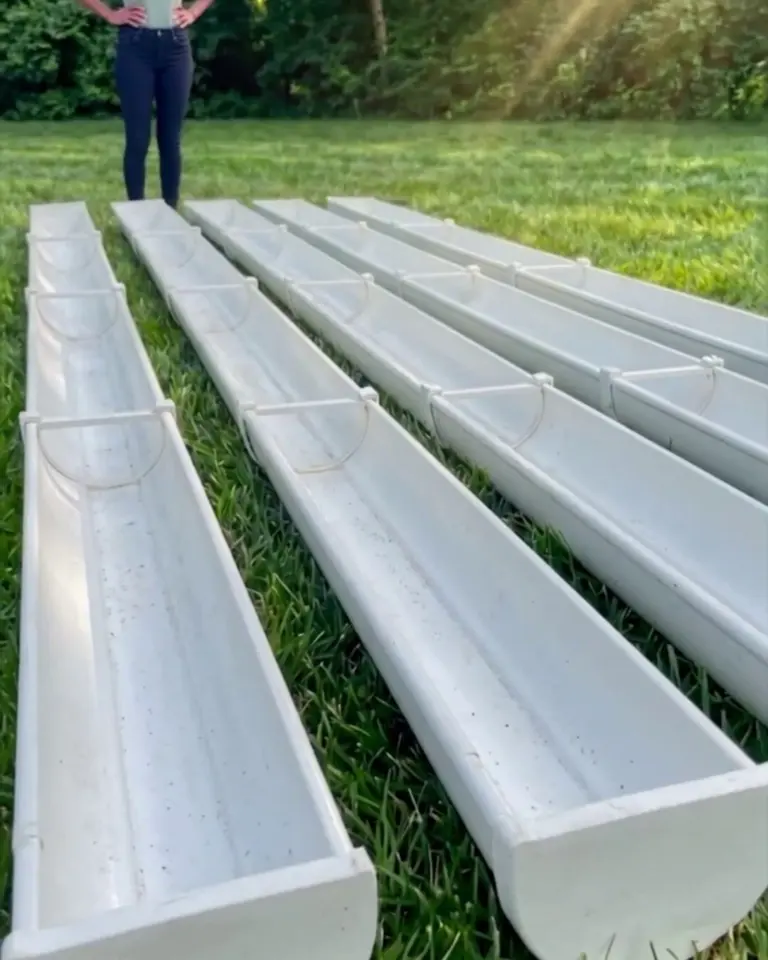
Drill ¼-inch holes every 6 inches along the bottom of each trough. Then cut 12 half-moons, 6 inches across, from one of the 2 × 4s, set one into each trough end on a bead of silicone, and drive two 1-inch screws through the pipe into each.
Step 3Build the frame
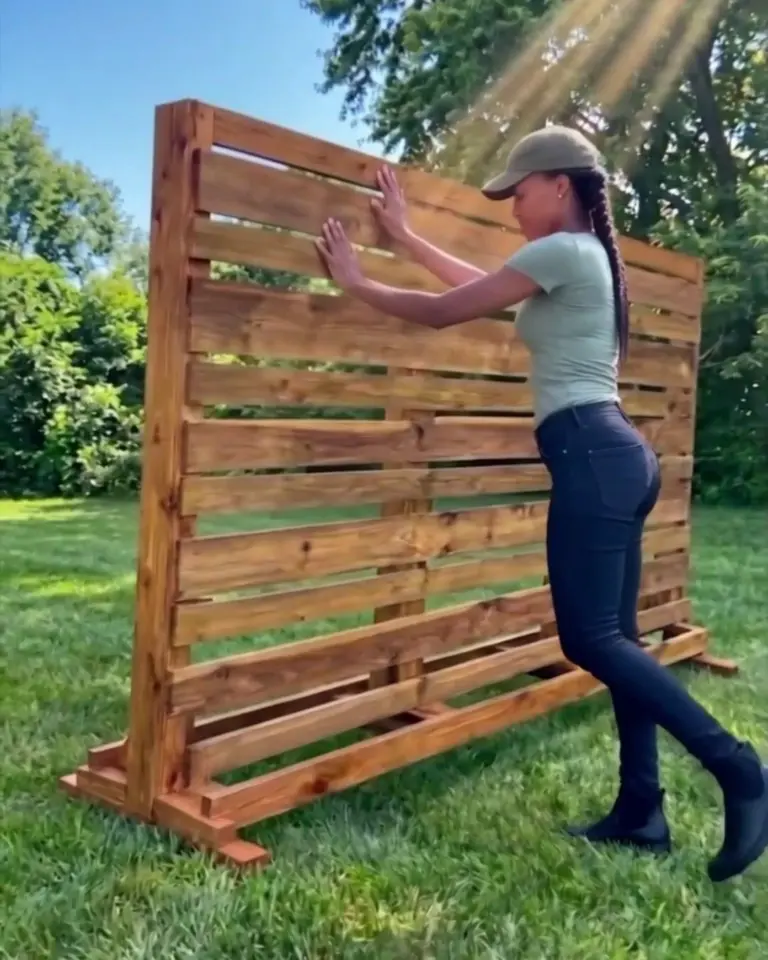
Cut two 2 × 4 posts to 6 feet and screw the 11 pickets across them, top down, with a 1-inch gap between pickets; pre-drill near the ends, since cedar splits within an inch of the end. Add a 3-foot 2 × 4 foot across the bottom of each post and a 2-foot diagonal brace from each foot up to its post.
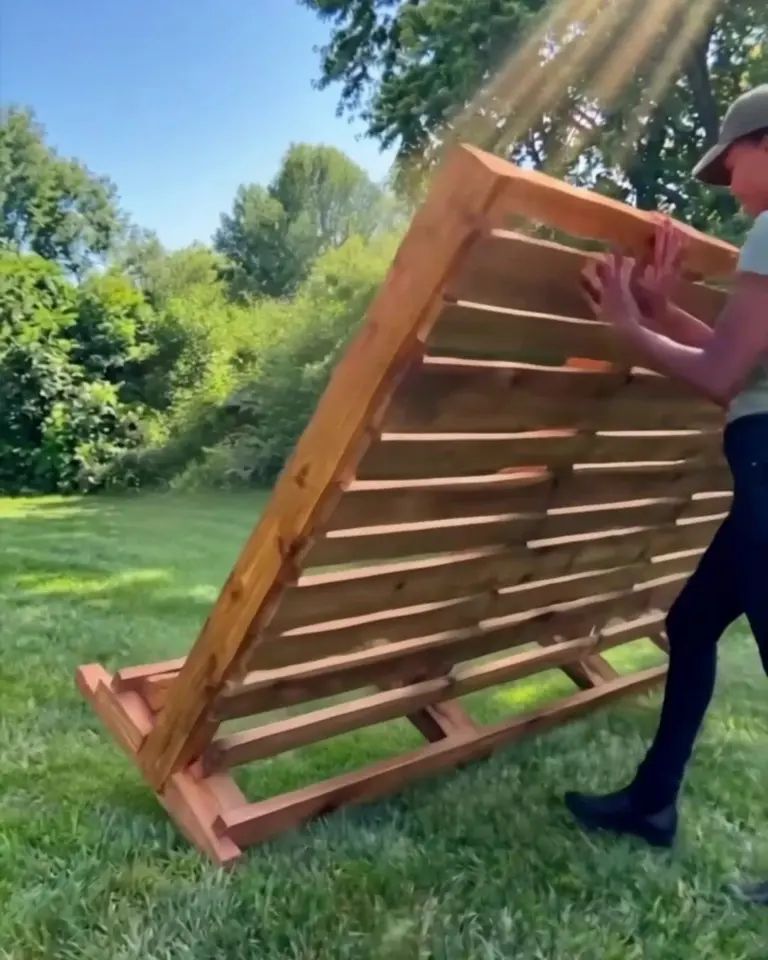
Step 4Stand it and stake it
Stand the frame where it gets at least six hours of sun and level it with shims under the feet. Drive an 18-inch rebar stake beside each foot and screw a strap over the pair.
Loaded, the face carries about 170 pounds of wet soil and pipe, and the whole thing catches wind like a fence panel.
Step 5Hang the loops
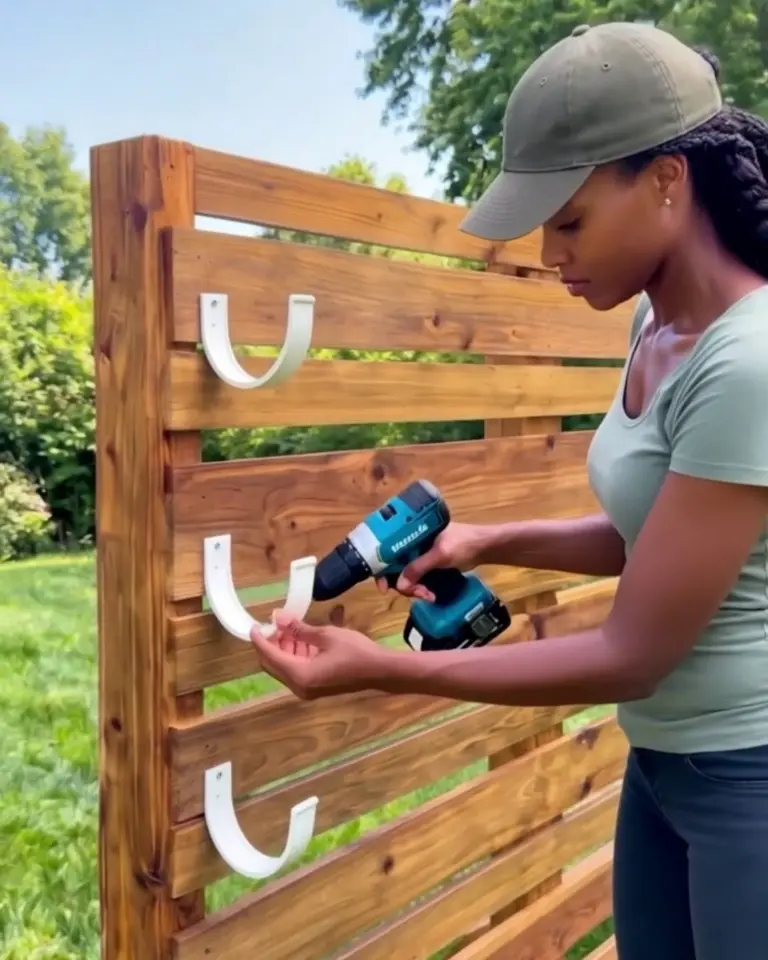
Cut 24 pieces of strap 13½ inches long and bend each into a U around a scrap of the pipe. Screw both ends of each loop to the slats with 1-inch screws, four loops per row, six rows 11 inches apart.
Hang the bottom row first and work up. Measuring 11 inches from a row that’s already level is easier than measuring from the ground.
Step 6Set the troughs
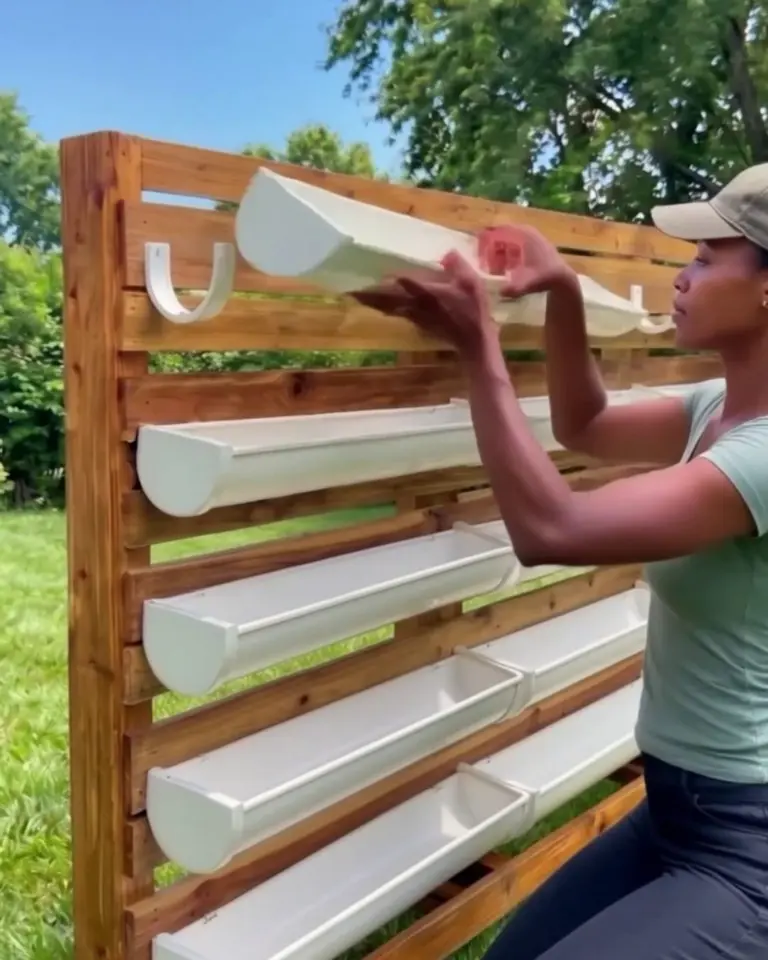
Drop a trough into each row of loops, drain holes down, and check it with a level. A trough that tilts sends all its water out one end.
Step 7Fill and plant
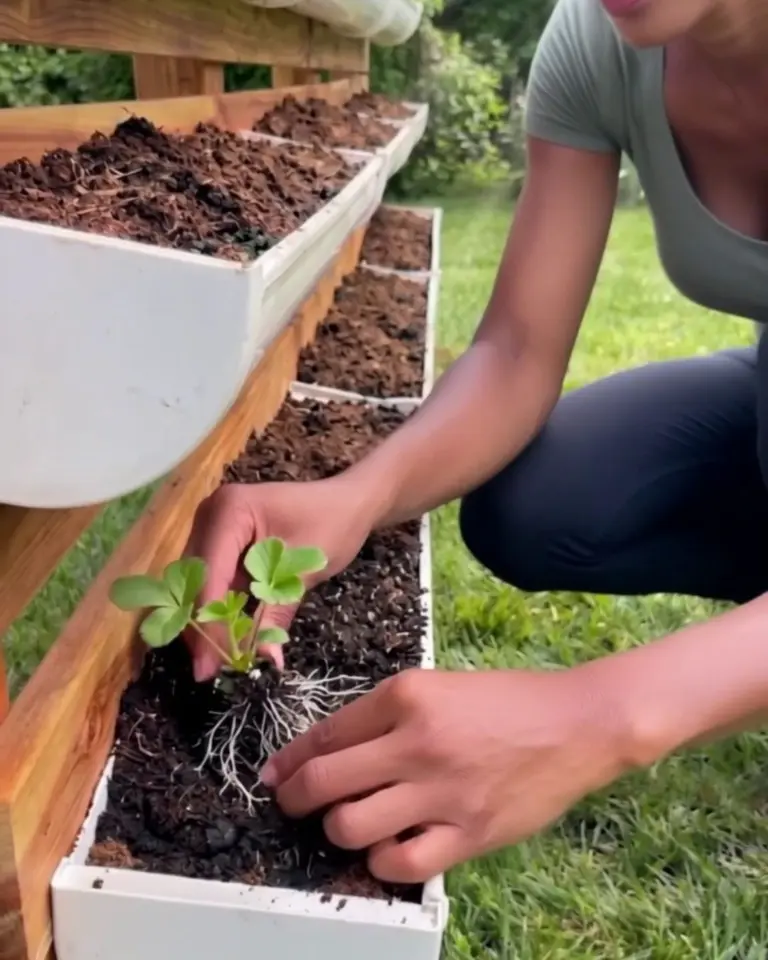
Wet the mix in the bag first, since dry potting mix sheds water and runs straight out the drain holes. Fill the troughs to half an inch below the lip; the two bags just cover all six.
Plant lettuce 10 inches apart, strawberries 8 and herbs 6, about 36 plants across the wall.
Step 8Water from the top
Pour slowly along the top row and let it drip down from trough to trough. Stop when water runs out of the bottom row’s holes.
Three inches of soil dries out fast, so in summer heat that’s a daily job.
Strawberries come back in the bottom row the next year. The lettuce rows get replanted each spring and again at the end of summer.
How a PVC Pipe Vertical Garden Holds Up
Drying out is the weak spot. A missed day in a heat wave shows first in the top row, where the lettuce goes limp by afternoon.
The cedar weathers to gray and the pipe turns slightly chalky in full sun over a few summers. Neither changes how it grows.
FAQ
The bottom row is always soggy
It catches drips from five rows above. Move the plants that like it wet, lettuce mostly, to the bottom, and put herbs that like it drier up top.
One trough sags in the middle
A loaded 5-foot trough weighs about 28 pounds. Add a fifth loop at the center of that row, and check that the trough isn’t resting on a screw head.
Can I use rain gutters instead of pipe?
We haven’t built one with gutters. A 5-inch K-style gutter holds a little more soil per foot, and its end caps are sold right next to it.
Is PVC safe for growing food?
Rigid pipe certified to NSF-61 is made for drinking water, and that’s the kind to use; NSF says certified rigid PVC pipe has no lead or phthalates in it. Skip pipe marked only DWV, and skip the glue.
Will full-size tomatoes grow in it?
Not well. Each plant gets roughly a gallon of soil here, and a full-size tomato wants a 5-gallon pot; cherry types manage with feeding every couple of weeks.
The two spare troughs lean against the garage, half full of leftover potting mix.
Somebody keeps planting radishes in them.