The reciprocating saw needs a 12-inch blade to reach through a tractor tire’s shoulder, and the one in our toolbox was 6. Second trip to the hardware store.
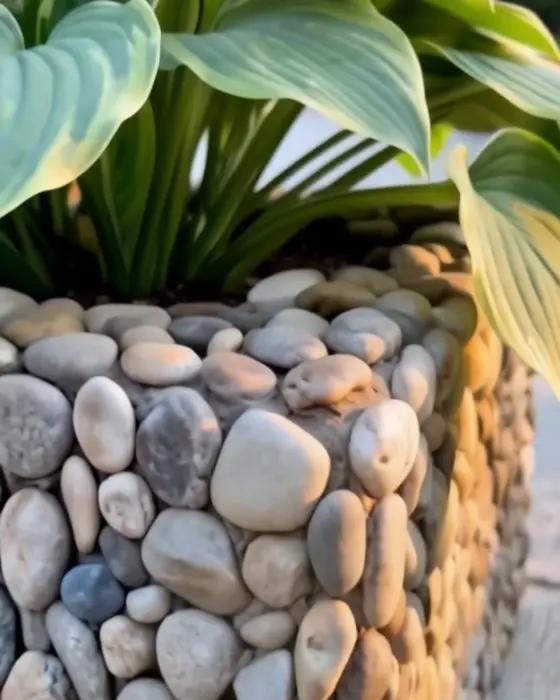
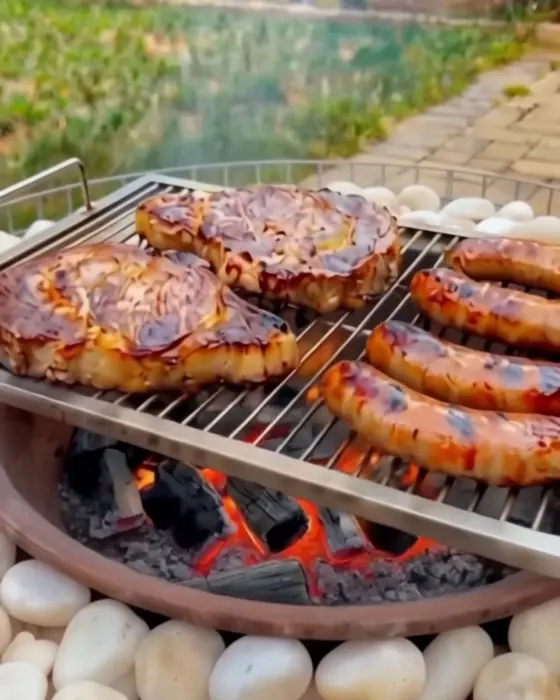
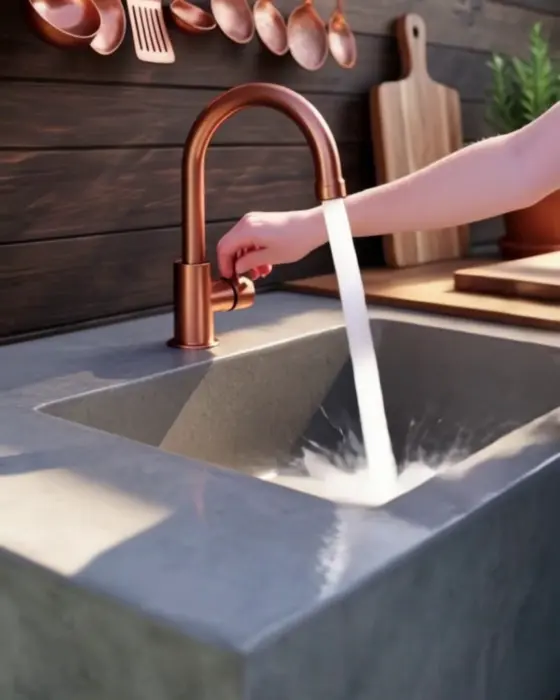
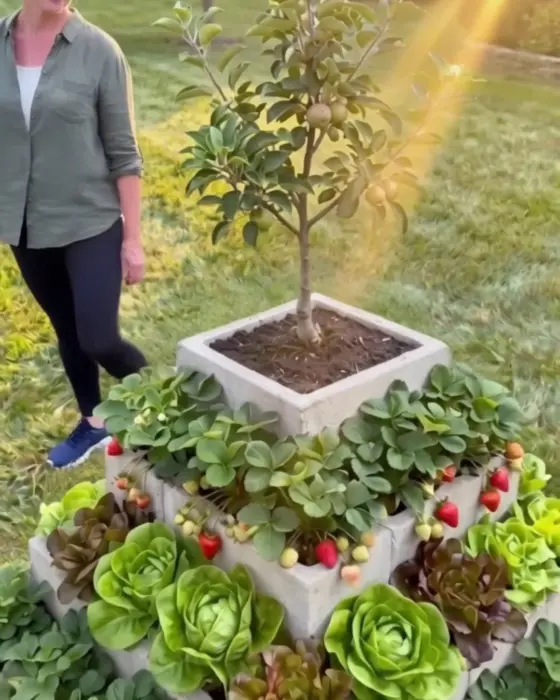
You’ll also love: How to Make a River Rock Concrete Planter from a Milk Crate, How to Build a Gabion Fire Pit Grill from an Old Car Wheel, How to Cast a Yoga Ball Concrete Sink for an Outdoor Kitchen.
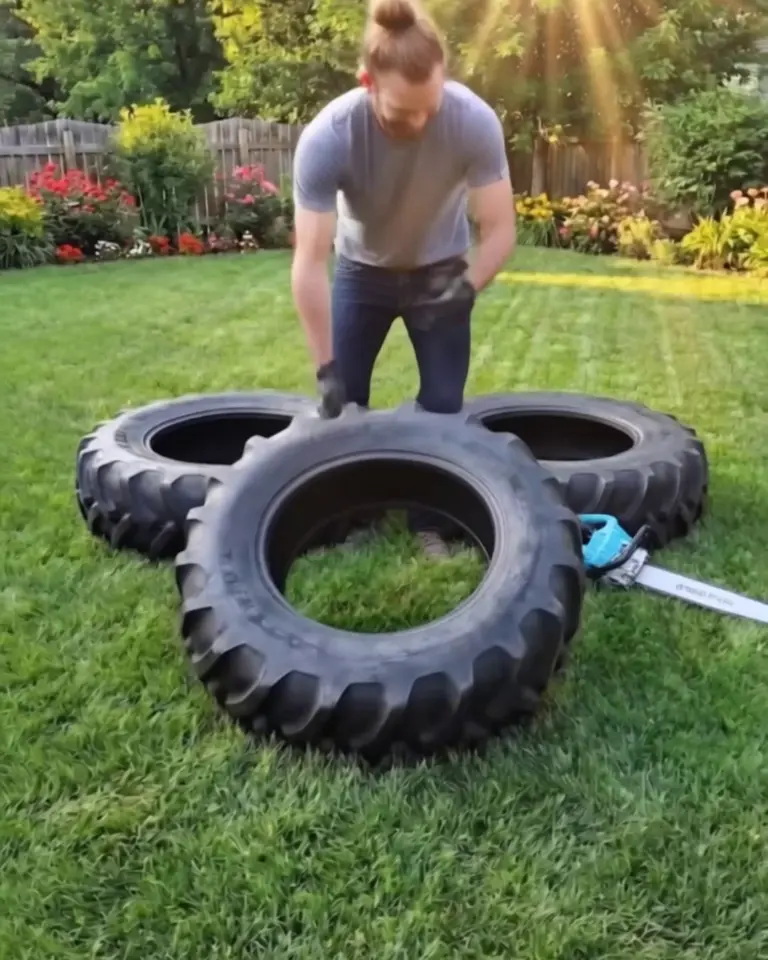
Each tire stands 56 inches tall and weighs about 160 pounds, so rolling three of them into a tight cluster on the lawn took two of us.
Cut rubber smells like a hot bike tube. The smell stays on your hands through dinner.
Our tractor tire pond holds about 300 gallons in three basins, with a solar jet in each. A neighbor called it the best use of old tires on the block, then asked whether the mosquitoes came with it.
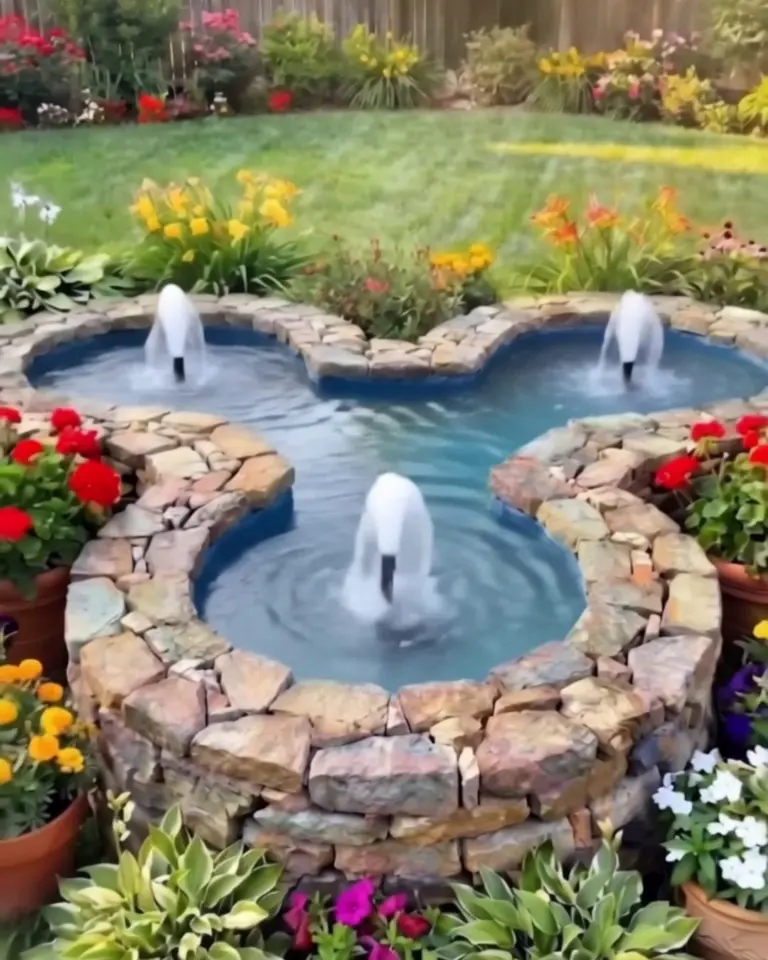
What the Tires Do Under the Stone
A tractor tire laid flat is already a round wall 17 inches high. Cut the top sidewall away and the bottom one stays as a floor ring, so the liner only rests on bare dirt in the middle.
We tried tucking the tarp into all three basins at once, and it slid out of the first while we pushed it into the third. It took three people and a bucket of water per basin, and the folds where the tires meet never lay quite flat.
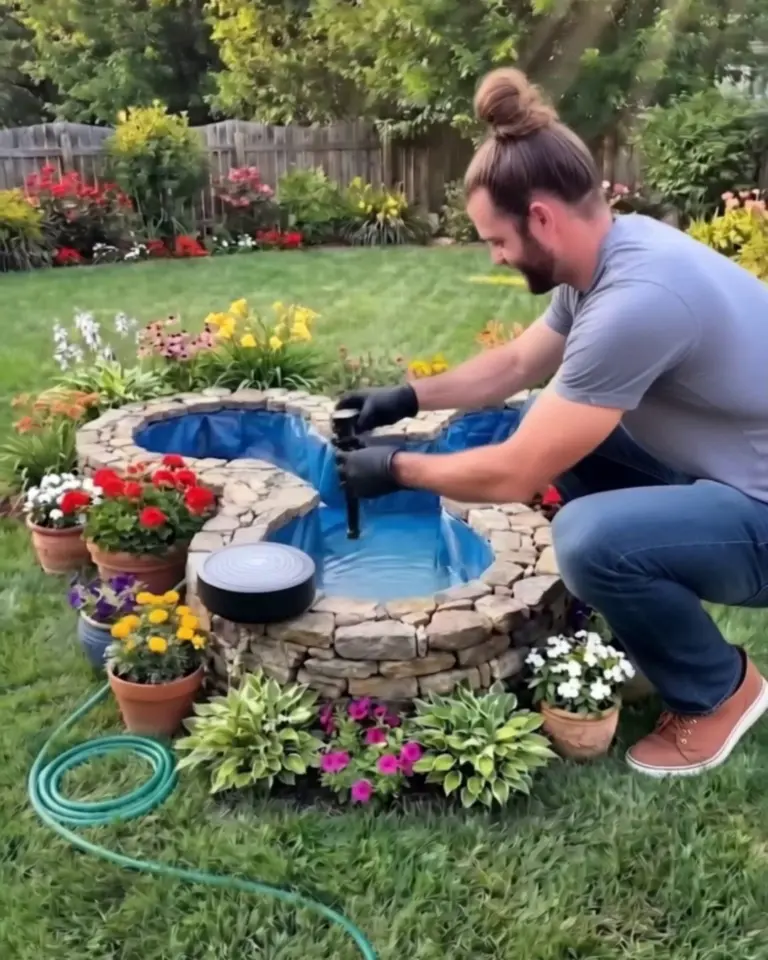
The stone hides every inch of rubber. From the patio it reads as a stone pond, built in a shape nobody would pick on purpose.
Materials & Tools
Not in the $555: the flowers, the saw itself, and stone delivery, which often runs $75 to $150 a load. The tires cost nothing; farm tire dealers pay to get rid of scrap ones.
Liner: a blue tarp is what the video shows, and sun makes it brittle, usually within a season. A 45-mil EPDM pond liner, 15 × 15 ft, runs about $240 and doesn’t.
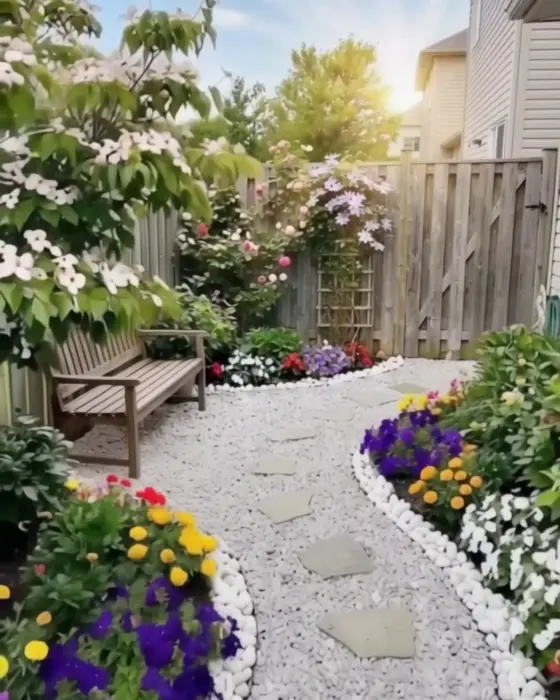
Flowers: petunias and marigolds in small pots, the same mix that runs down both sides of our white gravel garden path.
Watch the Build
Step by Step
Step 1Roll the tires into a cluster
Roll each tire upright to its spot, then tip it flat with a helper; Firestone’s catalog puts a 16.9-28 at 156 to 162 pounds. Push them together until all three touch, one in front and two behind.
Check the ground with a level first and shave the high spots. Water finds the low side, and a tire sitting 2 inches low shows liner above the waterline on the other edge.
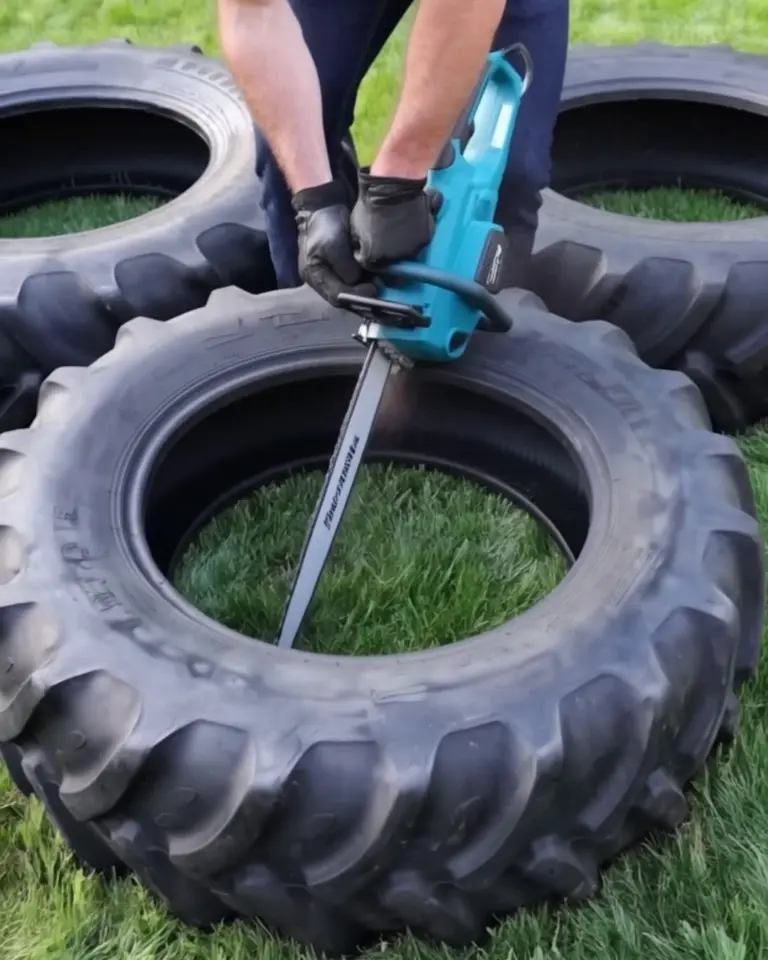
Step 2Cut off the top sidewalls
Drill a ½-inch hole in the top sidewall right where it meets the tread, slide the 12-inch blade in, and saw around the tire along that line. The cut runs about 12½ feet and leaves a ring 17 inches tall with an opening about 48 inches across.
Spray the blade with soapy water every foot or so. Dry rubber grabs the blade and stalls the saw.
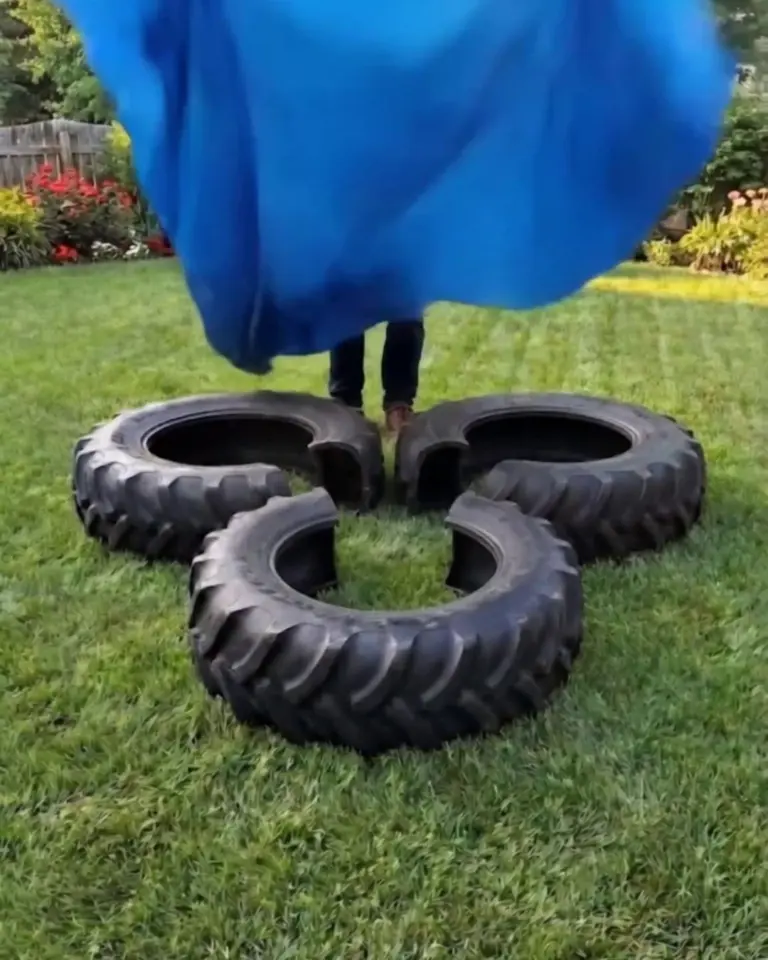
Step 3Lay the liner over all three
Rake stones and roots out of each center, where the old rim hole leaves bare ground, and spread a bag of play sand an inch deep in each. Then throw the tarp over the cluster from one side so it lands across all three basins.
Step 4Tuck it into the basins
Push the liner down into each basin, folding the extra into a few big pleats rather than many small ones. Run a few inches of water into each basin as you go; the weight pins the liner while you work on the next.
Leave the edges draped over the tire tops and down the outside.
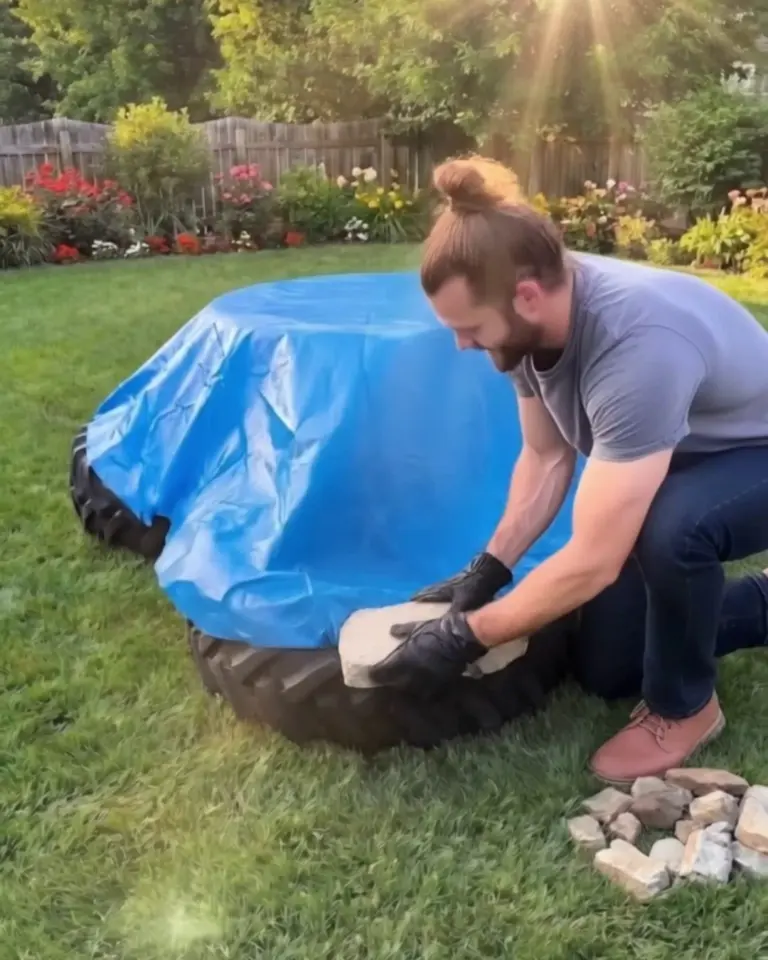
Step 5Start the stone wall
Set the first course of fieldstone tight against the outside of the tires, over the draped liner. Flattest faces go out, and the longest stones lie the long way into the wall.
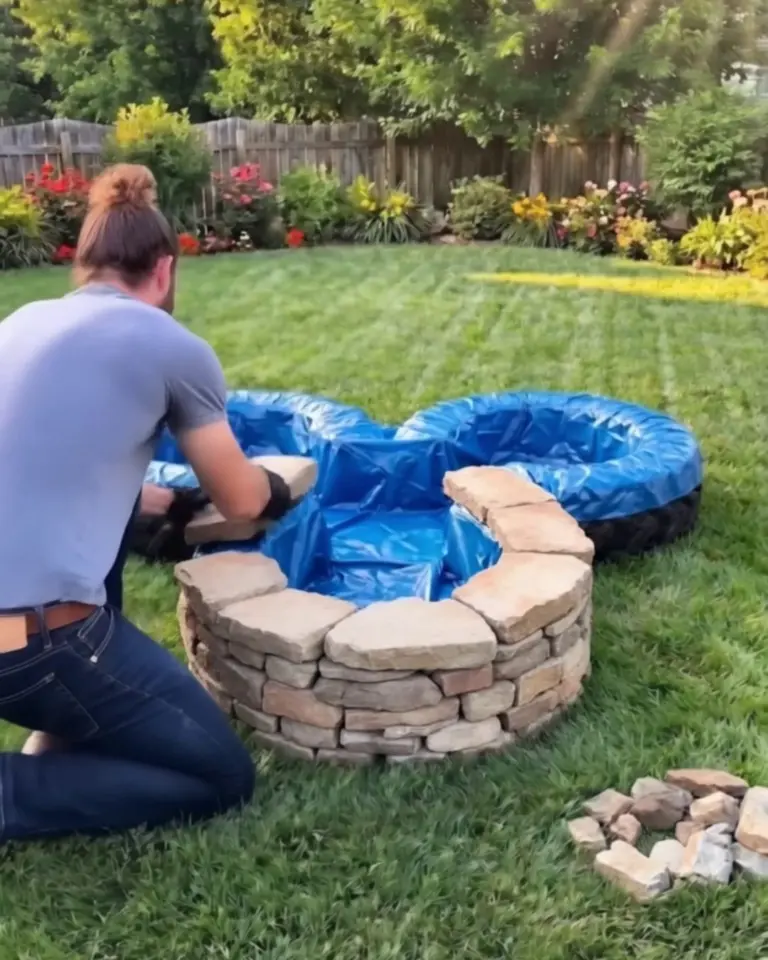
Step 6Finish the wall
Build up 4 or 5 courses until the top stones sit level with the tire rims, about 17 inches, staggering the joints one stone over two. The wall runs about 40 feet around and takes roughly 1.6 tons.
Fold the liner edge over the tire tops and pin it under the top course, then trim what still shows. No blue outside the basins.
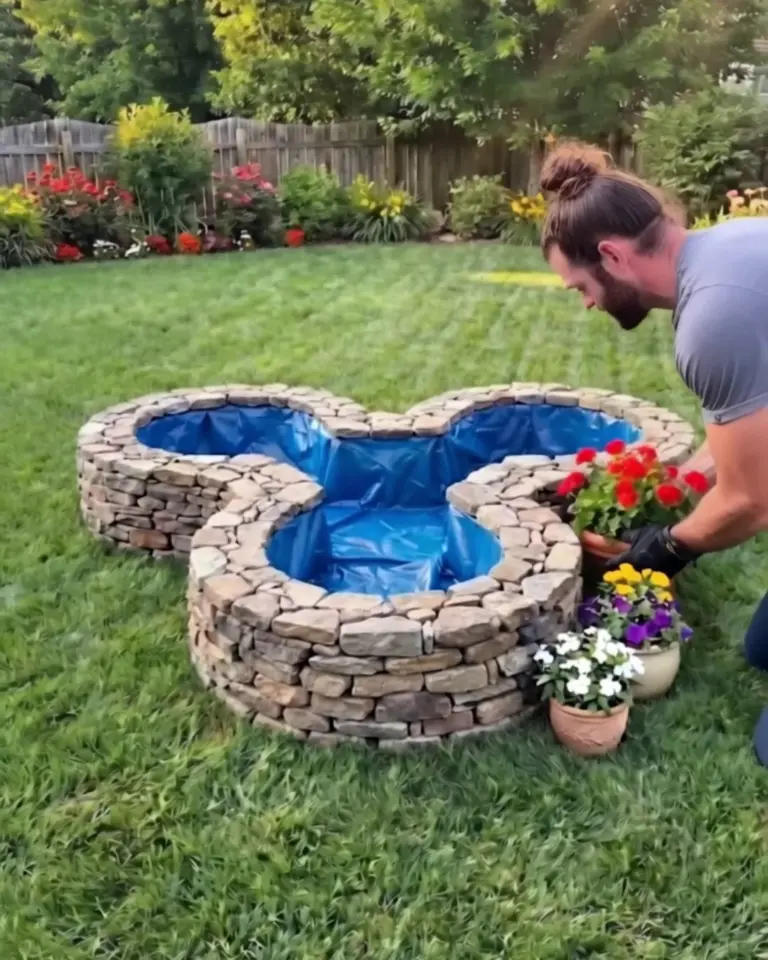
Step 7Fill it
Run the hose basin to basin until the water is about 4 inches below the top, roughly 13 inches deep. That’s close to 100 gallons per basin and about an hour from a garden hose.
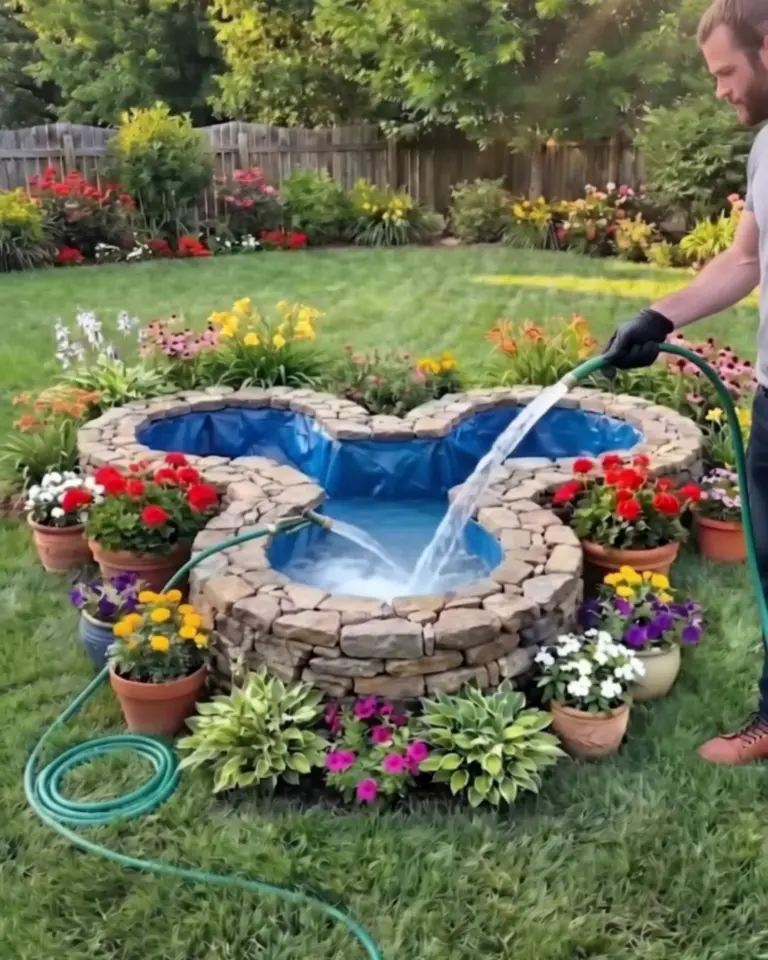
Step 8Set the solar pumps
Sit one pump in the middle of each basin and lay the three panels where they get full sun, on the wall or in a bed nearby. They spray only in direct sun, up to about 2½ feet on a clear afternoon, and stop when a cloud or a branch shades the panel.
How a Tractor Tire Pond Holds Up
The tarp goes first: sun works on the folds that sit above the water until they crack. Swap in a 45-mil EPDM liner when it does; the top course comes off, the new liner goes in, and the stones go back the same way.
Leaves pile into the basins every fall and clog the pump intakes. Rinse the screens once a week while they’re falling.
FAQ
The water level keeps dropping
Some is evaporation, which on a hot, sunny day can take a visible fraction of an inch. More than that is a leak, usually at a fold sitting just above the water or a pinhole in the tarp. Mark the level with a strip of tape and watch which basin drops fastest.
My fountains only run half the day
Shade on the panels, almost always. These pumps have no battery, so a panel in afternoon shade means a dead jet; move the panels before you blame the pumps.
Can I use regular car tires?
We haven’t tried it. A car tire cut the same way leaves an opening around 20 inches across and holds about 10 gallons, too small for a jet that sprays 2 feet.
Is it safe with small kids around?
Not unattended. There’s 13 inches of water in each basin, and young children can drown in far less.
What about mosquitoes?
The jets keep the water moving only while the sun is out. One Bti mosquito dunk, broken into thirds with a piece in each basin, treats the whole pond for about 30 days, going by the label.
The 6-inch blade is still in the toolbox, unused.
The left basin collects more leaves than the other two, and nobody has figured out why.