Lace soaked in cement keeps most of its holes, which was the first thing a friend asked about when she saw the lamp lit. Most, not all; the tight center of the pattern filled in.
You’ll also love: How to Make a Concrete Candle Holder in a Plastic Bucket, How to Make a Concrete Flamingo Statue Around a Coconut, How to Make a Carved Concrete Planter from a Plastic Crate.
Our concrete lace floor lamp is a 60-inch cotton lace tablecloth dipped in cement slurry, draped over a bucket on a wooden stand, cured, flipped, painted black and lit from inside with an LED Edison bulb.
The first tablecloth was polyester. It shed the cement like a raincoat.
Wet lace hangs heavy and cold and drips gray onto the patio for an hour. Another friend said the lamp looked expensive, then asked if it was meant to be a vase.

How Cloth Turns into a Shell
Cotton soaks up cement slurry the way a sponge soaks up water, so when the cement sets, every thread becomes a thin rod of concrete. Polyester only gets coated, and the coating flakes off.
We expected black paint to hide the lace. With the bulb inside, the light comes out only through the holes, and the pattern lands on the walls.
The folds do most of the holding up; a smooth drape would be weaker.
Materials & Tools
Not in the $85: the lumber scraps, the tub and gloves, and the branches.
Bulb: use LED only. An incandescent Edison bulb runs hot enough to scorch dry branches sitting a few inches above it.
Same method, outdoors: cloth and cement over a form is how our draped concrete planters are made, with a nursery pot in place of the bucket.
Watch the Build
Step by Step
Step 1Build the stand
Screw the 3-foot post upright onto two 2-foot feet crossed at the bottom. Set the bucket upside down on top, centered, and wrap it in plastic sheeting taped tight underneath.
For a taller lamp, use a 4-foot post and a longer cloth; the drape only needs to hang clear of the stand’s feet.
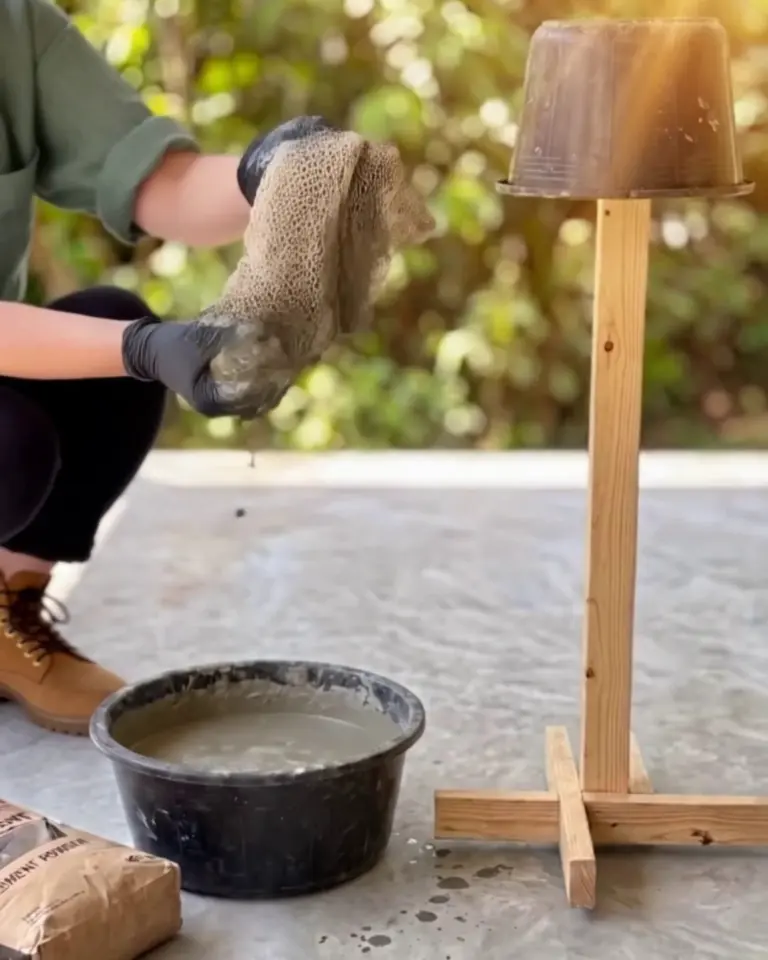
Step 2Mix the slurry
Sift about 15 pounds of Portland cement through a kitchen strainer, since lumps fill the lace holes solid; you can always mix more. Stir it into water, about 2 parts cement to 1 part water by volume, until it’s as thick as pancake batter.
Gloves on: wet cement burns skin.

Step 3Work it into the lace
Push the cloth under and squeeze it with both hands for 5 minutes, working slurry into every thread. Lift a corner now and then; dry, pale patches mean more squeezing.
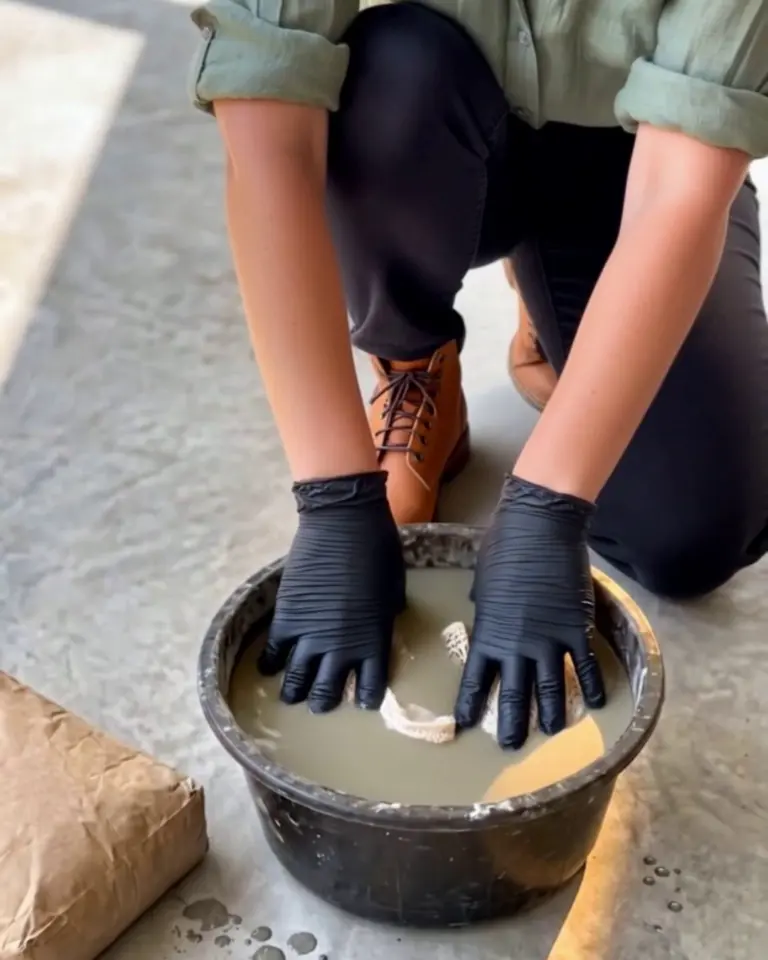
Step 4Drape it
Lift the cloth out, let it drip for a moment, and lay its center on the bucket bottom. Let it fall on all sides; it will hang a little past the bucket’s rim.
Turn the cloth so the prettiest part of the pattern faces front. The middle of the cloth ends up as the base, where nobody sees it.

Step 5Shape the folds
Pull the folds into even ripples all the way around and press the cloth flat on top. Clear any slurry webbing the lace holes with a fingertip while it’s wet.
Cover it loosely with plastic and leave it 3 days.

Step 6Lift it off and flip it
Lift the hardened shell off the bucket with a helper, peel out the plastic, turn it over and snip off any stiff threads poking out. The flat top becomes the base, and the hem becomes a ragged lace rim.

Step 7Paint it
Let it stand 30 days first; Behr asks for 30 days before paint goes on new concrete. Spray two light coats of matte black outdoors, inside and out, from about 12 inches in short passes; heavy coats fill the holes.

Step 8Wire it and add the branches
Drill a ½-inch hole low in the side with a masonry bit, feed the cord kit through and set the socket upright in the base. Pour about 10 pounds of gravel around the socket base so the lamp won’t tip.
Fit the LED bulb, then set the branches in so none touch it. Run the cord out the back, toward the wall.

How a Concrete Lace Floor Lamp Holds Up
The thin lace edge at the rim is the fragile part; knock it and a scallop breaks off, and where the black wears thin, a quick touch-up hides it. Indoors or on a covered porch it lasts, and dust comes out of the holes with a soft brush.
Out in the rain, the cloth fibers inside eventually weaken, so it isn’t a lamp to leave in the open.
FAQ
The lace holes filled up with cement
The slurry was too thick. Thin the next batch a little, and clear the holes with a fingertip or a skewer while the cloth is still wet.
The shell cracked when I lifted it
It came off before it was hard enough, or it stuck to the bucket. Give it the full 3 days, and keep the plastic between cloth and bucket smooth.
Can I use a crochet doily instead?
A doily is too small for a floor lamp, but cotton doilies make good table lanterns the same way, over a quart container. Pick one with big open stitches; tight crochet fills solid with the slurry.
Is it safe to leave on all evening?
With an LED bulb and a listed cord kit, yes, like any lamp. Keep branches and fabric away from the bulb and unplug it when you leave the house.
Could it go in the garden?
We haven’t kept one outside in the weather. Rain soaks the cloth core, and the cord kit would need to be rated for outdoor use.
The polyester tablecloth from the first try is a paint drop cloth now.
It still has a few gray patches where the cement gave up.