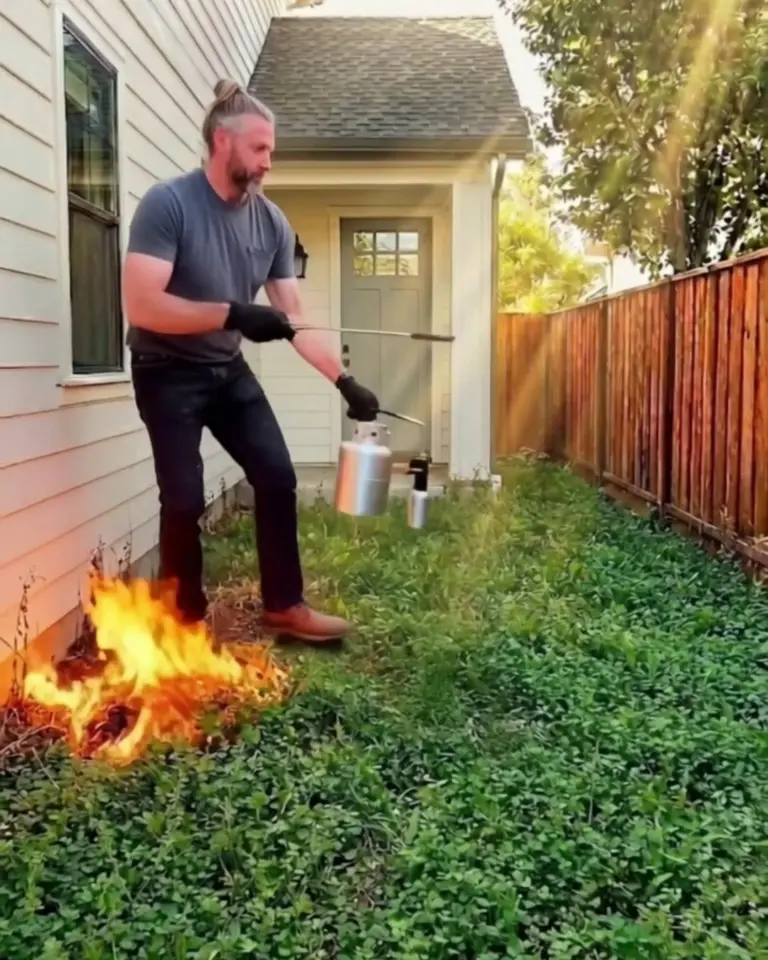
Our neighbor on the fence side asked, politely, if he could stand there with his garden hose while the flame weeder was going. He stayed for the whole half hour and only said one thing: “Not near my fence.”
You’ll also love: How to Make Glass Mosaic Stepping Stones with a Polished Face, How to Make River Rock Stepping Stones Cast Face-Down, How to Make Mosaic Stepping Stones in a Bicycle Tire Mold.
Our side yard paver walkway runs 25 feet from the gate to the back door: eleven 24-inch concrete pavers in a 3-foot lane of cream river rock, with black mulch, boulders and yuccas on either side.
The first paver went down on loose, raked soil. After one rain, the corner nearest the downspout had sunk an inch.
A paver set on damp sand makes a soft crunch as it beds in, and the river rock rattles out of the bag like hail on a roof.
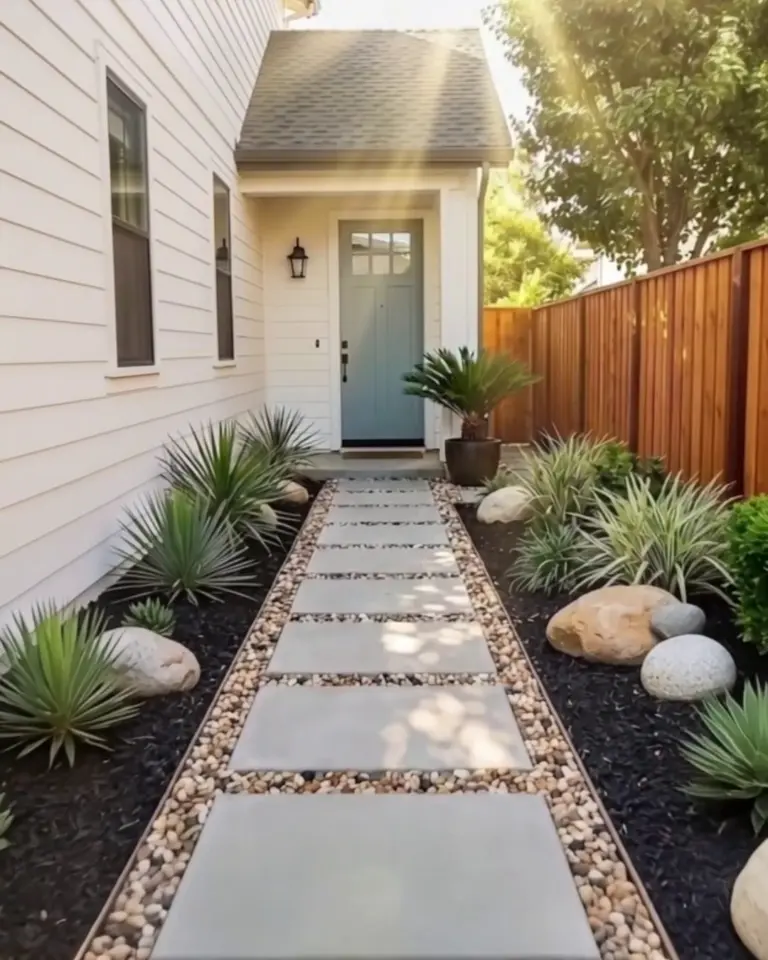
What a Narrow Side Yard Needs
Side yards get foot traffic down the middle and runoff from the roof along the edges. Pavers handle the first, and rock and mulch soak up the second instead of turning to mud.
We expected the weeds to be the hard part. Scraping off the top 4 inches took care of them; the torch only made the first pass easier.
Spacing the pavers a stride apart keeps the walk easy.
Materials & Tools
Not in the $875: a flat shovel, a rake, a 4-ft level, a wheelbarrow and hauling away about a cubic yard of dug-out soil.
Torch safety: the flame weeder never goes near the house, the fence or anything dry. Check your town’s burn rules first, and skip it on windy days.
Same idea, all stone: the lane works like our white gravel garden path, rock over fabric between firm edges, with pavers added for the feet.
Watch the Build
Step by Step
Step 1Knock back the weeds
Pull everything along the house wall and the fence by hand. In the open middle, pass the flame weeder slowly over young, green weeds, one or two seconds per patch, with the hose charged.
Iowa State Extension points out that the goal is to wilt weeds, not set them on fire. If something catches, you held it there too long.
Step 2Scrape and grade
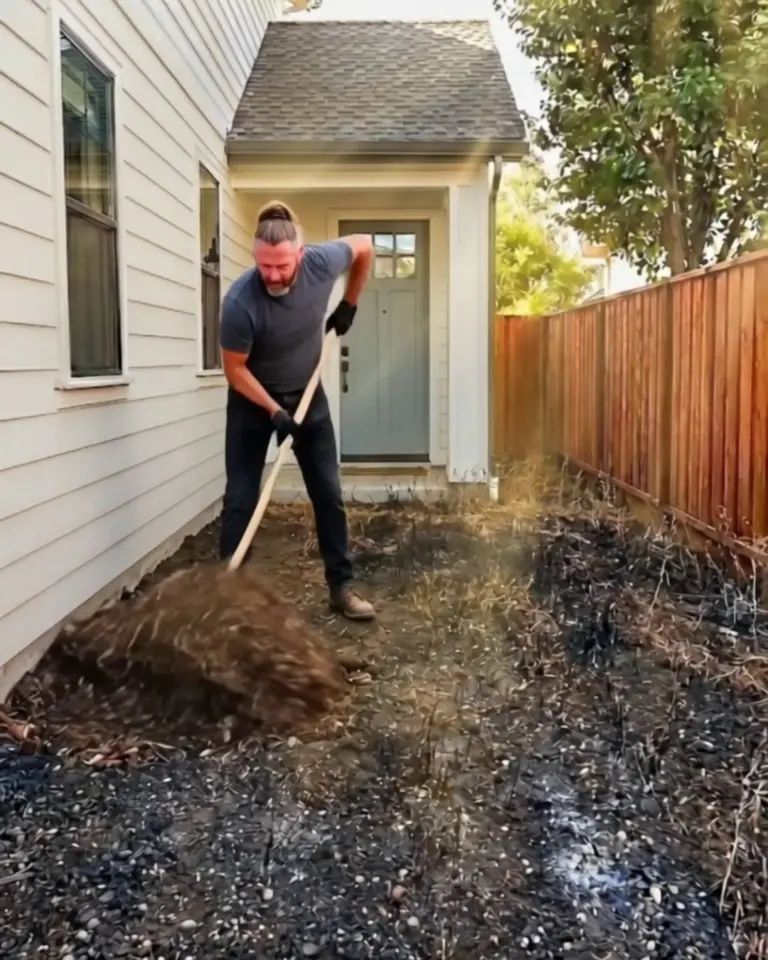
Dig out the top 4 inches across the whole width, roots and all. Rake the soil smooth and give it a slight fall away from the house, about ¼ inch per foot, so roof water runs toward the fence instead of the foundation.
A 3-foot lane 25 feet long, 4 inches deep, comes to about a cubic yard of soil. Line up somewhere for it to go before you start digging.
Step 3Set the edging
Run two lines of steel edging 36 inches apart down the middle of the yard, staked every 3 feet. Leave the top edge about ½ inch above where the rock will finish.
Steel edging bends around a gentle curve if you want one; push it against your knee a little at a time.
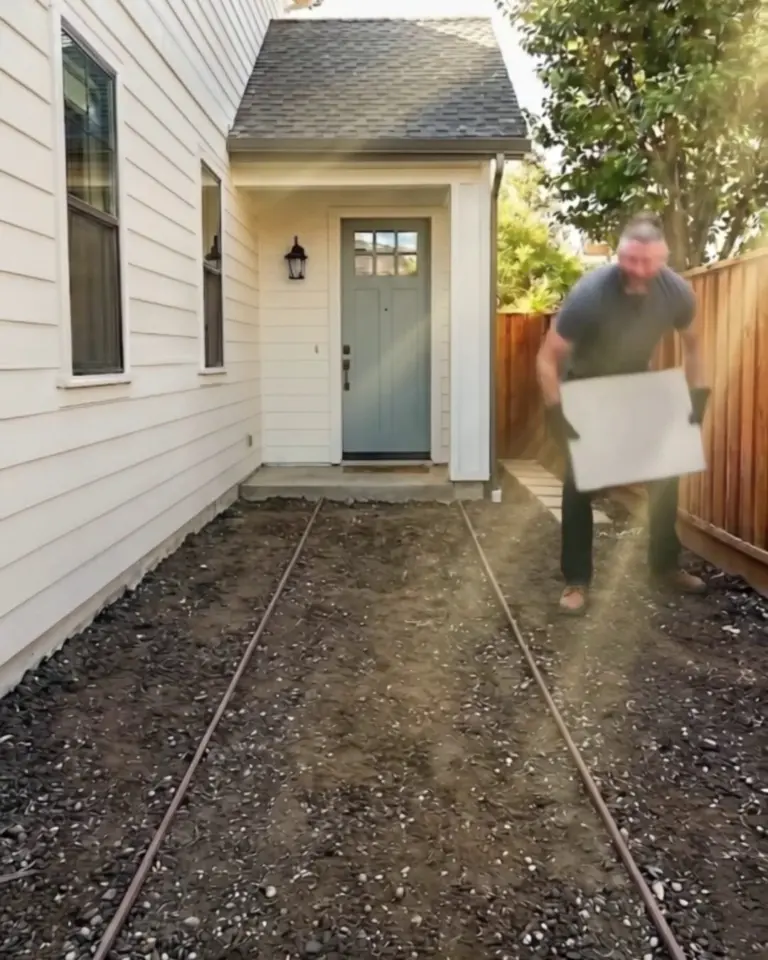
Step 4Build the paver beds
Lay landscape fabric between the edging, overlapping seams by 6 inches. At each paver spot, 28 inches apart on center, spread 3 inches of paver base, tamp it hard, and top it with an inch of sand.
Screed the sand flat with a short board.
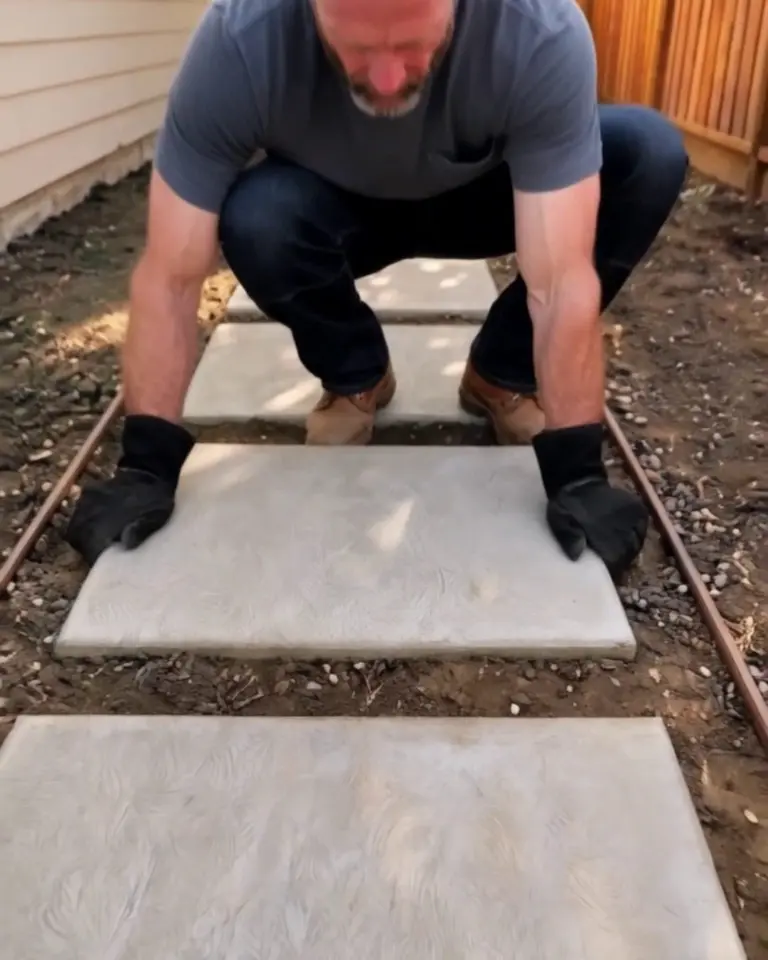
Step 5Lay the pavers
Set each paver on its sand bed and tap it down with the rubber mallet. Lay the 4-foot level across two pavers at a time; they should be flush with each other and slope with the yard.
A paver that rocks needs a little sand scraped out from under its high corner.
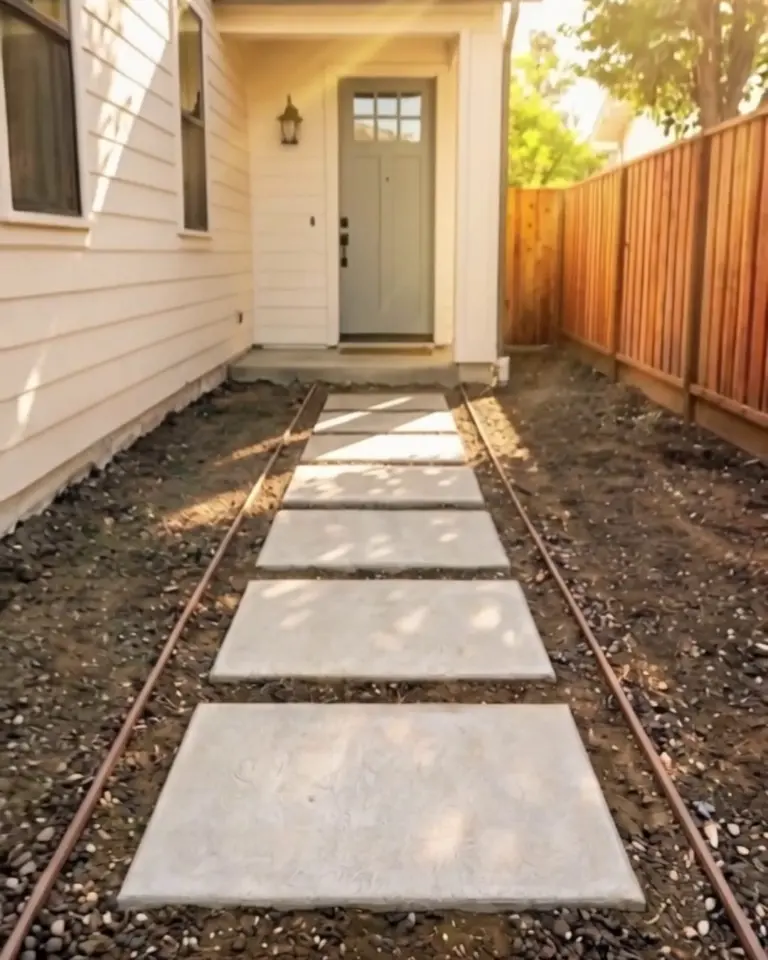
Step 6Fill with river rock
Pour river rock between and around the pavers, 2 inches deep, and rake it level about ¼ inch below the paver tops.
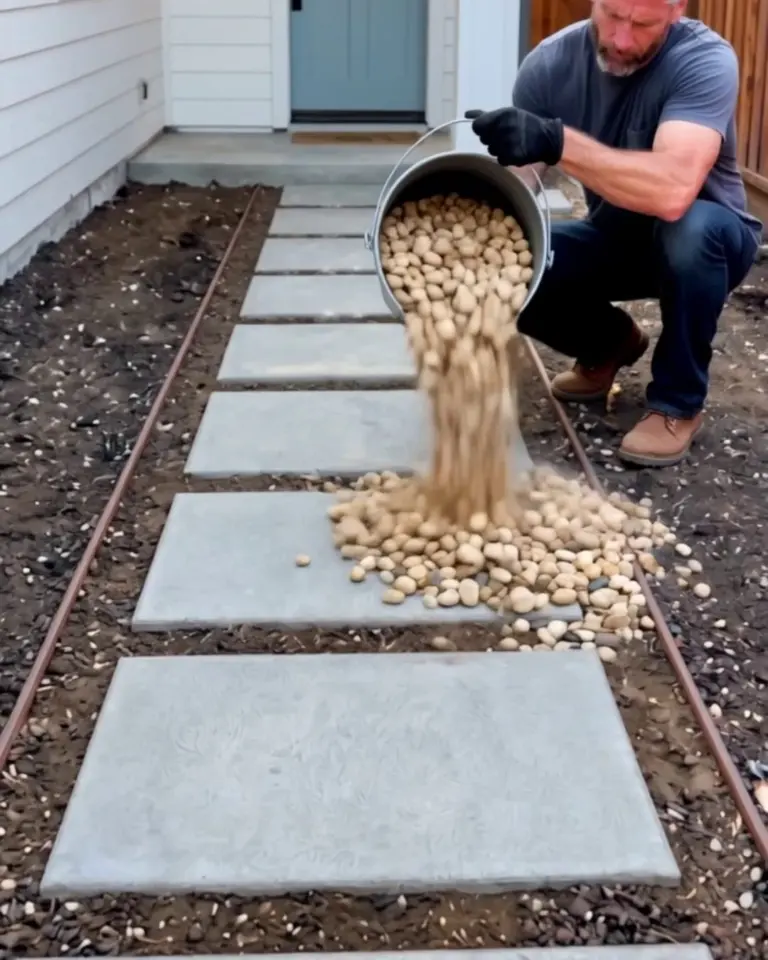
Step 7Mulch the beds
Spread black mulch 3 inches deep in the beds on either side of the lane. Keep it a few inches below the siding and pulled back from the foundation.
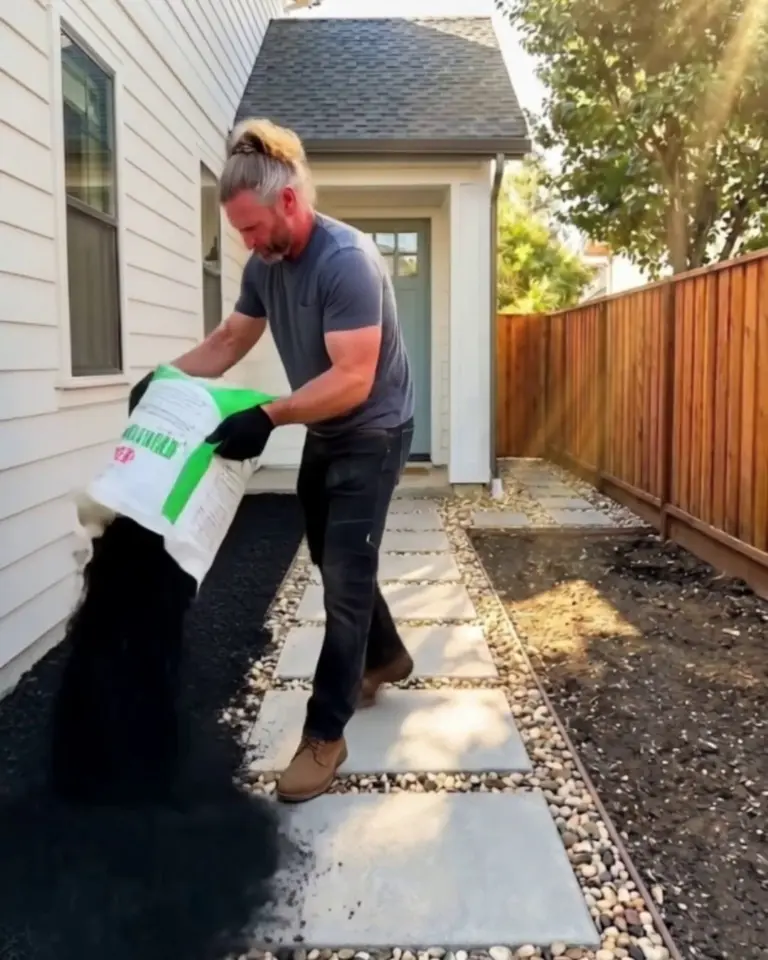
Step 8Set the boulders
Dig each boulder in about a third of its height, so it looks like it’s been there for years rather than dropped off a truck. Group them in twos and threes.
Anything over about 50 pounds is a two-person lift or a hand truck.
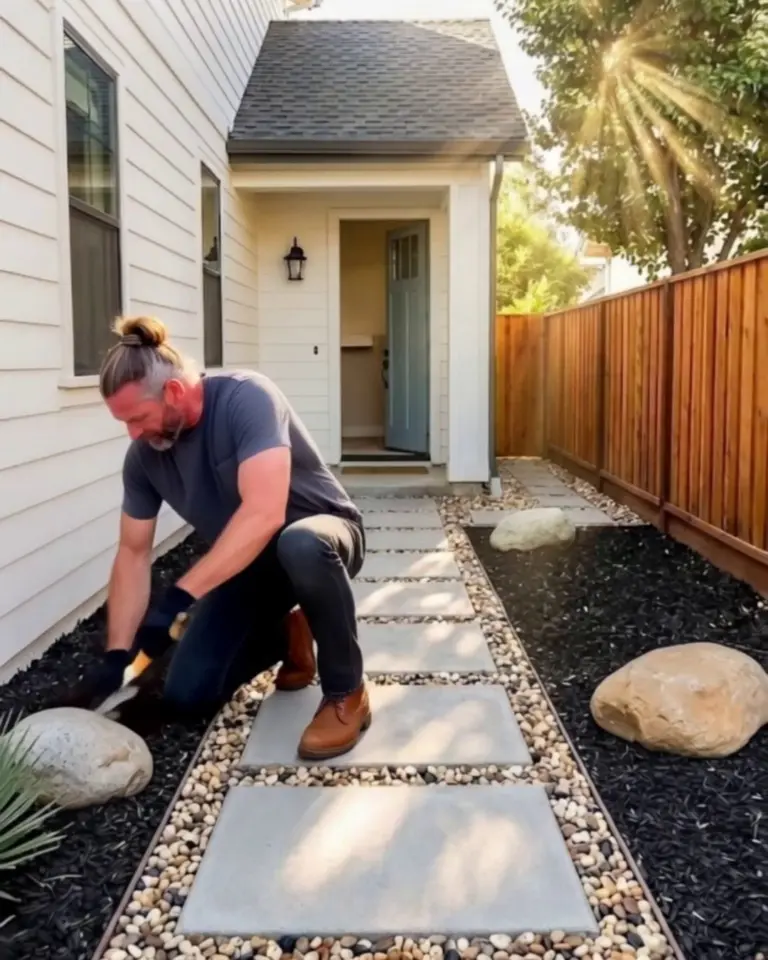
Step 9Plant
Plant the yuccas and grasses about 3 feet apart, at the depth they grew in their pots, and water each one in slowly. Keep sharp-tipped yuccas a couple of feet back from the lane.
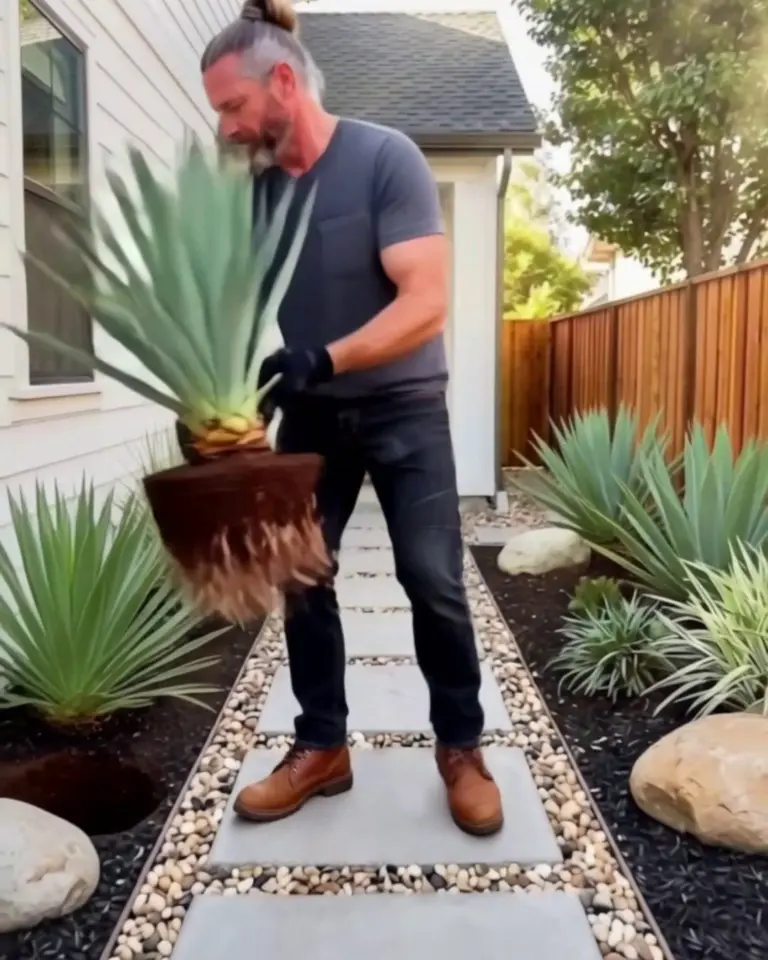
How the Side Yard Paver Walkway Holds Up
River rock wanders onto the pavers and gets kicked into the mulch; sweep it back now and then. The mulch fades to brown in a year or so and needs a fresh inch.
After the first few heavy rains, check for a paver that has settled and reset it while it’s easy.
FAQ
One paver rocks when I step on it
Its sand bed isn’t flat. Lift it with a flat bar, scrape or add sand, and set it again with the mallet.
Weeds are coming up through the rock
Usually at a fabric seam or where the fabric tore. Pull them while they’re small, and overlap any new fabric a full 6 inches.
Can I use pea gravel instead of river rock?
You can, but pea gravel rolls underfoot and travels. Crushed stone, ¾ inch, locks together and stays put better.
Will the pavers heave in winter?
We haven’t been through a hard freeze with this path yet. A good base drains water away from under the pavers, which is the part that matters most, but we’ll know more by spring.
Is the flame weeder enough on its own?
Not on established clover or grass. Iowa State notes it works best on small, young plants; older ones grow back from the roots, which is why the scraping matters.
The neighbor never used his hose. He did turn it on once, to rinse the soot off his shoes.