A post-hole digger does the part of this build nobody sees: four holes, 10 inches across and 40 deep. Our first try skipped them and screwed the pallets together on the lawn, and one push sent all three walls swaying like a loose screen door.
You’ll also love: How to Build a Round Pine Picnic Table Around a Tree, How to Build a Round Pallet Swing Bed with a Timber Frame, How to Turn Broken Plates into a Mosaic Patio Table.
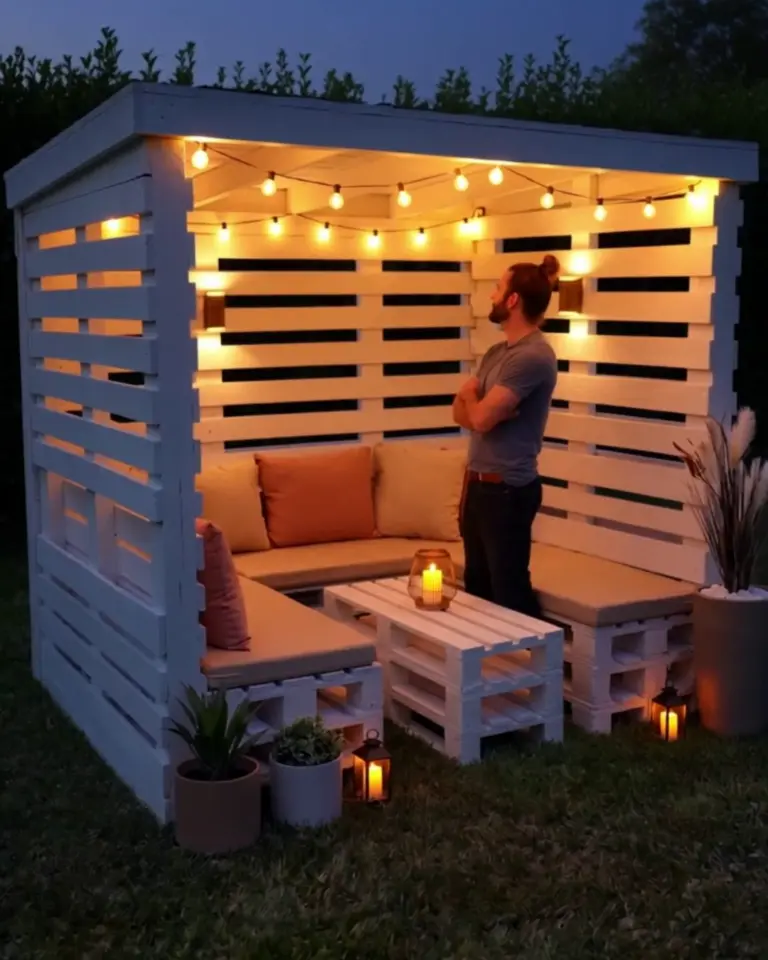
Our pallet cabana is 15 pallets on four posts: an open-front room 8 feet wide, 4 feet deep and about 7 feet tall, with an L-shaped bench, a clear corrugated roof and white paint.
A neighbor called it the nicest bus shelter on the street. Then he sat in it until the string lights came on.
Fresh white paint on rough pallet wood smells sharp for a day, and the bulbs tick faintly as they warm up.
What Keeps a Pallet Room Standing
Pallets are strong flat but floppy at the joints. Screwed to posts set in concrete, they become stiff panels; screwed only to each other, they fold like cardboard.
We expected the roof to be the heavy part. It’s the wind on the roof that matters, which is why the posts go so deep.
The bench, three pallet halves high, braces the back corner too.
Materials & Tools
Not in the $735: the post-hole digger, a drill, a circular saw, a ladder, cushions and pillows.
The stamp: pallets marked HT are heat-treated, which is what you want for a place people sit. Skip any marked MB, and any with no stamp at all.
The floor: grass inside a cabana turns to mud under feet and chair legs. A layer of gravel, laid like our white gravel garden path, stays clean and drains.
Watch the Build
Step by Step
Step 1Sort the pallets
Pick 15 pallets with sound stringers and the HT stamp. Pry off any cracked boards and replace them with boards from a spare.
A dry pallet that size weighs around 40 pounds, more after rain, so stack them somewhere dry the week before.
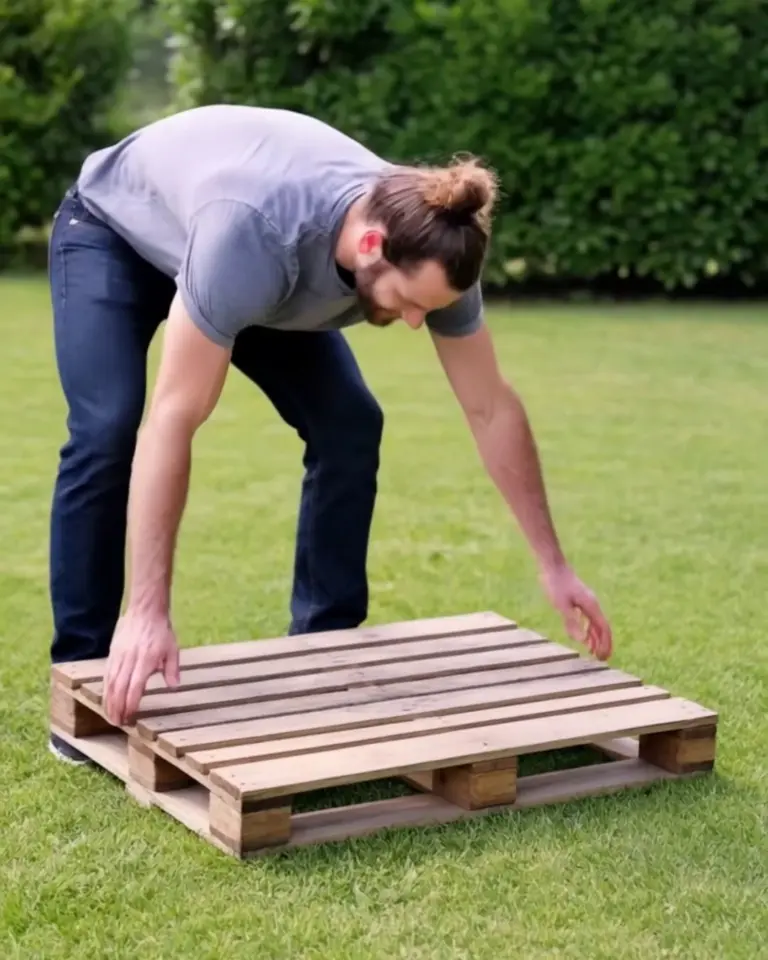
Step 2Set the posts
Mark a rectangle 96 × 48 inches and dig a 10-inch hole at each corner, 40 inches deep. The concrete maker’s data sheet asks for a hole about a third as deep as the post is long, and 4 hours before a post takes any strain.
Set each post plumb and pour in dry mix in two stages, soaking each with water, to 4 inches below the surface.
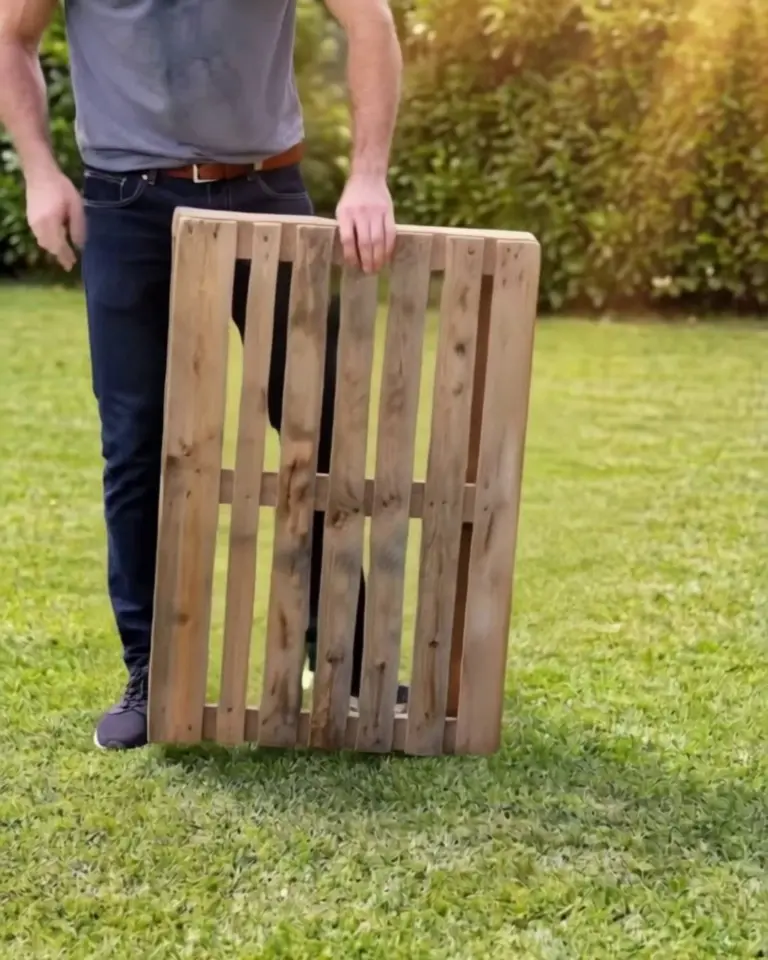
Step 3Build the back wall
Stand two pallets on their long edge between the back posts, on a couple of pavers so they’re off the soil, and screw each one to the posts with four structural screws. Stack two more on top for an 80-inch wall.
Check the bottom row with a level before the top row goes on. Whatever tilt it has, the top row copies.
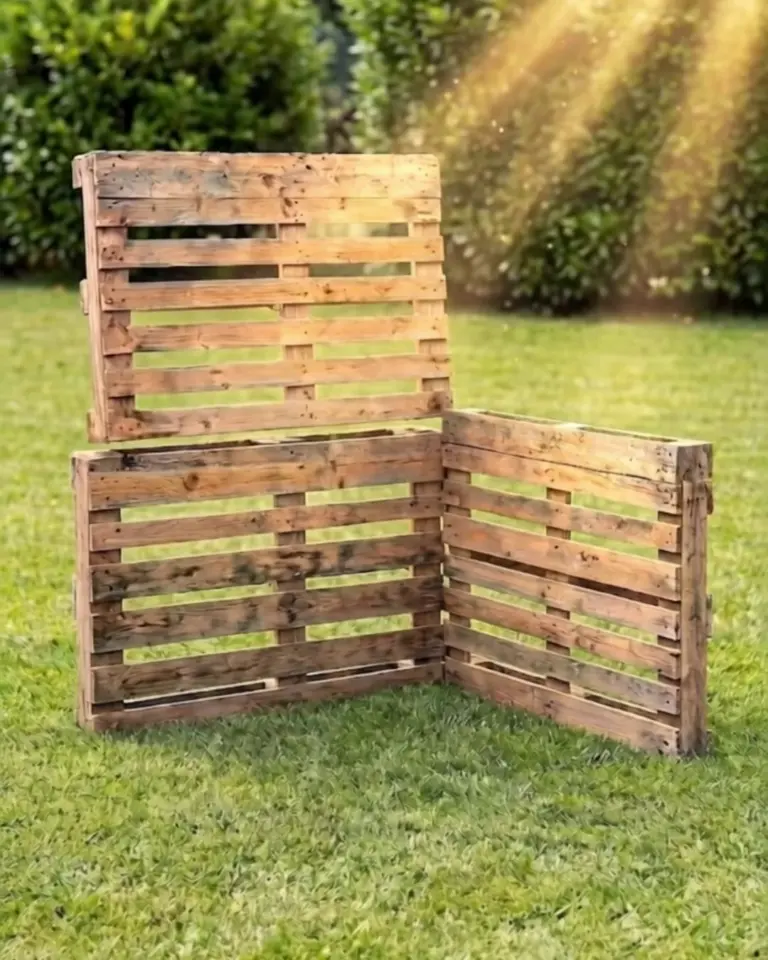
Step 4Add the side walls
Do the same on each side, one pallet wide and two high, screwed to the front and back posts.
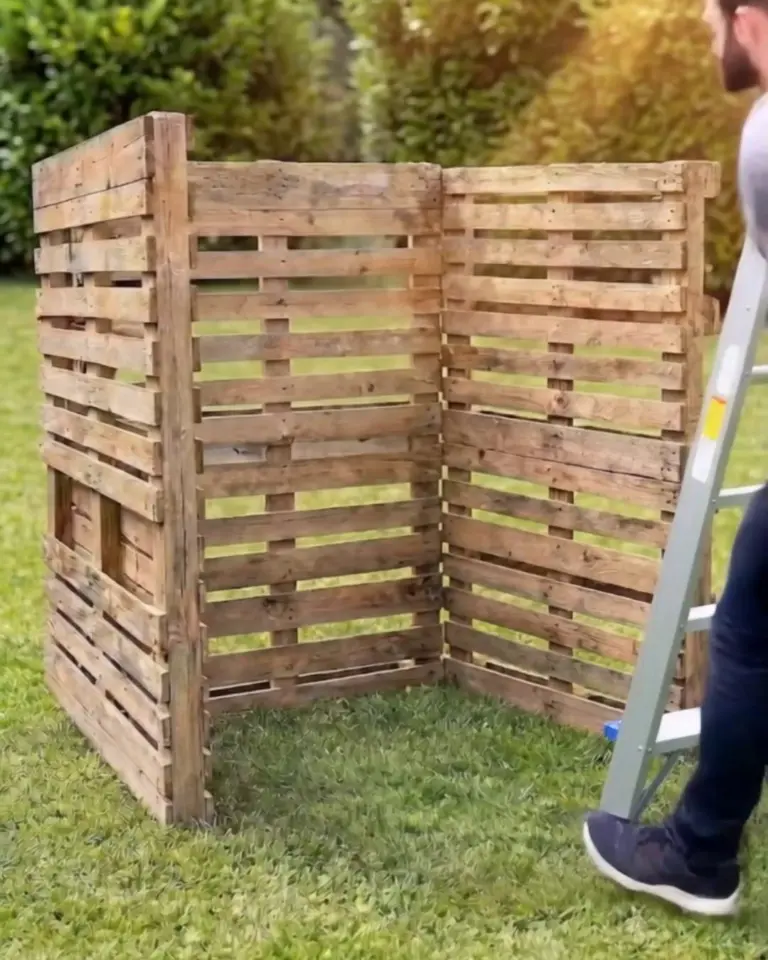
Step 5Tie the corners
Screw an L-bracket across every joint where two pallets meet, inside and at the top and bottom of each row.
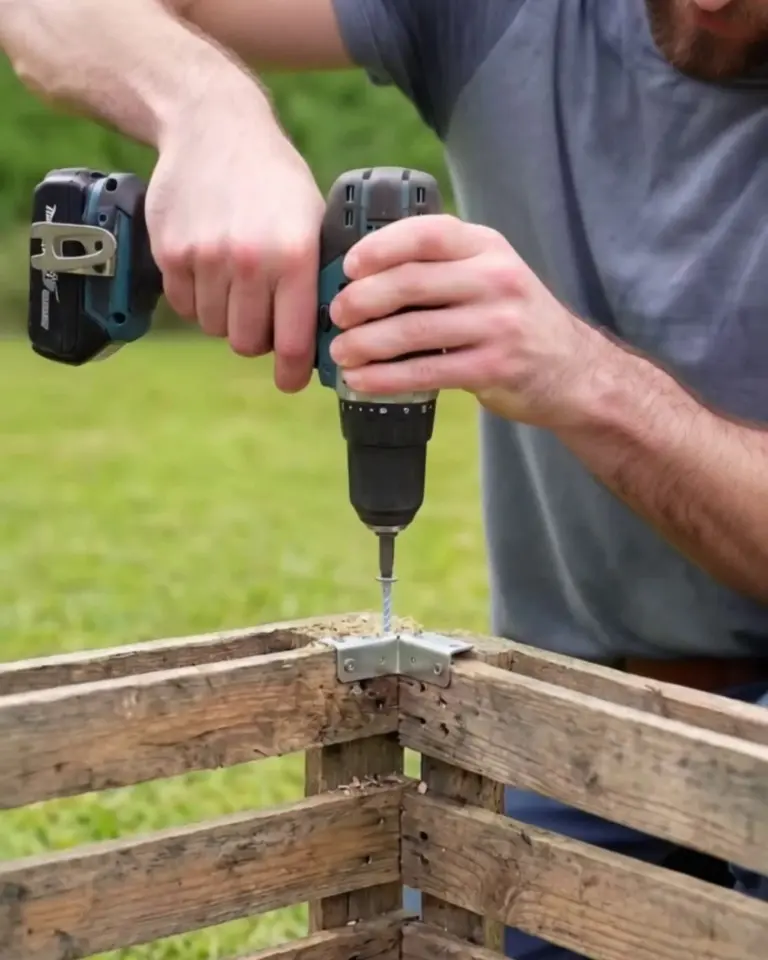
Step 6Stack the bench
Cut five pallets in half lengthwise with the circular saw and screw a 2×4 scrap along any cut edge that lost its stringer. Stack the halves three high and screw them together, two stacks along the back wall and one along the left side.
Three halves come to about 16½ inches, and a 4-inch cushion brings the seat to chair height.
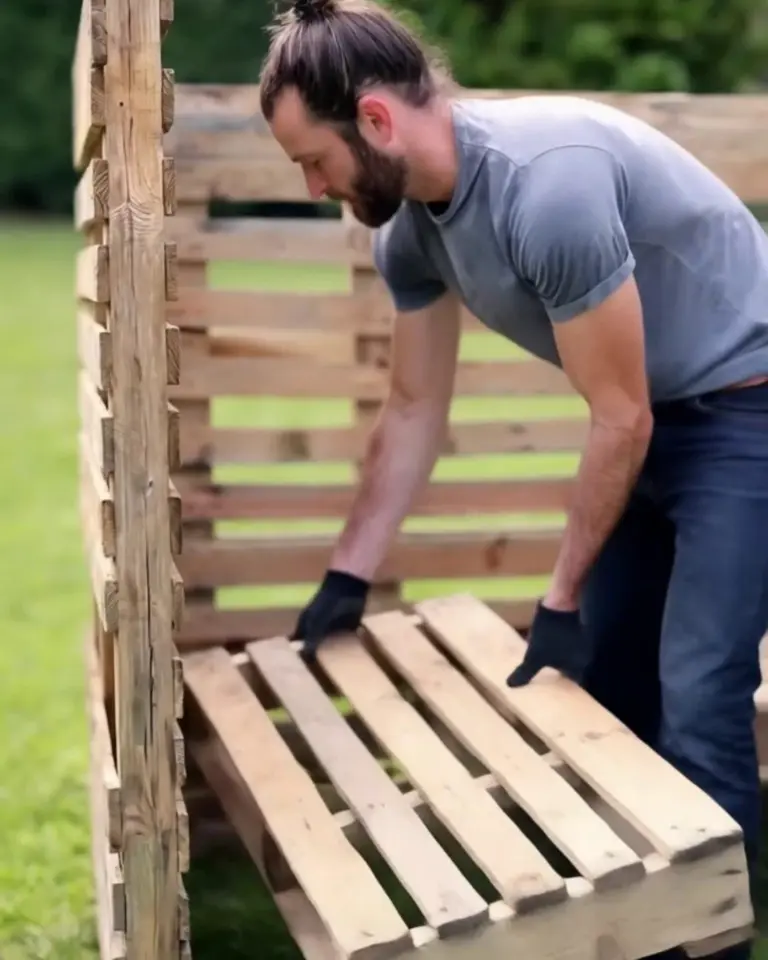
Step 7Put on the roof
Cut the front posts off at 88 inches and the back ones at 81, so the roof drops about 1½ inches per foot toward the back. Screw a 2×4 rail across each pair of post tops, lay the two roof pallets flat across the rails, and screw them down.
Fasten the corrugated panels over the pallets with a 3-inch overhang all around, screws through the crowns of the ridges with their washers.
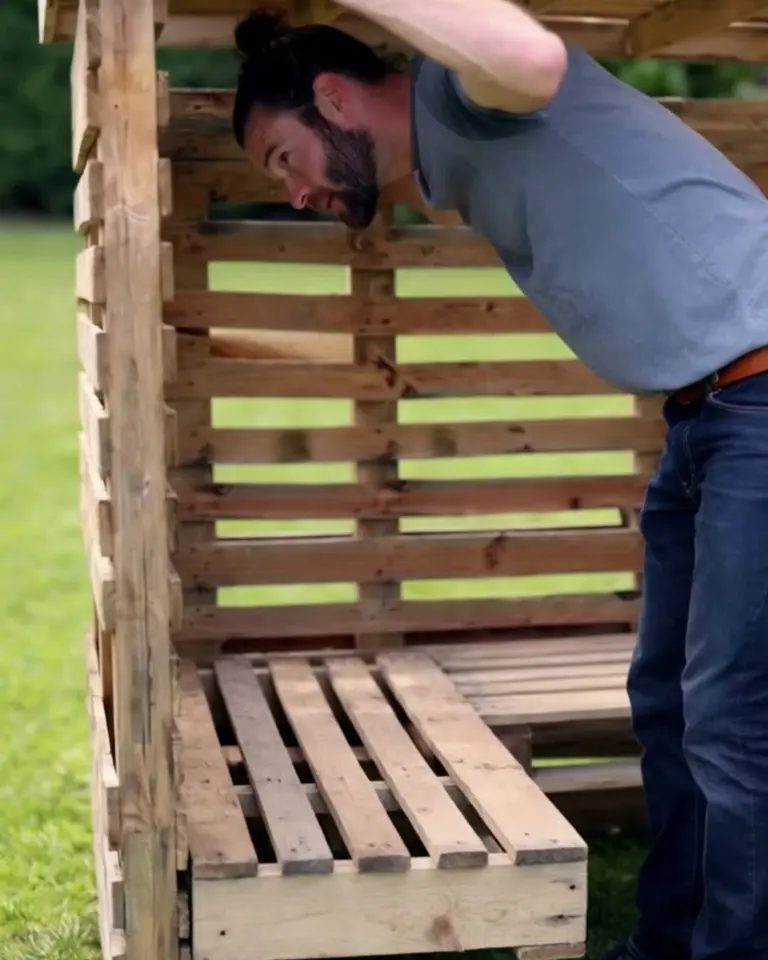
Step 8Prime and paint
Brush primer into every board face and gap, then two coats of white. Rough pallet wood drinks the first coat; a brush works it in better than a roller.
Paint in a dry spell. Pallet wood that’s damp inside blisters the paint within weeks.
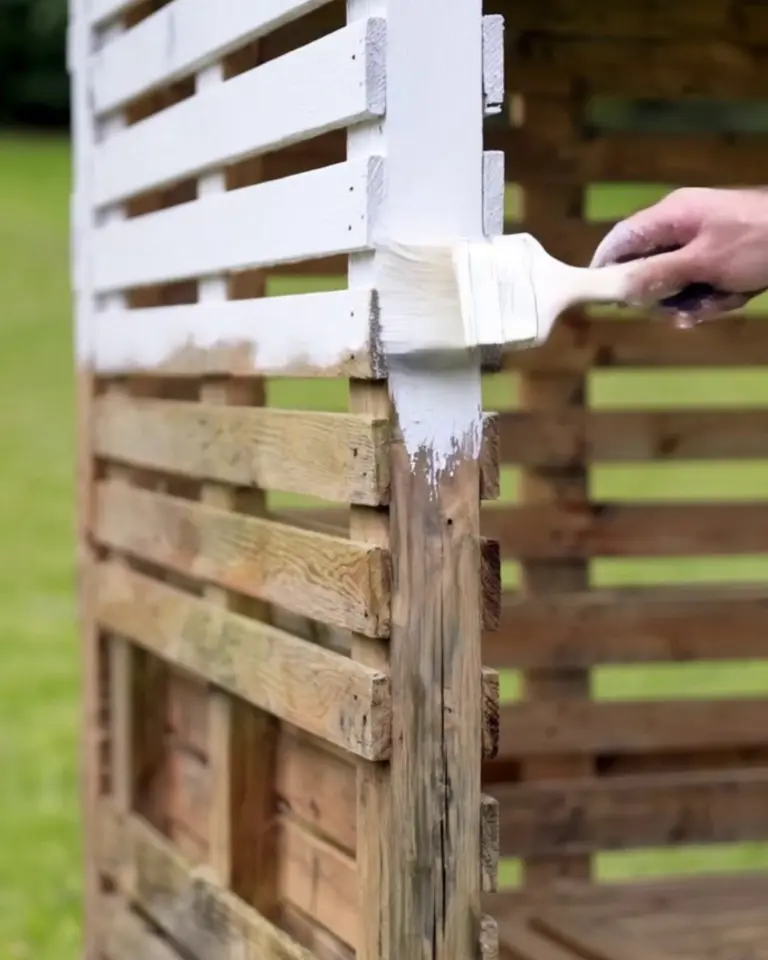
Step 9Hang the lights
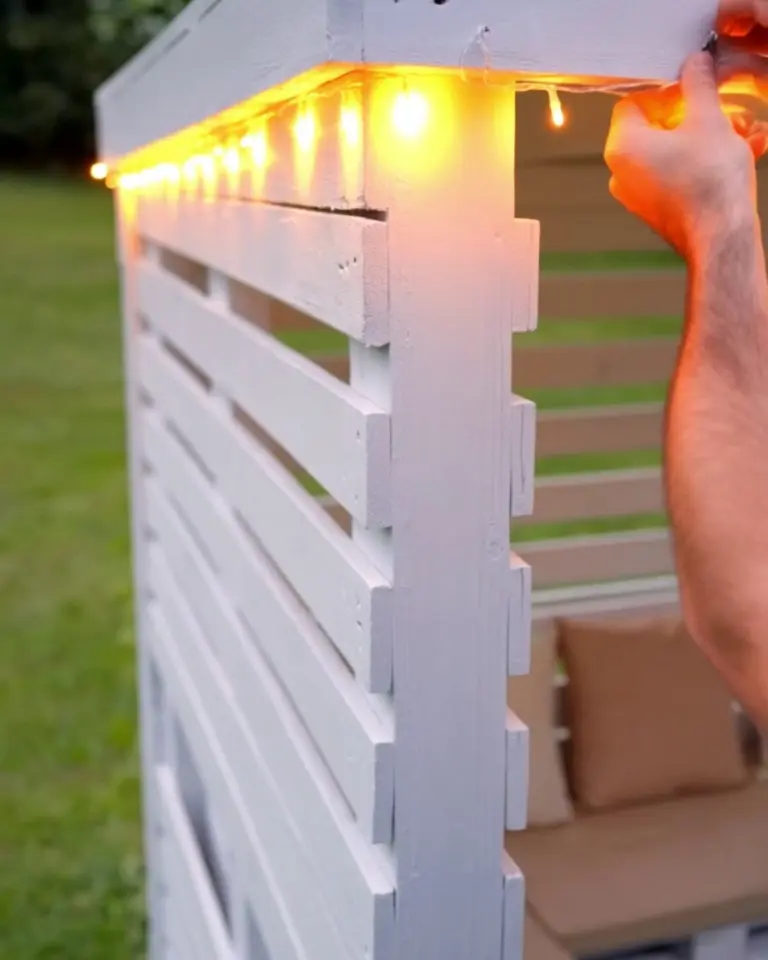
Run the string lights along the inside of the roof edge on small hooks, and plug them into an outdoor outlet with a GFCI. Cushions and pillows go on last.
How the Pallet Cabana Holds Up
The bottom boards wear first, from rain splashing up off the ground. Touch up their paint every year and the rest every two or three.
Pallet wood keeps checking and splintering as it weathers, so sand any rough spots near the bench.
FAQ
The walls still rack side to side
The pallets aren’t screwed to the posts often enough. Add screws every 12 inches up each post, and a diagonal 2×4 brace inside a side wall if it still moves.
Rain drips through the roof
Usually the panels don’t overlap enough, or the screws went in the valleys. Overlap each panel by one full ridge and put every screw through a crown.
Can I skip the posts?
Against a sheltered wall, screwed to it, maybe. Out in the open, a roofed box catches wind like a sail, and we haven’t left one up without posts.
Do I need a permit?
It depends on the town. Small open structures often don’t, but rules about size and distance from the property line vary, so ask before digging.
Where do the cushions go when it rains?
Outdoor cushions shrug off a shower, but a deck box keeps them dry for longer stretches. Ours go in after dinner.
The neighbor’s bus shelter remark stuck. Somebody hung a hand-painted route number on the post.