Our neighbor’s kid watched the first hard rain push a brown fan of soil out from under the bottom frame and across the patio bricks, then asked if the garden was leaking. It was.
You’ll also love: How to Build a Tipped Pot Flower Bed in the Front Lawn, How to Grow Red Onions in Egg Flats Along the House, How to Grow a Side Yard Watermelon Garden on Pallets.
That tier had been full for three days. We shoveled it out onto a tarp, stapled landscape fabric across the frame’s underside, and shoveled it all back in; the next rain ran out clear.
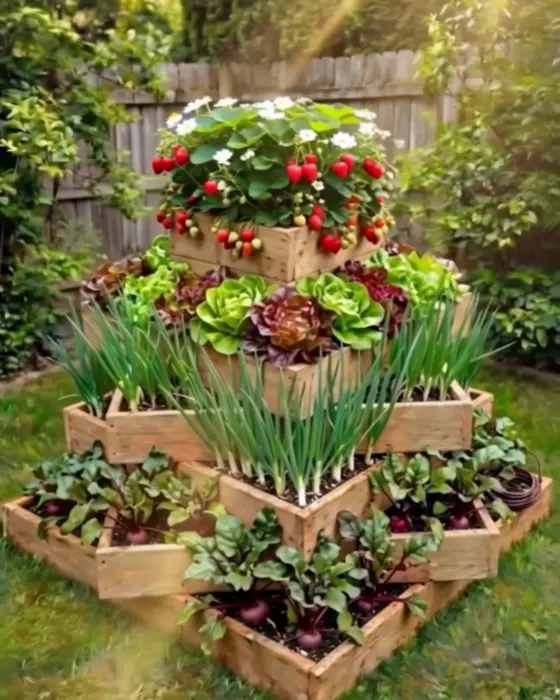
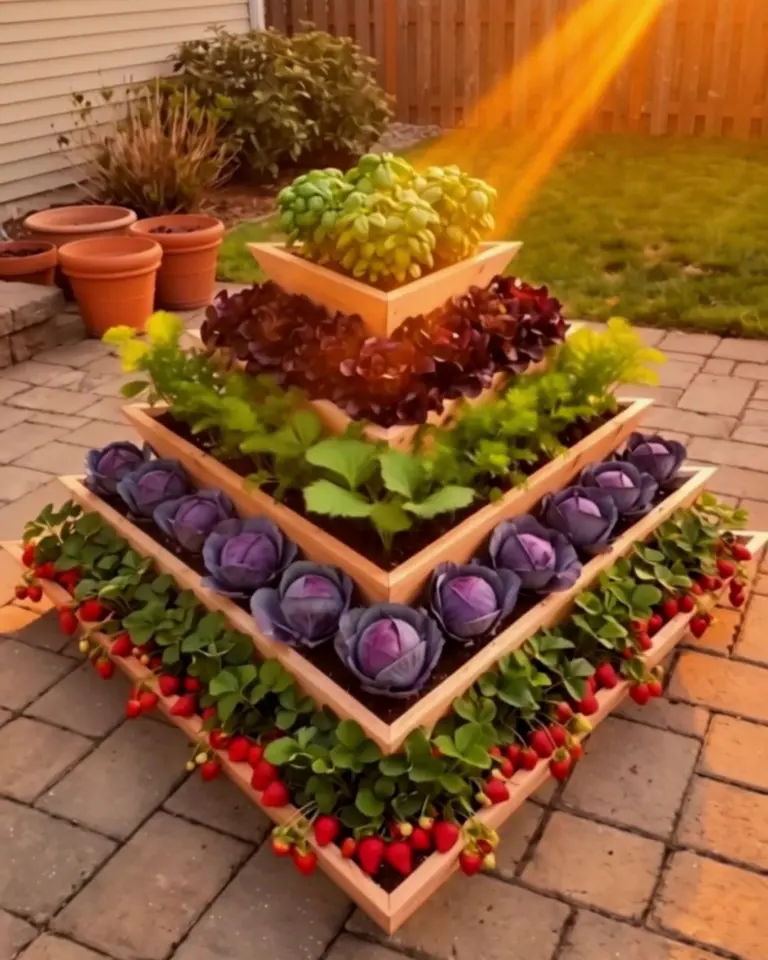
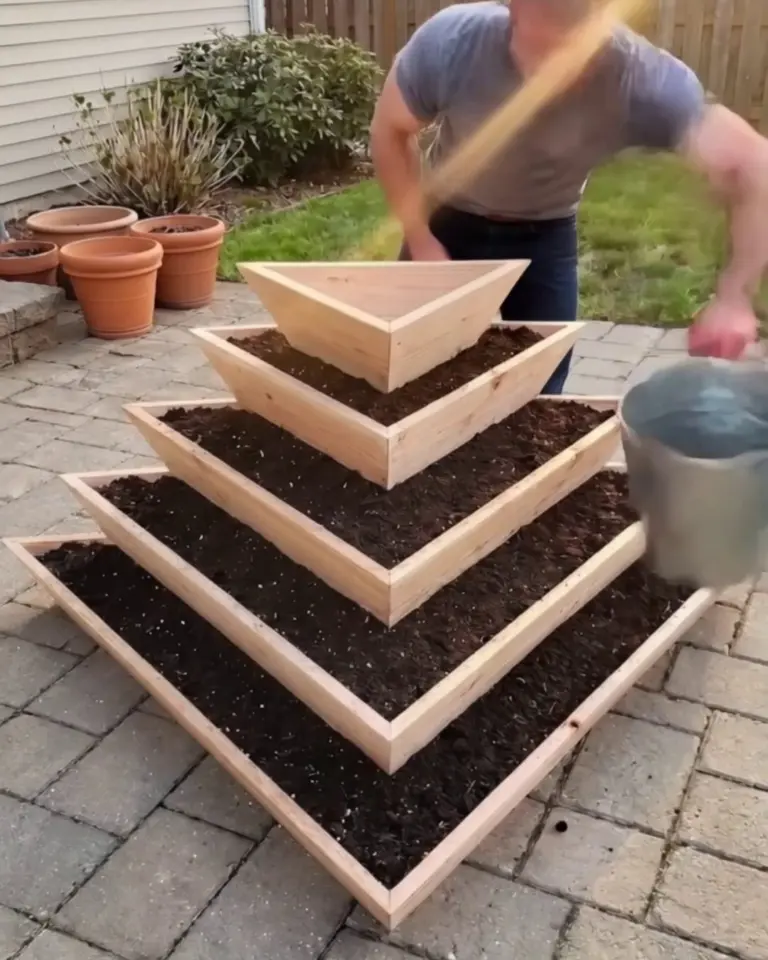
Our triangle raised garden bed is five cedar triangles stacked into a pyramid on the patio, about 8 feet per side at the bottom and 28 inches tall, planted from strawberries at the base to basil on top.
Fresh-cut cedar smells like a closet, and the soil thuds off the bucket.
Why Each Tier Steps In 18 Inches
Our first sketch had each triangle 12 inches shorter per side than the one below. We built the bottom two frames and stacked them before cutting the rest, got barely 2 inches of open soil between them, and took the second frame apart to trim it from 84 inches to 78.
Every 6 inches off the side length moves the next frame in about 1¾ inches, and the 1½-inch board takes part of that back. At 18 inches per step, each tier keeps just under 4 inches of open soil along its sides and about 7 inches in each corner, room enough for strawberry crowns and lettuce.
We expected the top to be the hard tier to keep watered. The bottom strip dried first: one board deep, on pavers that soak up the afternoon sun.
Materials & Tools
Not in the $460: a miter or circular saw that bevels to 30°, a drill, a staple gun, a wheelbarrow, the speed square and the watering can.
Cutting list: three boards each at 96, 78, 60, 42 and 24 inches, measured along the outside face, both ends beveled at 30°. The 96s use whole boards with only the bevels trimmed, so pick the three straightest.
The basil at the top: NC State’s plant toolbox lists full sun and moist, well-drained soil for sweet basil, planted after the last frost. The top tier gets the most sun of all.
Same idea, square: our cinder block pyramid garden stacks four tiers of block instead of wood.
Watch the Build
Step by Step
Step 1Build and set the bottom frame
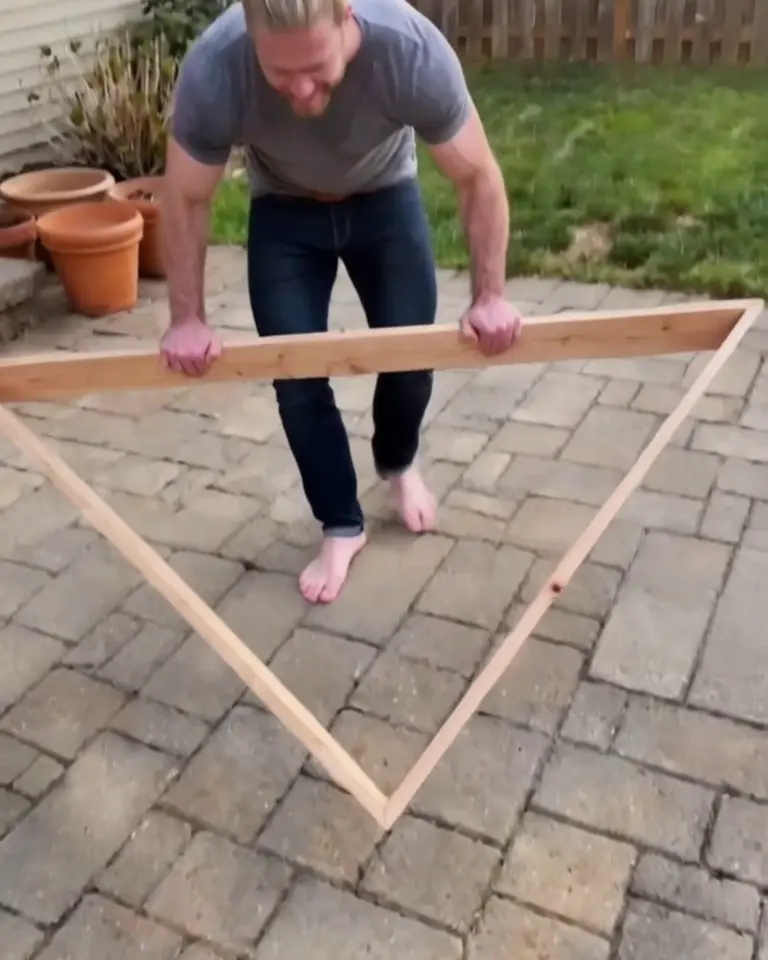
Bevel both ends of three 96-inch boards at 30°, so each is longer on its outside face. Stand them on edge in a pinwheel, each board’s end butted against the inside face of the next, and drive three screws per corner through the face into that end, pilot holes first.
Flip the frame, staple fabric across the whole underside in two strips overlapped 6 inches, staples every 4 inches, and trim it flush. Turn it back over and set it on the patio.
Step 2Fill the first tier
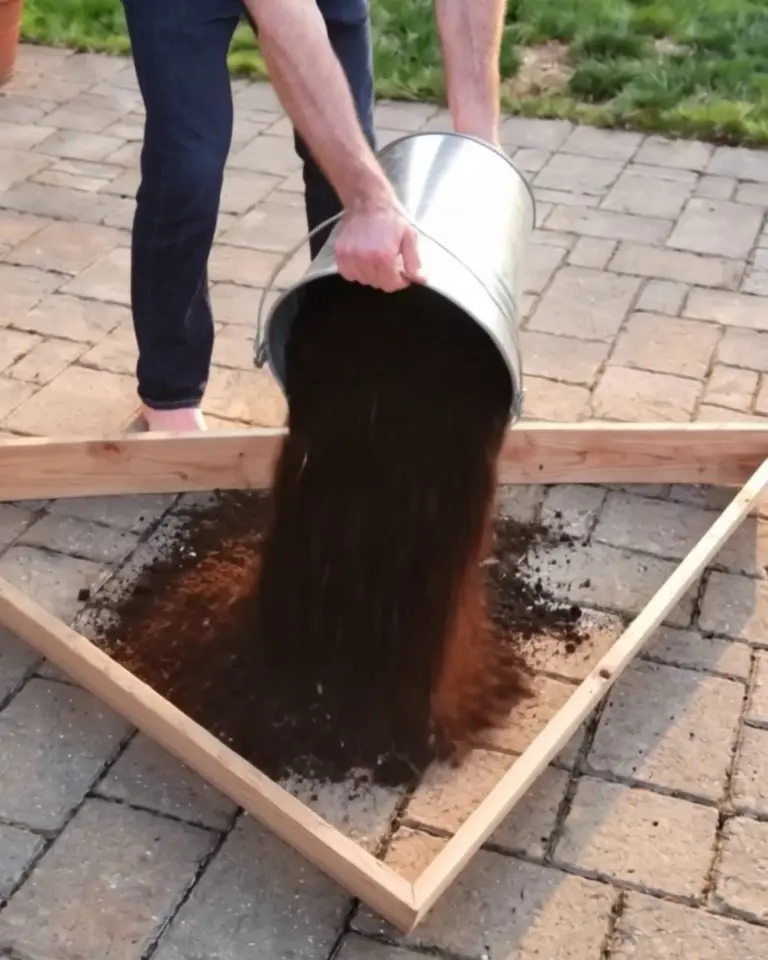
Bucket in soil to the top of the boards and rake it level, then press it lightly with your hands; the next frame sits on it.
A cubic yard of bulk mix equals 18 bags and, even with the delivery fee, cost us less. Have it dumped on a tarp, or the driveway keeps a brown square.
Step 3Set the second tier
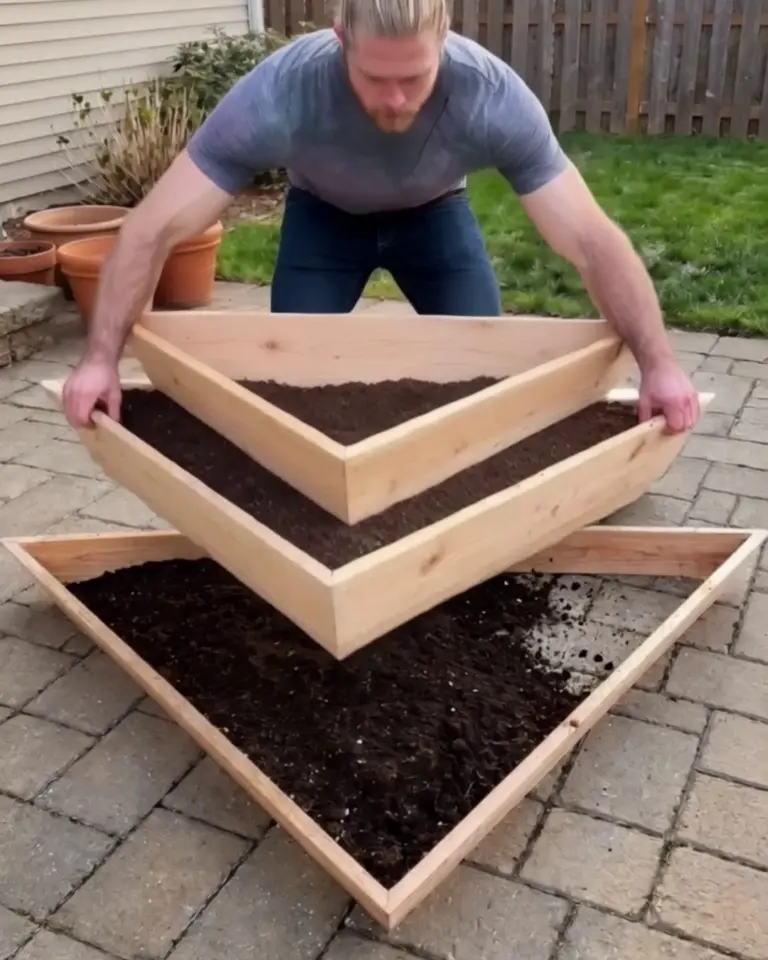
Build the 78-inch triangle the same way, with no fabric, and center it on the soil. The open strip should be the same width along all three sides, just under 4 inches.
Step 4Fill and repeat
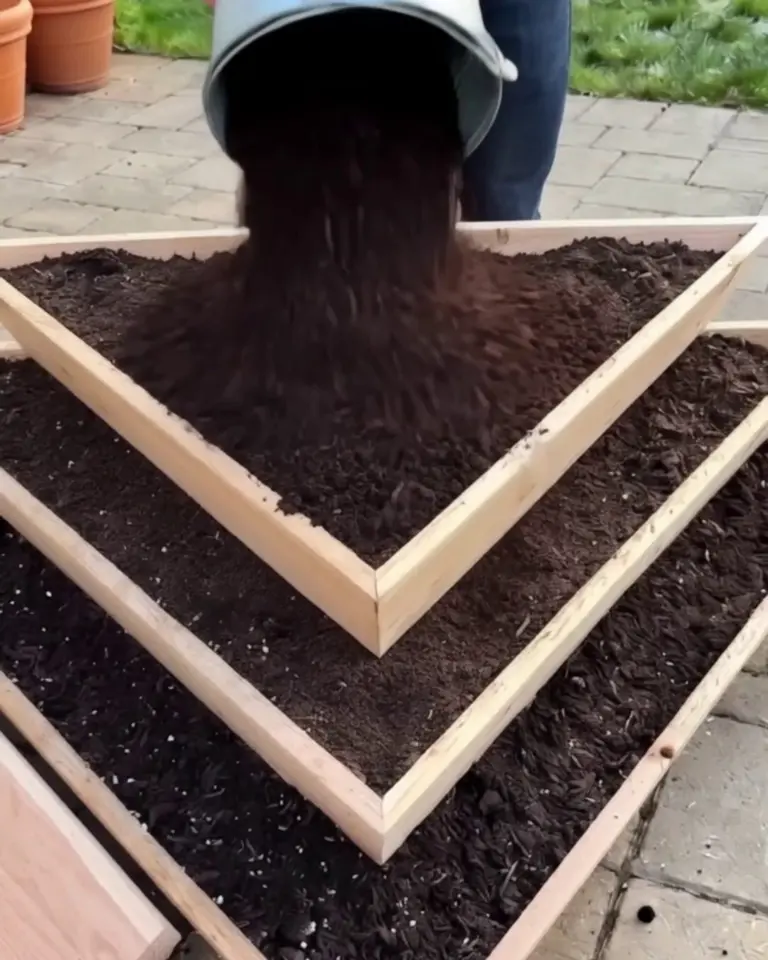
Fill the second tier the same way, then build, set and fill the 60-inch and 42-inch frames.
Soak each tier with the hose before the next frame goes on. Dry mix settles later, and it takes the frames above it out of level when it does.
Step 5Top it off
Set the 24-inch triangle on top and fill it. Water the whole stack slowly; it settles an inch or so, and the two extra bags top up the low spots the next day.
Step 6Plant the bottom tier
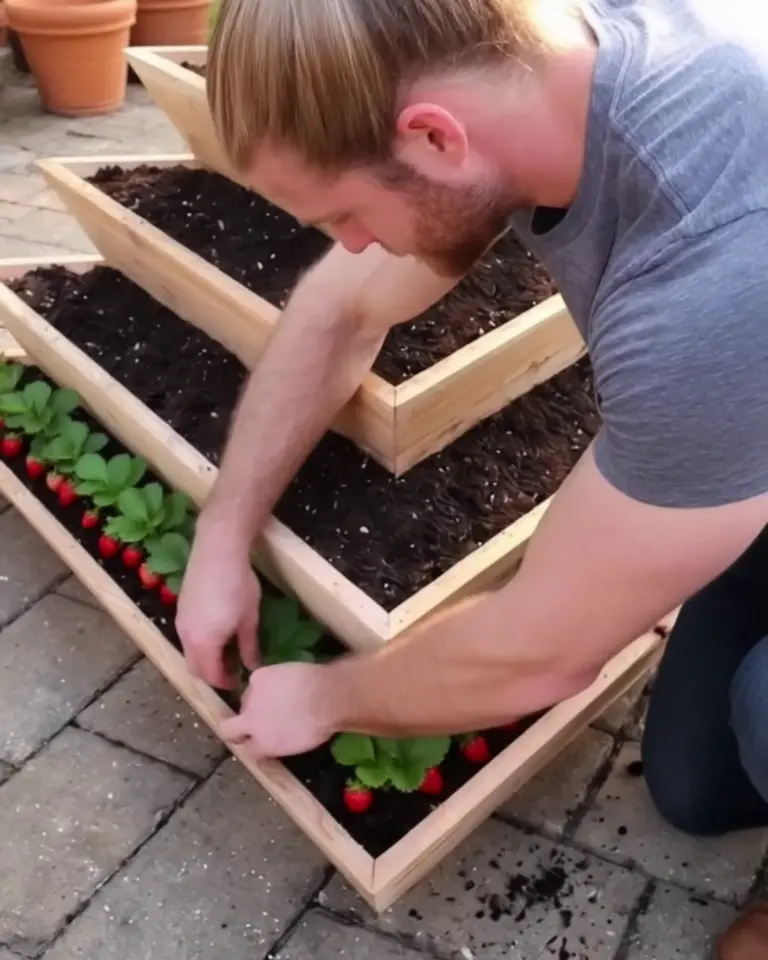
Set strawberries about 12 inches apart along the base strip; a bundle of 25 fills it with a few to spare. Their runners will hang over the edge.
Plant the crown too deep and it rots, too high and the roots dry out. The point where the leaves meet the roots should sit right at the surface.
Step 7Cabbage and carrots in the middle
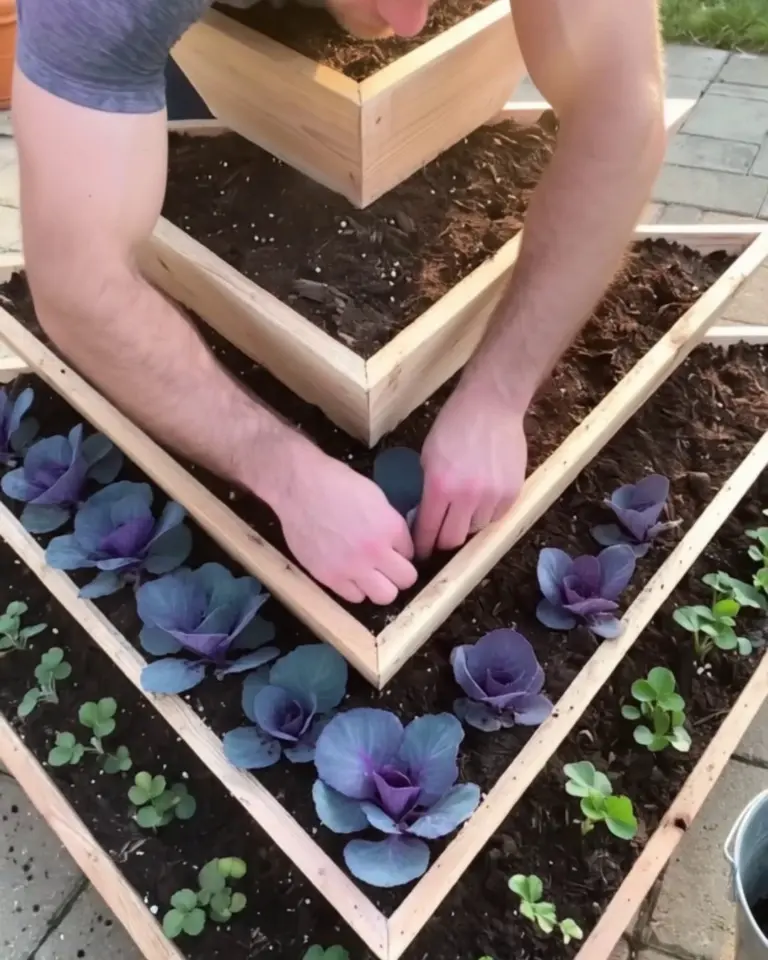
Put the red cabbages in the second tier, one in each corner and one halfway along each side. Sow carrot seed thinly in the third, and thin the seedlings to 2 inches apart once they’re up.
By midsummer the cabbage heads lean out over the strawberries. Nothing taller than cabbage belongs in that tier.
Step 8Lettuce and basil on top
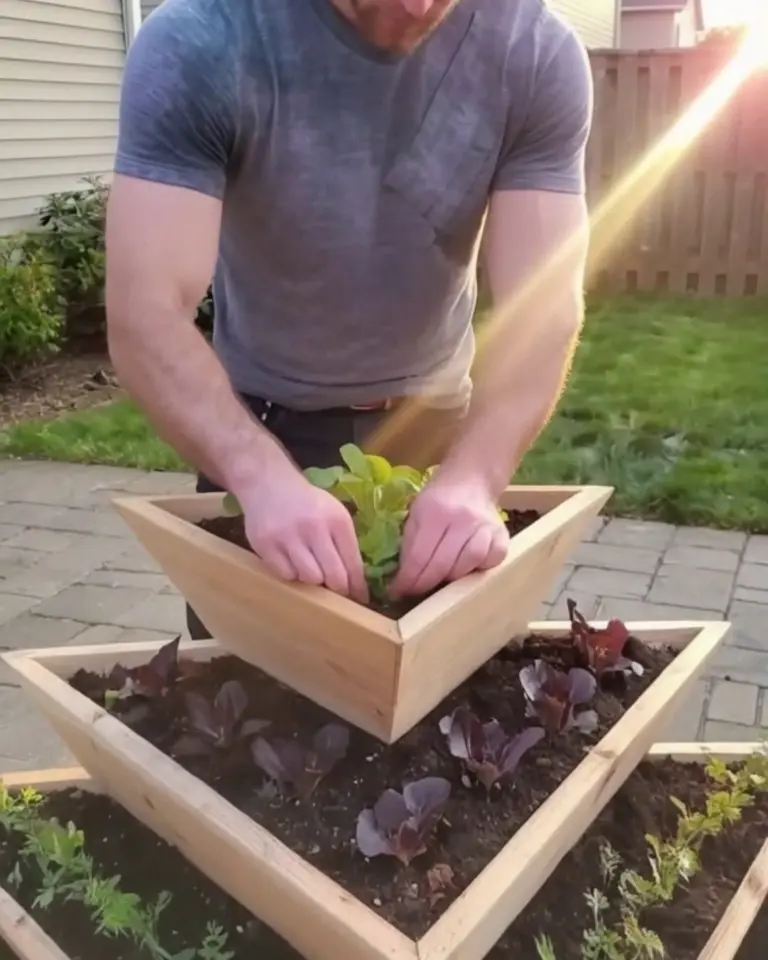
Plant six red lettuces around the fourth tier and three basil in the top triangle. Pinch the basil tips every week or so to keep it bushy.
Step 9Water from the top
Water the top tier and let it soak down through the stack, then give the bottom strip an extra drink. In hot weather, check the soil there every day.
A soaker hose snaked along the strawberries, on a timer, ended the daily trips for us.
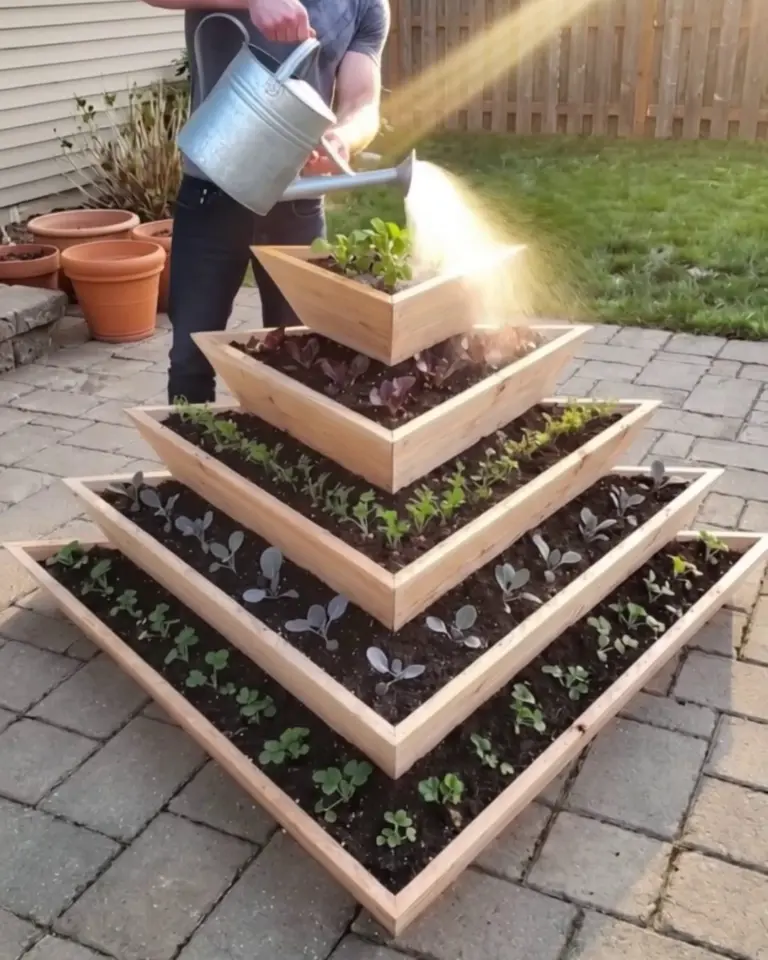
Step 10Pick from every side
Pick lettuce leaves from the outside in and basil from the tips. Strawberries keep coming through summer if you plant an everbearing kind.
Nothing is out of reach from the patio. The center of the bottom triangle is only about 28 inches from each side, and the upper tiers come closer still.
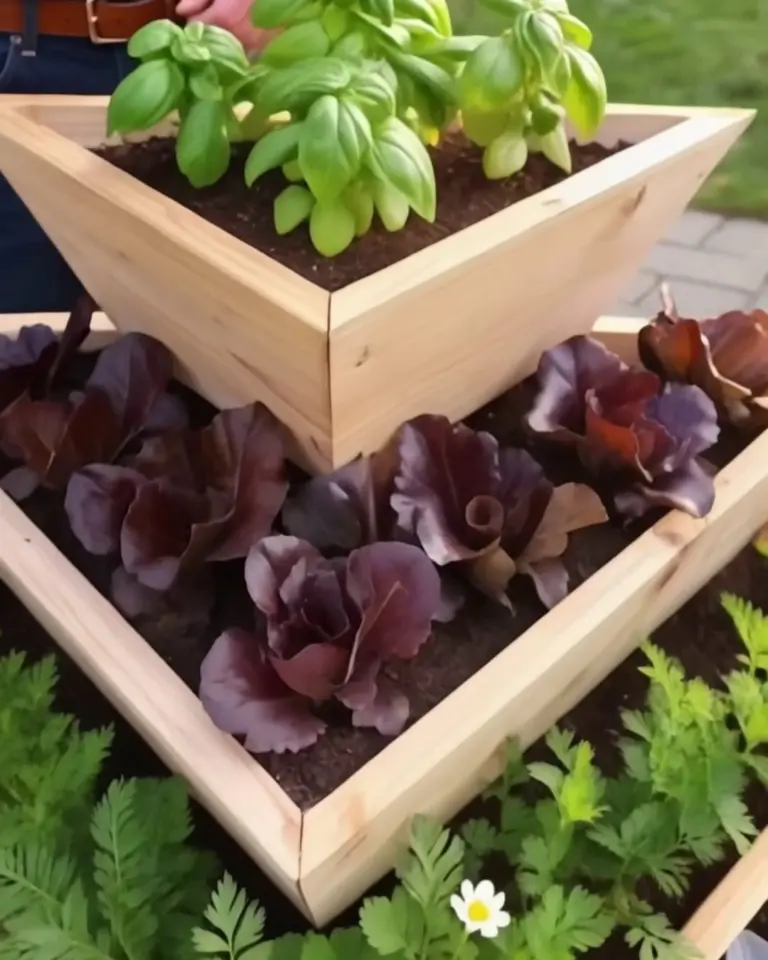
How the Triangle Raised Garden Bed Holds Up
Water seeps out under the bottom frame after every watering, and the pavers along its edge have picked up a faint tea-colored stain from the cedar that sun fades over a few weeks. The upper tiers lose a couple of inches of soil a season; a bag of compost each spring brings them back up.
Cedar weathers gray, and the corner screws loosen before anything else does, so tighten them each spring.
FAQ
The corners won’t close
The bevels aren’t a true 30°, or one board in the set came out longer than the other two. Recut the long one to match.
Soil keeps washing onto the patio
The fabric has a gap, usually at a corner or where the two strips overlap. Ours stopped once the overlap went to 6 inches and the staples to every 4 inches.
Can I put it on grass instead?
Yes, and it drains better there. Lay wet cardboard under the bottom frame to smother the grass, and skip the fabric.
My cabbages are shading the strawberries
Cabbages get much wider than they look as seedlings. Pull a few lower leaves, or plant something smaller, like beets, in that tier next year.
Will the frames last through winter?
Cedar handles weather well. We haven’t kept this one through a full winter yet, so we can’t say how the corner joints will do.
The kid now checks the patio for brown fans after every storm. So far, none.