Standing a 7½-foot patio umbrella in an empty stock tank takes more base than it looks: our 30-pound one went over in the first gust, before a single bag of sand was in.
You’ll also love: How to Make a Glass Gem Concrete Planter on a Wire Frame, How to Make a Bed Frame Garden Bed from an Old Iron Bed, How to Build a Pallet Cabana with a Bench and String Lights.
A 50-pound base held. Our neighbor, who keeps hens too, watched the second try and asked why we didn’t just let ours dig under the deck like hers do.
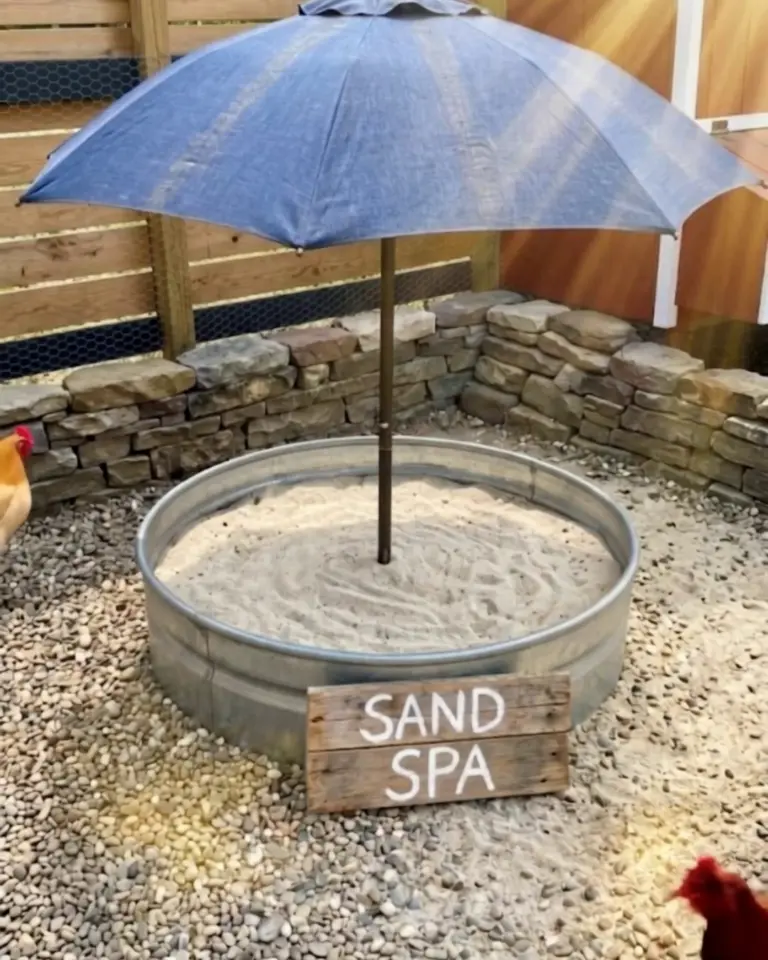
Our chicken dust bath is a 4-foot galvanized stock tank on gravel, with about 5 inches of play sand and diatomaceous earth inside and the umbrella’s shade over all of it.
Dry sand hisses out of the bag, and the tank’s thin wall rings when a hen lands on the rim.
Why a Tank Beats a Hollow in the Run
A bare hollow in the run turns to mud with every rain. The tank holds loose sand off the ground, and its 1-foot wall keeps most of what the hens fling inside.
We expected them to pile in the first afternoon. They walked around it for two days and went in only after we raked a few shovels of dry garden soil into the sand.
The rooster still hasn’t used it. He stands on the rim and watches.
Materials & Tools
Not in the $350: a drill, a rake, the scrap board for the sign, and the garden soil, which came from the yard.
The mix: the Merck Veterinary Manual describes dust boxes of about 50 pounds of washed play sand with about 6 cups of food-grade diatomaceous earth, and hens bathing in them carried markedly fewer lice. We kept that ratio, about 48 cups across the 8 bags.
Umbrella size: a 7½-foot canopy covers the 4-foot tank with about 20 inches to spare all around. A 9-footer throws more shade and catches more wind.
Under the tank: on bare dirt or grass, lay a gravel pad 5 feet across and 2 inches deep first, about 3 cubic feet, so the drain holes have somewhere to empty. Leftovers from a project like our white gravel garden path will do.
Watch the Build
Step by Step
Step 1Drill the drain holes
Turn the tank upside down and drill six ½-inch holes through the floor with the step bit, spaced evenly about 4 inches in from the wall. File off the burrs inside and out.
Sweep up every steel shaving before the hens come near. They peck at anything shiny.
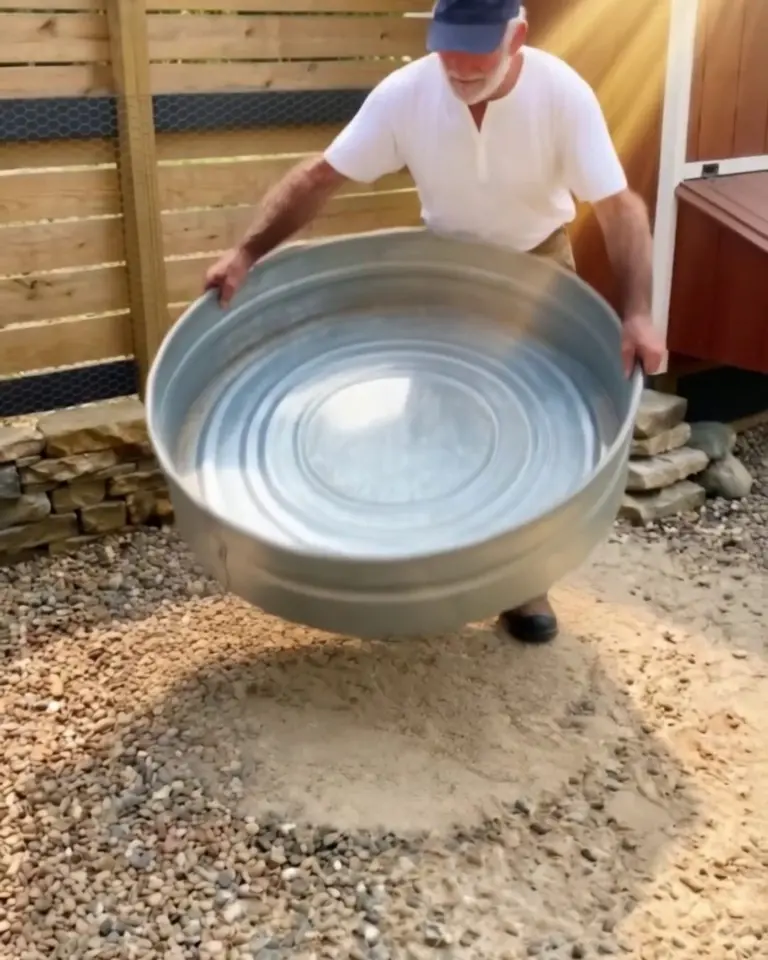
Step 2Set it on the gravel
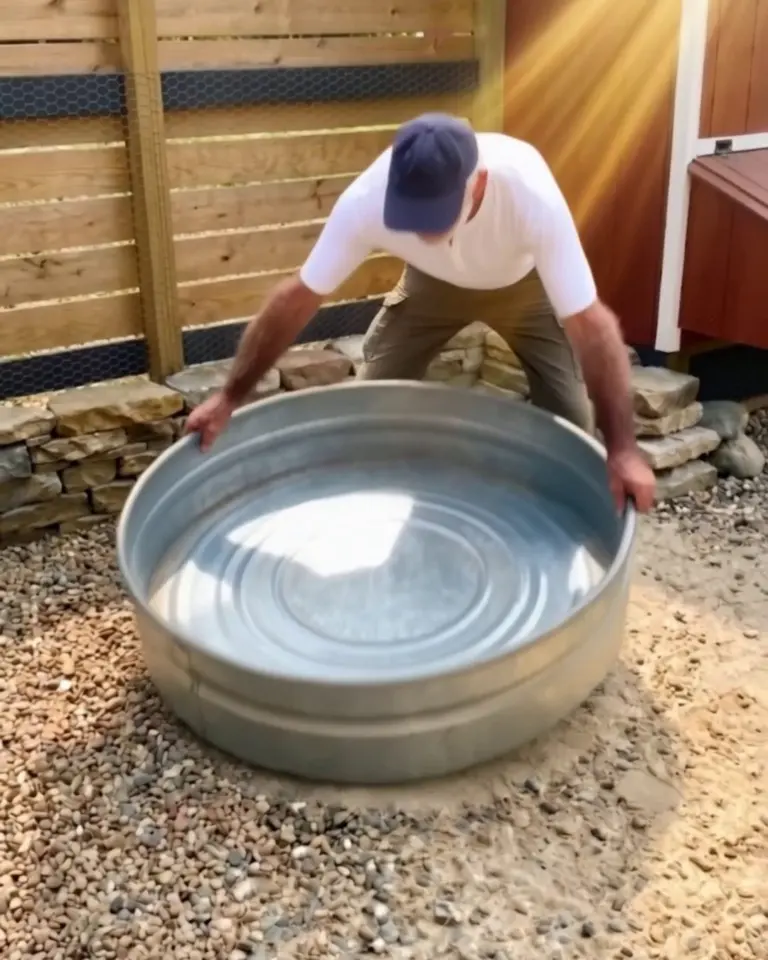
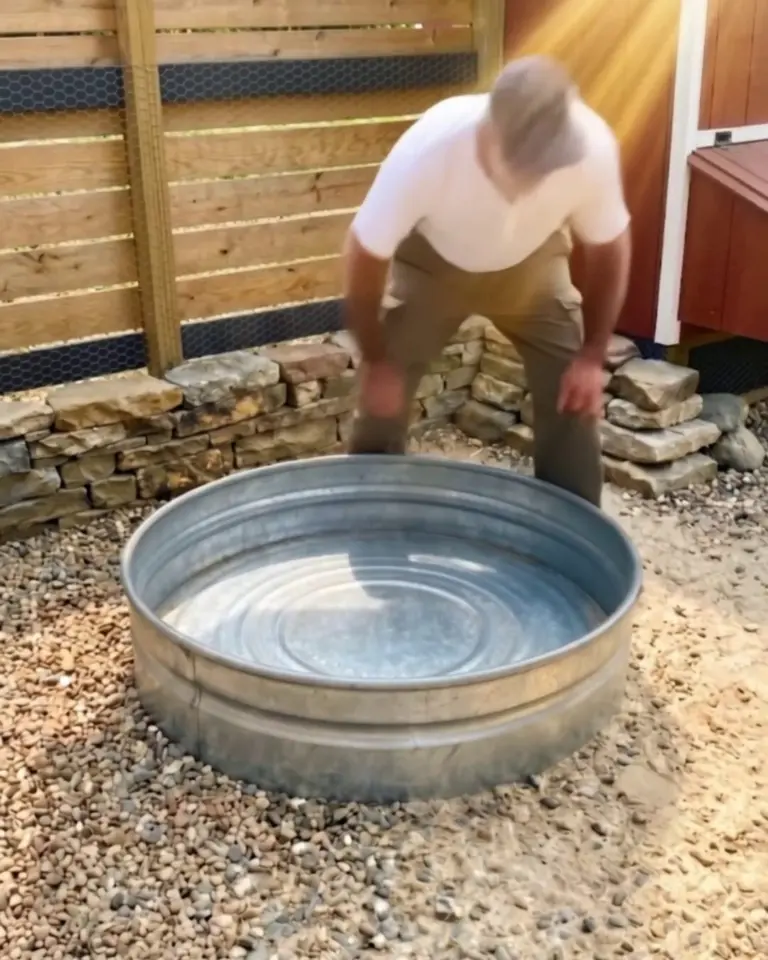
Turn the tank right side up and set it where the run gets morning sun, pressing it down until it sits flat. Rock it; if it wobbles, scrape gravel from under the high side.
Keep it off the low spot where water stands after rain, and a few yards from the coop door; sandy feet track straight into the nest boxes.
Step 3Line the floor
Cut a 4-foot circle of landscape fabric and lay it flat on the floor over the holes. Water drains through it, and the sand stays in.
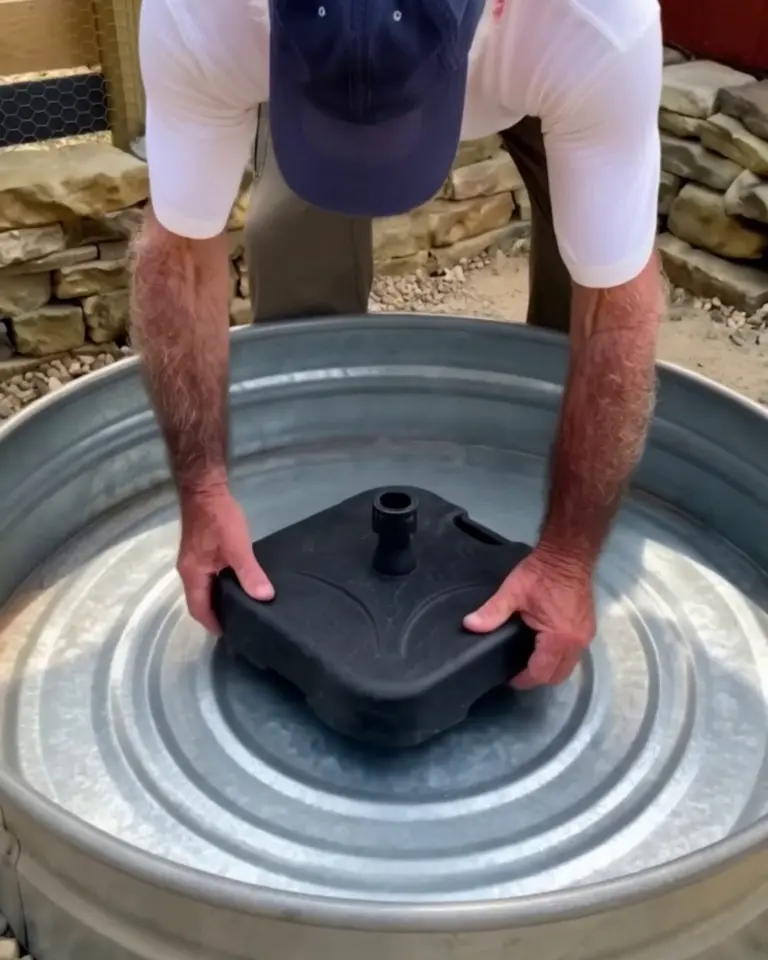
Step 4Center the base
Set the 50-pound base in the middle of the tank, on top of the fabric, with the pole socket pointing straight up. A 20-inch base leaves about 10 inches between each corner and the curved wall.
If your base is the fillable plastic kind, fill it with sand or water before the umbrella goes in. Empty, it weighs a fraction of the number on the label.
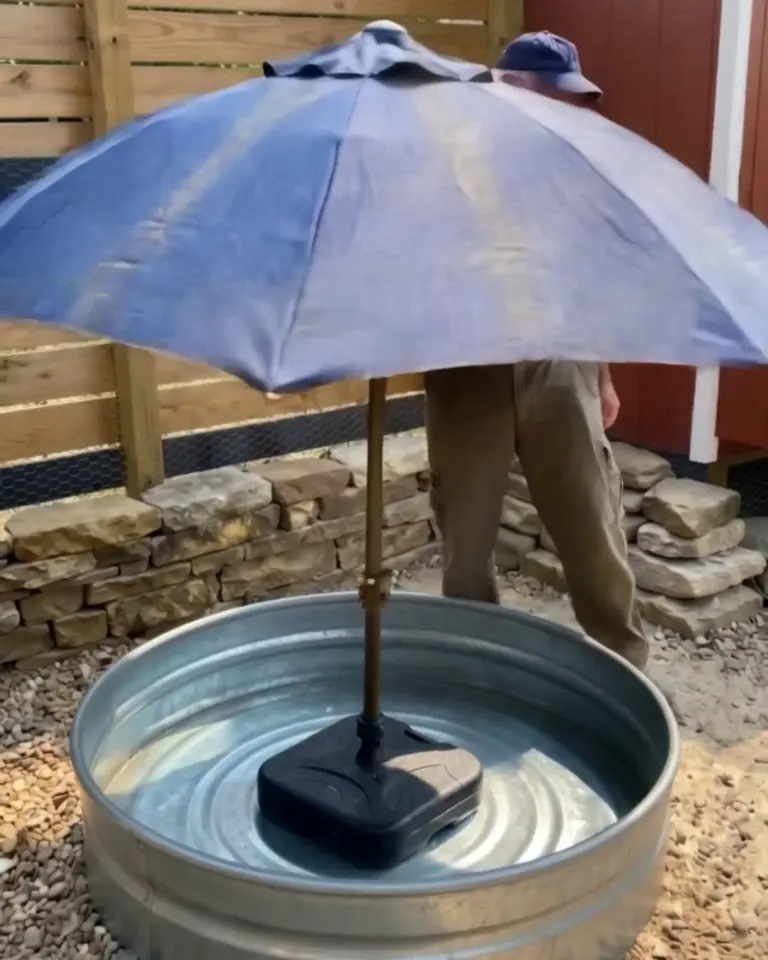
Step 5Raise the umbrella
Drop the pole into the socket, tighten the knob, and crank the canopy open. If yours tilts, angle it toward the afternoon sun.
Close it whenever wind is forecast. Open, it’s a 7½-foot sail on a 50-pound anchor.
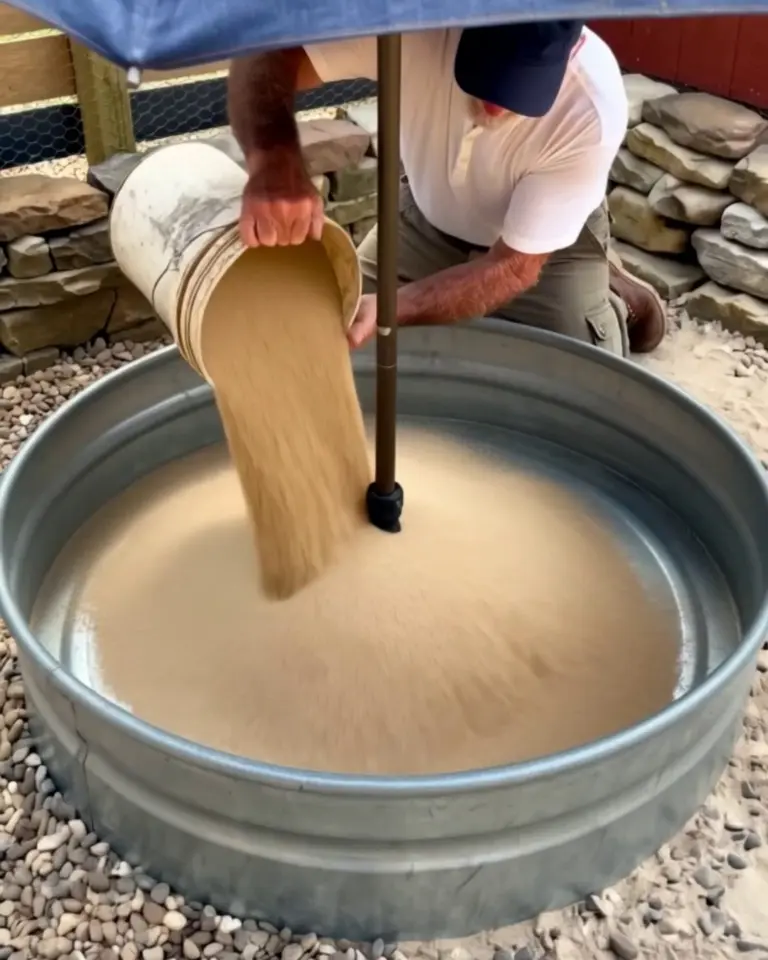
Step 6Pour in the sand
Empty the 8 bags in around the base, sprinkling about 6 cups of diatomaceous earth over each bag’s worth and raking it through as you go. Rake the whole tank level, about 5 inches deep, roughly flush with the top of the base.
Wear the mask and work upwind. Raking the DE in, rather than dusting it over the top, keeps more of it out of the air the hens breathe.
Step 7Rake in some soil
Break up three or four shovels of dry garden soil, with no clay in it, and rake it into the top inch. Ours went in on the third day, after the hens had circled the tank long enough.
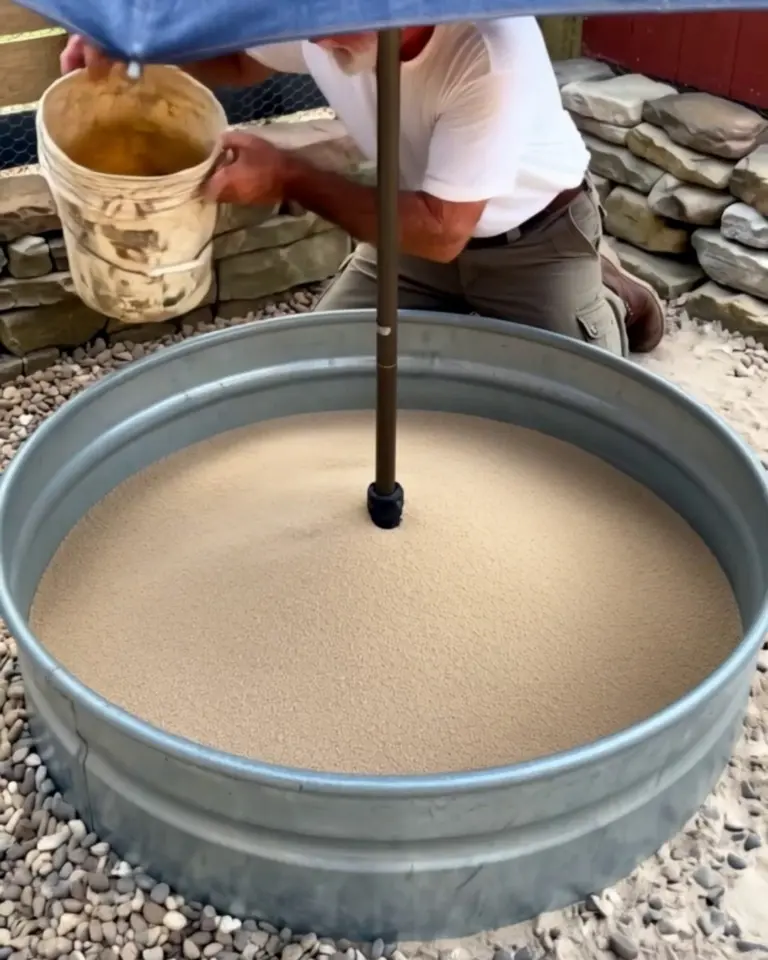
Step 8Lean on a sign
A scrap board with SAND SPA painted on it leans against the front of ours. The hens don’t read.
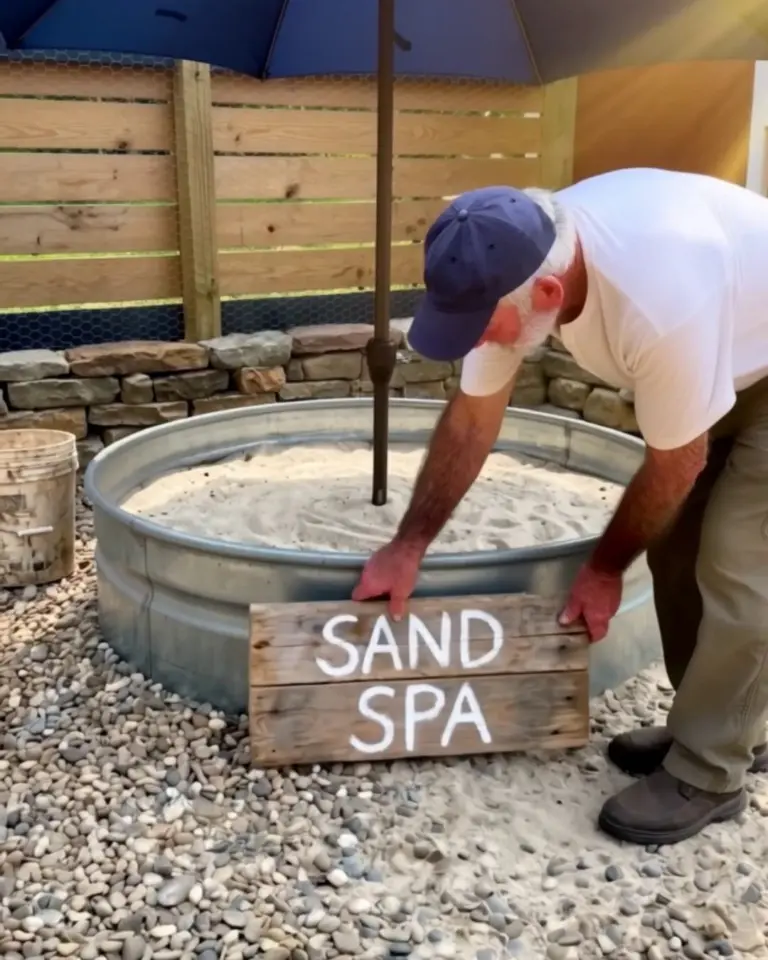
Step 9Let them find it
Scatter a handful of scratch grains on the sand the first day so the hens step in. After that, expect fluffing, flinging, and a tank that’s a little emptier every week.
A bag of play sand every month or so keeps the level up. Scoop out droppings when you see them, and the hens keep coming back.
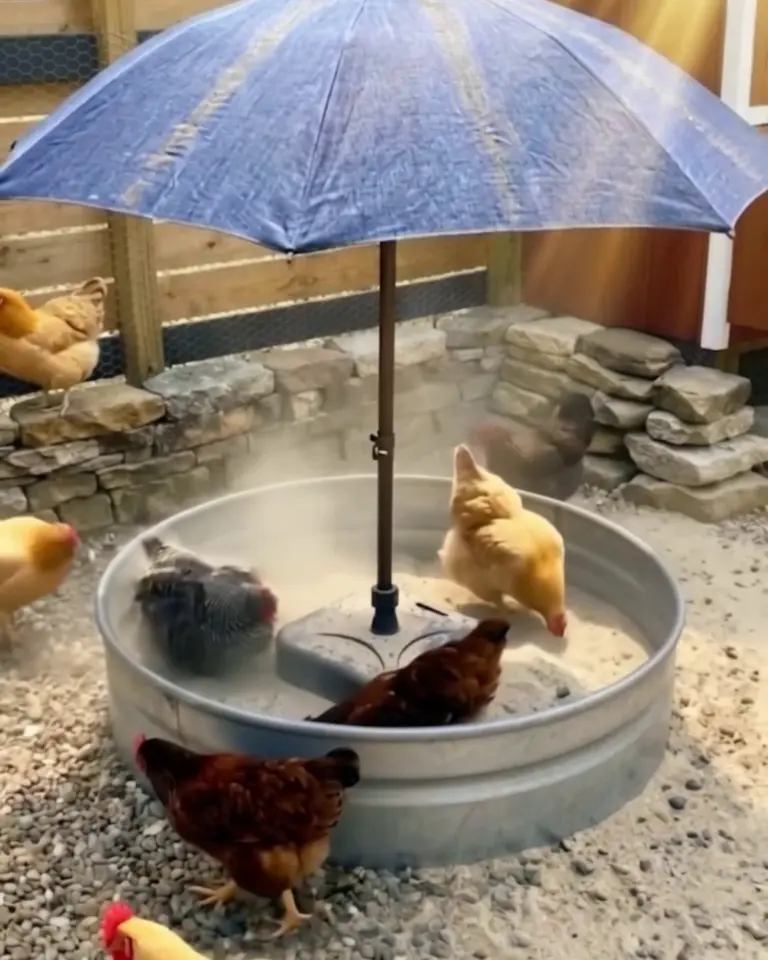
How the Chicken Dust Bath Holds Up
Rain still blows in under the canopy and packs the top of the sand, so it gets raked loose once the surface dries; after a soaking, the holes take about a day to drain the tank. Sand that stays wet against the steel floor is also what eventually rusts a stock tank, the other reason for the holes.
The umbrella fabric fades and frays first, within a season or two of full sun. The galvanized tank will outlast several of them.
FAQ
My hens won’t go near it
Plain sand isn’t what most hens pick on their own. Rake in a few shovels of dry, crumbly garden soil and toss some scratch grains on top.
The sand turned to a crust after rain
Wet sand packs as it dries. Rake it loose, and if it stays wet for days, lift the tank and check that the holes aren’t sitting in mud.
Can I skip the diatomaceous earth?
Yes; the hens bathe in plain sand and soil just the same. The drop in lice the manual describes came from sand treated with DE, though. If the flock already has lice or mites, ask a vet before counting on a dust box.
What about wood ash?
Plenty of keepers mix in a little from clean, untreated wood. We haven’t tried it, so we can’t say what it adds.
Will the umbrella blow over?
Ours has stayed up through breezy afternoons with the canopy open. When a storm is coming, we lift the umbrella out of the base and lay it down.
Last we looked, the rooster had moved from the rim to the sand. Standing in it, not bathing.