Cut the border trench with a flat spade, not a round shovel. A flat blade is about 7 inches wide, the same as one river rock lying on its side, and it leaves a clean wall for the rocks to lean on.
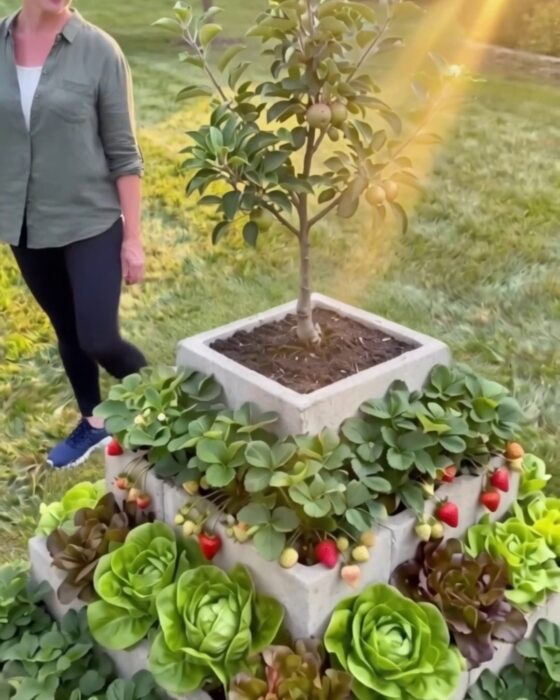
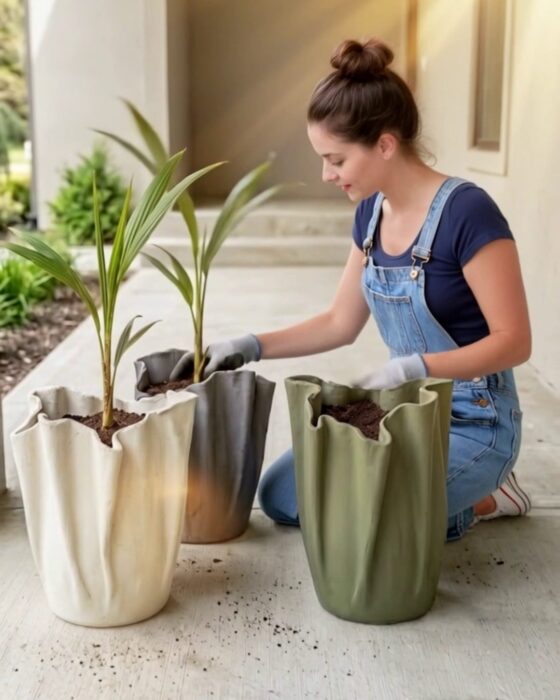
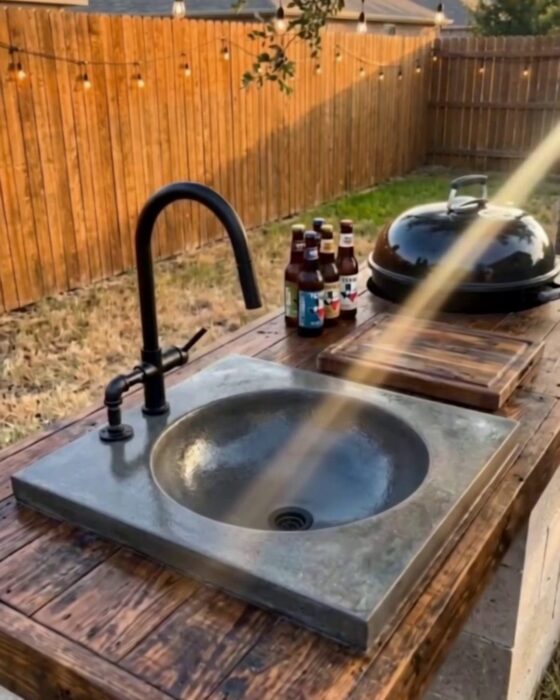
You’ll also love: How to Build a Cinder Block Pyramid Garden in Four Tiers, How to Make Draped Concrete Planters Over Nursery Pots, How to Make a Concrete Outdoor Sink with a Basketball Mold.
Round shovels scallop the edge, and every scallop shows once white gravel goes in next to it.
The first bag of gravel split on the wagon and left a white trail back to the driveway.
Dry weeds snap like kindling when you rip them out of baked ground, and the dust gets in your teeth. A friend looked at the finished white gravel garden path and asked how long before the dog digs it up.
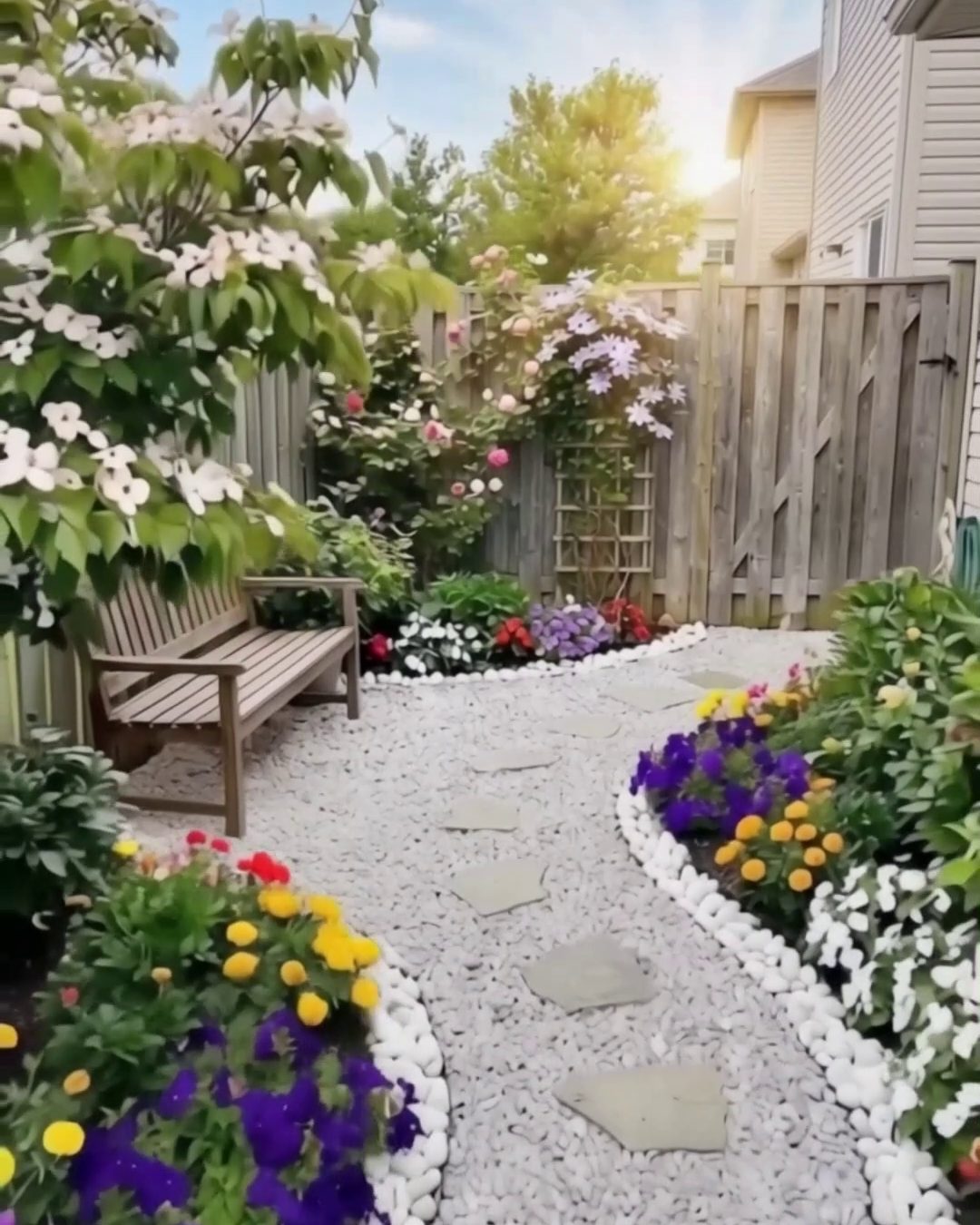
Why Fabric, Gravel and a Rock Edge Work Together
Landscape fabric under 2 inches of gravel starves weeds of light, and the rock border keeps the gravel from creeping into the beds. Either one alone fails within a season.
White gravel also reads as a path after dark. On a shady side yard it’s the one thing you can see from the back door.
We expected the flagstones to wander in loose gravel. Set into shallow scraped beds, they haven’t moved more than a finger’s width.
Materials & Tools
Gravel size: crushed stone between ⅜ and ¾ inch locks together and stays put. Round pea gravel rolls under your feet.
Bags or bulk: half a cubic yard of gravel delivered often costs less than 22 bags. The border rock is the pricey line either way: 3- to 5-inch white pebbles run about $40 a bag, over half the Cost, and a stone yard selling by the ton usually beats that.
The curve: look at it from the back door before cutting anything. A bend that seems gentle from the yard can read as a zigzag from the house, and the hoses move in seconds.
Not in the $620: the flowers, the bench and the trellis.
Watch the Build
Step by Step
Step 1Clear the weeds
Rake out the dead growth, then pull the live weeds by the root; a garden fork loosens the stubborn ones. A strip 20 feet long and 8 feet wide filled four contractor bags for us.
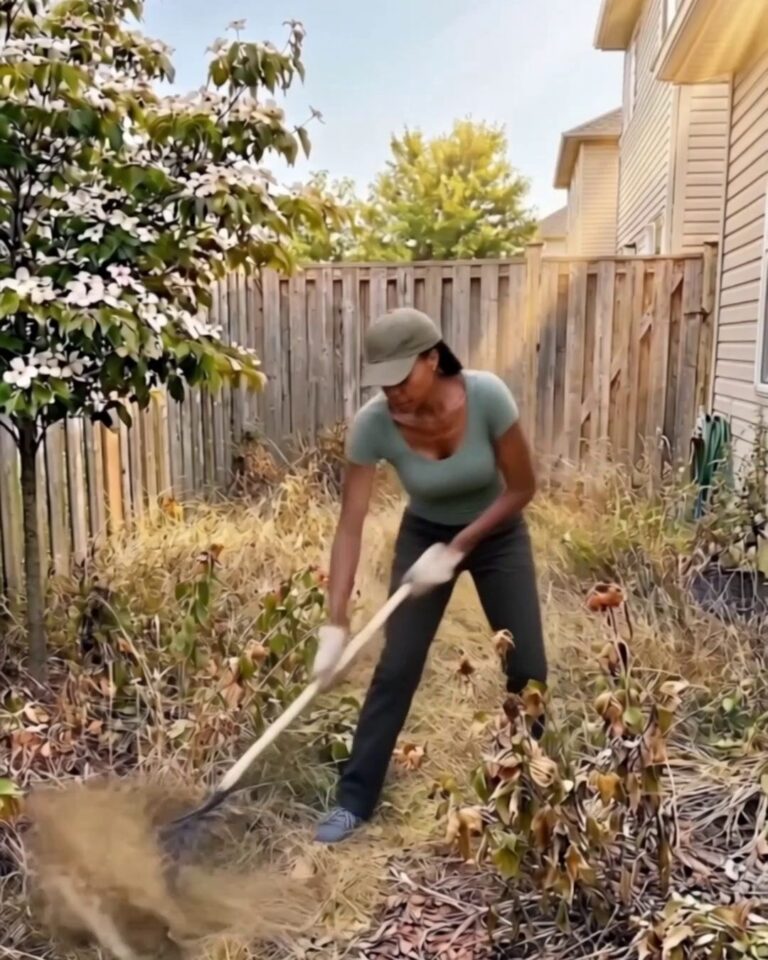
Step 2Loosen and level
Turn the top 4 inches of soil where the flower beds will go. Rake the path area smooth with a slight crown in the middle so rain runs off to the sides instead of pooling on the fabric.
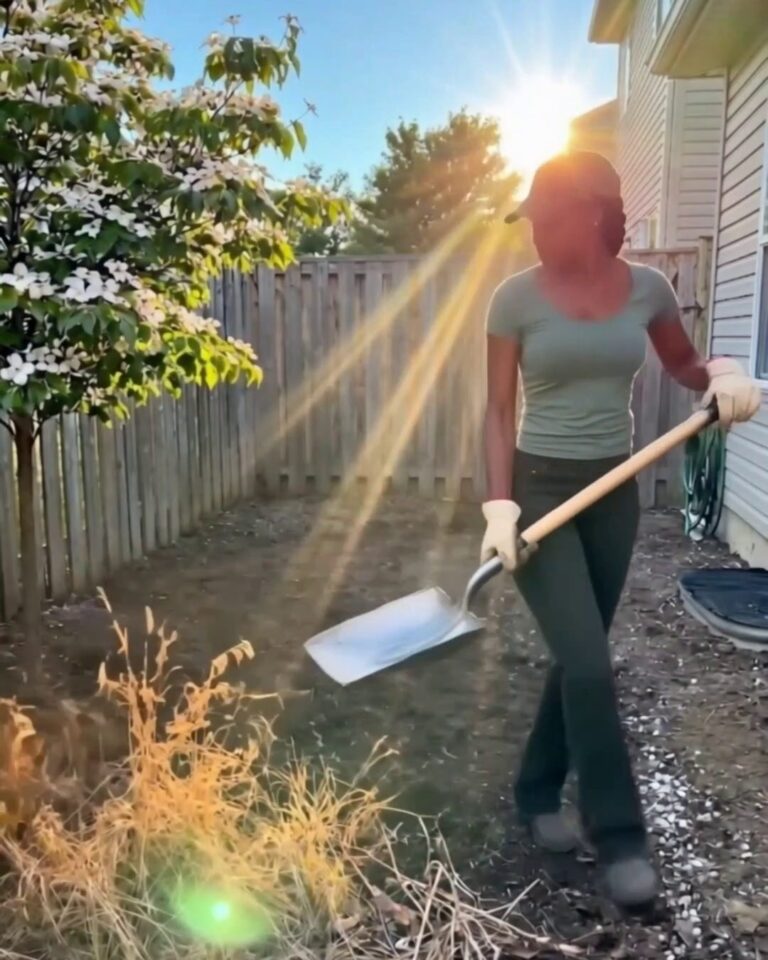
Step 3Mark the curve and cut the trench
Lay two garden hoses where you want the edges, 36 inches apart, and walk the curve once to check it. Cut along each hose with the flat spade, 3 inches deep and one blade wide.
Roll the fabric down the path, overlap any seam by 6 inches, and pin it every 2 feet and at every seam.
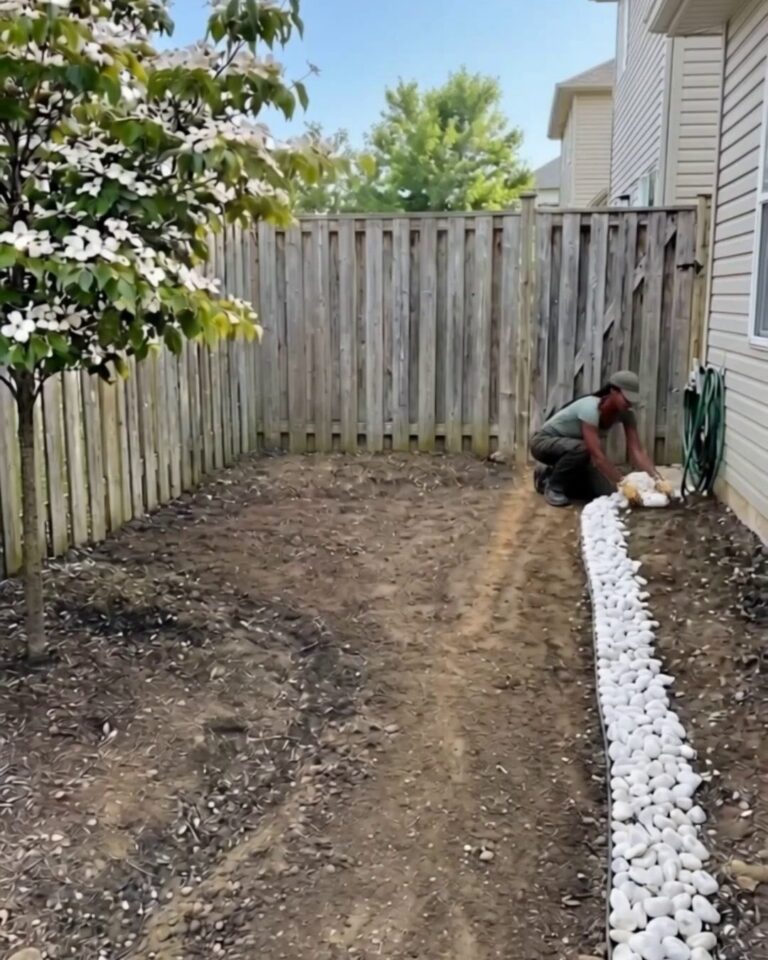
Step 4Set the river rock borders
Stand the rocks in the trench shoulder to shoulder, about three to a foot, and press each one down until it doesn’t rock. The two curved edges come to about 44 feet, and a 30-pound bag lines roughly 5½ feet, so eight bags.
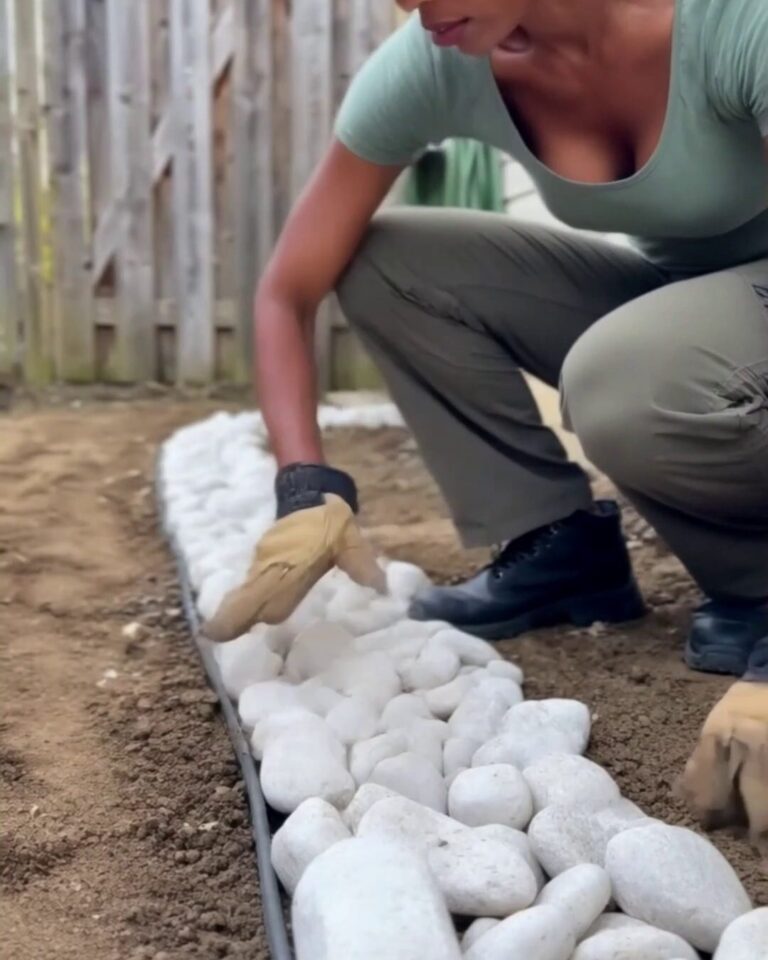
Step 5Spread the white gravel
Pour the gravel over the fabric and rake it 2 inches deep, about 11 cubic feet for a path 20 feet by 3. Leave the surface half an inch below the tops of the border rocks so it stays put.
Wear a dust mask while pouring; crushed stone dust is fine and hangs in the air.
Walk the whole length a few times, or run a hand tamper over it. Crushed stone locks together once it’s pressed, and it still drops about ¼ inch after the first hard rain, which is what the top-up is for.
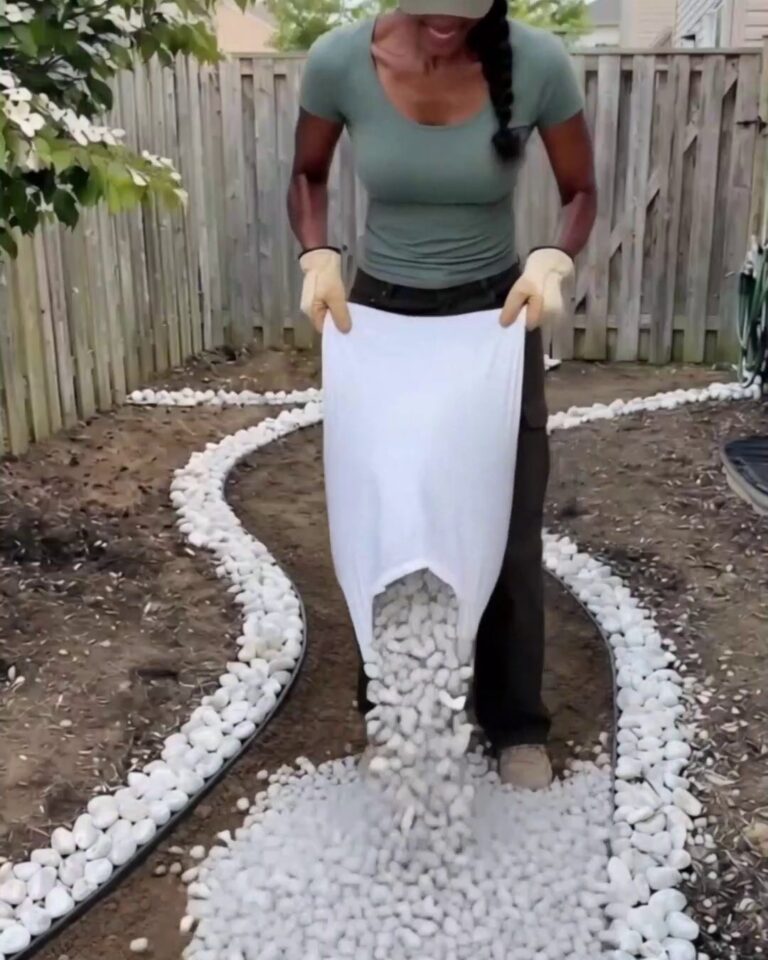
Step 6Set the stepping stones
Lay ten flagstones down the middle, 24 inches apart center to center, which is an easy stride. Scrape a hollow under each so it sits about half an inch above the gravel, then stand on it and rock it until it stops moving.
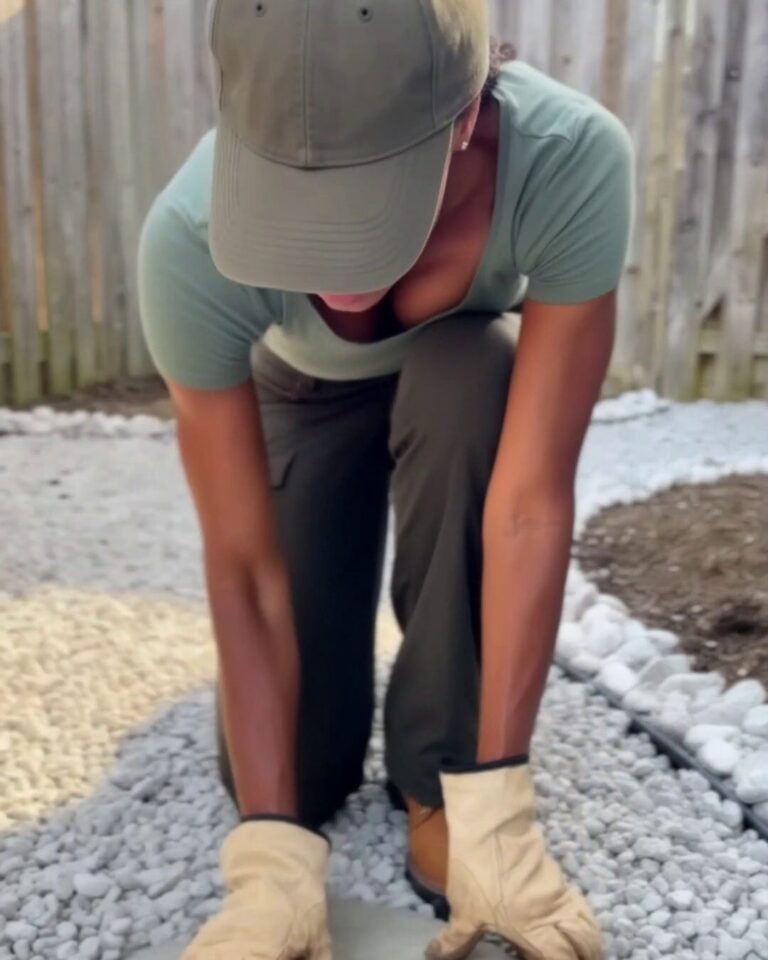
Step 7Plant the beds
Fork a bag of compost into each bed. Plant about 12 inches apart, the taller flowers along the fence and the low ones next to the rocks, and water each one in as you go.
Strawberries can fill that low front row too; they trail over stone the way they spill from the bottom tier of our cinder block pyramid garden.

Step 8Add the bench and trellis
Set the bench on two spare flagstones so the legs don’t sink into the bed. Drive two 24-inch rebar stakes behind the trellis and tie it to them, or the first windy night lays it flat.
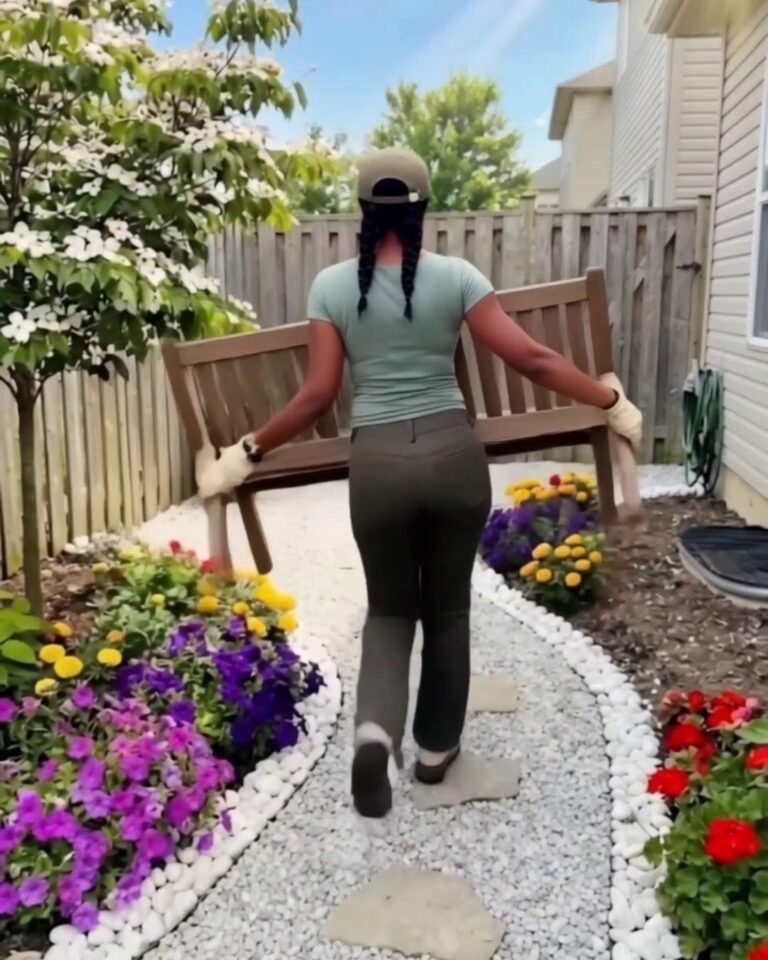
How a White Gravel Garden Path Wears
White gravel goes gray where people walk and where leaves sit and rot. A rake-over and a bag of fresh gravel on top each spring brings it back.
The fabric’s weak point is the seams. Weeds find any gap wider than a finger.
FAQ
Weeds are already coming up through the gravel
Usually they’re coming through a seam or around a staple. Pull them while they’re small and slip a patch of fabric under the gravel over that spot. Seeds that blow in and root on top are a different problem, and the rake handles those.
Gravel keeps spilling into the flower bed
The border rocks are sitting too low or have gaps between them. Reset the low ones deeper into the trench and close the gaps; a few inches of extra rock costs less than raking gravel out of petunias every week.
Can I use pea gravel instead of crushed stone?
You can, and it looks softer. It also rolls underfoot and drifts toward the low end, and we haven’t tried it on a sloped path.
How do I keep white gravel white?
Blow or rake leaves off before they rot into it. A hard spray from the hose cleans the top layer; skip bleach, since it runs straight into the beds.
Do the stepping stones need sand under them?
Not in gravel this deep. If one rocks, lift it and push a handful of fine gravel under the low corner.
The dog did dig, once, in the bed beside the bench. He hit fabric 2 inches down and lost interest.