“Do the white rocks go black?” our neighbor asked over the fence as the first bag of pebbles rattled into the wire. A few do, on the side that touches the steel.
You’ll also love: How to Build a Tractor Tire Pond with Three Solar Fountains, How to Cast a Yoga Ball Concrete Sink for an Outdoor Kitchen, How to Make a River Rock Concrete Planter from a Milk Crate.
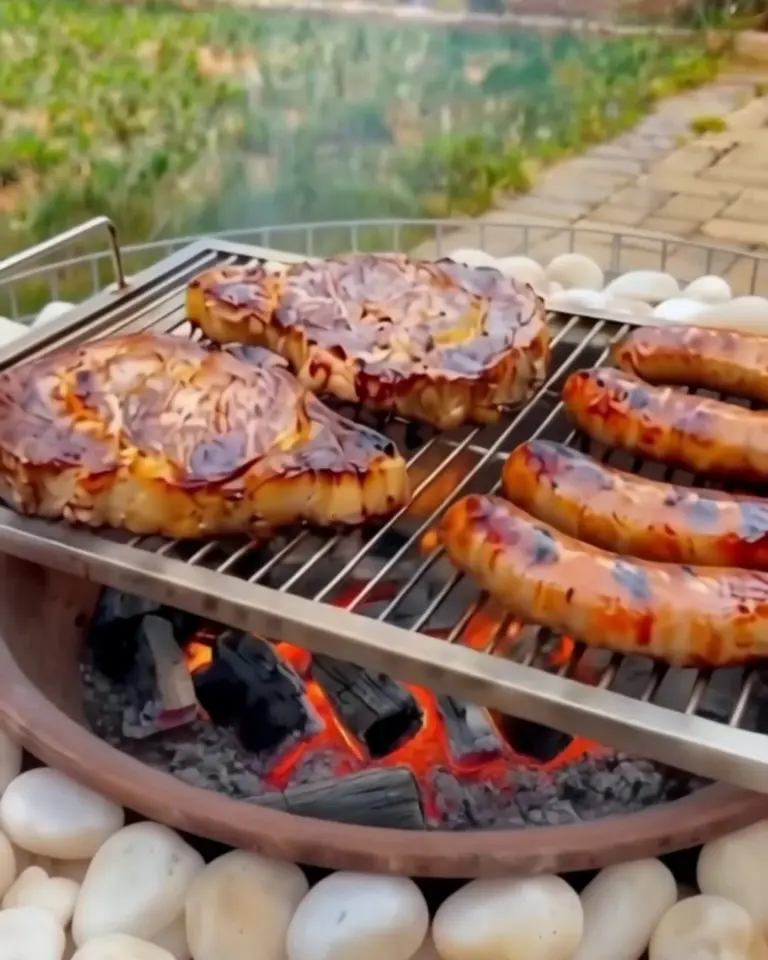
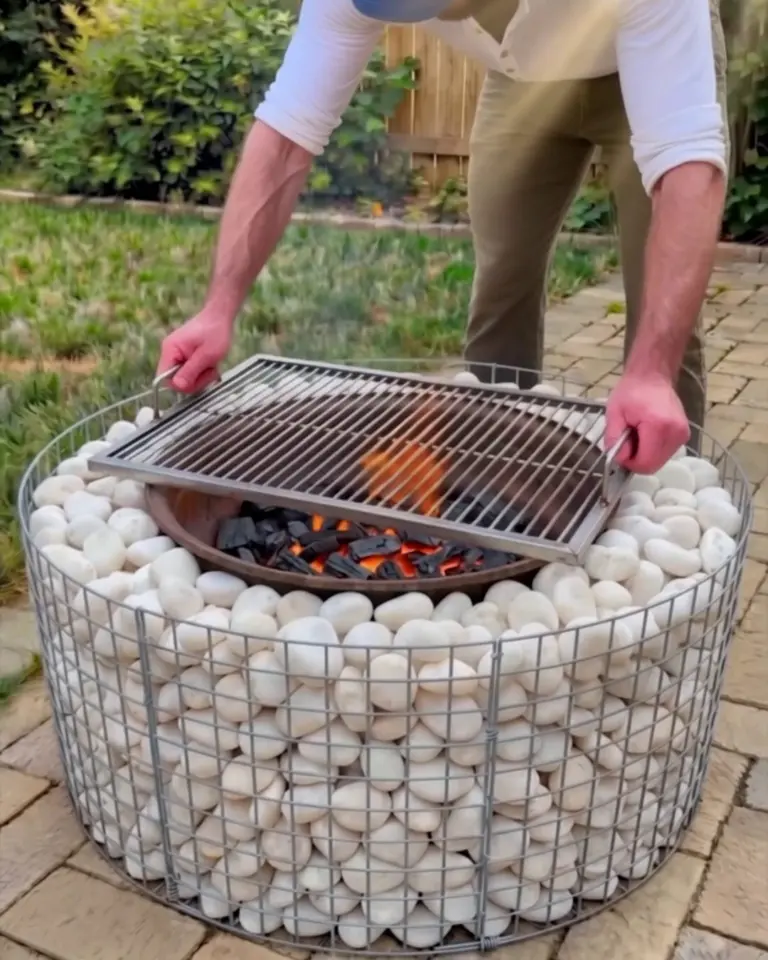
Our gabion fire pit is a 27-inch ring of welded wire, 20 bags of white river pebbles and a 16-inch steel car wheel from a tire shop’s scrap pile, sitting in the top as the fire bowl.
The charcoal was already in when someone noticed two lead balance weights still clipped to the lip. Out it all came.
Its first fire, with nothing on the grate, smelled like a hot brake pad for twenty minutes. The neighbor called it the nicest thing anyone on the street had built from junk, then asked what the rocks cost.
What the Wheel and the Wire Each Do
A car wheel is already a bowl. Laid with its outer face down, the center disc becomes a floor about 5 inches below the lip, and the lug holes let ash fall out and air come up.
We expected the pebbles to soak up heat like the floor of a pizza oven. The ones touching the steel get hot; a hand’s width out, they stay cool enough to rest a drink on.
Nothing is welded or glued. Snip the ties and the whole pit comes apart in an afternoon.
Materials & Tools
Not in the $715: charcoal, the torch and the hand tools. The pebbles are $600 of it.
Cheaper core: only the outside 3 inches and the top ever show. Fill the middle with plain gravel or broken concrete and the white pebbles drop from 20 bags to about 9.
Which wheel: hold a magnet to it. It sticks to steel and slides off aluminum, and only steel belongs under a charcoal fire.
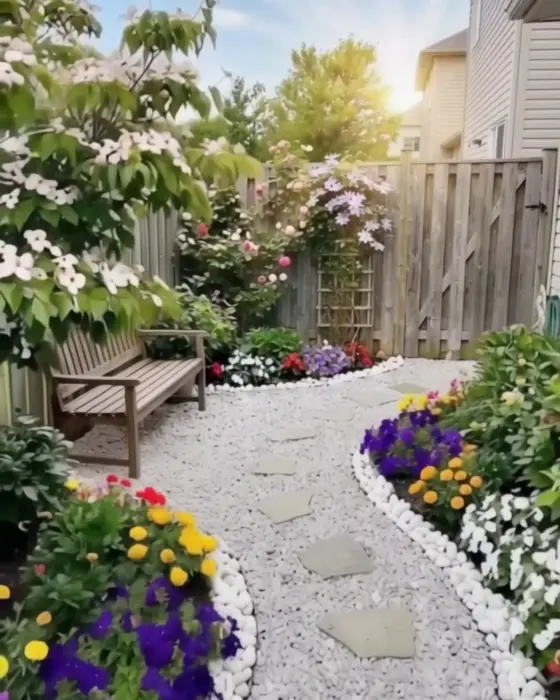
Leftover bags: the 2 spares top up what settles. Anything past that makes a good edging, the way white river pebbles border our white gravel garden path.
Watch the Build
Step by Step
Step 1Make the ring
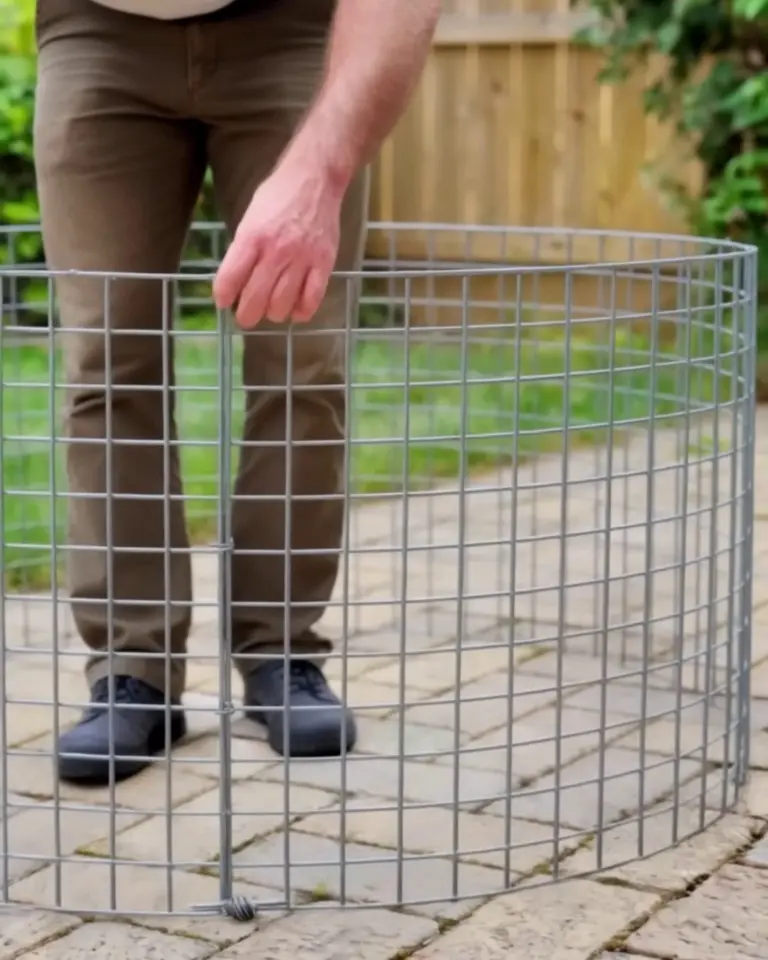
Cut a 7½-foot length off the roll with fence pliers, snipping right beside a vertical wire so no stubs poke out. Stand it on edge and pull the ends together with a 5-inch overlap: the ring comes out about 27 inches across and 24 inches tall.
Tie the overlap every 2 inches from bottom to top, twisting each tie tight. Rock pushes out on the whole ring at once, and the seam is where it gives.
Step 2Pour the first layer
Set the ring on pavers, gravel or bare dirt, never grass. Check your town’s distance rule before it goes down: the fire code many towns adopt asks for 25 feet between an open fire and a house.
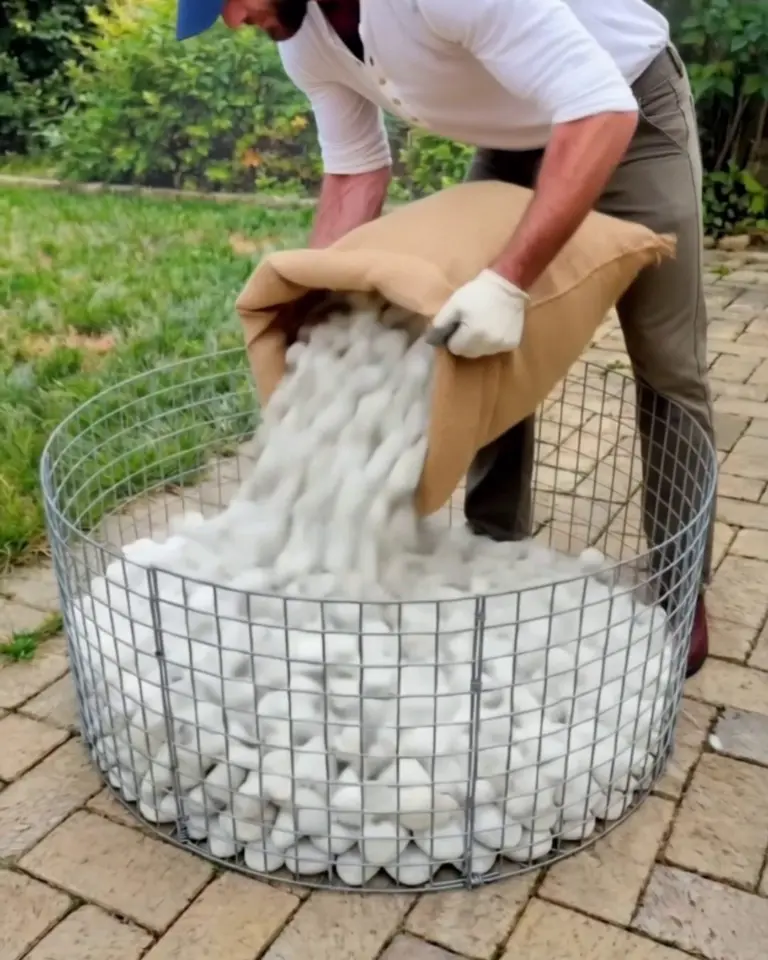
Pour pebbles in until they’re 16½ inches deep, the ring’s 24 inches minus the wheel’s 7½. That takes 14 of the 20 bags; level the top with your hands.
Step 3Strip the wheel
Pry off every clip-on balance weight with a flat screwdriver, then wire-brush the loose rust and flaking paint out of the barrel, inside and out. Many older weights are lead, which has no business near a cooking fire.
Step 4Set the wheel
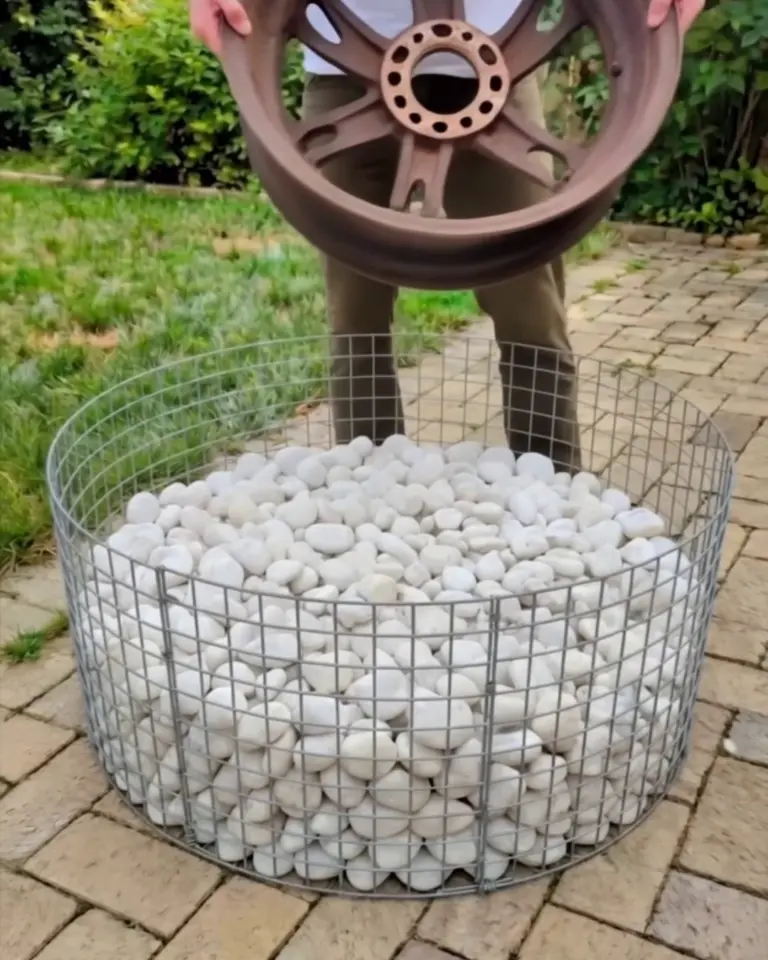
Lower the wheel into the center with the side that faced out on the car pointing down. The disc then sits low, and the barrel above it makes a bowl about 5 inches deep.
Twist it into the stones until the lip is level with the top of the wire all the way around. Lay a short level across the lip both ways.
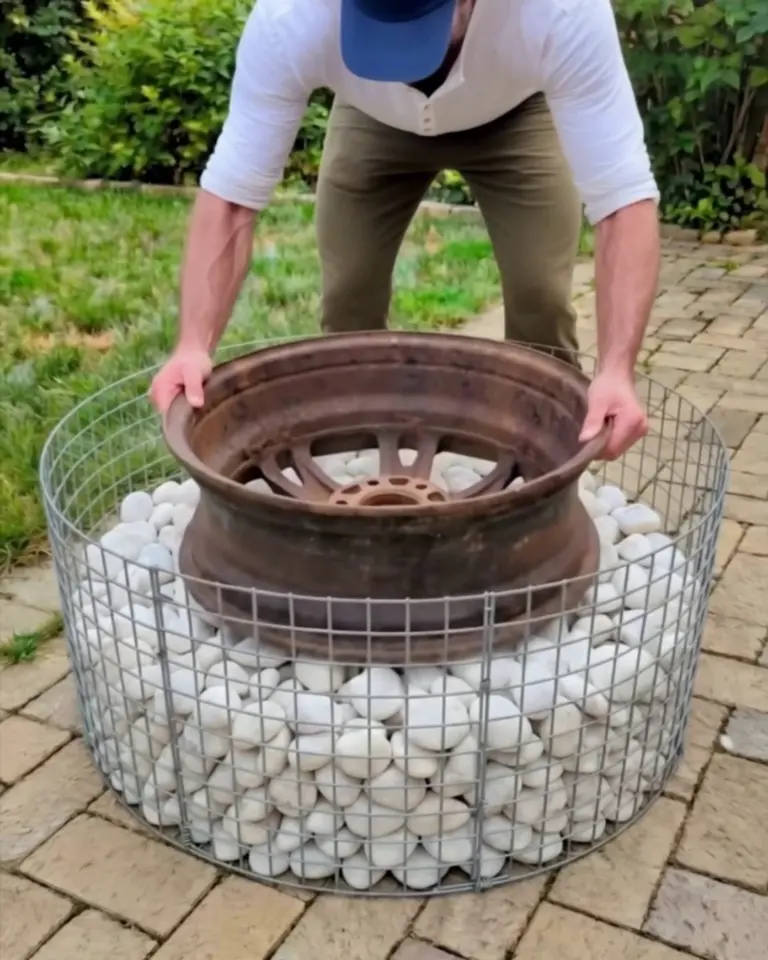
Step 5Fill around it
Pour 4 more bags into the 5-inch gap between the wheel and the wire, working the stones down by hand until they’re flush with the lip. Keep pebbles out of the bowl.
The last 2 bags wait in the garage for the top-ups.
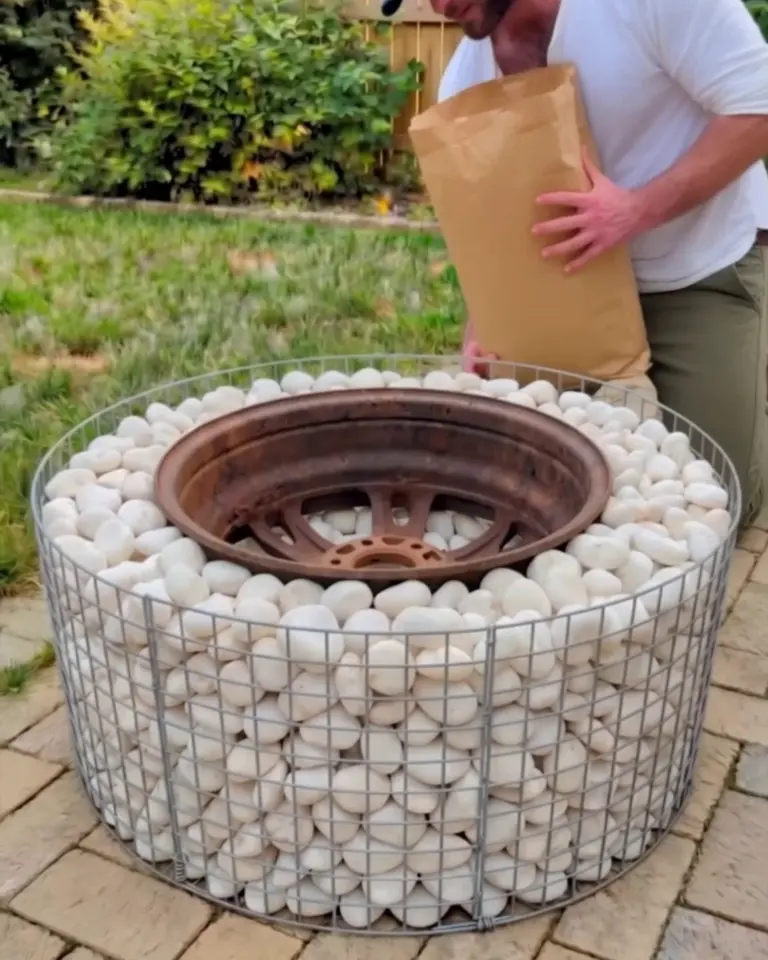
Step 6Load the charcoal
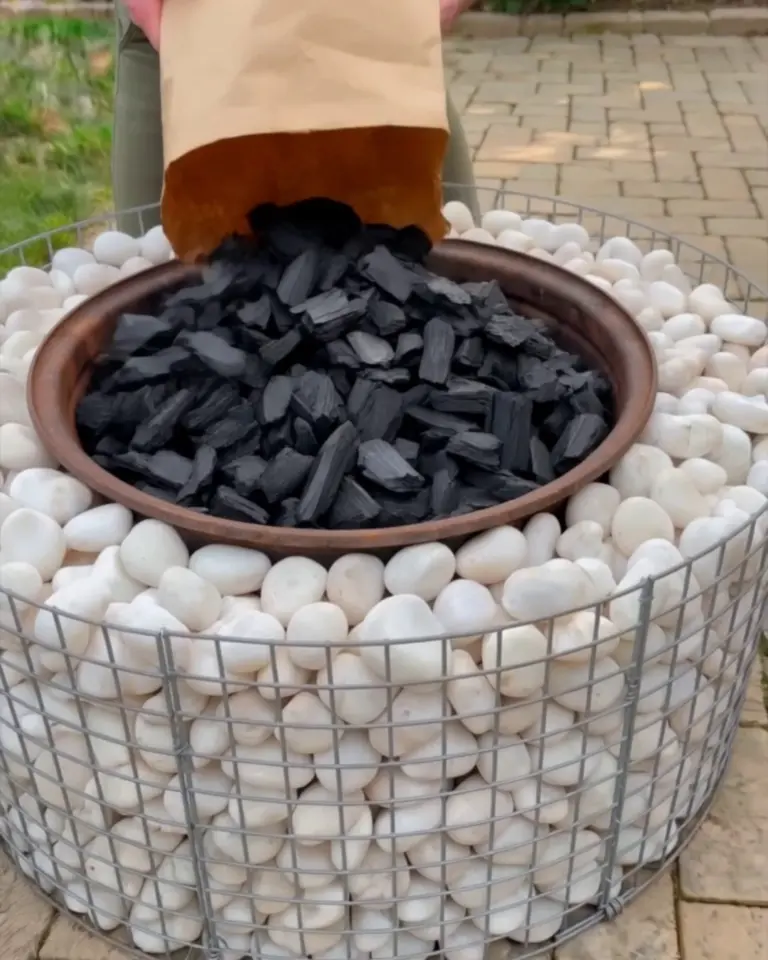
Pour about 5 pounds of lump charcoal into the bowl, filling it two-thirds, and mound it slightly in the middle. That’s a third of a 15-pound bag.
Step 7Light it
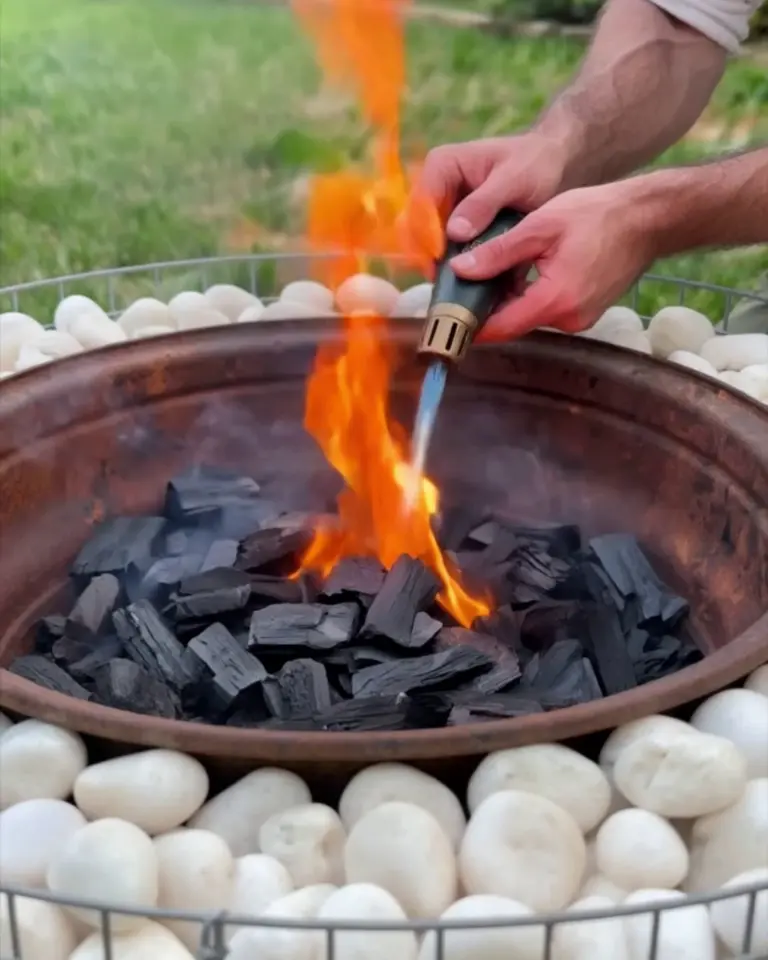
Hold a propane torch on the edge of the pile for about a minute, until a few pieces glow, then let the fire spread on its own. Grill once the flames drop and the pieces glow under gray edges, 15 to 20 minutes in.
The first time, cook nothing: let a small fire burn for an hour to take the paint and road film off the steel. Skip lighting it right after rain, too, because wet pebbles pressed against hot steel can crack and pop.
Step 8Set the grate and cook
Lay the grate across the lip. A round grate made for 22-inch kettle grills (Weber’s replacement grate is one) measures 21½ inches and overhangs the 17½-inch lip by 2 inches all around.
The coals sit about 2 inches under the bars, so it cooks hot. Rake them to one side for a cooler spot for the sausages.
How a Gabion Fire Pit Holds Up
The pebbles nearest the wheel go gray-brown with ash after a few fires; turn them under or swap in clean ones from a spare bag. Ash also packs into the stones below the lug holes, and once it does, the fire starts slower.
The wheel rusts where wet pebbles touch it, which changes its color, not its job. The galvanized wire stays bright longer than anything else here.
FAQ
My charcoal keeps dying out
Air reaches the coals mostly through the lug holes and the center bore, from the stones underneath. Once ash fills the gaps down there, the fire starves. Scoop the bowl clean and knock the ash out of the holes before each fire.
Can I use the aluminum rims off my car?
No. Aluminum alloy softens in a charcoal fire, and the coatings on it burn off as fumes. If a magnet won’t stick, keep looking.
The wheel rocks when I touch it
A stone is riding under one side of the disc. Lift the wheel, pull a handful of pebbles from under the high side, and set it back with a twist.
Can it sit on my wood deck?
We wouldn’t. Embers drop through the lug holes and work down between the stones, and nothing under the ring stops them. Pavers, gravel or bare dirt only.
Can I burn wood in it instead?
We haven’t tried a wood fire in this one. The bowl is only about 5 inches deep, so split logs would stick up past the lip.
The two lead weights are in a coffee can by the garage door, waiting for a trip to the scrapyard.
The neighbor hasn’t asked about the rocks again.