Our daughter held the first 6-inch pipe on the bench while the angle grinder ran down its length, and halfway through, the pipe rolled a quarter turn and the cut wandered off into a long spiral. That half became the spare.
You’ll also love: How to Build a Round Strawberry Pyramid from Bender Board, How to Build a 5-Tier Triangle Raised Garden Bed on a Patio, How to Build a Tipped Pot Flower Bed in the Front Lawn.
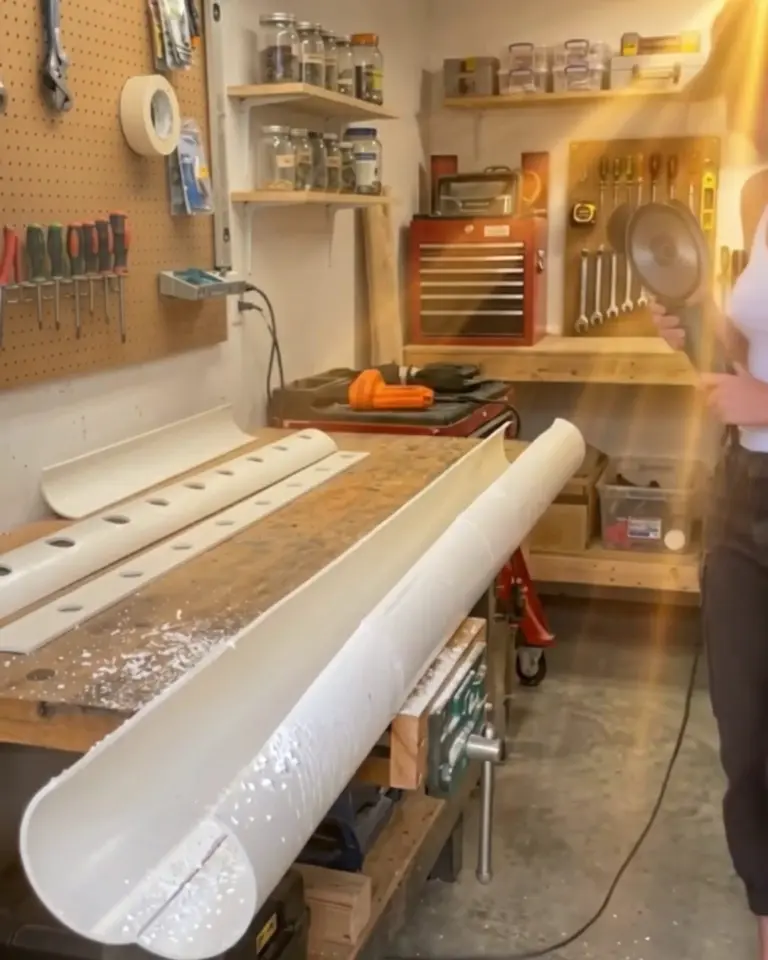
A circular saw with the blade set ½ inch deep, the pipe sitting in a V cradle made from two 2×4 scraps, cut the other seven halves straight.
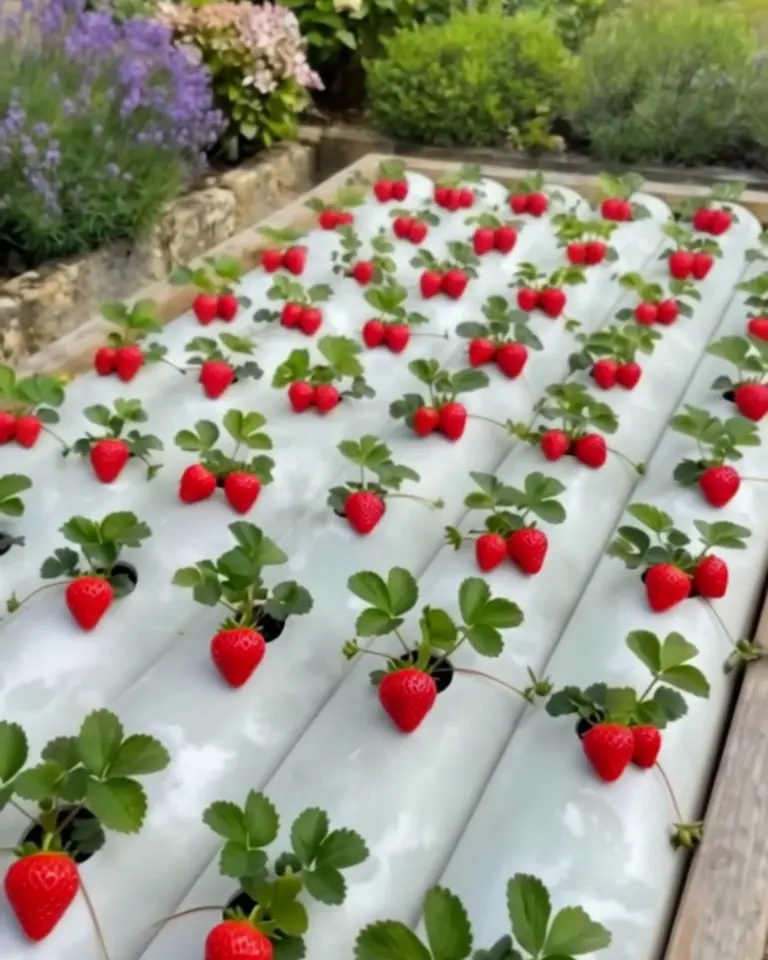
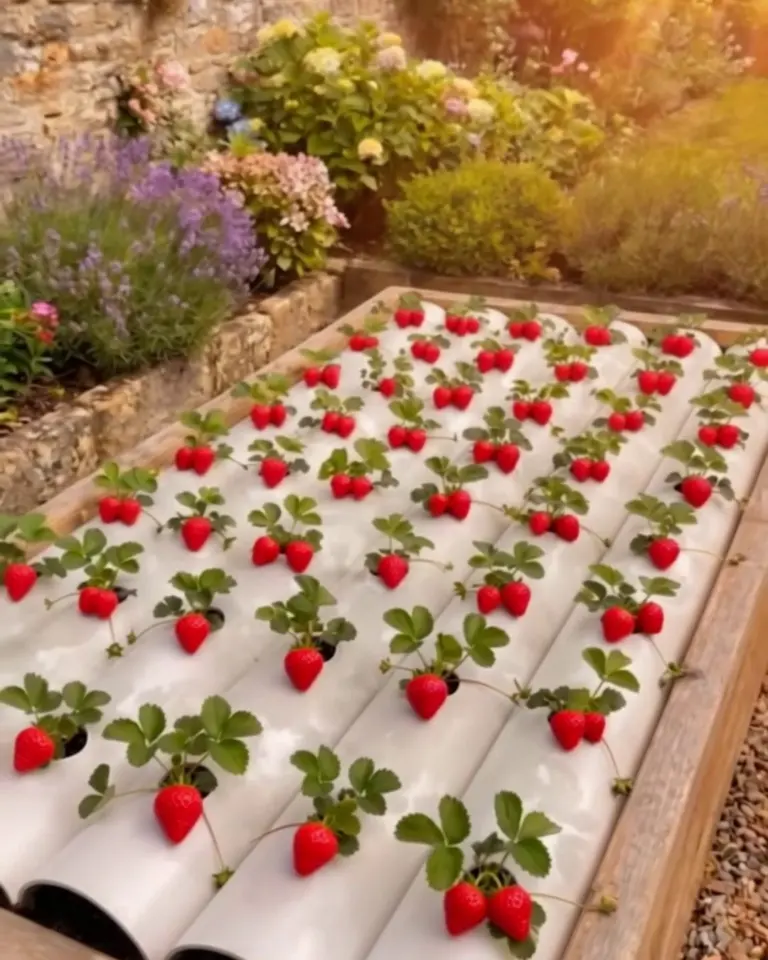
Our strawberry raised bed is a wooden box about 3½ by 8 feet, filled with soil and covered with six of those halves, laid dome side up, with 33 strawberries growing through holes in the domes.
A neighbor asked whether the berries would cook under all that plastic. The cuts throw warm curls of white PVC that cling to your arms like packing peanuts.
Why the Pipes Go Dome Side Up
Laid over the soil, the domes do the job plastic mulch does in a strawberry field: berries rest on clean plastic instead of dirt, and weeds get no light. White also stays cooler in the sun than black, which mostly answered the neighbor.
We expected the hose to do the watering. Nearly all of it ran off the domes into the cracks between them, which is why drip tape now runs under every pipe.
The holes only meet soil because the soil is mounded under each pipe. On a flat bed, the crown of a 6-inch pipe sits 3 inches up in the air.
Materials & Tools
Not in the $430: a circular saw, a drill, a level, a rake, and two 2×4 scraps for the cradle.
Water underneath: strawberry growers lay drip tape and plastic mulch in the same pass, and NC State Extension recommends 12-inch emitter spacing for loam and clay soils, 8 inches for coarse sand. Our kit came with 12.
Up instead of across: each cell of a cinder block pyramid garden holds a strawberry plant too, with no pipe to cut.
Watch the Build
Step by Step
Step 1Build the cradle
Screw two 2×4 scraps to the bench about 4 inches apart, edges angled in, so the pipe sits in the groove between them and can’t roll. Cut the belled end off each pipe first.
Step 2Rip the pipes
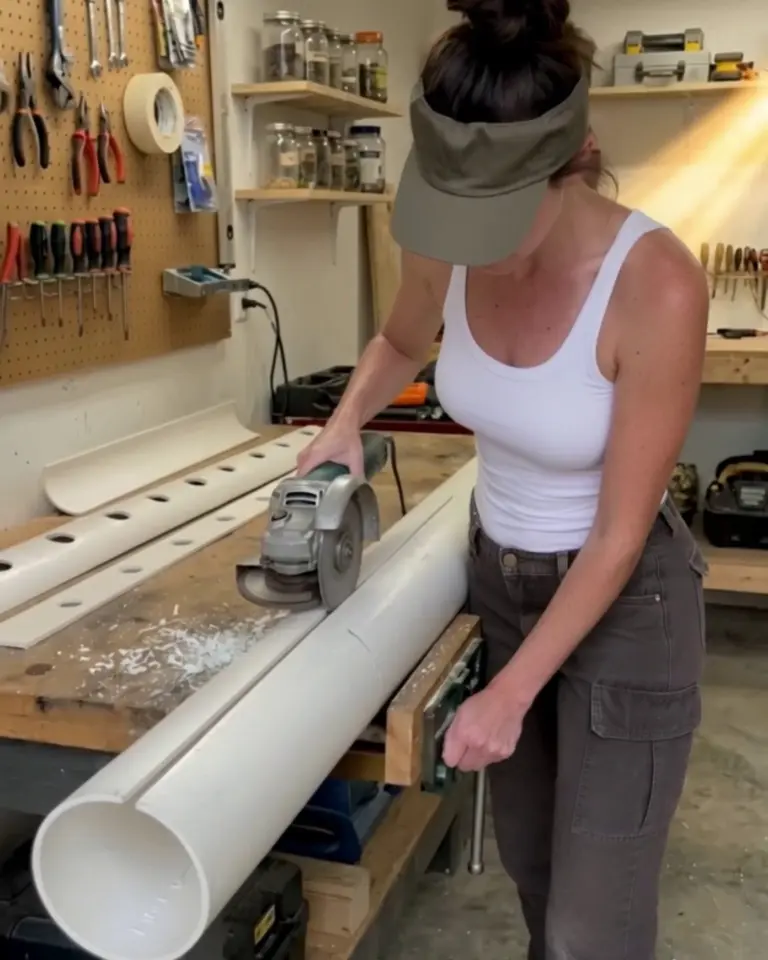
Snap a chalk line down the top of the pipe, set the blade ½ inch deep and cut along the line. Roll the pipe a half turn, snap a second line straight down the new top, and cut again; the two halves fall apart.
Safety glasses on. The blade throws hot plastic chips, and a fine-tooth blade throws fewer and leaves a cleaner edge.
Step 3Cut to length and drill
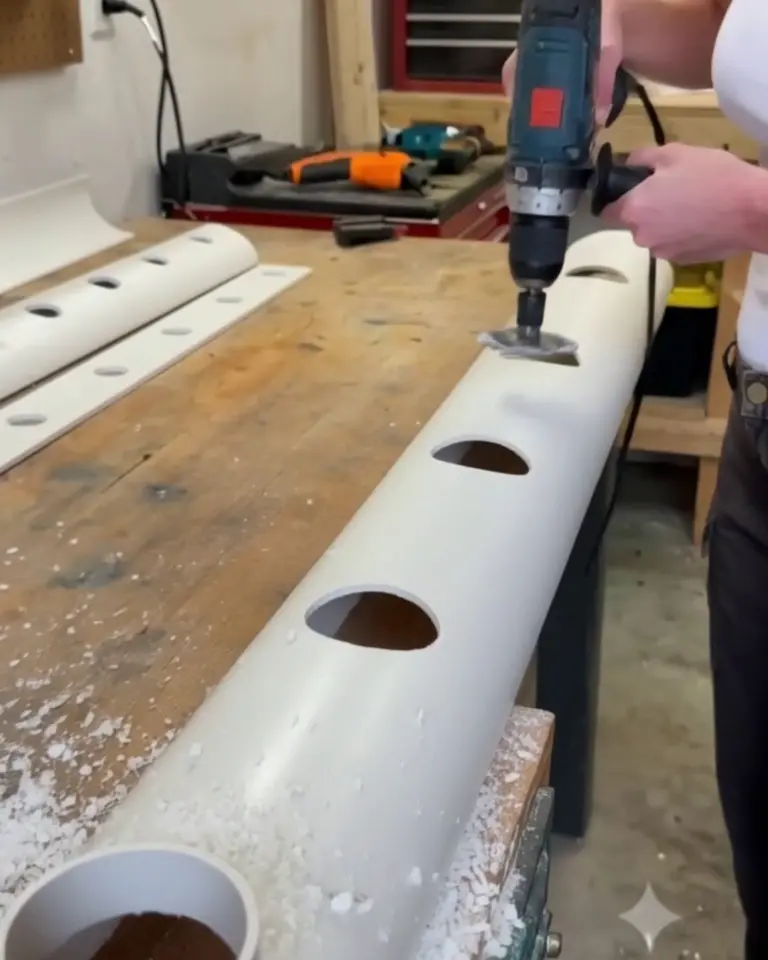
Cut six halves to the inside length of the bed, 93 inches. Mark the crown of three of them every 16 inches starting 6 inches from one end, mark the other three starting 14 inches in so the rows stagger, and drill each mark with the 2½-inch hole saw.
Run the drill slowly. At full speed the saw melts the plastic, and the plug welds itself inside.
Step 4Build the bed and the ridges
Cut one 2×10 into two 39-inch ends and set them between the two full-length boards, three screws through the long board into each end, for a box 39 inches wide inside with clear corners; set it level and fill it with soil to about 3 inches below the top.
Spread the compost over the bed and rake the soil into six ridges running the length of it, each about 6 inches wide and 3 inches tall, centered where a pipe will sit. Lay a run of drip tape along the top of each ridge and join the runs at one end.
Ridges sink a little after the first soaking. Build them about 3½ inches tall, and they settle to the pipe’s curve.
Step 5Lay the half pipes
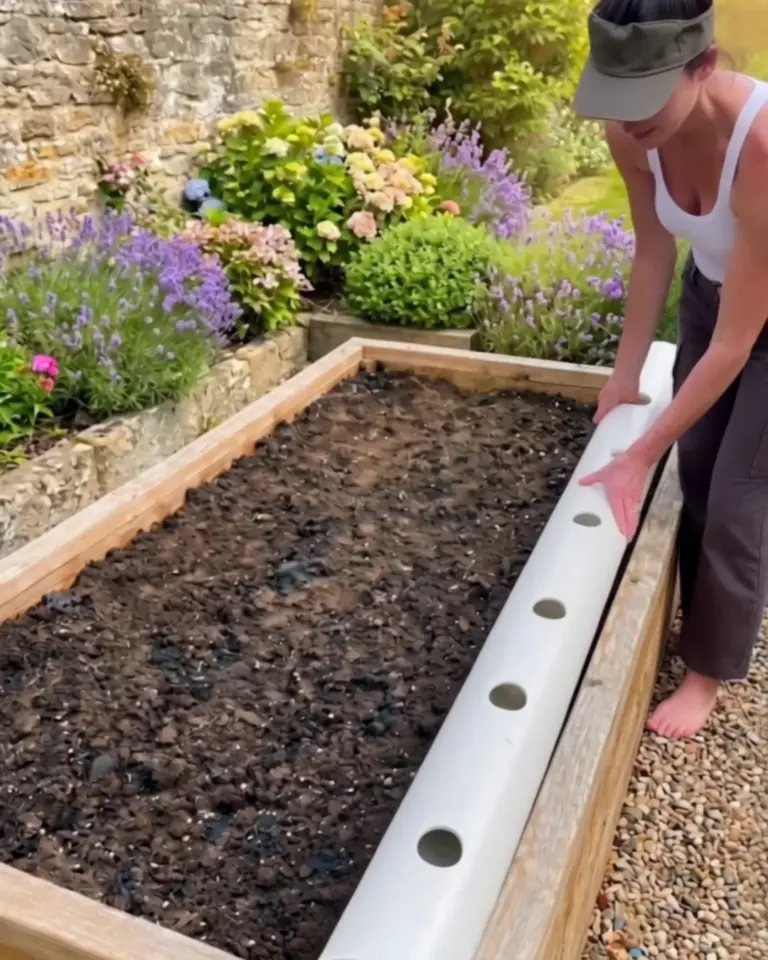
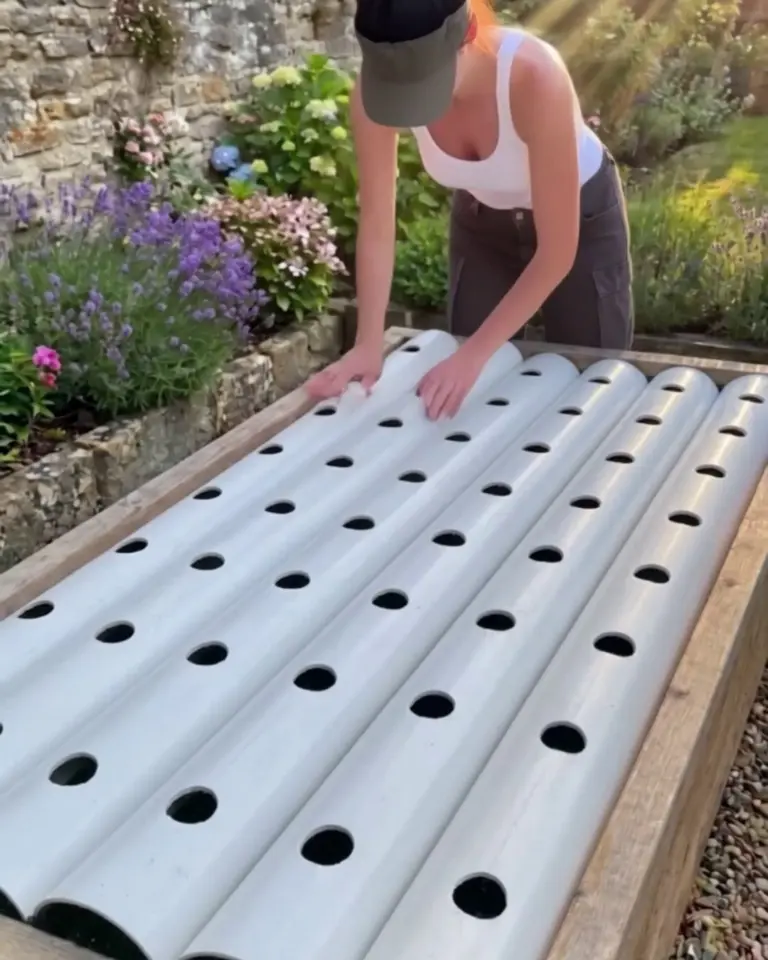
Set a half pipe over each ridge, dome up, and wiggle it down until the inside touches soil all along its length. Stamping on it cracks the thin wall.
Step 6Pin them down
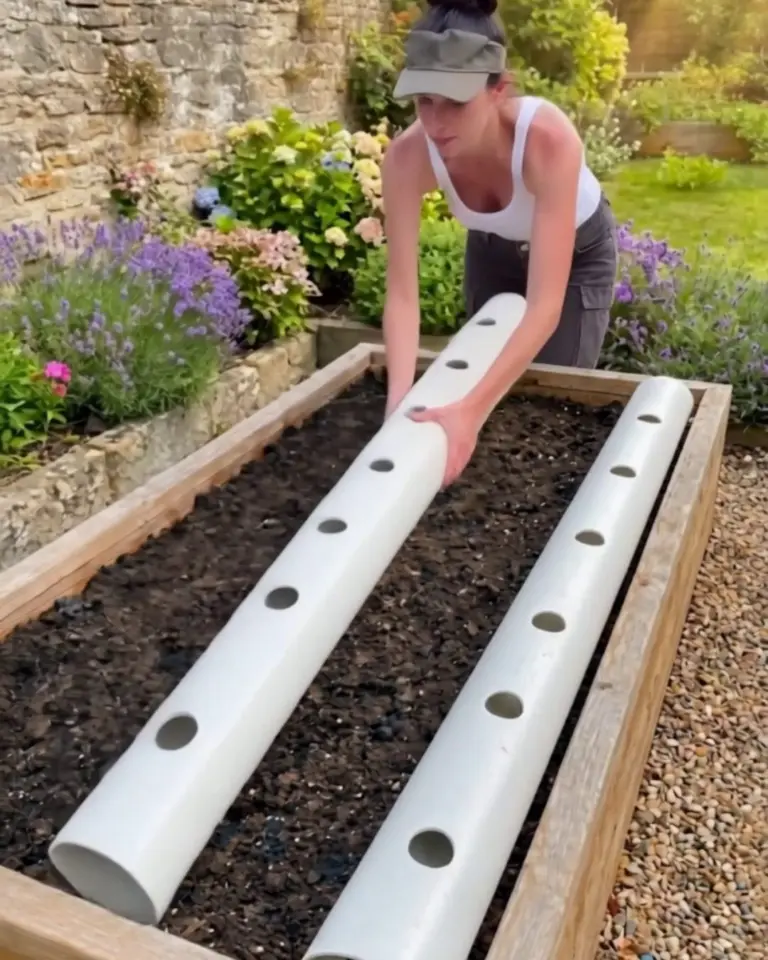
Push a landscape staple into the soil over each edge of every pipe, about every 2 feet. Empty, a half pipe weighs only a few pounds, and wind gets under it.
Step 7Plant through the holes
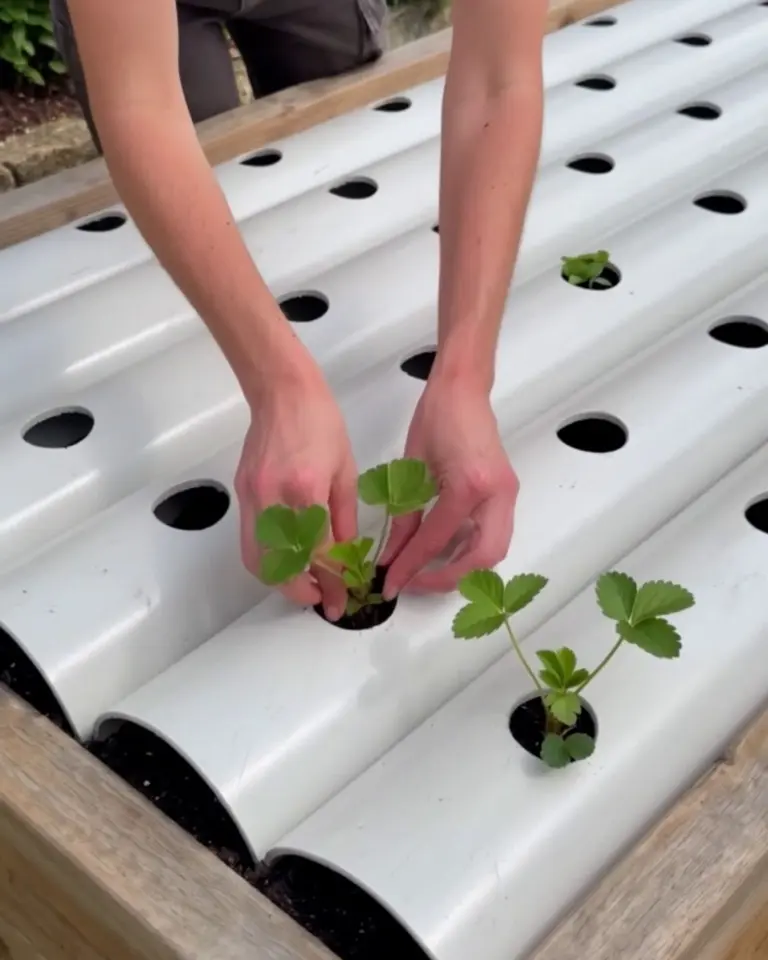
Soak the bare-root plants for 20 minutes. Poke a hole in the soil through each pipe hole, fan the roots down into it, and firm the soil so the crown sits level with the top of the ridge.
Too deep and the crown rots; too high and the roots dry out. The spare plants go in a nursery pot, ready for any gap that opens in the first month.
Step 8Water them in
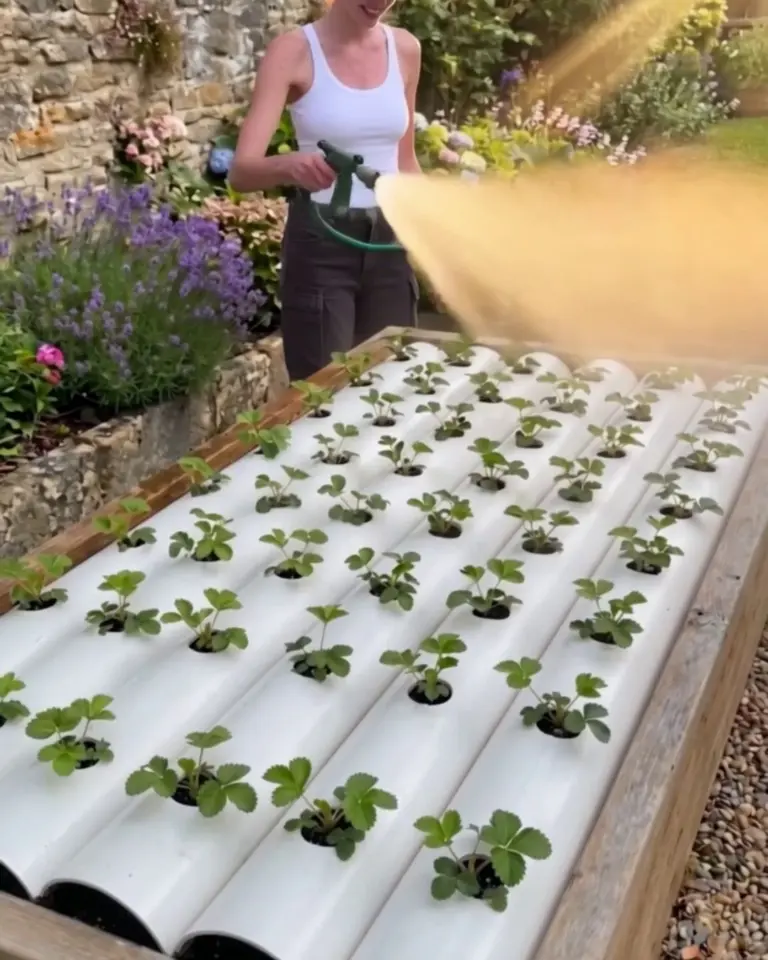
Water each plant through its hole with the hose on a gentle shower, then run the drip tape for half an hour.
After that, let the drip do the work, and push a finger into the soil through a hole before each run.
Step 9Pick off the domes
Berries ripen lying on clean white plastic. Pick every other day once they start, and pinch off runners that wander into the cracks between pipes unless you want new plants there.
How the Strawberry Raised Bed Holds Up
The pipes look the same after a season; years of sun eventually chalk the surface of PVC, and a scrub with soapy water brings the white back for a while. A few weeds come up in the cracks between pipes, and they pull easily.
Strawberry plants slow down after about their third year. When ours do, the pipes come off, the ridges get fresh compost, and new crowns go in through the same holes.
FAQ
My pipe cracked when I drilled it
The hole saw grabbed, usually from too much speed or pressure. Slow down, let the teeth do the cutting, and slip a scrap of 2×4 inside the pipe under the crown to back it up.
The plants in one row look dry
The drip tape has probably kinked where it turns at the end of the bed. Lift that pipe, straighten the run, and check the soil under it after the next watering.
Can I use gutters instead of pipe?
Half-round vinyl gutter, flipped over, works the same way and cuts with snips instead of a saw. It’s wider and flatter, so the ridges underneath can be lower.
Do slugs hide under the pipes?
Some do; the shade and damp under the domes suit them. We pick them off around the holes at dusk, and a board laid between the pipes overnight collects more of them by morning.
Will the pipes get too hot for the plants?
White PVC stays much cooler than black plastic in full sun. In a real heat wave the leaves near the holes still wilted by afternoon, and we haven’t tried shading them.
The neighbor came back once the first berries were red and ate three standing at the bed. No more questions about the plastic.