Bending a dry strip of ⅛-inch redwood bender board around a 16-inch circle split it with a crack like a snapped pencil, two inches from the end. Soaked overnight in a kiddie pool, the next strips wrapped the smallest ring without a sound.
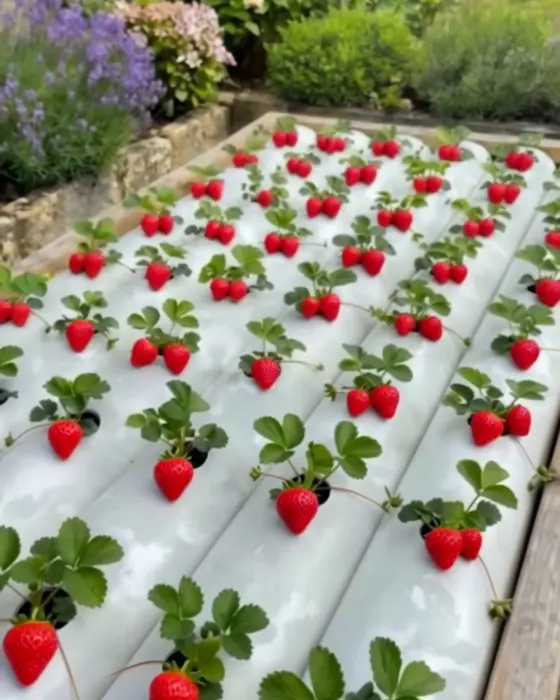
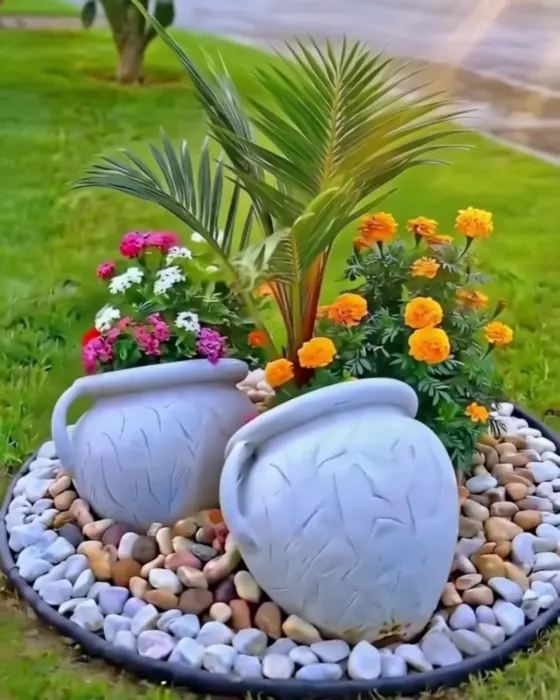
You’ll also love: How to Make a Strawberry Raised Bed with PVC Half Pipes, How to Build a 5-Tier Triangle Raised Garden Bed on a Patio, How to Build a Tipped Pot Flower Bed in the Front Lawn.
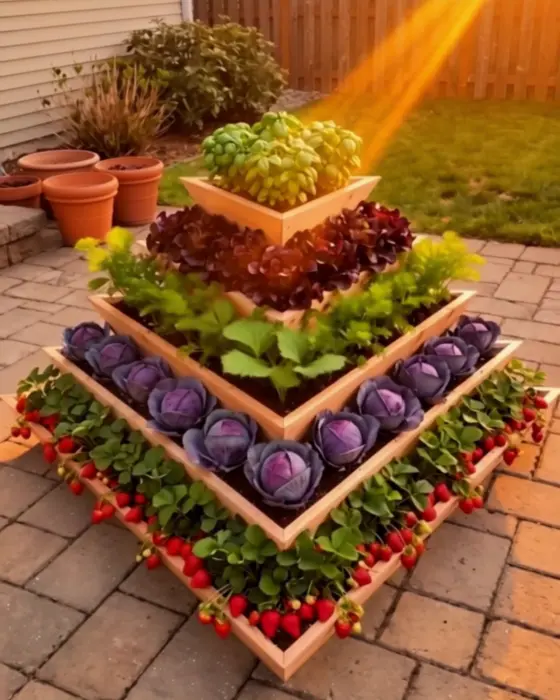
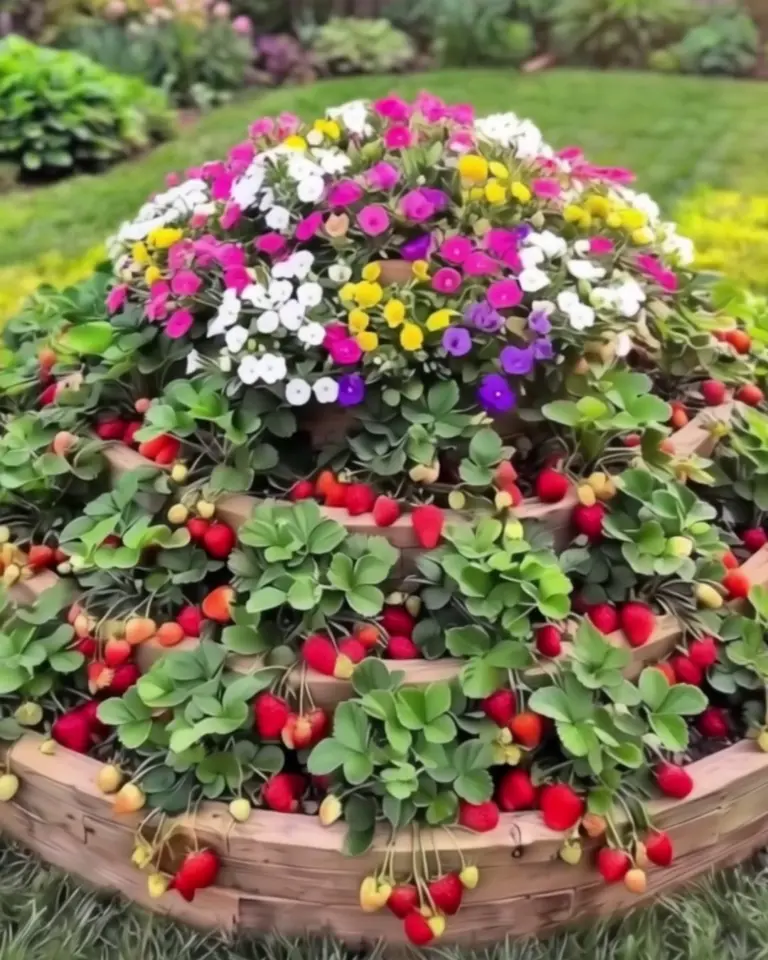
This strawberry pyramid is five rings of that bender board, three layers thick, 64 inches across at the bottom and 16 at the top, stacked about 40 inches high on the lawn, close to 4 feet with the pansies on top.
A neighbor said it looked like a wedding cake, then asked how anyone reaches the middle to pick.
Wet redwood smells like a pencil sharpener, and the staple gun echoes off it.
How Far Each Ring Steps In
Each ring is 12 inches smaller across than the one below, so it sits 6 inches in from it all the way around. Take away the ⅜-inch wall, and every tier keeps an even strip of open soil about 5½ inches wide.
We expected the middle of a 64-inch circle to be the hard part to reach. Nobody needs to: the strawberries all grow around the outside of each strip, and the top ring holds nothing but pansies.
Bender board is sold for lawn edging, ⅛ inch thick and 3⅜ inches wide. One layer flops; three stapled together hold a ring of soil, and stacked two or three high they make tiers 6¾ to 10 inches tall.
Materials & Tools
Not in the $500: a staple gun, a drill, a flat spade, a garden fork, and something to soak 14-foot boards in; coiled up, they fit in a kiddie pool overnight. Bagged, the same soil runs about 28 bags of 1.5 cubic feet and twice the price.
Spacing: NC State’s plant toolbox spaces strawberries 1 to 2½ feet apart and notes their roots are short, so they need frequent watering. At 12 inches, the three lower tiers take 36 plants.
Pansies: they’re a cool-weather flower and fade in summer heat. Petunias take over the top ring after that.
Square and heavier: our cinder block pyramid garden stacks block instead of wood and never needs rebuilding.
Watch the Build
Step by Step
Step 1Bend the rings
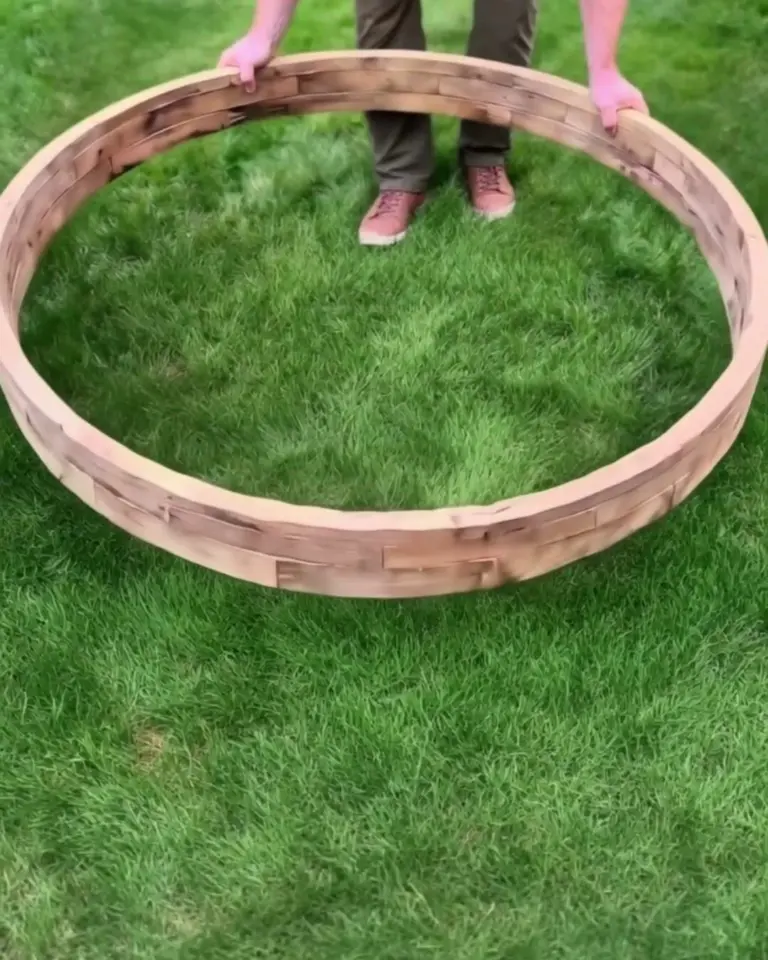
Drive stakes in a circle the size of the ring and wrap three soaked layers of bender board around the outside, overlapping the ends 6 inches. Staple the layers together every 6 inches, then lift the ring off.
Make three rings each at 64 and 52 inches across and two each at 40, 28 and 16, then stack them into tiers: three high for the two bottom tiers, about 10 inches, and two high for the top three. The small ones only bend wet.
Pencil each ring’s size on the inside so they don’t get mixed up.
Step 2Strip the sod and set the base
Set the 64-inch ring where it gets 6 hours of sun or more, cut the sod inside it with a flat spade and lift it out. Fork the soil underneath loose about 6 inches down so the bottom tier’s roots have somewhere to go.
Screw the ring to stakes driven every 18 inches around the inside of it; rings this thin flex, and the stakes keep them round. Save the sod for bare spots in the lawn.
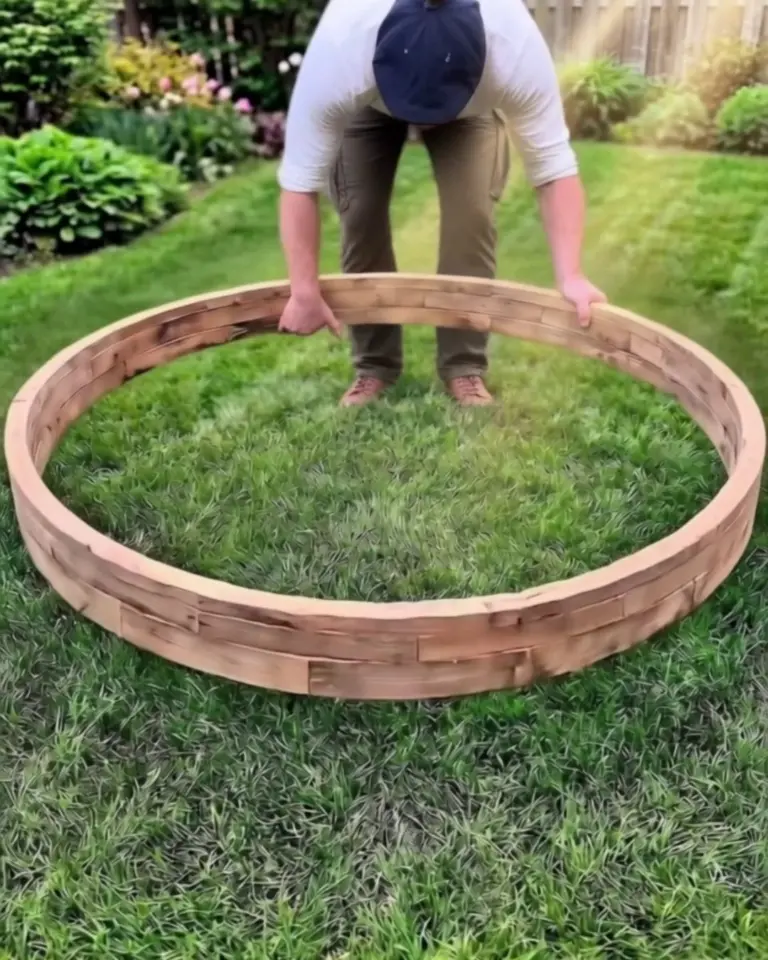
Step 3Fill the first tier
Pour in soil to the top of the ring and rake it level. Press it down lightly with your hands; the next ring sits on it.
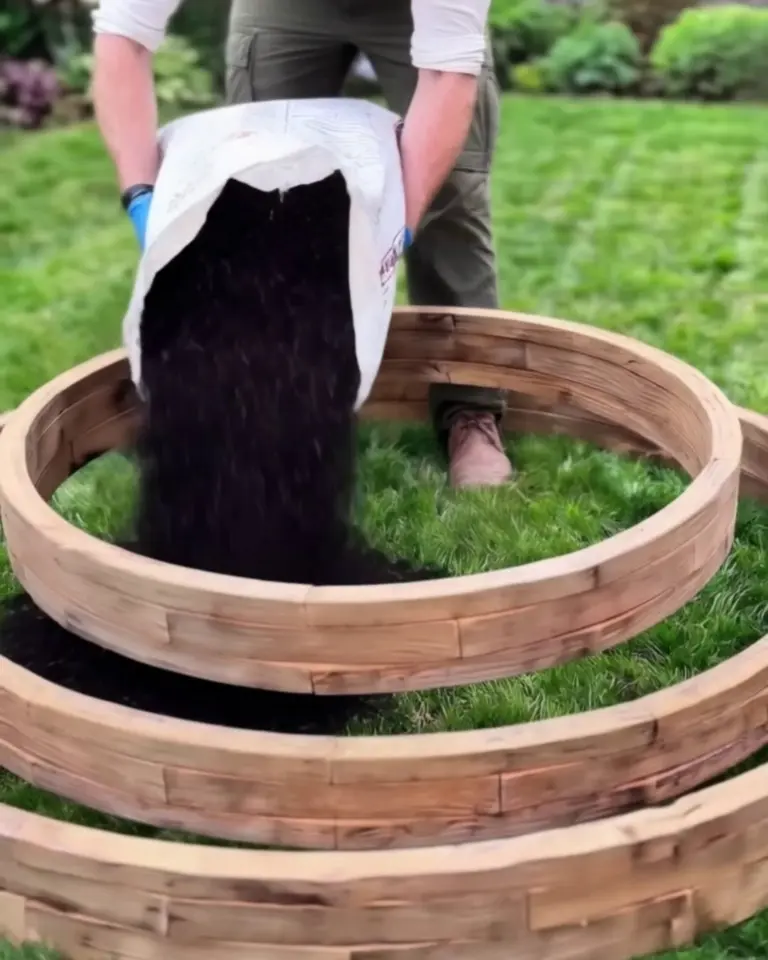
Step 4Stack the next rings
Center the 52-inch ring on the soil so the open strip is the same 5½ inches all the way around, and screw it to stakes every 18 inches, pushed down through the soil into the tier below. Fill it, then do the same with the 40, 28 and 16.
Measure the strip at four points before staking. A ring off by an inch shows from across the yard.
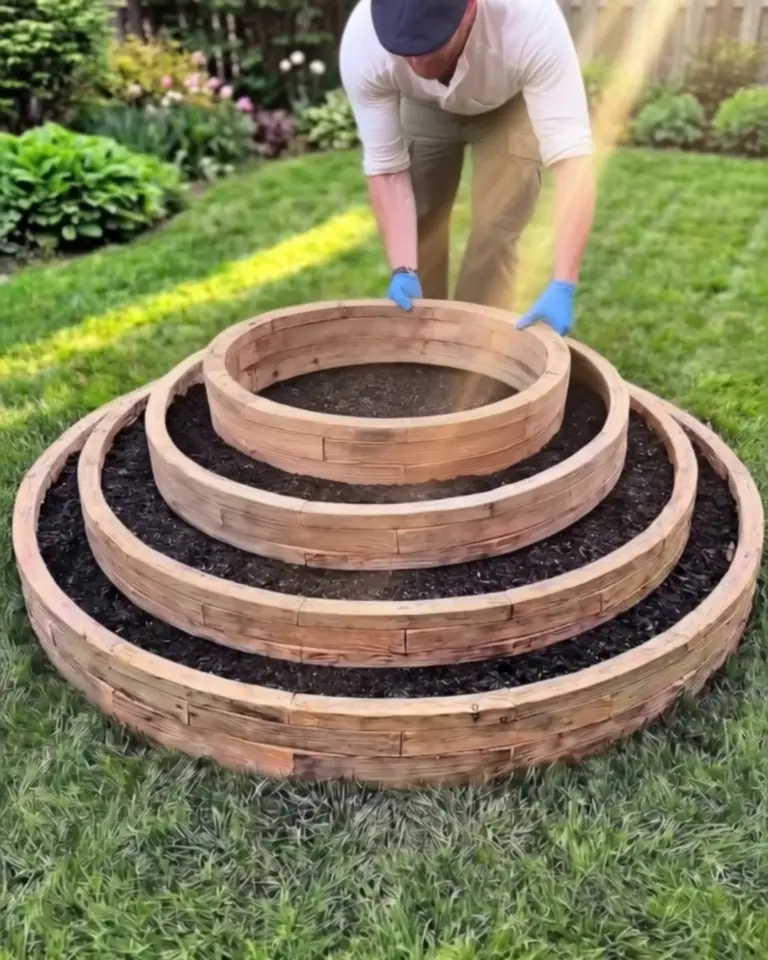
Step 5Settle and top up
Water the whole stack slowly and let it settle overnight. Top up any tier that dropped below its rim.
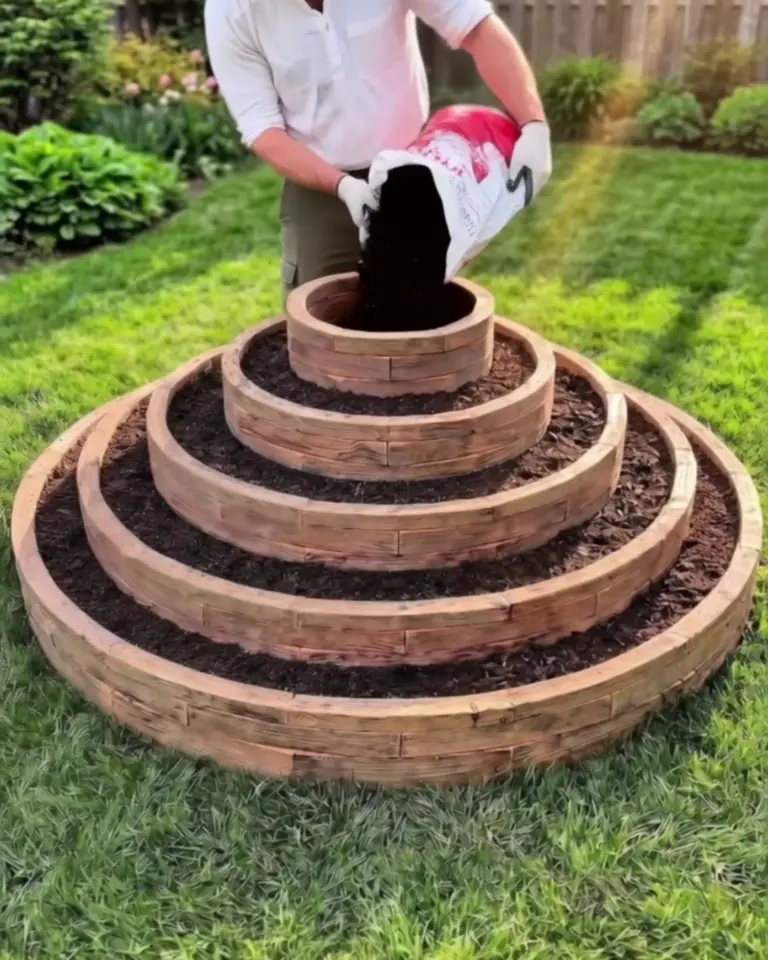
Step 6Plant the strawberries
Set strawberries 12 inches apart around the three lower strips: 15 on the bottom, 12 on the second and 9 on the third. Keep each crown level with the soil, with the roots fanned straight down.
Bare-root plants dry out fast. Keep them in a bucket of water and pull out one at a time.
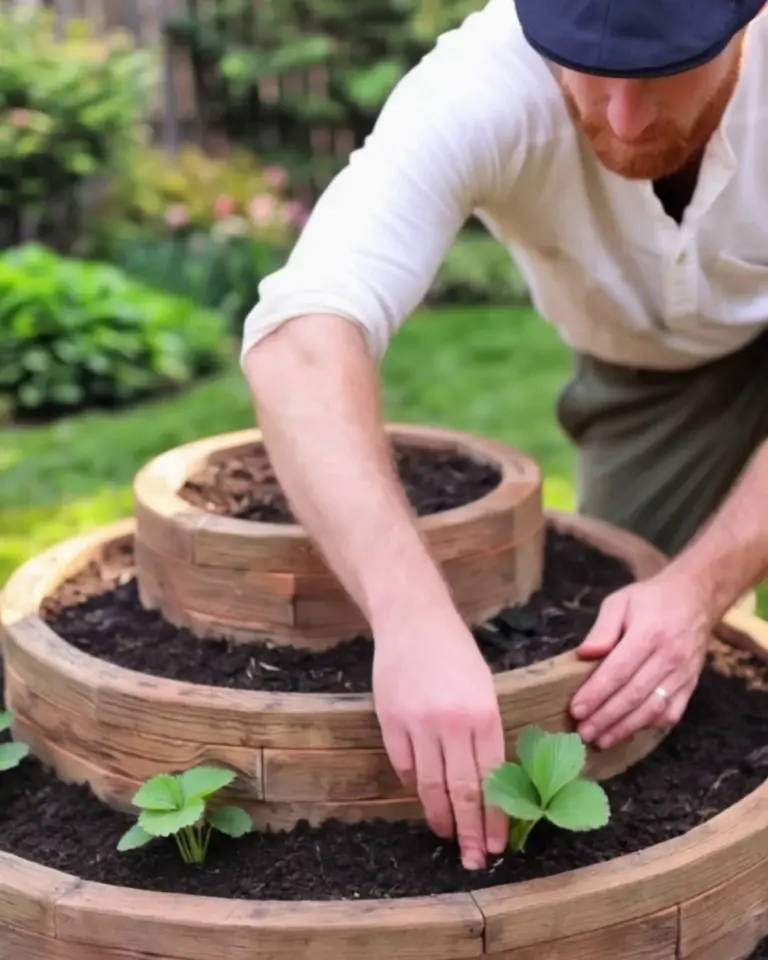
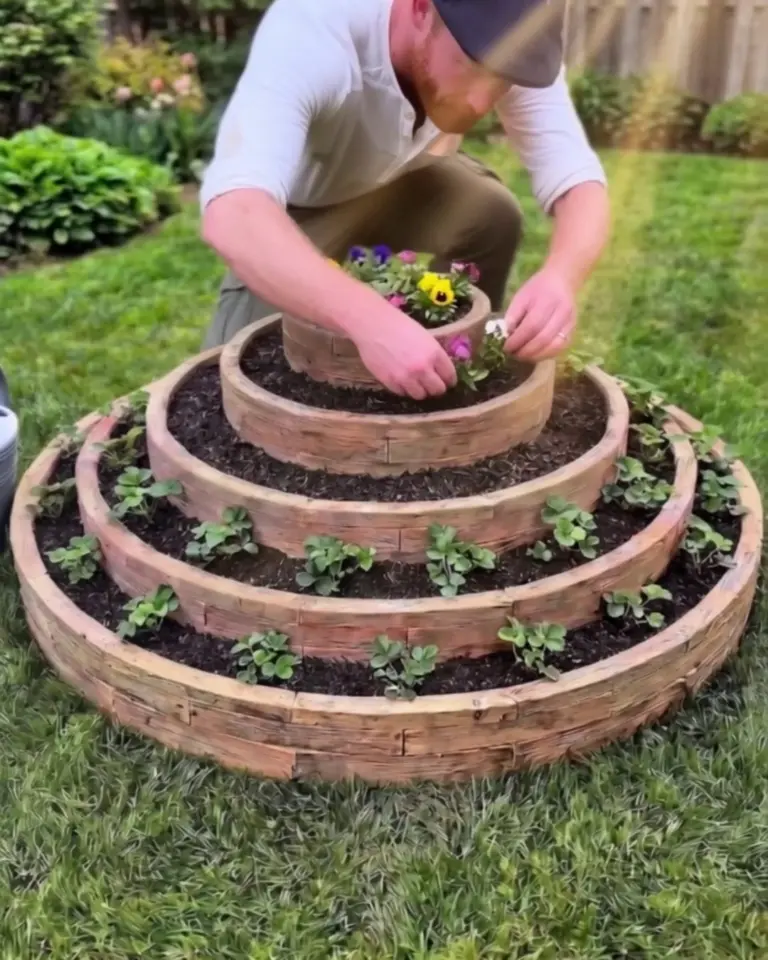
Step 7Pansies on top
Fill the fourth strip and the 16-inch top with pansies about 8 inches apart; two six-packs cover both.
Pinch off spent flowers every few days. They keep blooming longer that way.
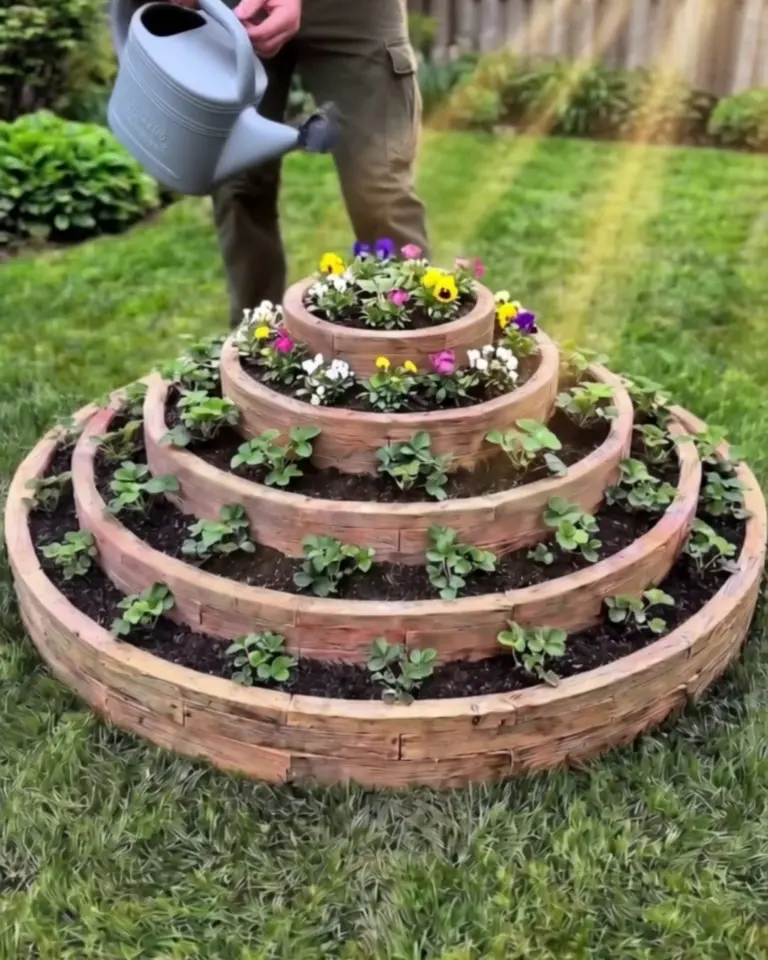
Step 8Water it in
Water from the top and let it run down through the tiers, then give the bottom ring an extra soak. Short strawberry roots want water often, about an inch at a time.
Use a can with a sprinkler head or a hose on shower. A hard stream washes soil off the narrow strips.
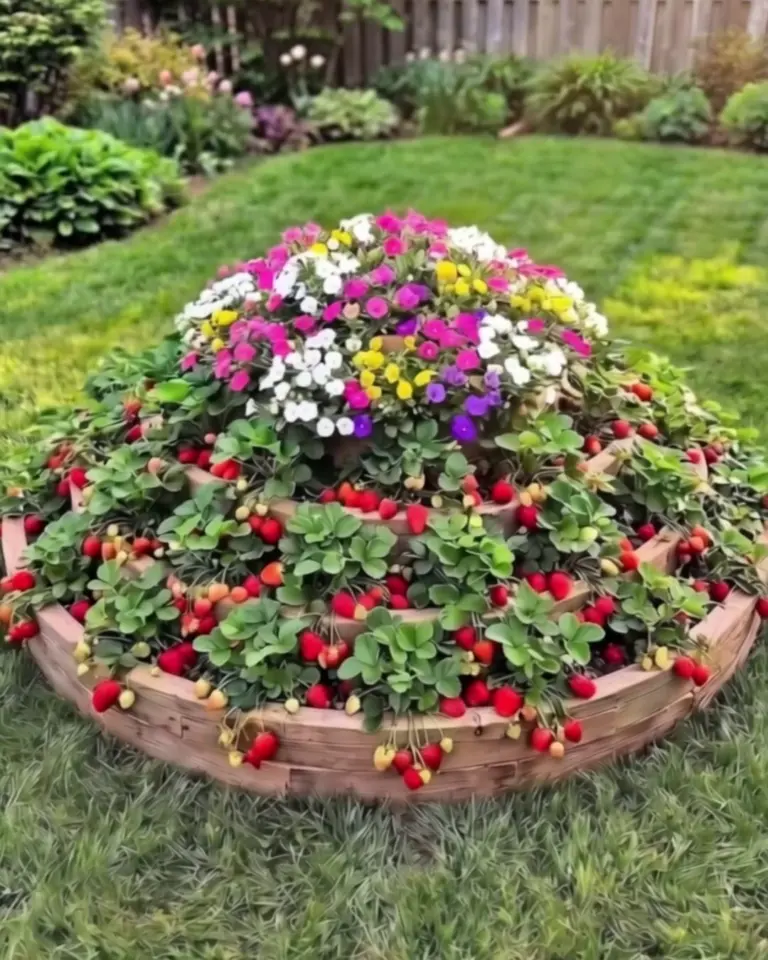
Step 9Pinch, then pick
NC State suggests pinching off the first year’s blooms so the plants settle in; we pinched the first flush and let the later ones fruit. Pick berries as they redden, and snip runners that hang over the edge.
Runners that root in the tier below are free plants. Pot a few up to fill gaps next year.
How the Strawberry Pyramid Holds Up
Bender board is thin, and the bottom ring, sitting on damp soil, softens first; expect to rebuild that one in a few years. Staples rust at the overlaps unless they’re stainless.
The strawberries need replacing every 3 or 4 years anyway, which is a good time to redo the rings. Soil in the upper tiers settles each season and gets a top-up of compost in spring.
FAQ
The board cracked when I bent it
It was dry, or the curve was too tight for one go. Soak it overnight and bend it slowly around stakes; the two smallest rings won’t bend dry at all. A crack near the end can be cut off and hidden in the overlap.
A ring went oval
Soil pushed one side out before it was staked. Add stakes until there’s one every 18 inches, then fill evenly around the circle instead of from one side. Once it’s full, it won’t push back round.
Can I use metal edging instead?
Yes; galvanized steel landscape edging bends easily and outlasts redwood. It heats up in full sun, so keep strawberry leaves off the top edge.
The top tiers dry out first
They do; water drains down and the bottom stays damp longest. A soaker hose spiraled up the tiers evens it out, and a little straw on the top ring slows the drying.
Will it make it through winter?
Strawberries are perennial, and a layer of straw helps them through. We haven’t had the bender board through a hard winter yet, so we can’t say how the rings will look in spring.
The wedding-cake comment stuck; the grandkids call it the cake. Nobody has needed to reach the middle yet, and the pansies on top get more compliments than the berries.