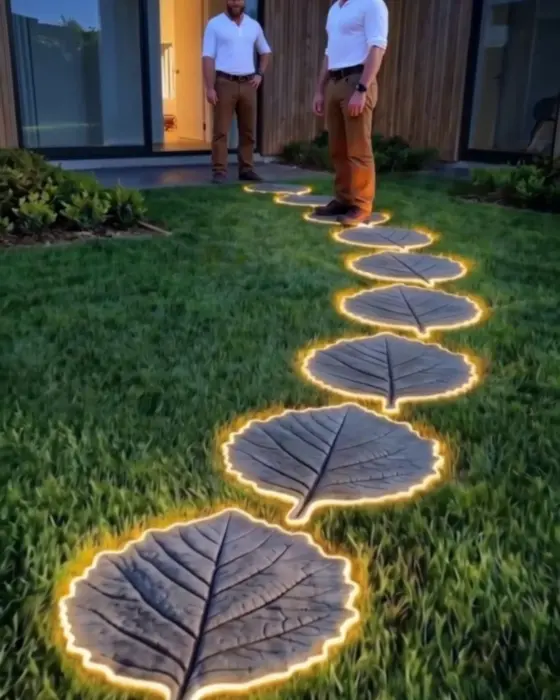
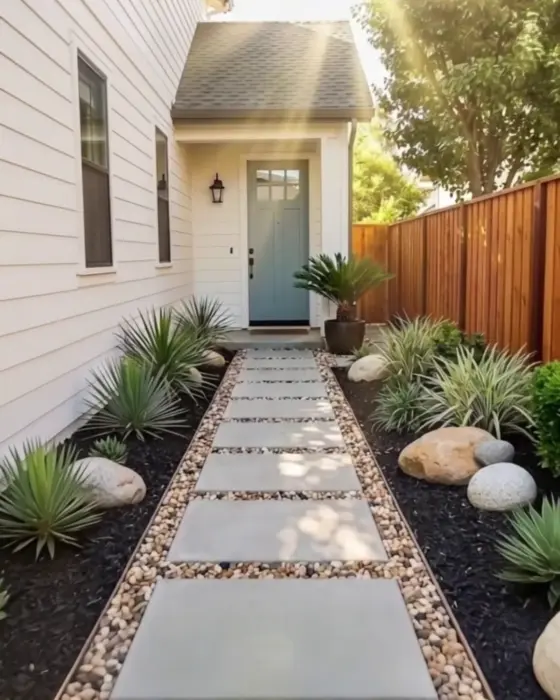
The question from next door, over the fence, was whether the lawn mower would chew up the edges of stones poured right into the grass. Mostly no: they sit a little below the sod, and so far only a couple of leaf tips have taken a nick.
You’ll also love: How to Build a Curving Cottage Garden Path with Flagstone, How to Make Colored Concrete Stepping Stones from a Leaf, How to Lay a Slate Stepping Stone Path in a Side Yard.
The first hole got no sand in the bottom, and that stone settled a quarter inch on one side within a week.
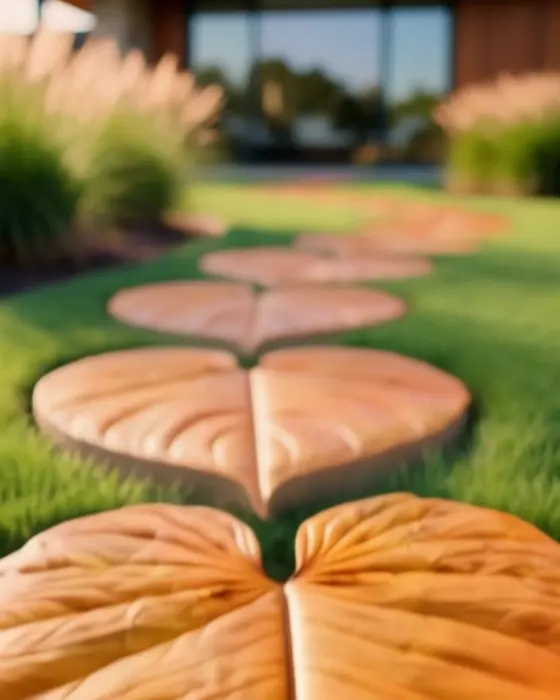
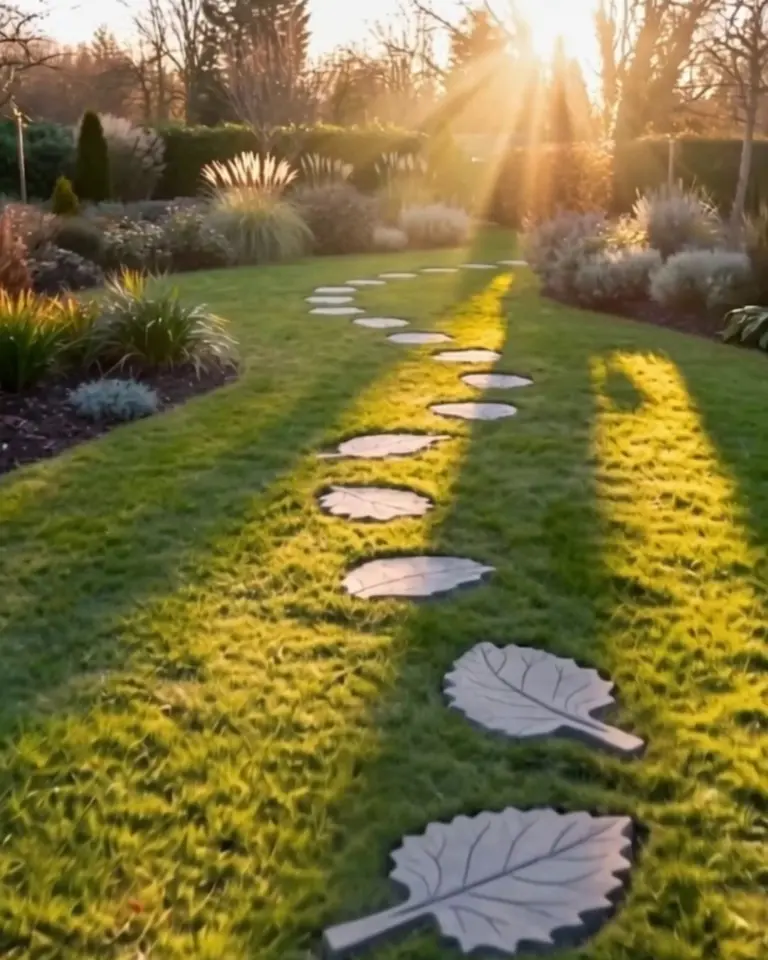
These rhubarb leaf stepping stones are eight concrete leaves, each about 20 inches across and 1½ inches thick, cast where they lie in a curve across the lawn.
Rhubarb stalks snap like celery, and the leaves leave a sharp green smell on your gloves.
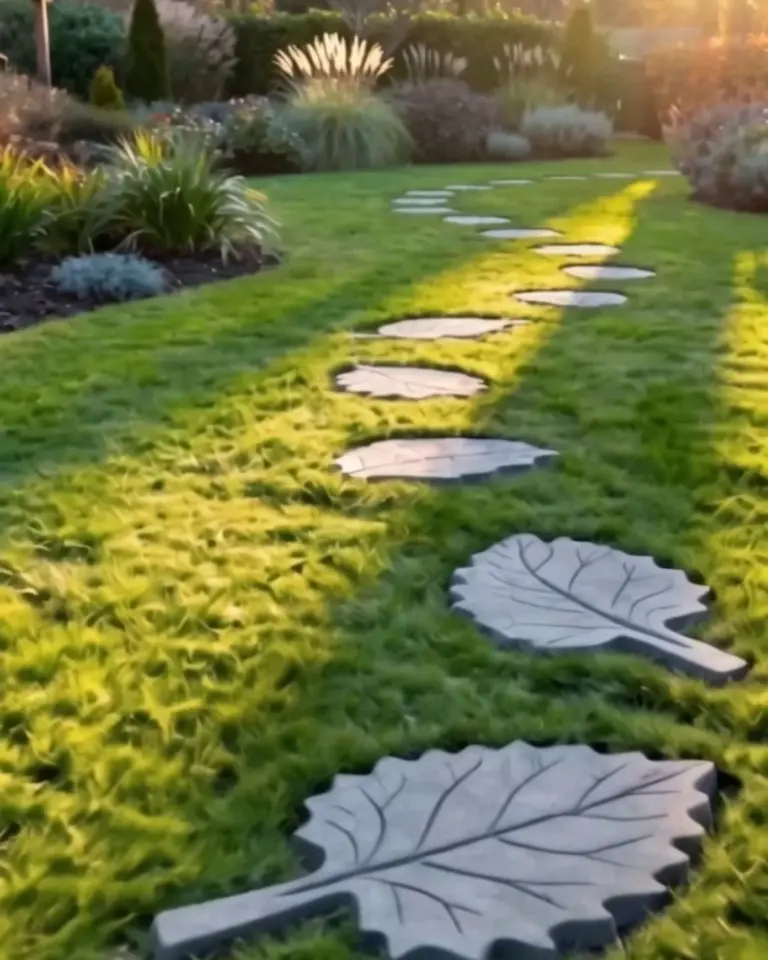
Why Pour Them Where They’ll Stay
A 20-inch leaf stone 1½ inches thick still weighs about 27 pounds. Poured in its own hole, it never has to be carried, leveled or bedded again.
We expected the sod cut to be rough and the concrete edge to need a lot of trimming. Tracing the leaf with a knife through the turf gave an edge clean enough that only the stem end needed work.
Rhubarb is the leaf for this. Its veins stand up thick on the back, and one leaf covers a whole stone.
Materials & Tools
Not in the $120: the rhubarb leaves, a flat spade, a hoe, a wheelbarrow, a scrap 2×4 for tamping and a toothpick.
The mix: one maker’s concrete mix lists a 2-inch minimum thickness, so stones this thin are sand mix. With no gravel in it, the finer veins print cleanly too.
Leaf size: rhubarb leaves run 18 to 24 inches across. Anything under about 16 makes a stone too narrow for a whole foot.
A softer route: if mowing around stones sounds like a chore, our white gravel garden path takes the lawn out of the picture.
Watch the Build
Step by Step
Step 1Trace and dig
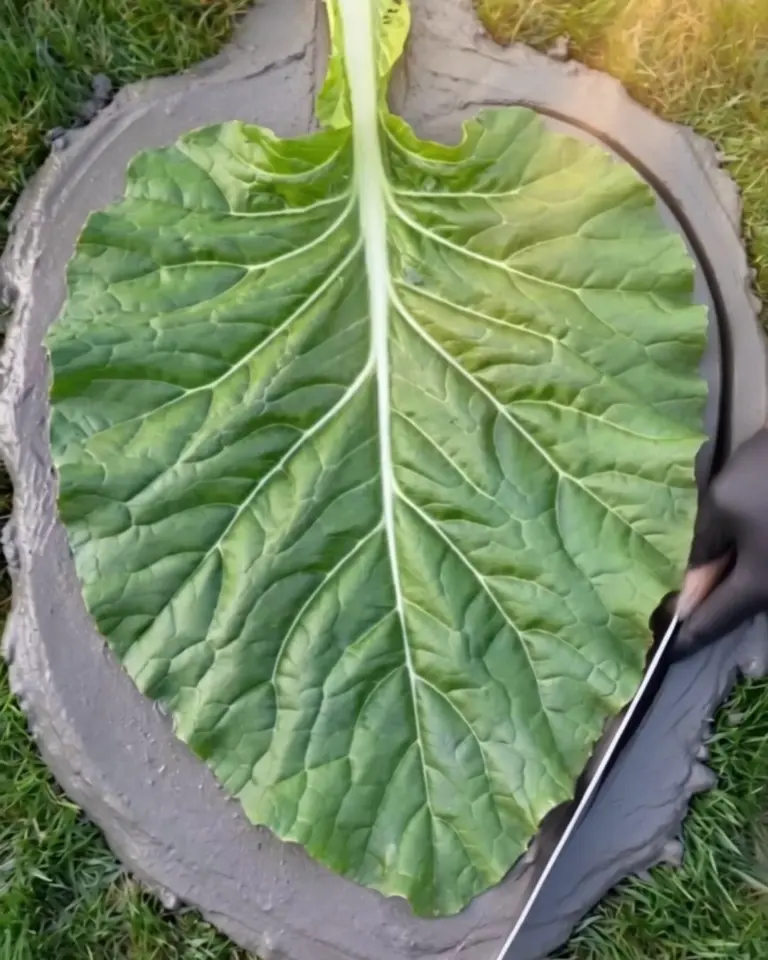
Lay the leaves out on the lawn about 24 inches apart, center to center, and walk the line. Trace around each leaf with the utility knife, cutting straight down through the sod, then dig each shape out 2½ inches deep.
A flat spade lifts the sod in clean chunks; keep them for patching thin spots.
Leave the stem off the tracing and add it later with the trowel. A thin stem cut through the turf crumbles when you dig it.
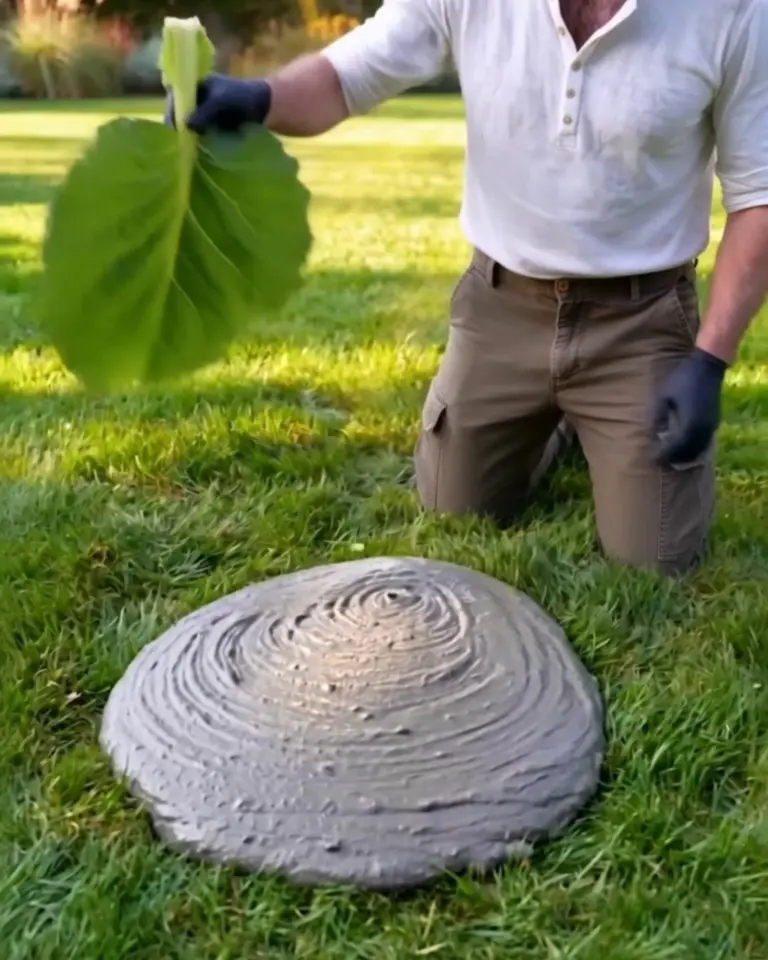
Step 2Sand, mix and pour
Spread an inch of sand in each hole, tamp it firm with the end of a 2×4 and mist it just before pouring, without leaving puddles. Mix one bag at a time with about 8 pints of water, stiff enough to hold a shape; each bag fills about three holes to about ¼ inch below the sod.
Gloves and glasses on. A splash of wet concrete in the eye is a trip to urgent care.
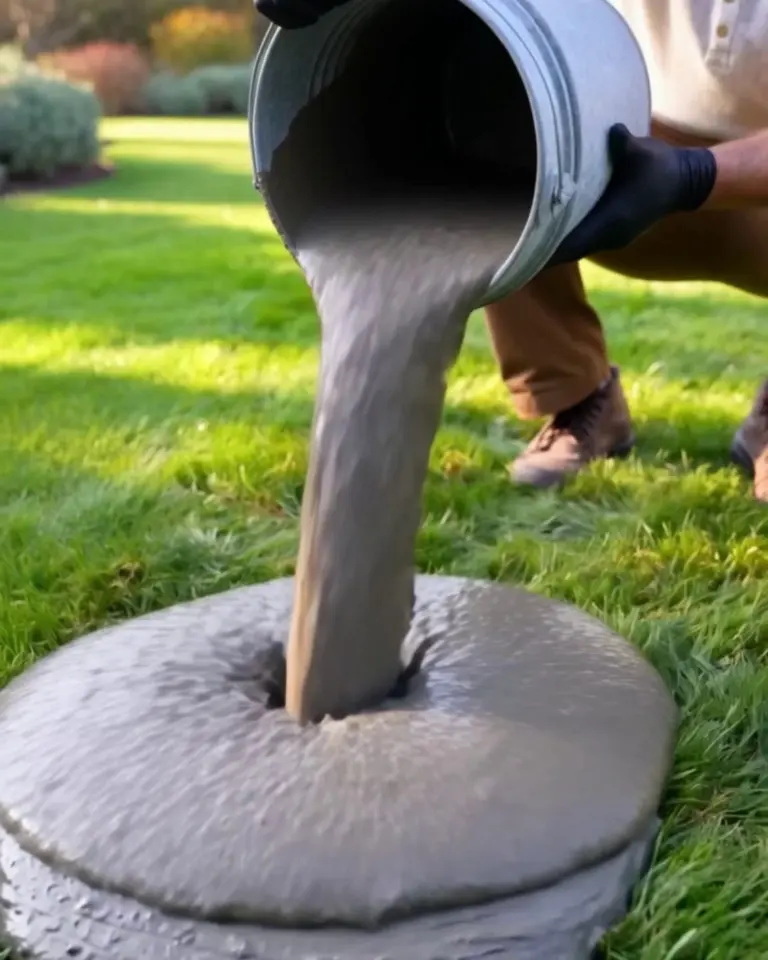
Step 3Float it smooth
Work the float back and forth until the top is smooth and level with the cut edge. Let the wet sheen fade for a few minutes before the leaf goes on.
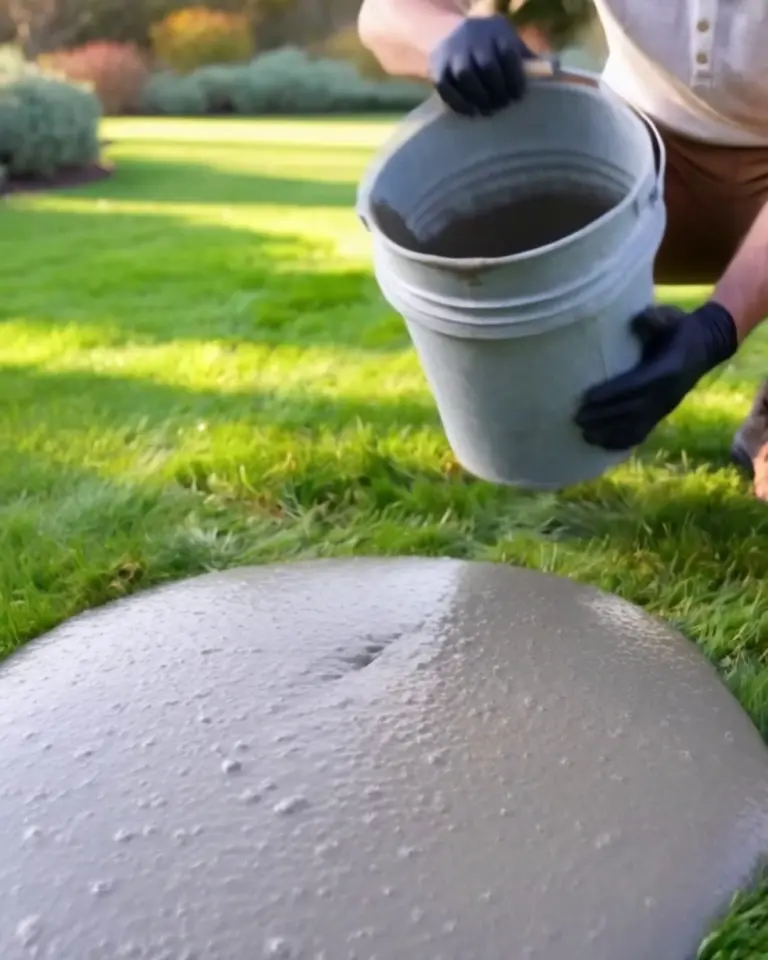
Step 4Lay the leaf
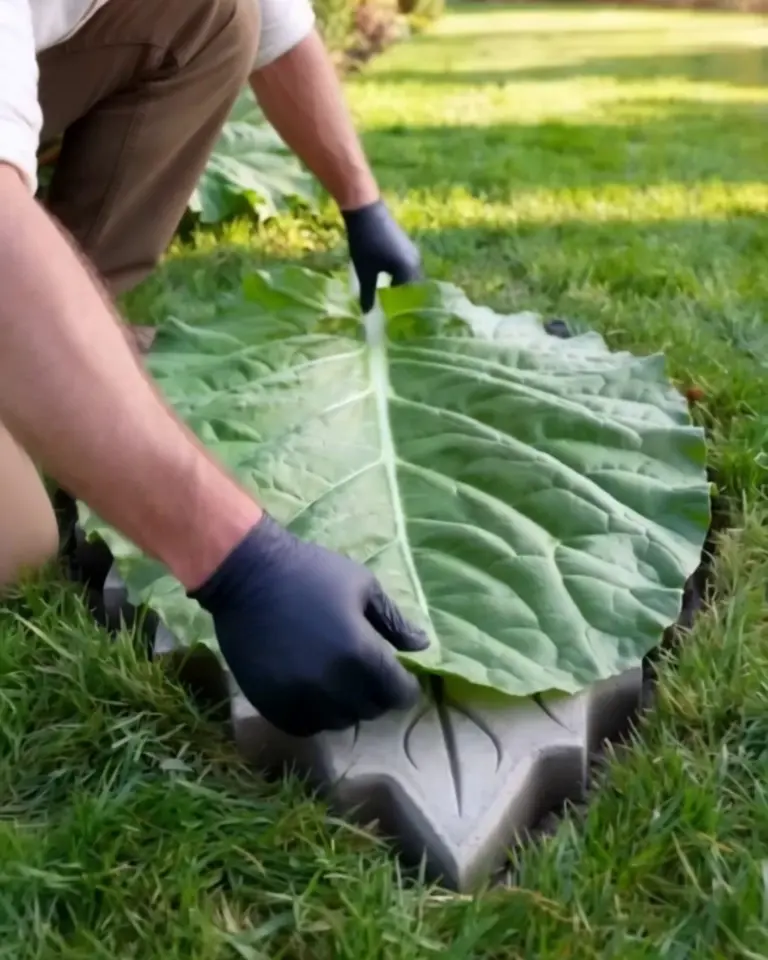
Lay the leaf vein side down, centered in the outline, and smooth it from the middle outward so every part of it touches the paste.
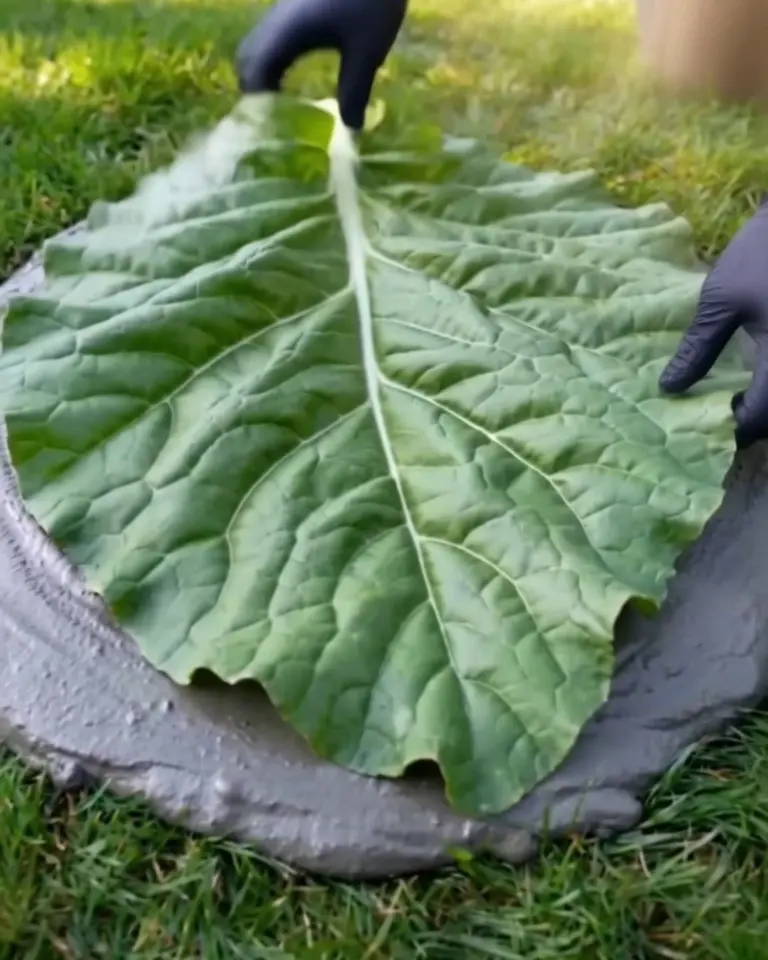
Step 5Press it in
Press it with flat hands from the center vein outward, about ⅛ inch deep, and shape a short stem at the base with the margin trowel.
Don’t slide your hands. A leaf that moves smears its own veins.
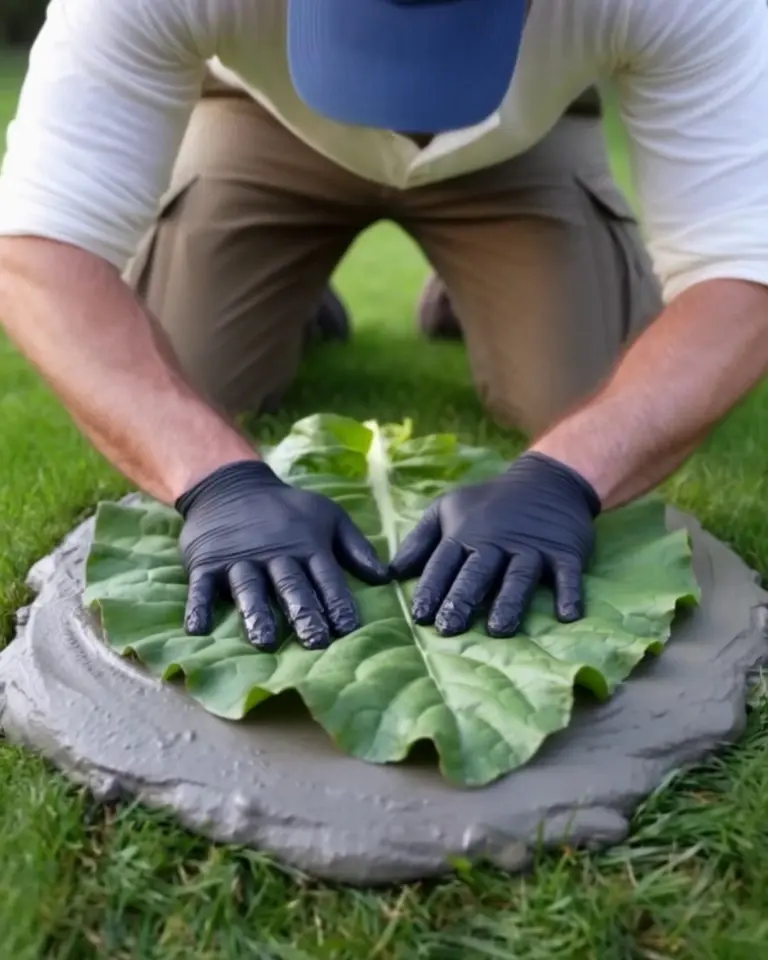
Step 6Tidy the edge
Run the margin trowel around the edge where concrete slumped onto the grass, and scrape off anything outside the cut line. Pull any blades of grass out of the edge before it stiffens.
A blade left in the edge leaves a crease you’ll see for good.
Step 7Cover, then peel
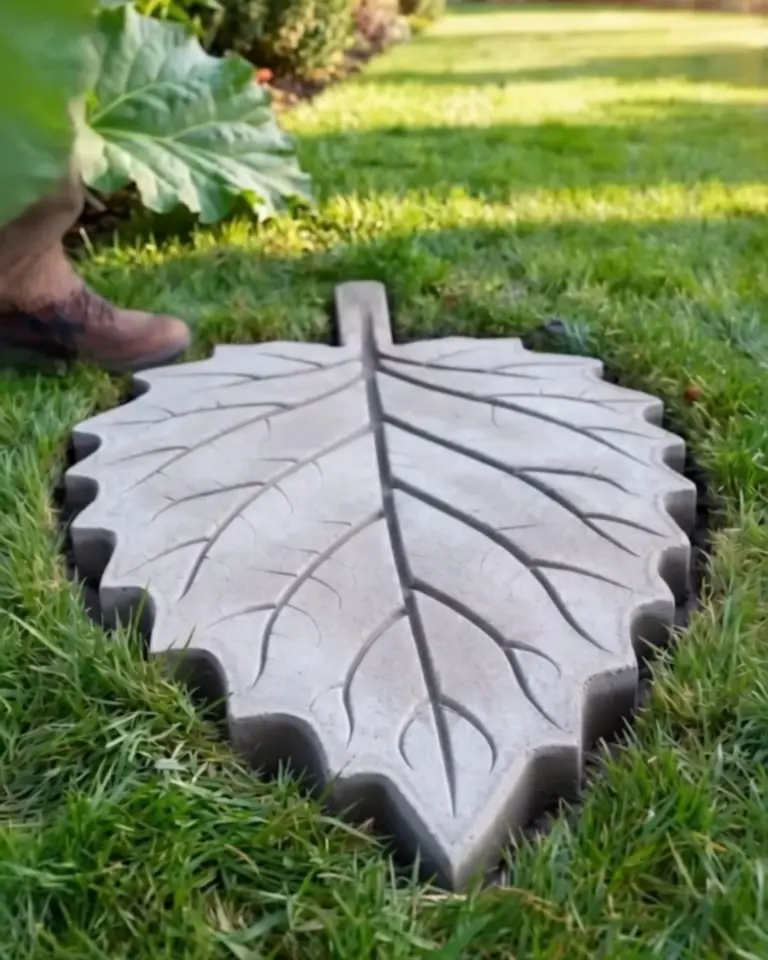
Lay plastic over each stone and weigh the edges with rocks. The next day, lift the leaf from the stem end and peel it back slowly; pick out stuck bits with a toothpick.
Peel it while it’s still limp. Left a few days, the leaf dries out and tears into pieces.
Step 8Cure and seed the edges
Keep the stones under plastic, or mist them daily, for 5 days in warm weather and 7 in cool. Sprinkle grass seed into any bare soil along the edges and keep it damp.
Rhubarb leaves are poisonous to eat, not to handle. They go in the compost, out of the dog’s reach.
Step 9Walk it in
Give the stones a week before the mower rolls over them, and run the deck at its highest notch for the first few cuts. By then the seeded edges have filled in around them.
How Rhubarb Leaf Stepping Stones Hold Up
Grass creeps over the edges within a season, and a pass with an edging tool each spring keeps the leaf outlines crisp.
The fine vein lines fill with dirt and moss, which makes them easier to see; a stiff broom clears them if you’d rather not. Where winters freeze hard, a stone poured on poorly drained soil can heave; the sand underneath helps, and ours haven’t moved yet.
FAQ
The veins came out faint
The leaf went in shiny side down, or the mix was so wet it slumped back over the veins. Press the vein side down, and mix it stiff enough to hold a shape.
One stone sank on one side
The sand under it wasn’t tamped, or there was none. Lift the sod at the low edge, pack sand under the stone with a trowel handle, and water it in.
No rhubarb in the garden
Hosta, elephant ear and burdock leaves print well too. Pick one with thick veins on the back; thin, glossy leaves barely show. Rhubarb growers at farmers markets usually cut the leaves off and toss them, so ask.
Can I mow right over them?
Once they’re a week old, yes, as long as they sit just below the sod line. The deck still scuffs them if the lawn dips beside a stone, and a string trimmer cleans up the grass along the edges.
Will they crack in winter?
We haven’t had these through a hard freeze yet, so we can’t say how they’ll do. The two in the shade stay wet longest, and those are the ones we’re watching.
The neighbor mows right over the corner of our lawn that touches theirs. The two nicked leaf tips are on that side.