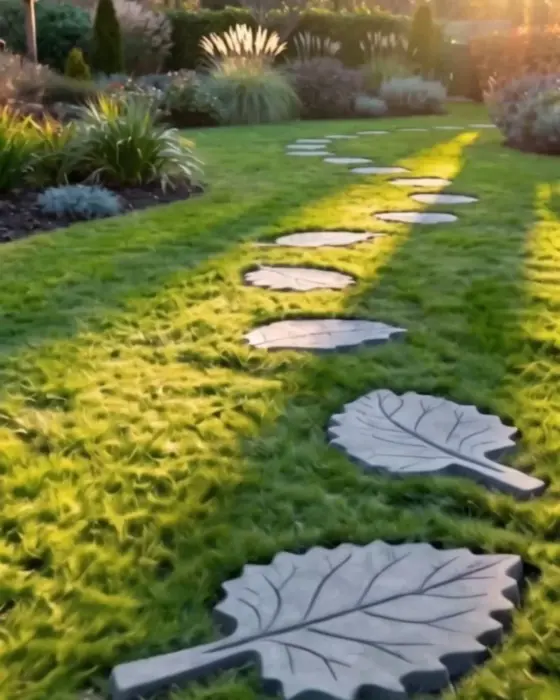
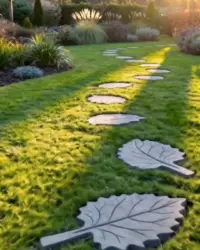
The first flagstone went down on raked soil, looked level, and rocked like a seesaw under one foot by the next morning. Water from the sprinkler had softened the dirt under one corner overnight, and the stone’s uneven back did the rest.
You’ll also love: How to Cast Rhubarb Leaf Stepping Stones Right in the Lawn, How to Make Colored Concrete Stepping Stones from a Leaf, How to Lay a Slate Stepping Stone Path in a Side Yard.
Every stone after that sat on an inch of sand, wiggled down until it stopped moving.
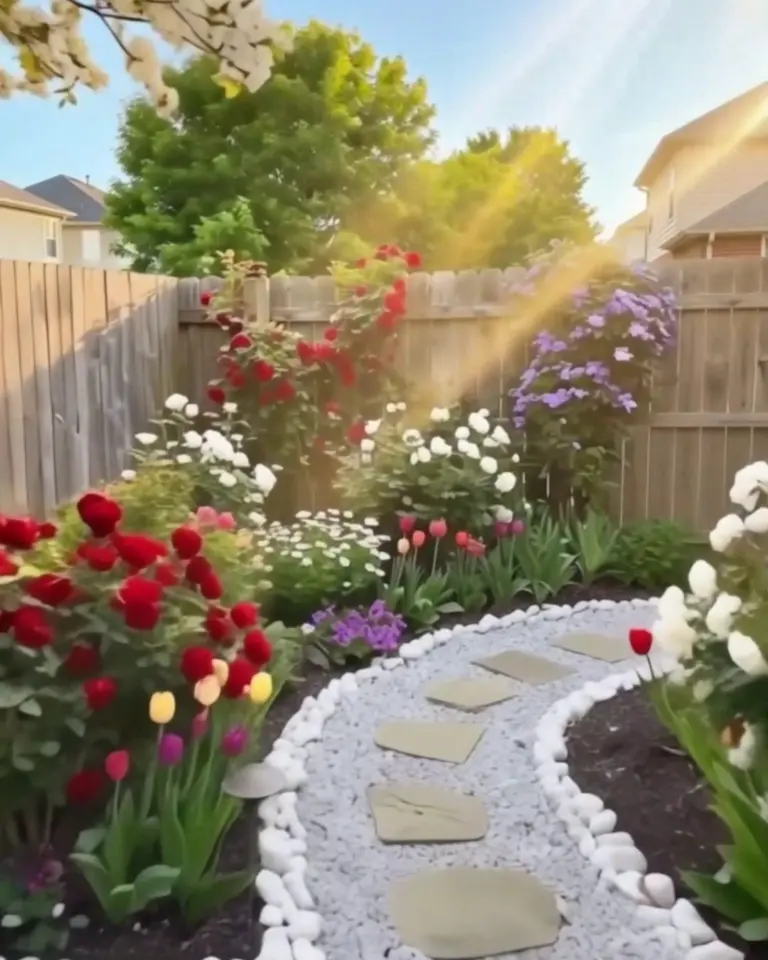
Our cottage garden path is 24 feet of pale pea gravel between white river rock borders, with 12 flagstones down the middle and beds of hostas, roses and petunias on either side.
Pea gravel crunches like cereal underfoot. Our neighbor called it pretty, then asked how often we’d be raking it back onto the path.
Why Stones Run Down the Middle
Pea gravel is round, so it rolls underfoot and never packs. With a flagstone every 24 inches, feet land on stone and the gravel just fills the gaps.
We expected the round border rocks to hold the gravel in. They didn’t, and within a week pea gravel had slipped between them into the mulch, which is why a strip of plastic edging now runs along the inside of each border, out of sight.
Both beds get the same 3 inches of mulch. They don’t get the same plants; the house side is in shade by early afternoon.
Materials & Tools
Not in the $485: the plants and the bench, and the mattock, a flat spade, a rake and a wheelbarrow.
Price check: bagged, the white rock alone runs about $40 for each 0.4 cubic foot, 12 bags for these borders. One load of rock, gravel and mulch from a landscape yard, delivery included, costs less than that.
Tulips: NC State’s plant toolbox says to plant tulips three times as deep as the bulb, in full sun, and that hybrids fall off sharply after the first year. Bulbs go in during fall; potted tulips already in bloom can go in during spring.
Straighter and simpler: our white gravel garden path uses crushed gravel, which locks together and doesn’t need the hidden edging.
Watch the Build
Step by Step
Step 1Clear the weeds
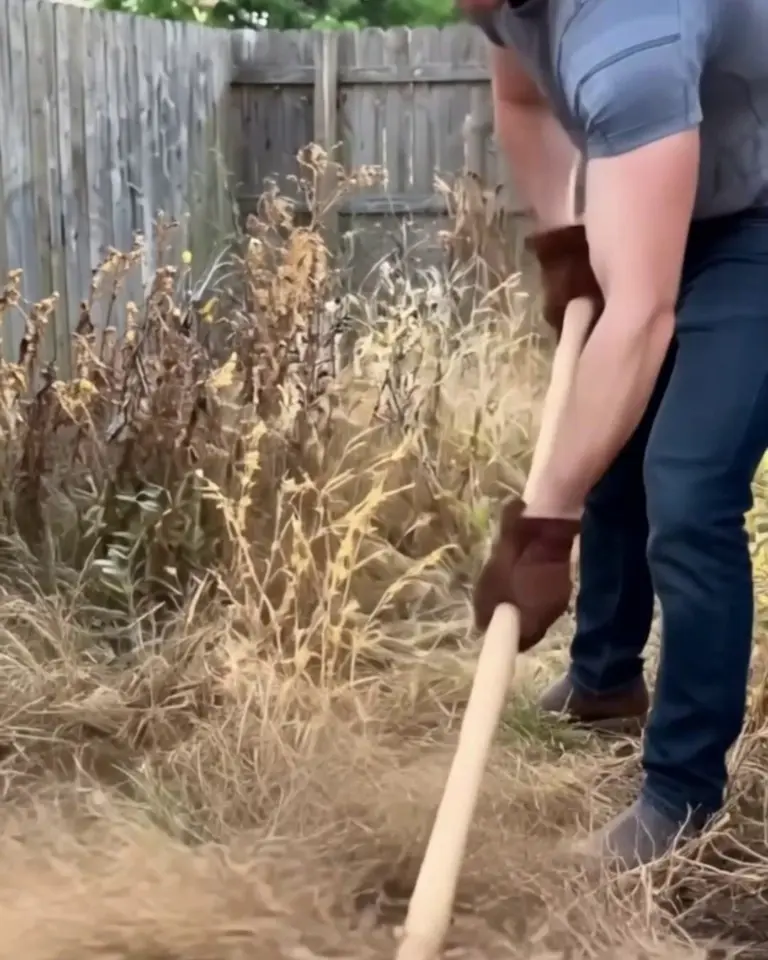
Chop the dead weeds out with the mattock, roots and all, and rake the yard down to bare soil. Bag anything with seed heads instead of composting it.
Step 2Mark the S-curve
Lay two garden hoses 36 inches apart in an S from the back step to the far corner, and walk it a few times. Mark both lines with spray paint and rake the strip between them level, a couple of inches below the beds.
Keep each bend wide enough to walk without stepping on the rocks; ours curve on about an 8-foot radius.
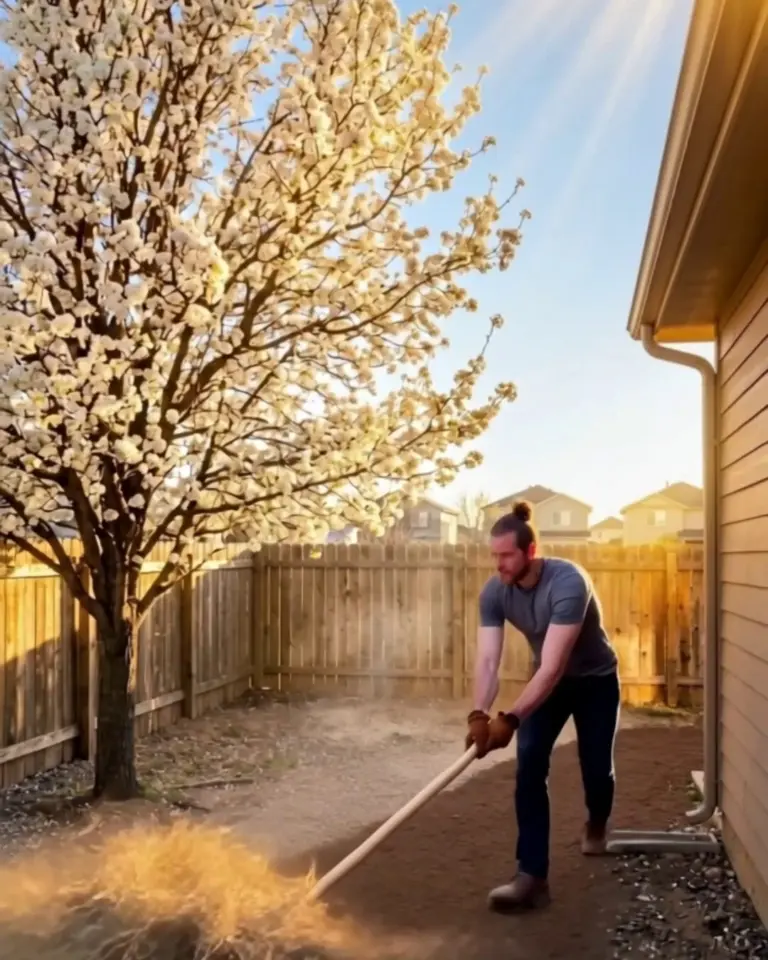
Step 3Set the edging and fabric
Dig a slit 4 inches deep along each painted line, stand the edging in it with its top flush with the soil, and stake it every 4 feet. Roll the fabric down the lane between the two strips and pin it every 2 feet.
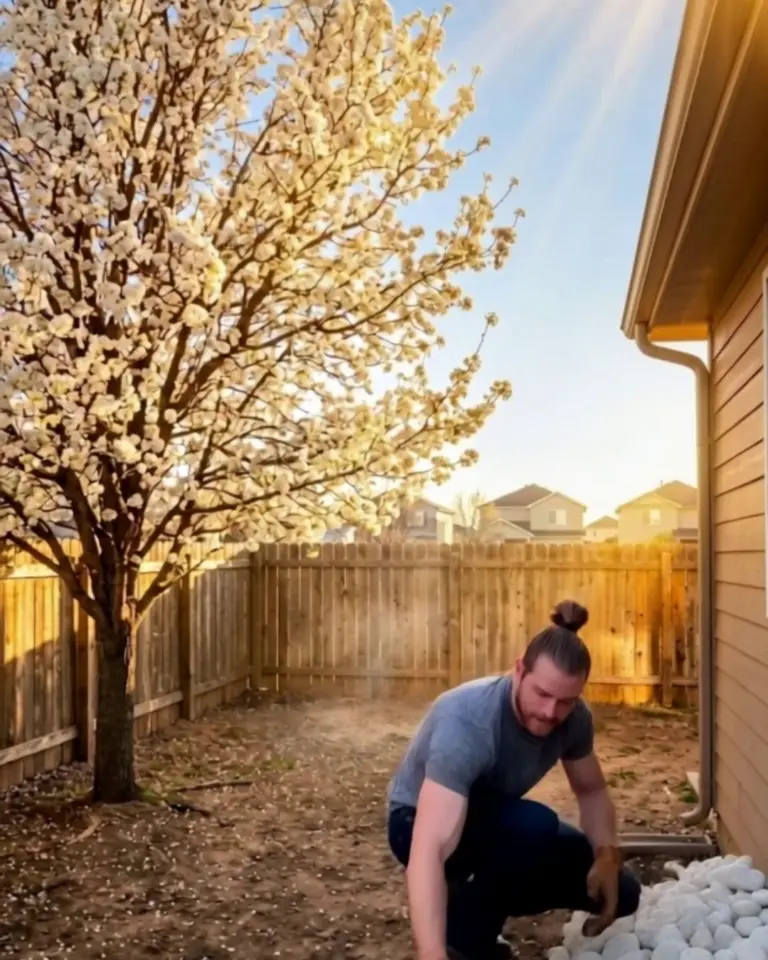
Step 4Line the borders
Set the white rocks along the outside of each edging strip, touching, and press each one into the soil so it won’t roll. Save the biggest for the outsides of the bends, where feet cut the corner.
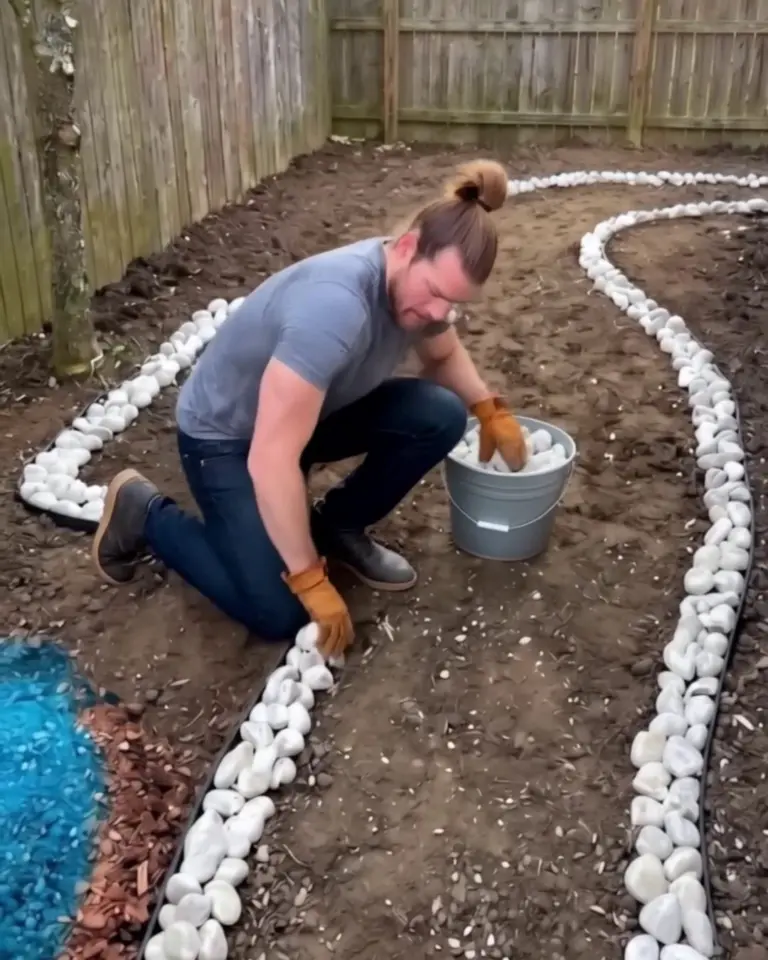
Step 5Bed the flagstones
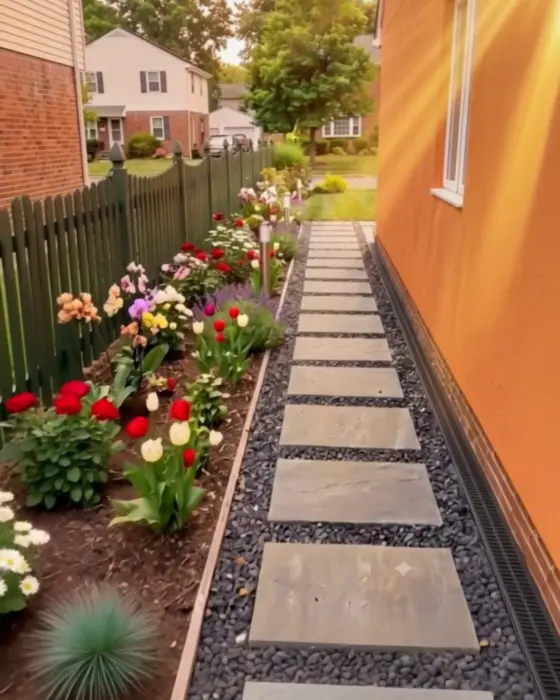
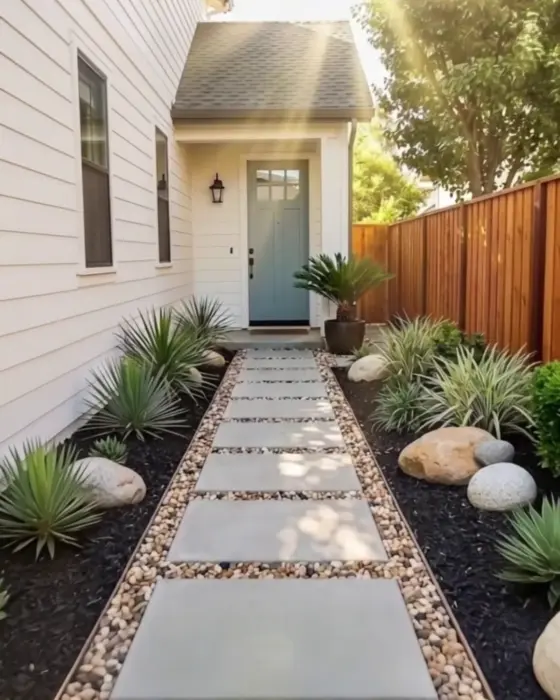
Lay the stones out first, about 24 inches apart center to center, and walk them before setting any. Then set each on an inch of sand spread over the fabric, wiggling it down until it stops rocking, its top a hair above where the gravel will finish.
Stand on each stone and shift your weight. A stone that clicks needs more sand under the low corner.
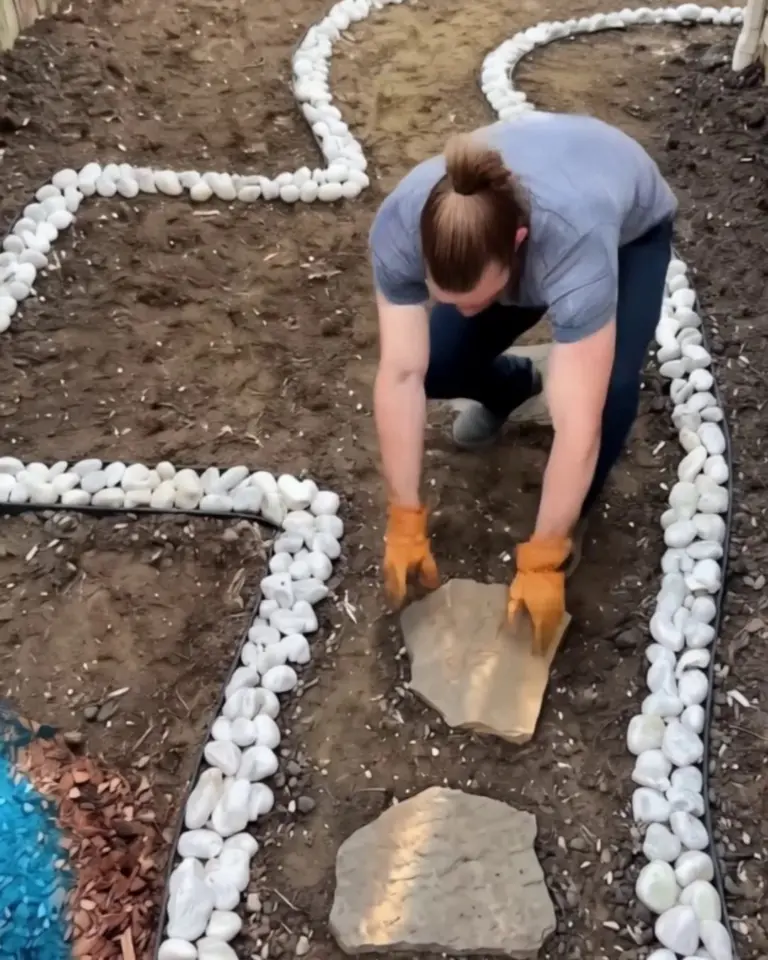
Step 6Pour the pea gravel
Pour gravel around the stones to 2 inches deep and rake it level, just below the stone tops. A bit under half a cubic yard fills 24 feet of this lane, with some left for the bench.
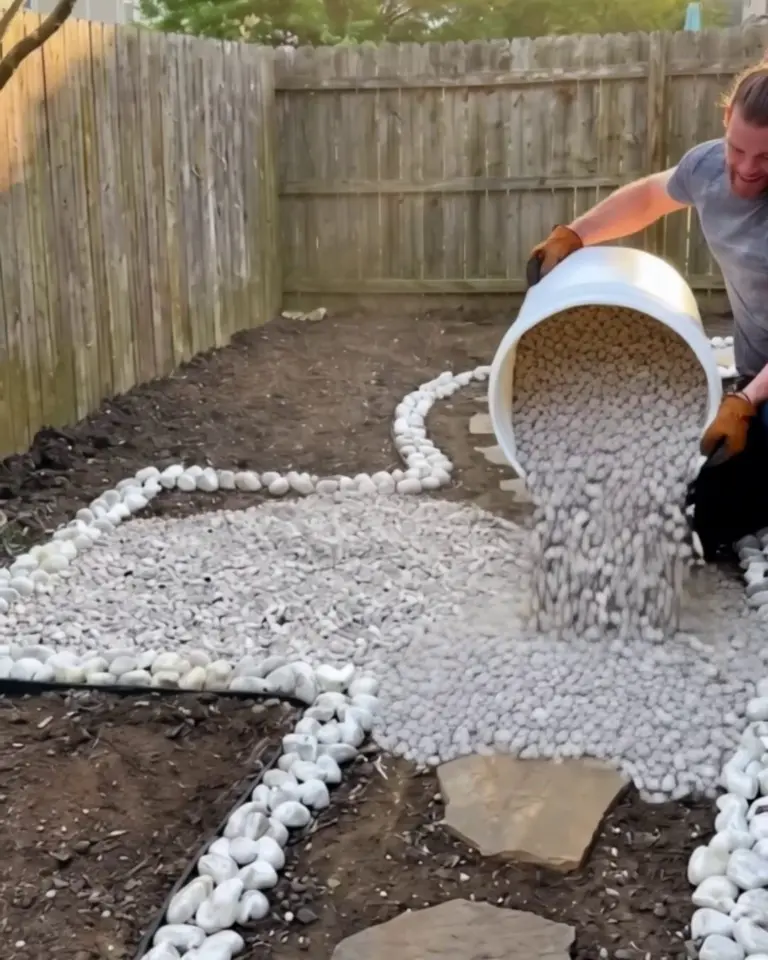
Step 7Mulch the beds
Spread 3 inches of shredded mulch over both beds outside the borders. Keep it an inch or two back from the rocks, or the first hard rain floats it into the gravel.
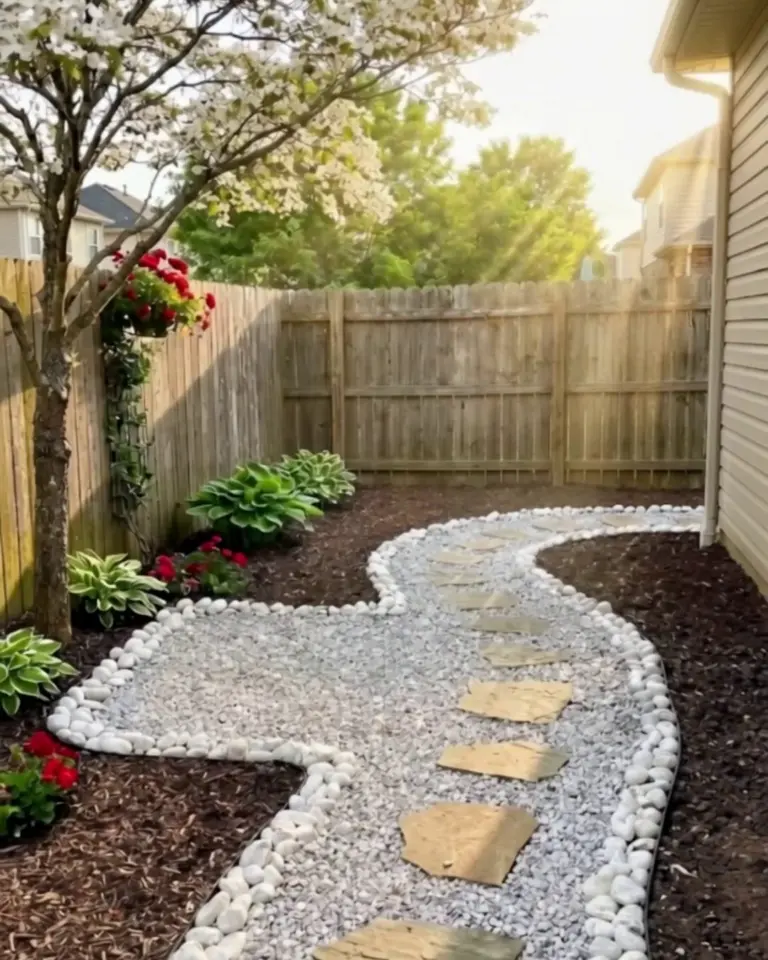
Step 8Plant the shade side
Plant five hostas about 2 feet apart in the bed along the house, where the house shades it from early afternoon on. Pull the mulch back, set each at the depth it sat in its pot, and tuck the mulch back around it.
Hostas like morning sun and dappled shade. Afternoon sun scorches the leaf edges.
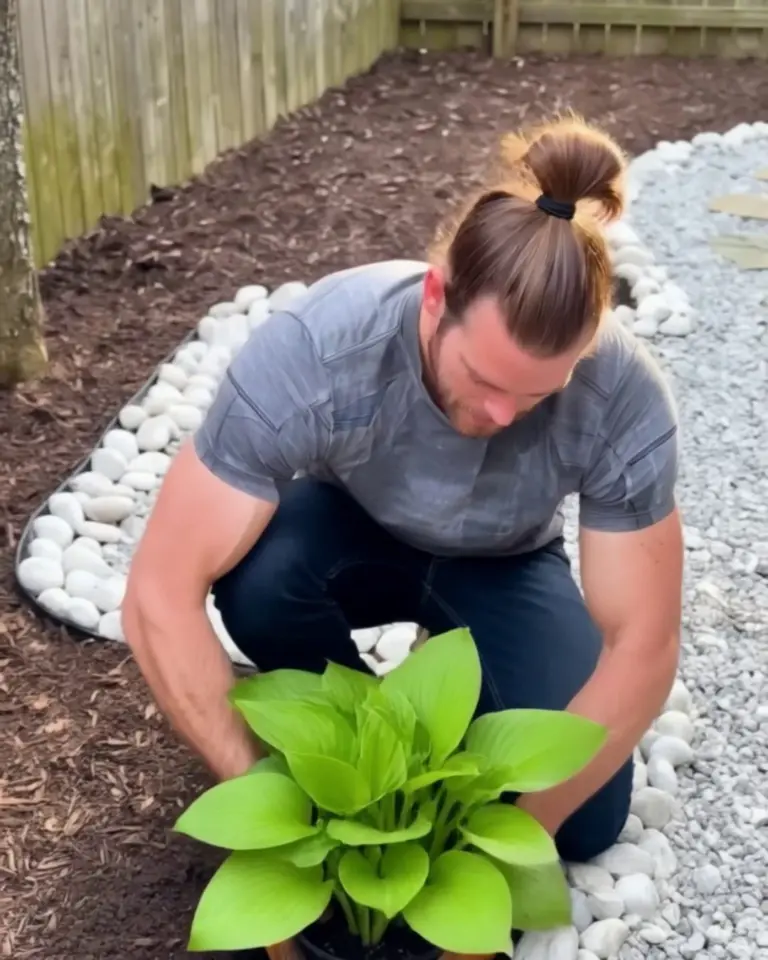
Step 9Plant the sunny side
Tie the two climbing roses to the fence, about 6 feet apart, and fill the bed in front of them with petunias and daisies set about 10 inches apart. In fall, tuck the tulip bulbs in between them in clumps of seven.
Roses want 6 hours of direct sun or more, which is why they’re on the fence side.
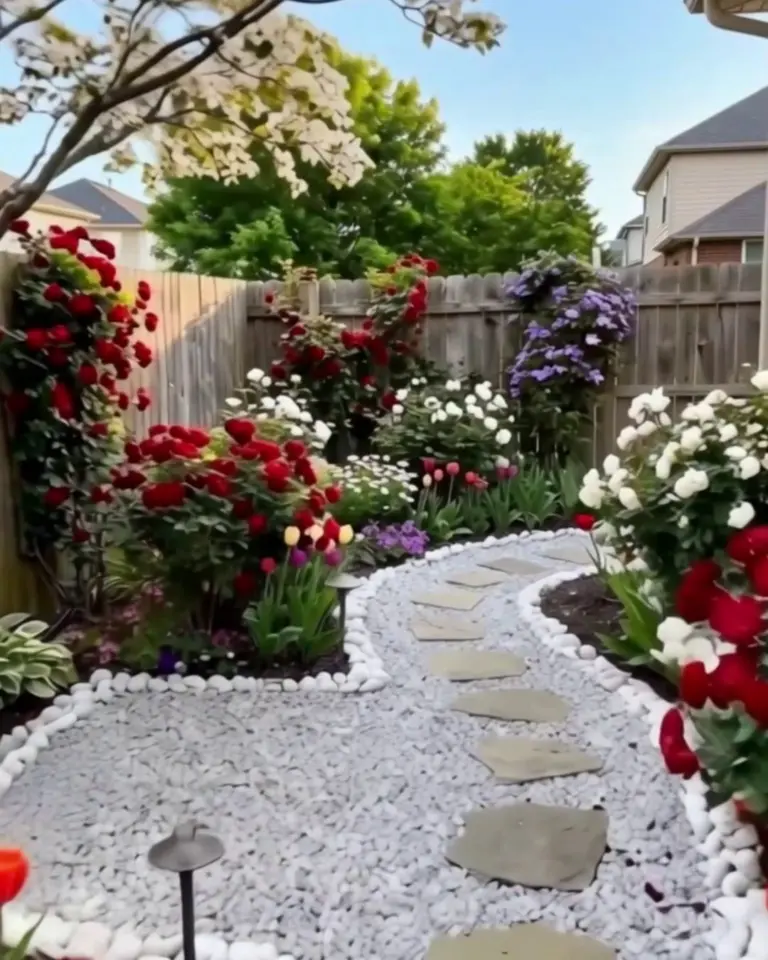
Step 10Add the bench
Set the bench where the last bend opens up, on a square of fabric topped with the leftover gravel so its legs don’t sink into the mulch.
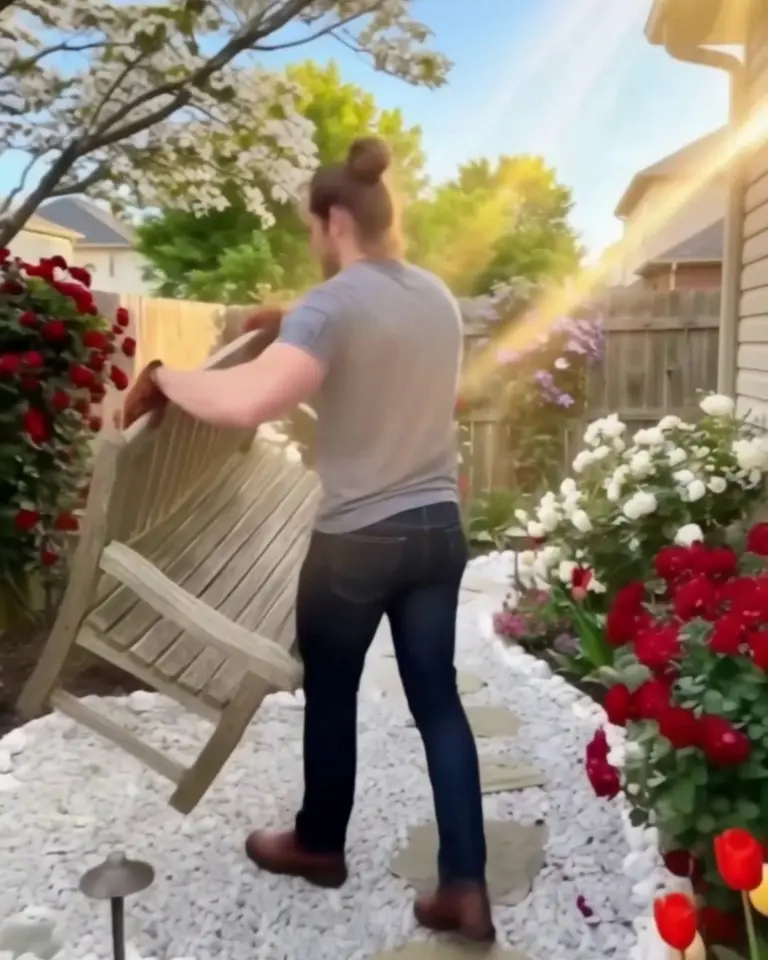
How the Cottage Garden Path Holds Up
Pea gravel still drifts onto the stones where feet cut the bends, and a few minutes with a rake every couple of weeks puts it back.
Mulch breaks down and needs another inch each spring. The hybrid tulips put on a thinner show the second year and get replaced with fresh bulbs.
FAQ
One flagstone still rocks
Lift it, add sand under the low corner, and wiggle it back down. If the stone has a hump on its back, scoop sand away under the hump instead.
Gravel keeps ending up in the mulch
Check that the edging runs the whole length of each border, with its top level with the soil, not below it. The outsides of the bends need it most.
Can I use crushed gravel instead of pea gravel?
Yes; crushed gravel locks together and stays put better, stones or no stones. We liked the softer look of round gravel between the flags.
My hostas got scorched
They’re getting afternoon sun. Move them somewhere the afternoon light doesn’t reach; ours only grow where the house shades the bed after lunch.
Will the tulips come back?
Ours were thinner the second spring, the way hybrids usually go. We haven’t tried species tulips there, so we can’t say whether they’d do better.
The neighbor’s question turned out to be fair: we rake the bends every other weekend. The stones haven’t moved since the sand went under them.