Wrapping the 5-gallon bucket in plastic is the step that lets the cement net come off it at all. Our first one skipped it, and the cured shell bonded to the bucket so well that we had to cut the bucket out from inside in strips.
You’ll also love: How to Make a Cobblestone Concrete Planter from Plastic Bags, How to Make a Terrazzo Concrete Planter from Broken Bottles, How to Make a Concrete Fire Bowl from Two Plastic Basins.
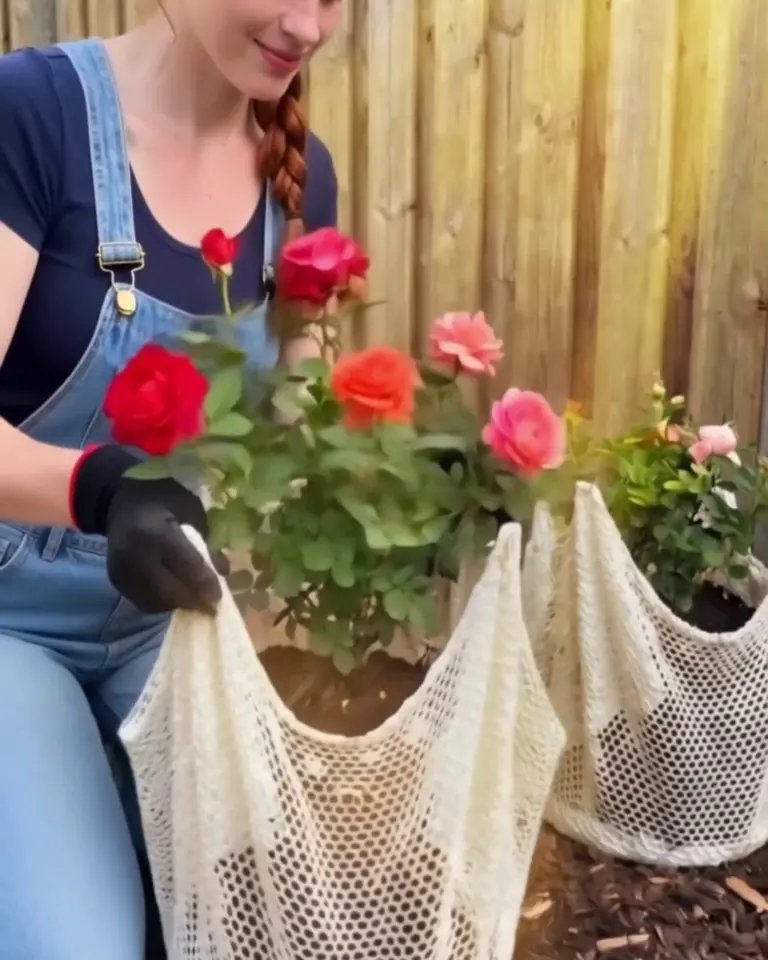
Our crochet cement planter is a cotton crochet tablecloth soaked in Portland cement and draped over that bucket: about 12 inches across and 18 tall at the points, with a lined pocket of soil for one patio rose.
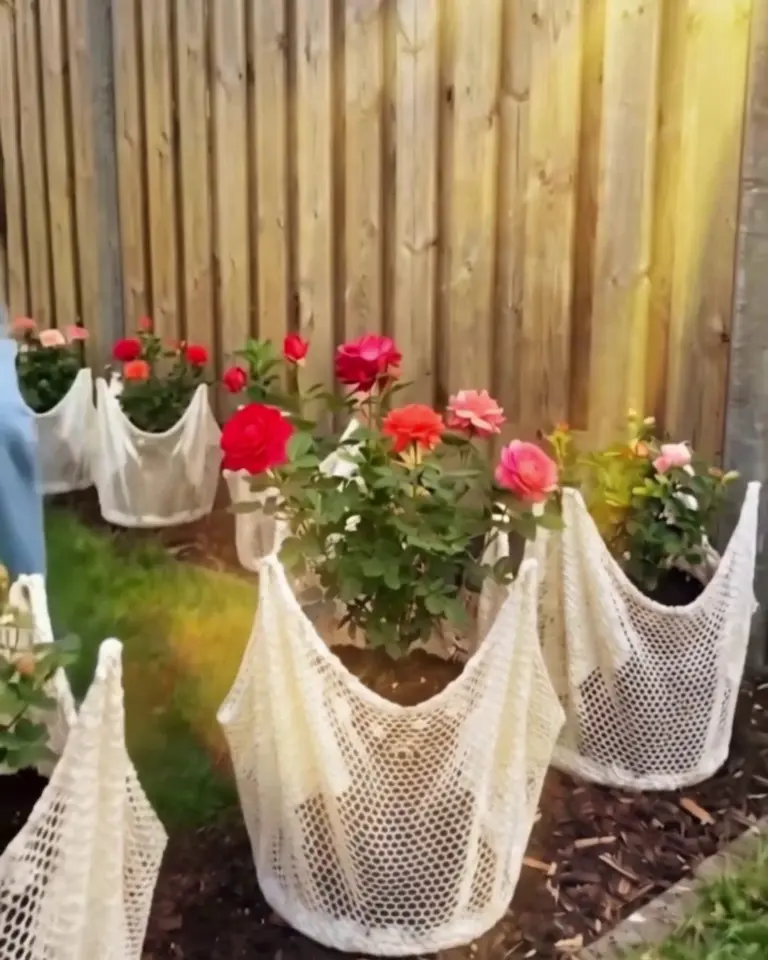
A neighbor said the row of them looked like laundry left out to dry. Then she asked for one for her porch.
Wet cotton full of cement is as cold and heavy as a soaked bath towel, and it drips gray onto the patio for the first hour.
Where the Points Come From
The points at the rim are the corners of the tablecloth. They hung straight down the sides of the bucket while the cement set, so when the shell is turned over, they stand straight up.
We expected the open mesh to be the weak part. The folds carry the load; a cured shell takes a rose and its soil without flexing, as long as it sits flat on the ground.
Cotton drinks the slurry all the way through. Synthetic lace only gets coated, and the coating flakes off.
Materials & Tools
Not in the $110: scissors, a drill with a paddle mixer if you have one, and a hose.
Cement, not plaster: plaster of Paris looks the same in the tub but is made for indoor pieces and doesn’t stand up to rain. Portland cement comes in 47- and 94-pound bags, and the small one makes about three planters.
Same method, smaller: our draped concrete planters use the same slurry over nursery pots, with plain cloth instead of crochet.
Watch the Build
Step by Step
Step 1Set up and mix
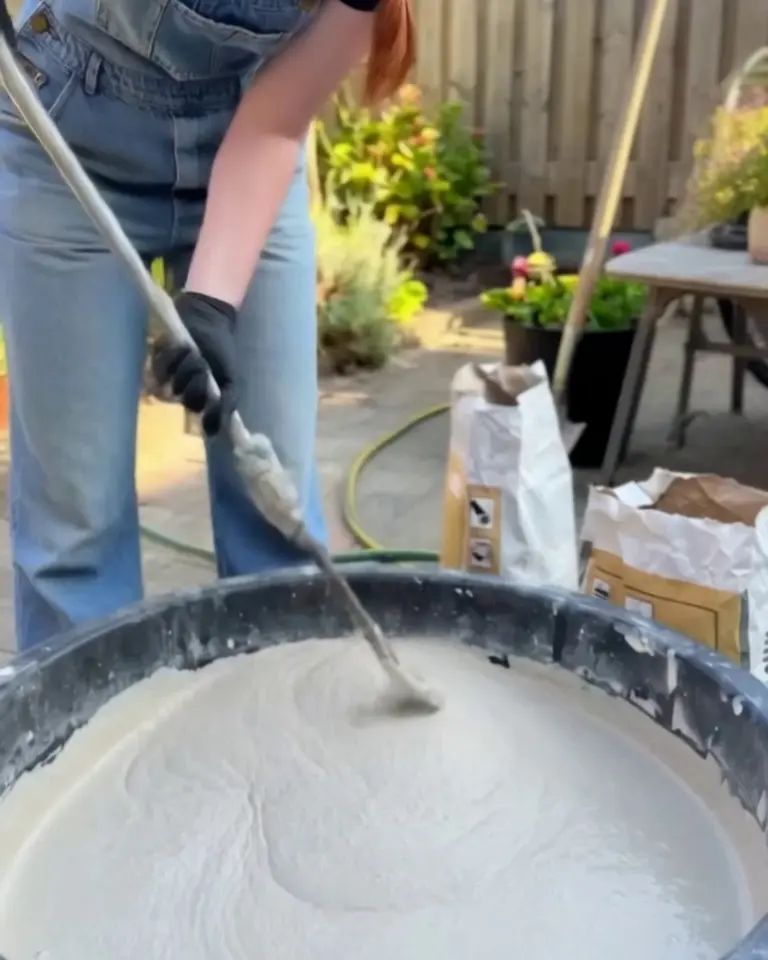
Turn the bucket upside down on a board, cover it with plastic sheeting and tape the plastic tight underneath. Then stir about 12 pounds of Portland cement into roughly 2 quarts of water, two parts cement to one part water by volume, until it’s like pancake batter.
Gloves on before your hands go in. Wet cement burns skin, and you’ll be in it up to the wrists.
Step 2Soak the tablecloth
Wet the tablecloth with the hose and wring it out first; damp cotton takes up slurry faster than dry. Lower it into the tub a section at a time.
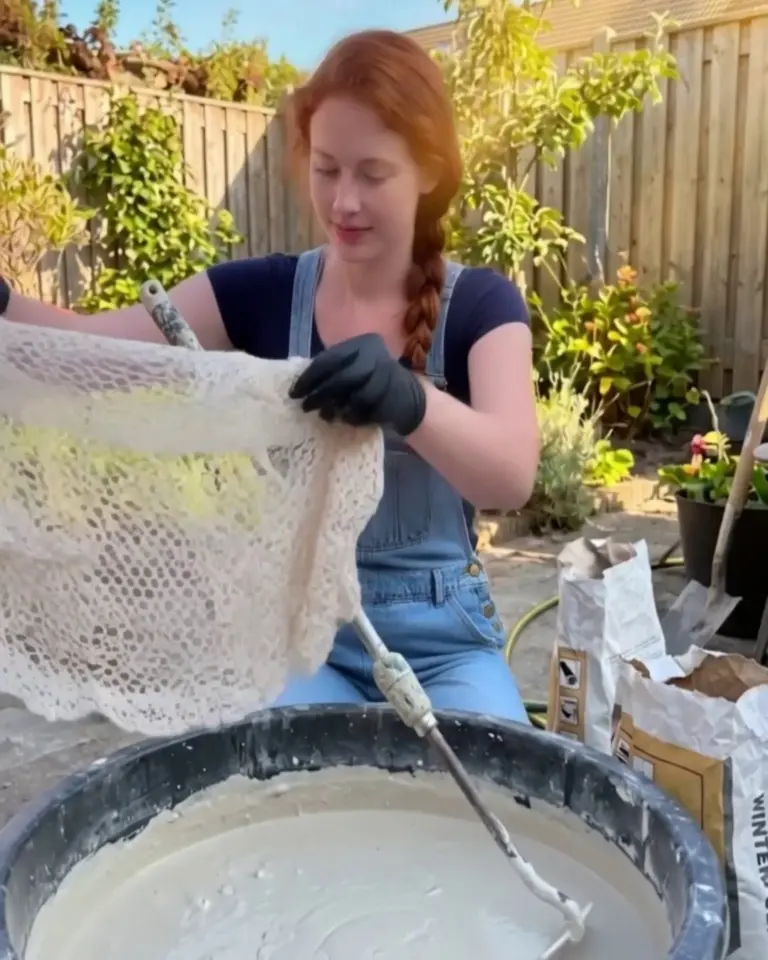
Step 3Work it in
Squeeze and knead the cloth under the slurry for about 5 minutes, opening it up now and then to check for pale, dry patches. Every thread should come out evenly gray.
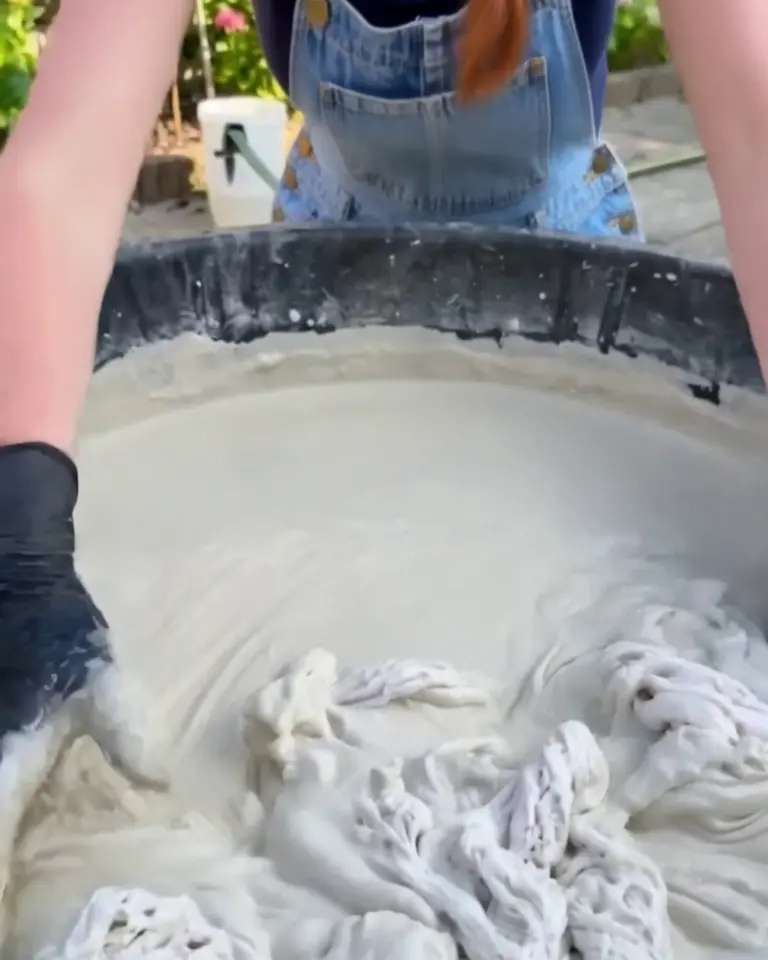
Step 4Drape it over the bucket
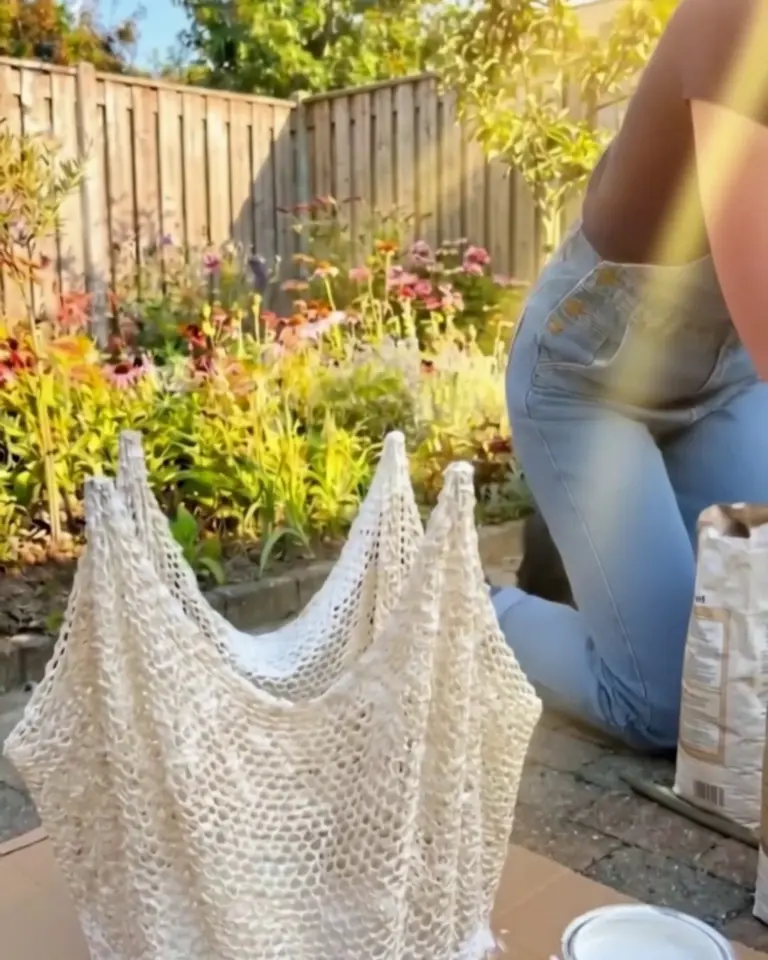
Lift the cloth out, let it drip for a moment, and lay its center on the bucket bottom. Turn it so the corners hang down the four sides.
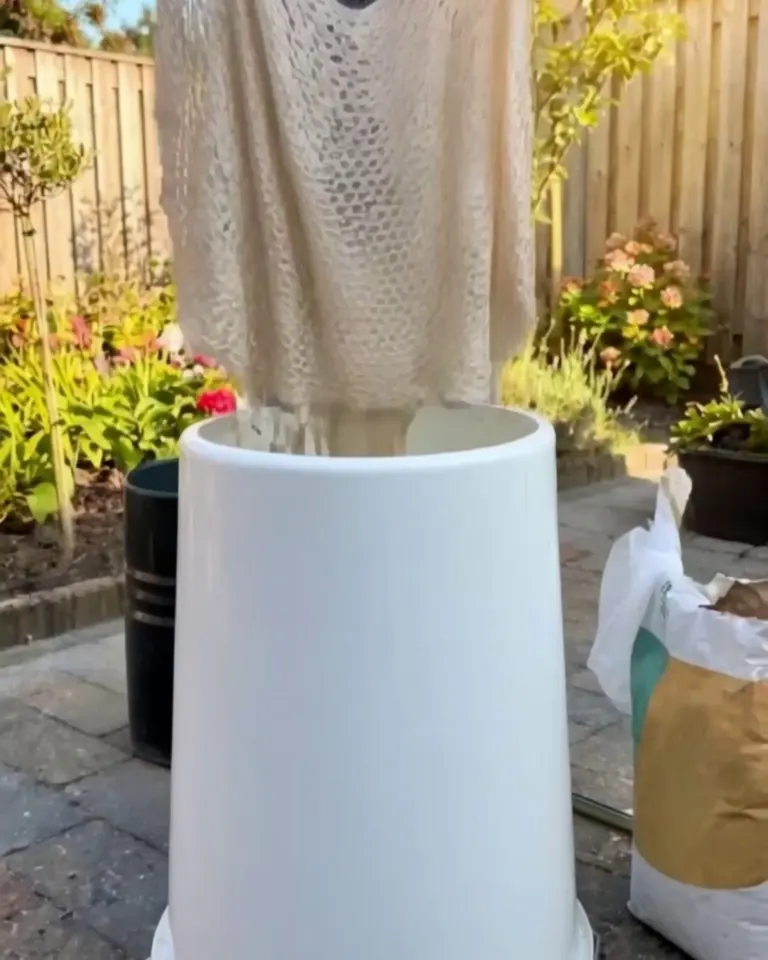
Step 5Shape the folds
Press the cloth flat on top, then pull the sides down so they hug the bucket, with even folds between the corners. Clear any slurry webbing the holes with a fingertip while it’s wet.
Drape plastic loosely over the whole thing and leave it 3 days, out of direct sun.
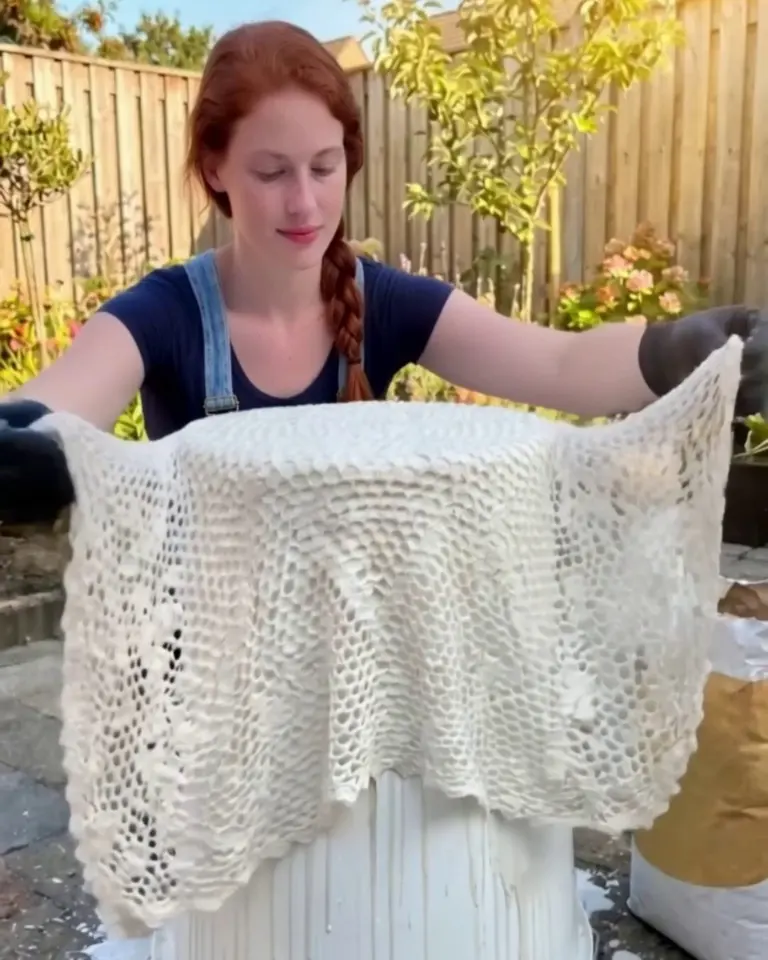
Step 6Lift it off and turn it over
With a helper, ease the shell up off the bucket, peel out the plastic, and turn it right side up. The bucket bottom made a flat base; the corners are now the points at the rim.
Step 7Line it and fill
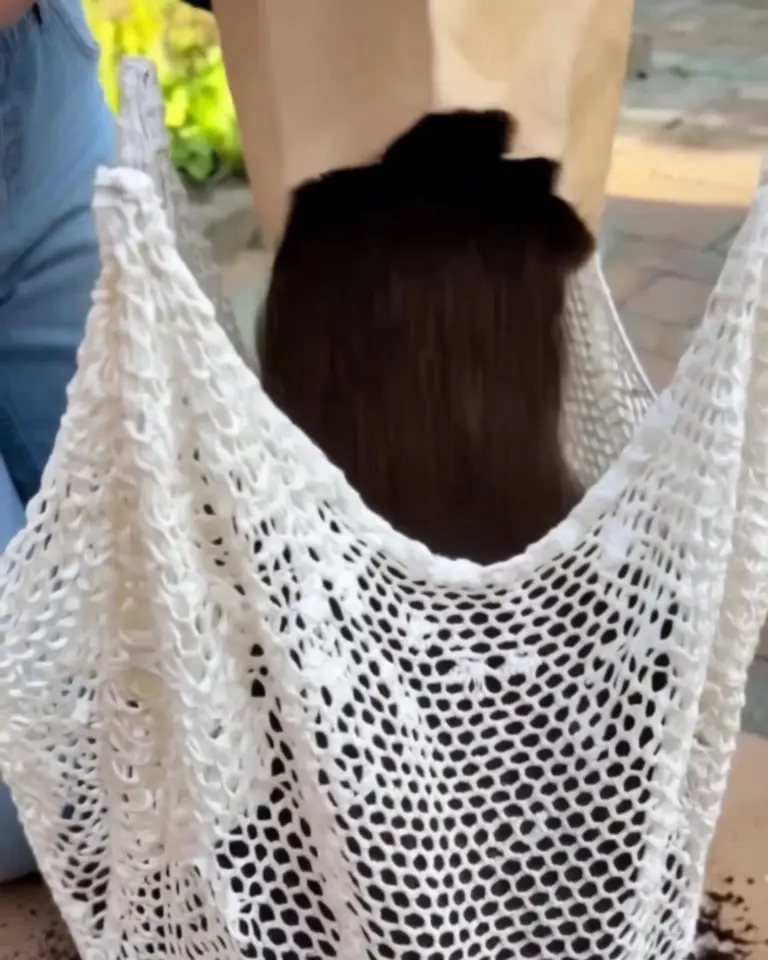
Rinse the shell a few times to wash off the loose lime. Push a 30-inch square of landscape fabric down inside, then fill with potting mix to about 3 inches below the lowest dip in the rim and fold the fabric edge under the soil.
Without the liner, the mix runs straight out through the holes in the first rain.
Step 8Plant the rose
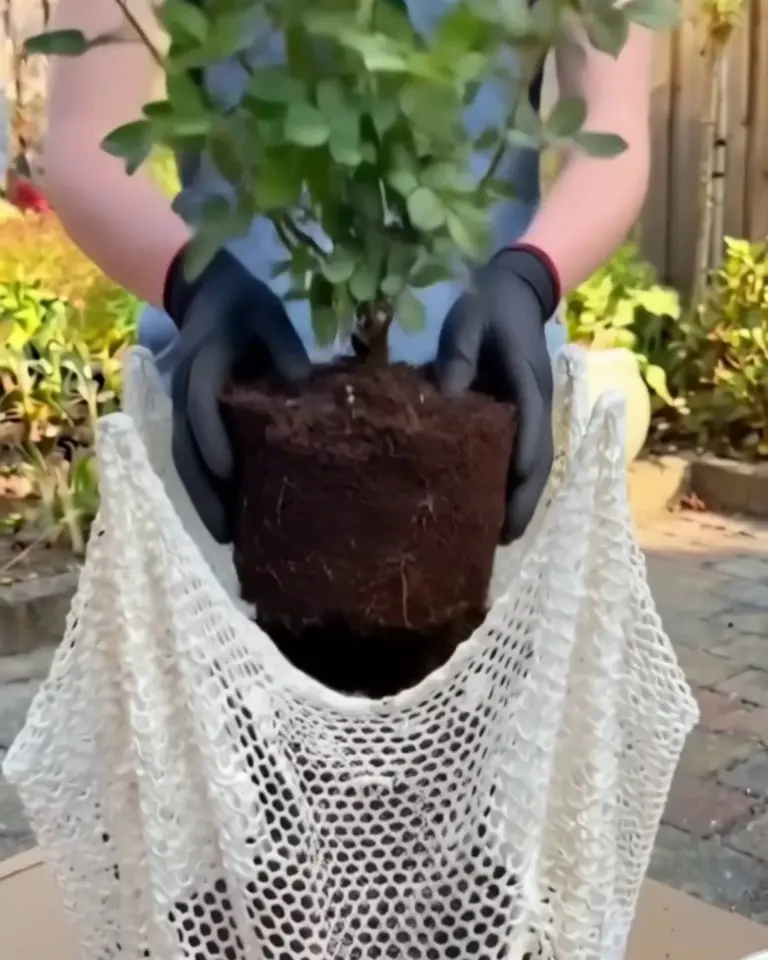
Tip the rose out of its nursery pot, loosen any roots circling the bottom, and set it at the same depth it grew. Firm the mix around it and water slowly until it drains out the bottom.
Step 9Set them in the bed
Press each planter an inch into the mulch so it can’t tip, and space them about 2 feet apart along the bed. Spray two light coats of clear sealer on the outside once they’ve dried out for a couple of weeks.
How a Crochet Cement Planter Holds Up
The points chip first, usually from a hose or a mower. The cotton inside weakens over years of wet and dry, so a planter left in the open won’t last like a solid pot.
Re-seal once a year. Roses in containers dry out faster than roses in the ground, so check the soil every couple of days in summer.
FAQ
One side sagged flat while it cured
The slurry was too thin, or that part of the cloth wasn’t fully soaked. Once it’s set, the shape is fixed; the next one gets a slightly thicker mix and a few more minutes of kneading.
Soil keeps washing out through the holes
The liner is missing or torn. Lift the rose out, fit a fresh square of landscape fabric, and replant.
Can I use a polyester lace curtain?
No. Polyester doesn’t soak up the slurry, and the cement peels off in flakes within a week. Thrift stores are full of cotton crochet tablecloths.
Will the rose survive winter in it?
We haven’t left a rose in one through a hard winter. Roots in a container get much colder than roots in the ground, and a planter this size holds very little soil around them.
Can I paint it?
Yes, once it has cured for a week and dried out, with masonry paint. We left ours plain; the gray-white shows the crochet pattern better than paint does.
The bucket from the first try is still in the shed, with a ring of cement lace stuck to it. It holds the hose now.