Running a hose down the bare liner is the test we skipped the first time. With the cobbles already in, the water stopped halfway along and pooled in a dip we couldn’t see, and a whole stretch of rock came back out so we could pack soil under the liner there.
You’ll also love: How to Build a Brick Garden Faucet Column with a Pebble Basin, How to Build a Rainwater Harvesting System on a Barrel Rack, How to Build a Tractor Tire Pond with Three Solar Fountains.
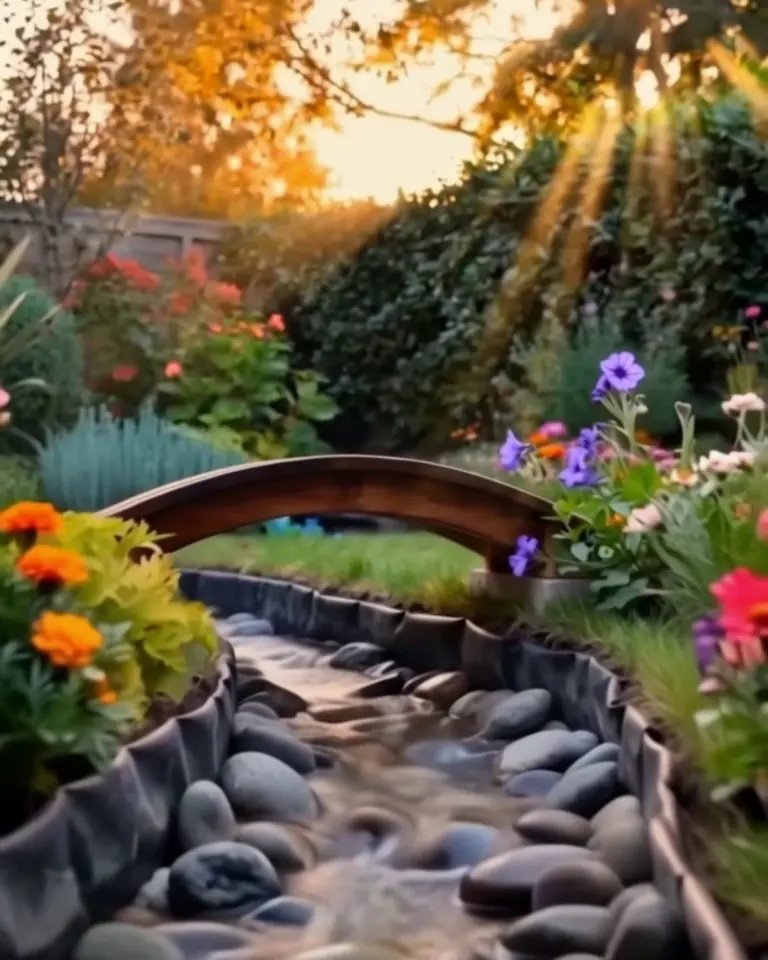
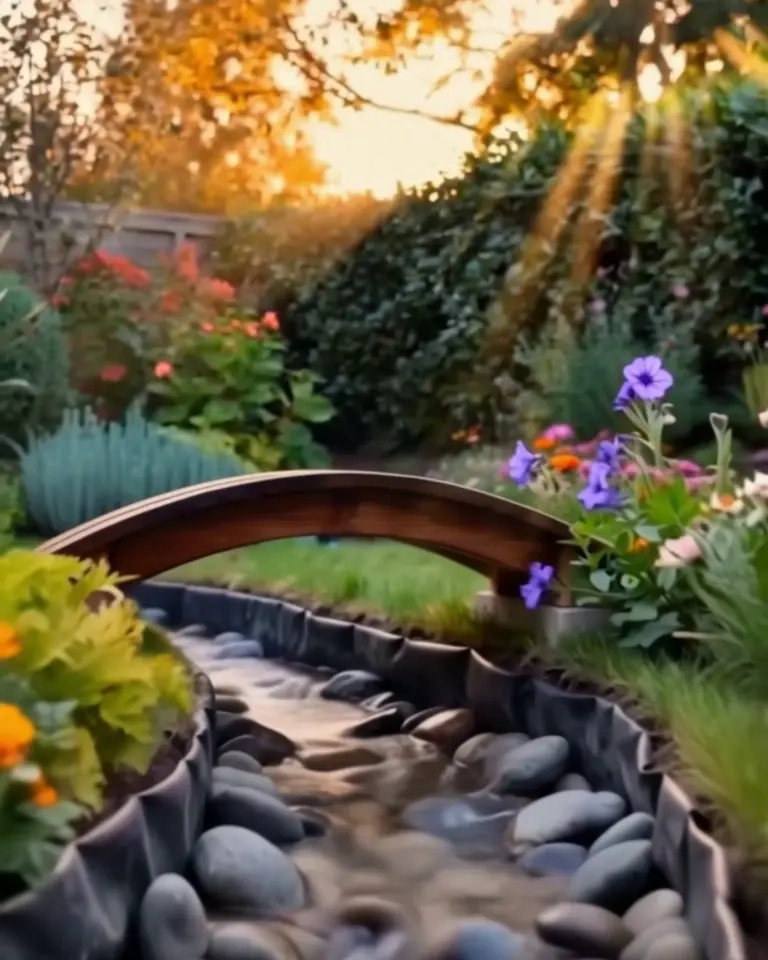
Our backyard stream is a 20-foot curve of river rock over a rubber liner, with no pond at the end: the water drops into a buried basin and gets pumped back to the top. A small cedar arch bridge crosses it halfway.
A neighbor asked whether the bridge would hold her dog, then sent the dog across first.
New rubber liner smells like a bike tire on a warm afternoon. Once the water runs, the cobbles chatter loud enough to hear from the kitchen.
Why There’s No Pond at the End
A pondless stream keeps all its water in a basin buried under rock at the low end. Nothing stands open to collect leaves or breed mosquitoes, and when the pump is off the stream simply drains back down.
We expected the pump to be the noisy part. It sits buried and silent; the sound comes from water dropping over each cobble.
The bridge never touches the liner.
Materials & Tools
Not in the $1,020: rock delivery, a jigsaw, a drill, shovels, and an electrician if you need a new outlet.
Before the shovel: call 811 to have buried lines marked. K-State Extension notes that outlets for water features must be GFCI-protected and sit 5 to 20 feet from the water’s edge.
Leftover cobbles: they make a dry edging for the beds nearby, laid on fabric the way we did our white gravel garden path.
Watch the Build
Step by Step
Step 1Mark and dig
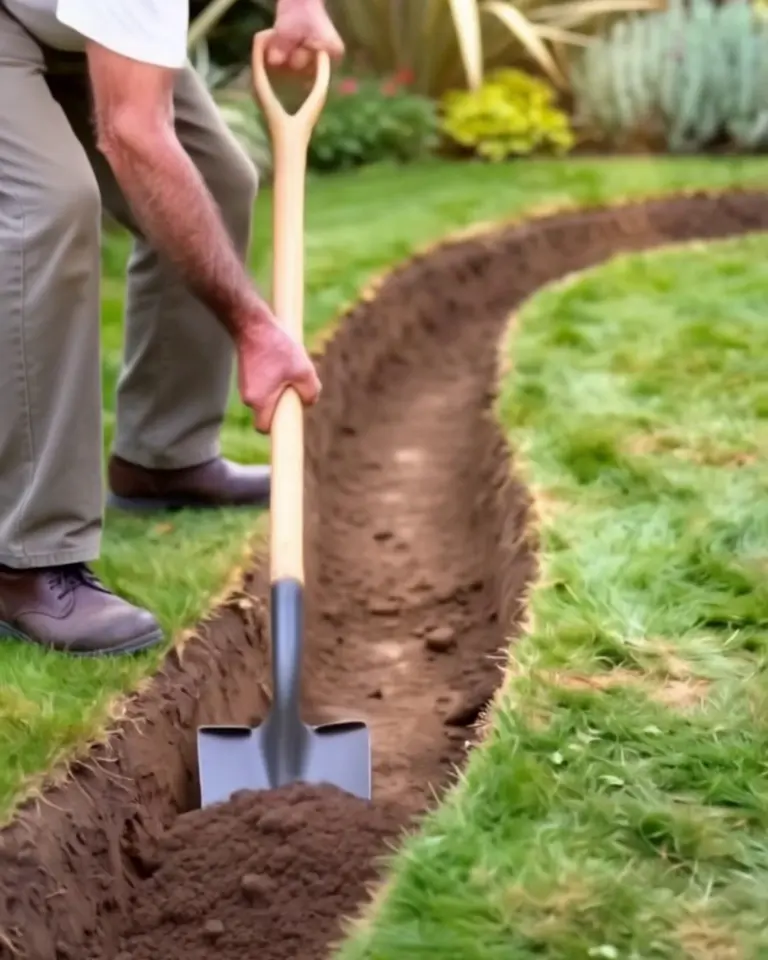
Lay out the curve with a garden hose and spray along it. Dig a trench 24 inches wide and 8 inches deep, falling about 6 inches from the top end to the bottom; at the low end, dig a basin 30 inches across and 24 inches deep.
Step 2Cushion and lay the liner
Rake out stones and roots, spread an inch of sand to fill the shovel marks, and cover everything with underlayment. Unroll the liner over it with plenty of slack, leaving a foot beyond the trench on both sides.
K-State’s sizing rule is length plus twice the depth plus 2 feet, and the same for the width.
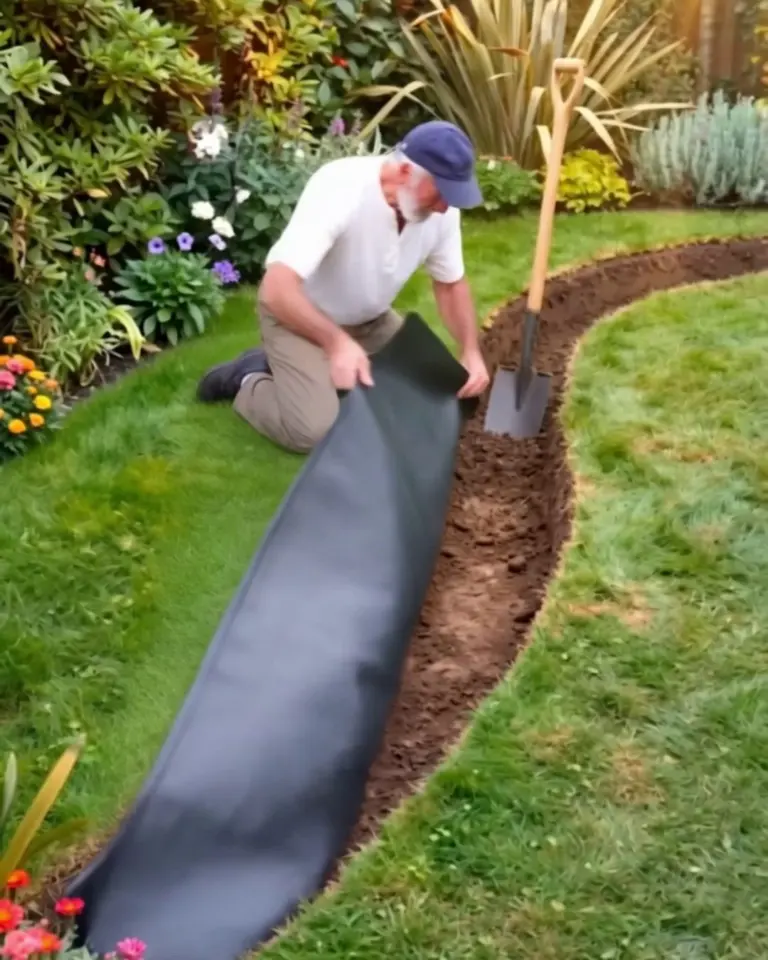
Step 3Fit it down
Press the liner into the trench and the basin, folding the extra into a few large pleats on the curves rather than many small ones. Set the pump vault in the basin and run the tubing outside the liner, buried beside the stream, up to the top end.
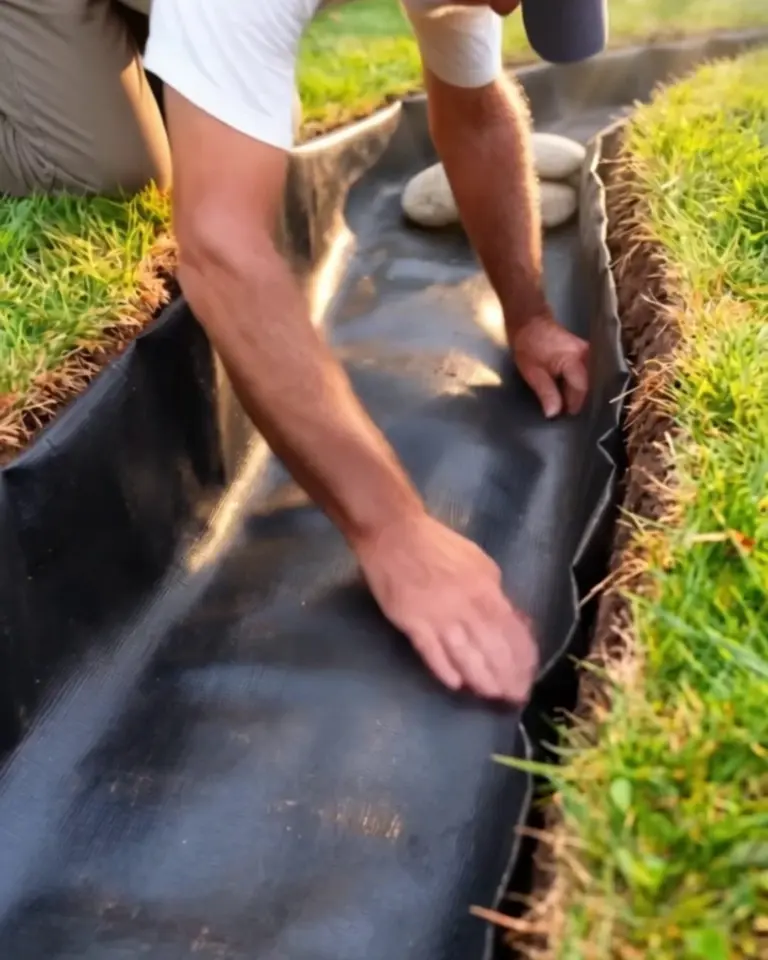
Step 4Set the big stones
Lay the edge stones first, along both banks, to hold the liner in place and hide it. Lift the liner edge up behind them so it finishes a couple of inches above the water line.
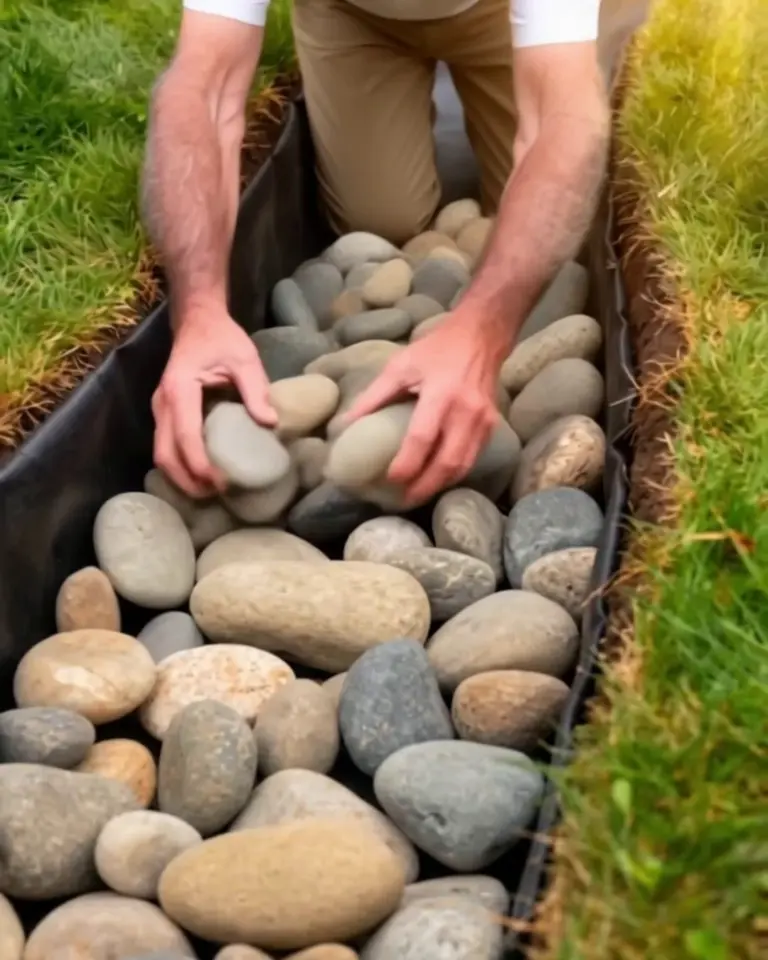
Step 5Fill and test
Fill the channel with river rock, bigger pieces at the edges and smaller in the middle, and pack the basin around the vault. Run a hose in at the top end and watch where the water goes before the pump goes in.
Wherever it creeps toward an edge, lift the liner there or add soil under it.
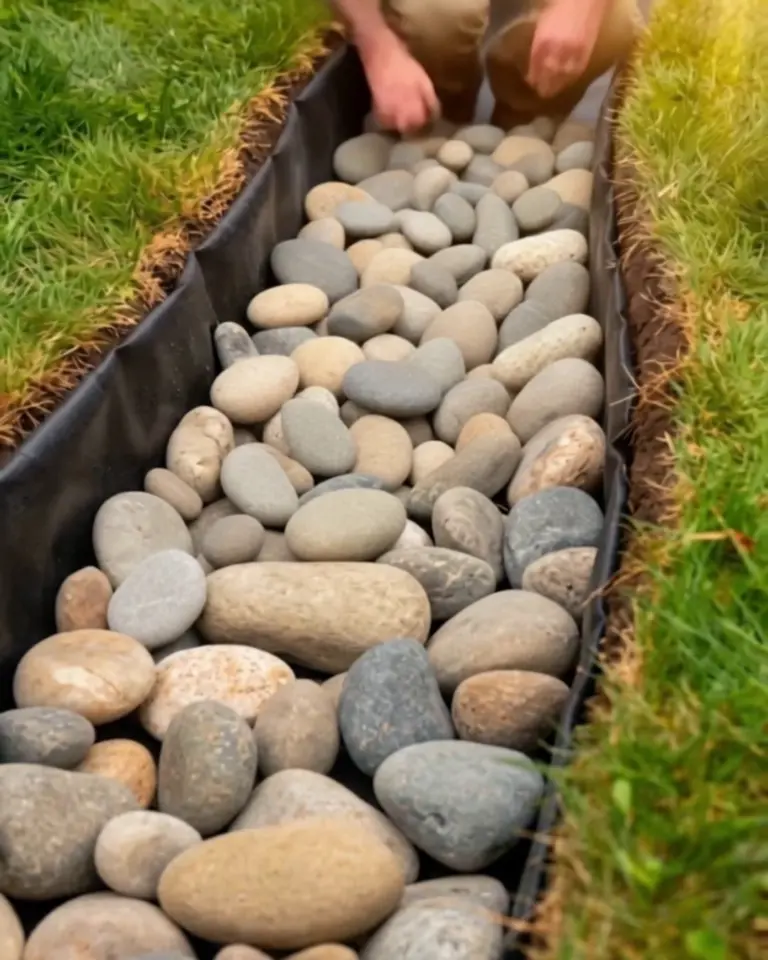
Step 6Cut the bridge stringers
Cut the 2×10 into two 48-inch pieces. Bend a thin batten between nails to draw a curve rising about 3 inches at the middle on each, cut along it with a jigsaw, and set them on pavers bedded level on firm soil just outside the liner.
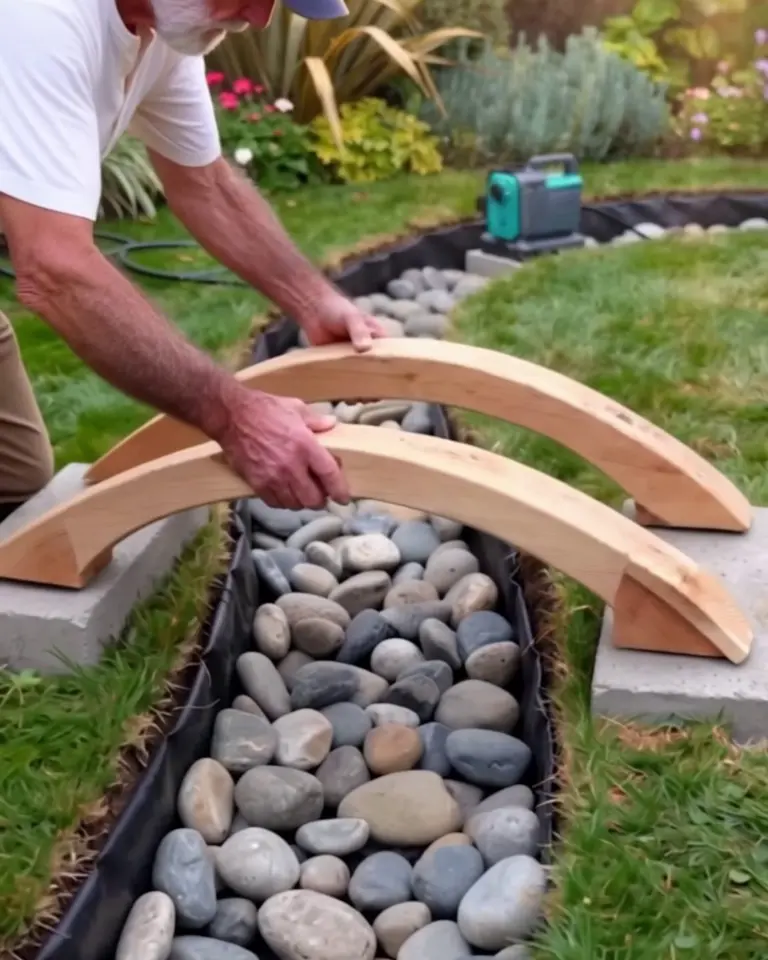
Step 7Screw down the deck
Cut nine 24-inch slats from the 5/4×6 boards and screw them across the stringers with ¼-inch gaps, two screws at each end. Pre-drill near the ends so the cedar doesn’t split.
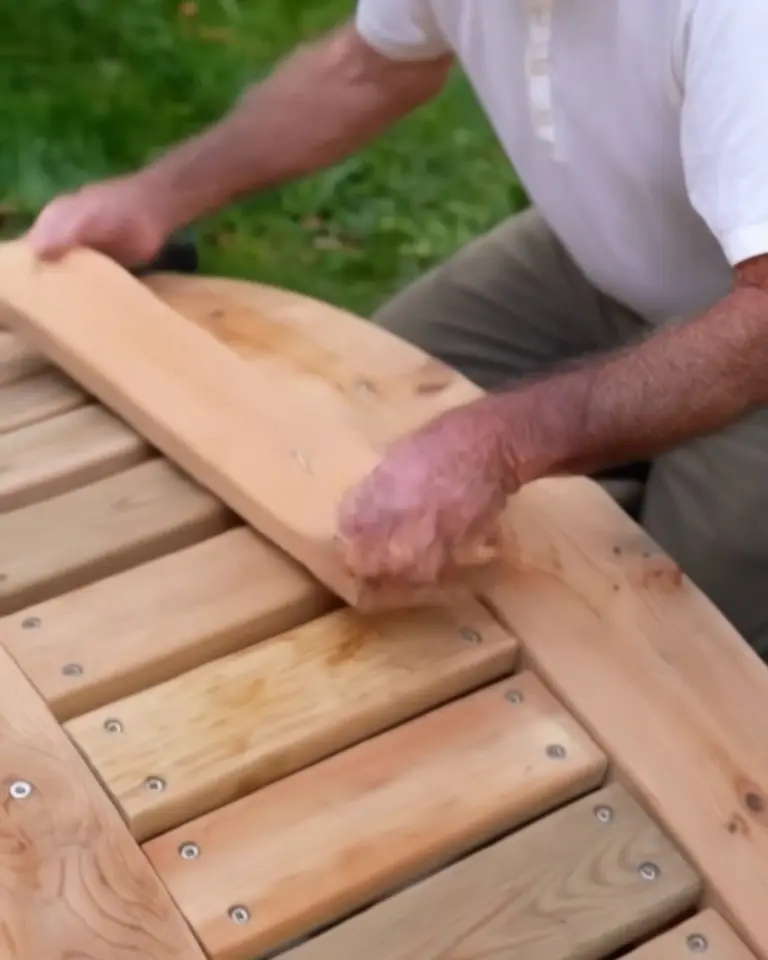
Step 8Stain it
Brush penetrating stain over every face, the slat ends and the undersides, and wipe off what doesn’t soak in. Let it dry for a day before anyone walks across.
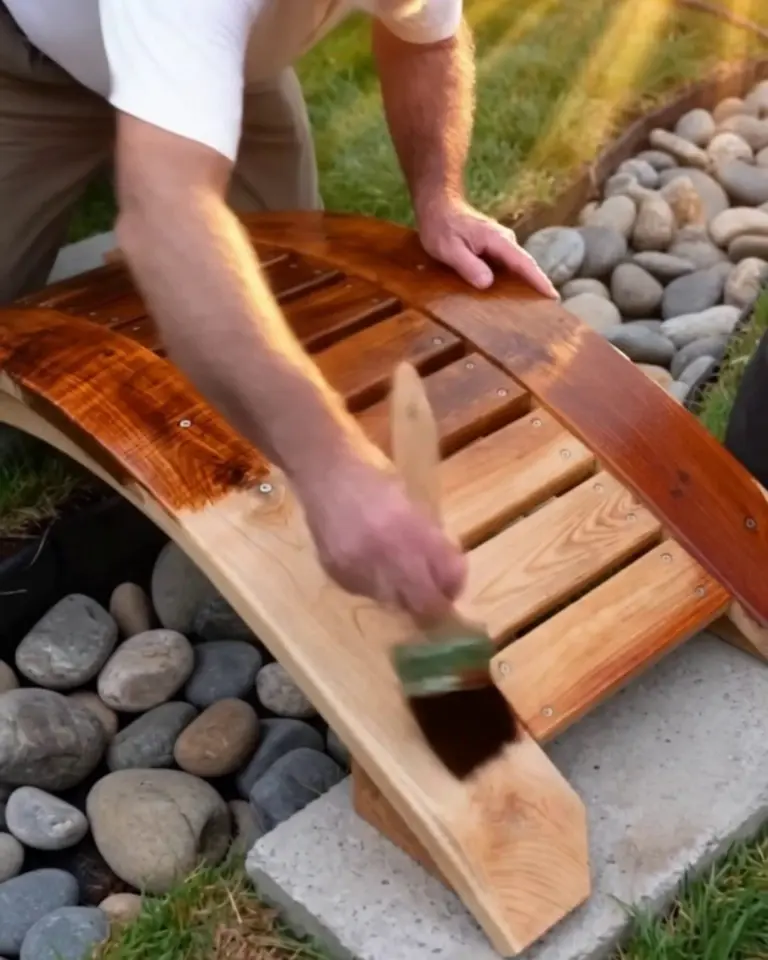
Step 9Set the bridge
Lift the bridge onto its pavers so the ends rest on stone, clear of the liner. Check that it doesn’t rock; a thin shim of slate under one corner fixes most wobbles.
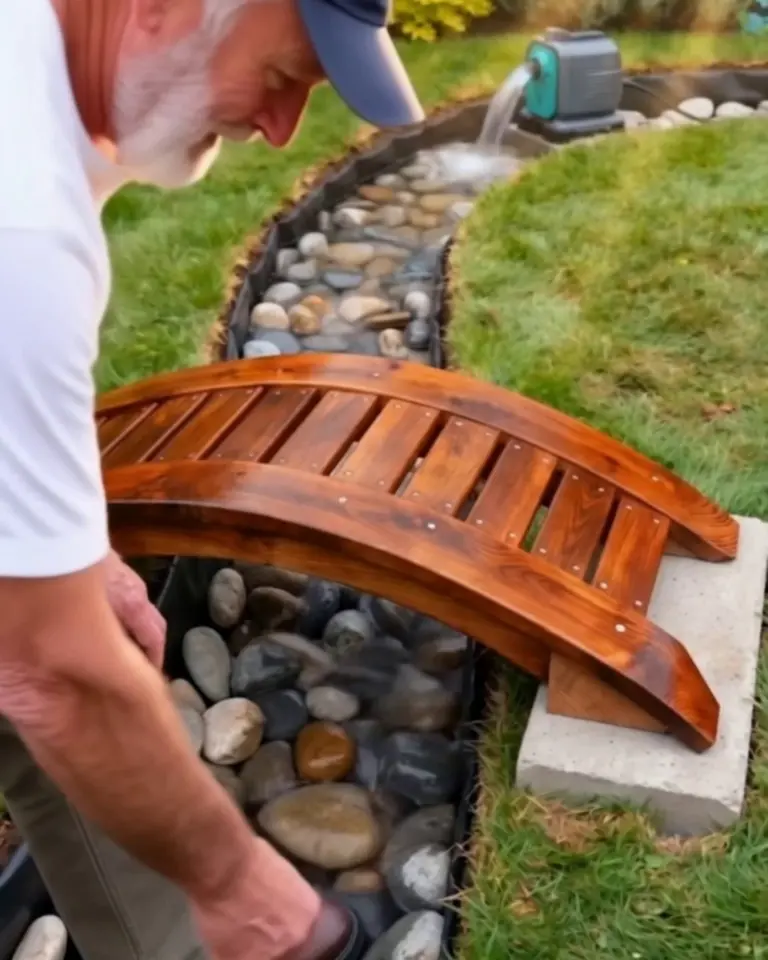
Step 10Fill it and switch on
Fill the basin with the hose, plug the pump into the GFCI outlet, and adjust the flow. For a stream about 12 inches wide at the water, K-State’s 100 to 150 gallons per hour per inch of width works out to roughly 1,200 to 1,800 at the top.
How the Backyard Stream Holds Up
Leaves and silt settle in the basin, so open the vault and clean the pump intake every few weeks in fall. Where the liner edge gets exposed to sun, cover it again; rubber lasts far longer out of the light.
The bridge stain wears fastest on the deck. Recoat it every year or two.
FAQ
The water level drops every day
Some of that is evaporation, especially in summer. If the basin drops more than an inch or two a day, walk the edges; usually the liner has sagged below the water line somewhere.
The top of the stream barely trickles
The pump is fighting more lift than it’s rated for, or the intake is clogged. Clean the intake first, then check the pump’s chart at your height.
Can I use a heavy tarp instead of a pond liner?
No. A tarp breaks down in sun and leaks at every fold. A 45-mil rubber liner costs more but lasts for years.
Is it safe with small kids around?
There’s no open pool, and the basin is filled with rock, which makes it safer than a pond. Kids still love to pull the cobbles out.
Can I keep fish in it?
We haven’t tried. A pondless stream has no open water for them, and the basin is packed with rock.
The dog crosses the bridge now without being asked. It still won’t touch the water.