The neighbor’s teenager who helped roll the tire asked why we needed a 4-foot level for something round. The water answers that: if the tire sits an inch off level, a crescent of black liner shows above the waterline on the high side.
You’ll also love: How to Build a Backyard Stream with a Wooden Arch Bridge, How to Build a Brick Garden Faucet Column with a Pebble Basin, How to Build a Rainwater Harvesting System on a Barrel Rack.
Our tractor tire bird bath is a 5-foot farm tire laid flat, lined with rubber, ringed in dry-stacked limestone and filled with about 70 gallons. A solar fountain and a shallow stone shelf make it usable for birds.
We filled it before building the shelf. For a week no bird came down to drink; the water was 14 inches deep right at the edge.
The fountain gurgles like a coffee maker. The teenager said it looked like a fire pit someone filled by mistake.
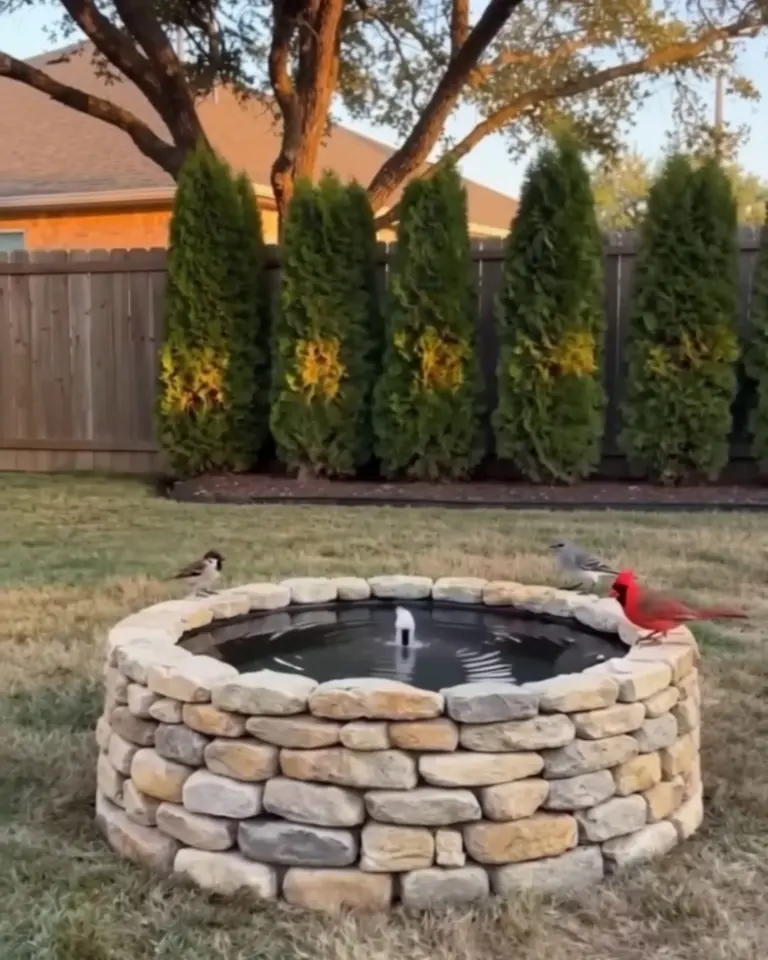
What Makes a Pond Useful to Birds
Most songbirds won’t step into water deeper than their legs. A tire pond is a foot deep or more, so on its own it’s a pond for looking at, not a bath.
We expected the fountain to bring them in. It helped them find the water; the shelf is what let them use it.
Moving water also discourages mosquitoes from laying eggs.
Materials & Tools
Not in the $575: stone delivery, a utility knife, a hose and a wheelbarrow.
How shallow: the American Bird Conservancy suggests bath water no deeper than 2 inches, and about 1 inch at the edges, with stones for perches. The shelf in Step 7 gives birds that inside a much deeper pond.
Around the base: a ring of gravel keeps the mower away from the stones, laid like our white gravel garden path.
Watch the Build
Step by Step
Step 1Roll the tire into place
A tractor tire can weigh 200 pounds or more, so roll it upright to the spot, then let it down flat with a second person. Pick a place a few yards from shrubs, close enough for birds to dart to cover but not so close that a cat can wait there unseen.
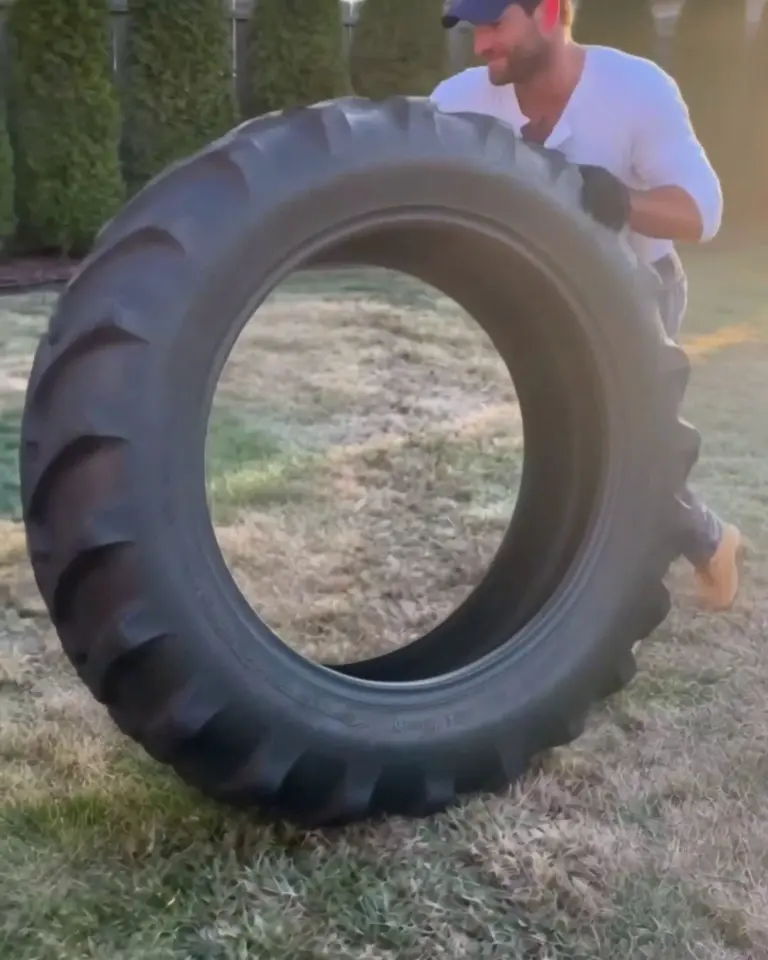
Step 2Level it
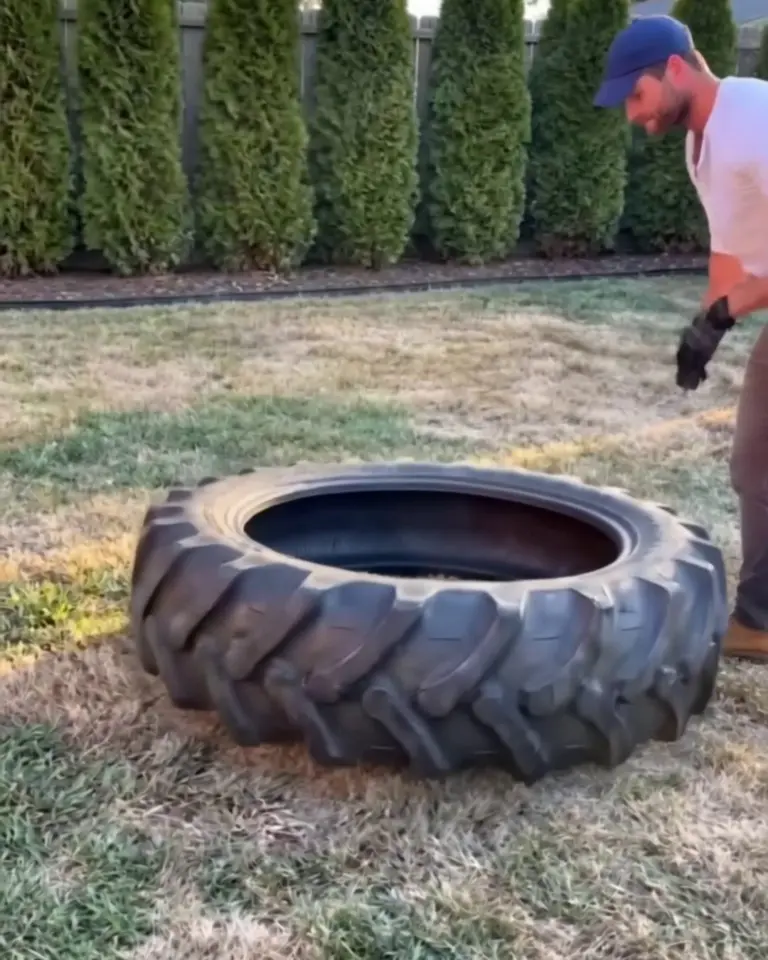
Lift the tire aside, scrape the spot flat, and pick out any roots and stones. Set it back down and check across the top in two directions with the level, raking soil under the low side until it reads true.
Wash the tire with a hose and a stiff brush while it’s easy to reach. Road grime and old grease come off now, not after it’s lined.
Step 3Cushion and drape the liner
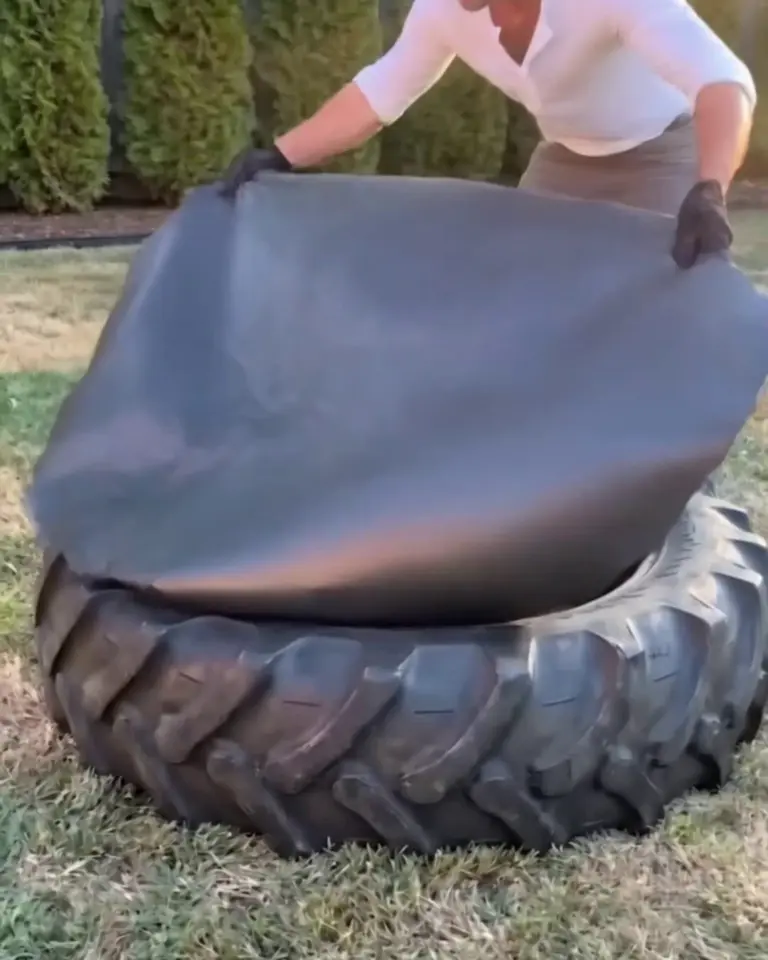
Spread 2 inches of sand over the ground inside the tire for a smooth floor. Lay the underlayment over the tire, then the liner, centered, with plenty of slack.
Work on a warm afternoon if you can. Rubber liner is stiff when it’s cold and much easier to fold in the sun.
Step 4Settle the liner
Push the liner down into the center and run in a few inches of water, folding the extra into a few large pleats around the sides. Let the weight of the water pull it into shape.
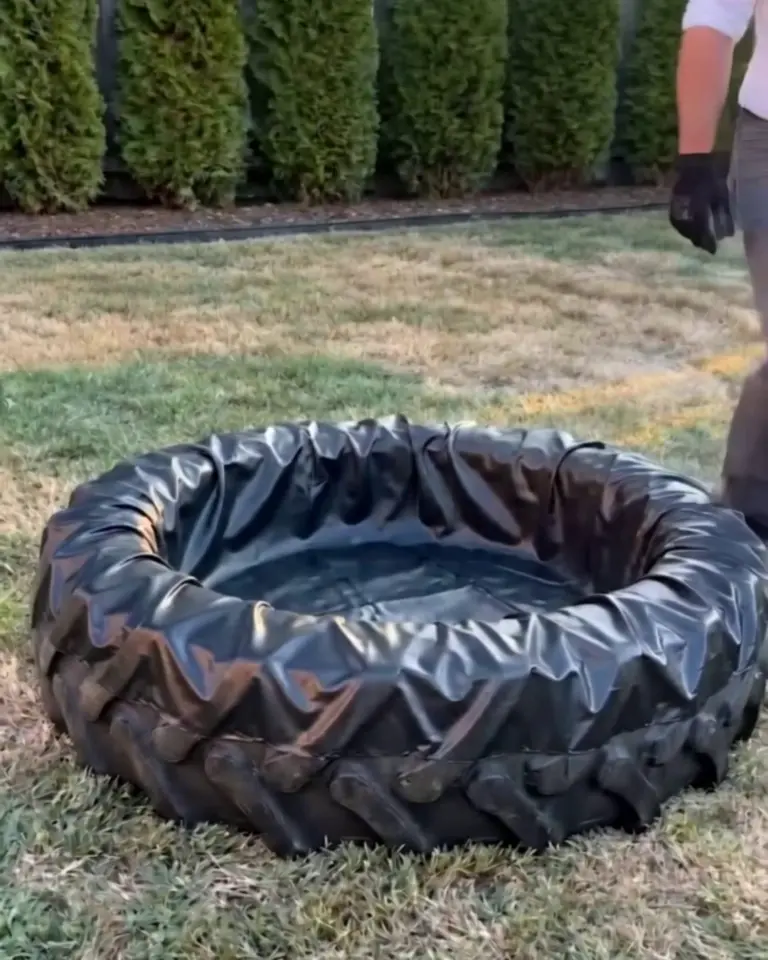
Step 5Lay the first course
Set the biggest stones tight against the outside of the tire, on level ground, longest side pointing into the wall. Check each one with the level before the next goes down.
Sort the stones into piles first: big and flat for the base, mixed for the middle courses, and the longest, flattest ones saved for the cap.
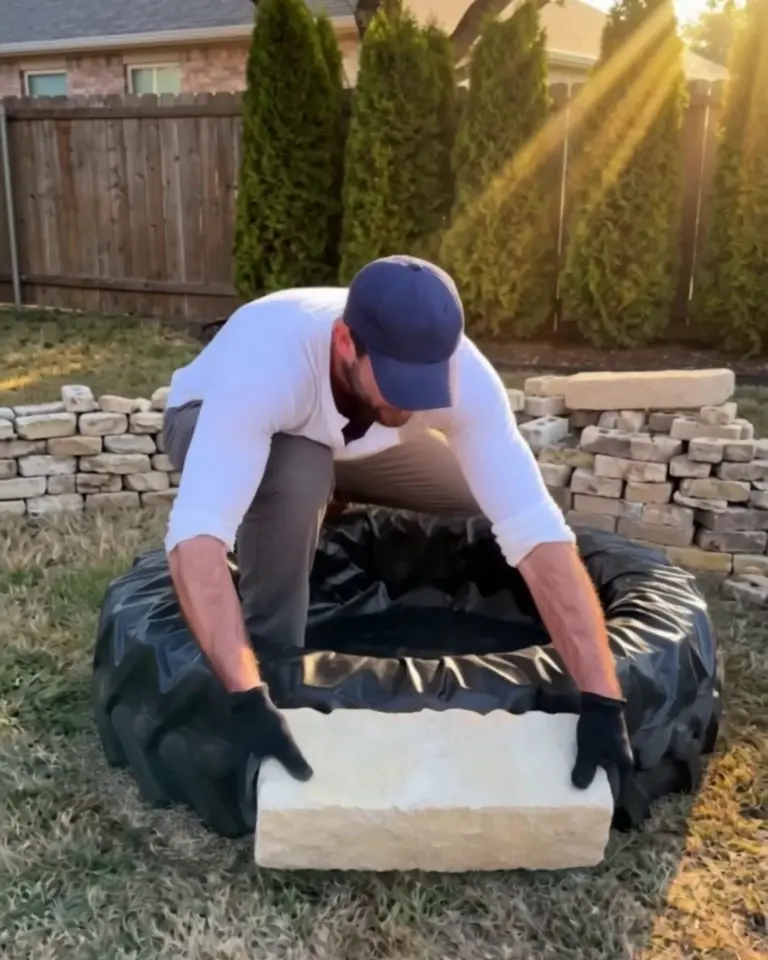
Step 6Stack the wall
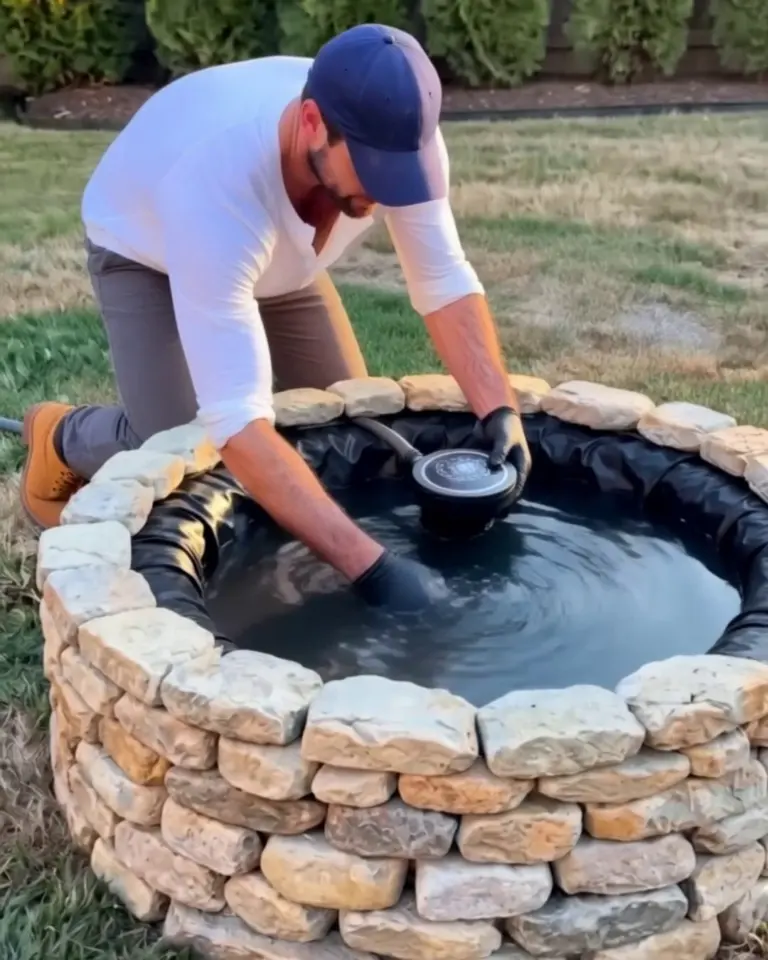
Build up course by course, each stone bridging the joint below, until the wall is level with the top of the tire. Lay the flattest stones as a cap course that overhangs the rim an inch, trapping the liner edge, then trim the extra liner with a utility knife.
Leave a few inches of liner tucked behind the cap rather than cutting it flush; it gives you room to adjust later.
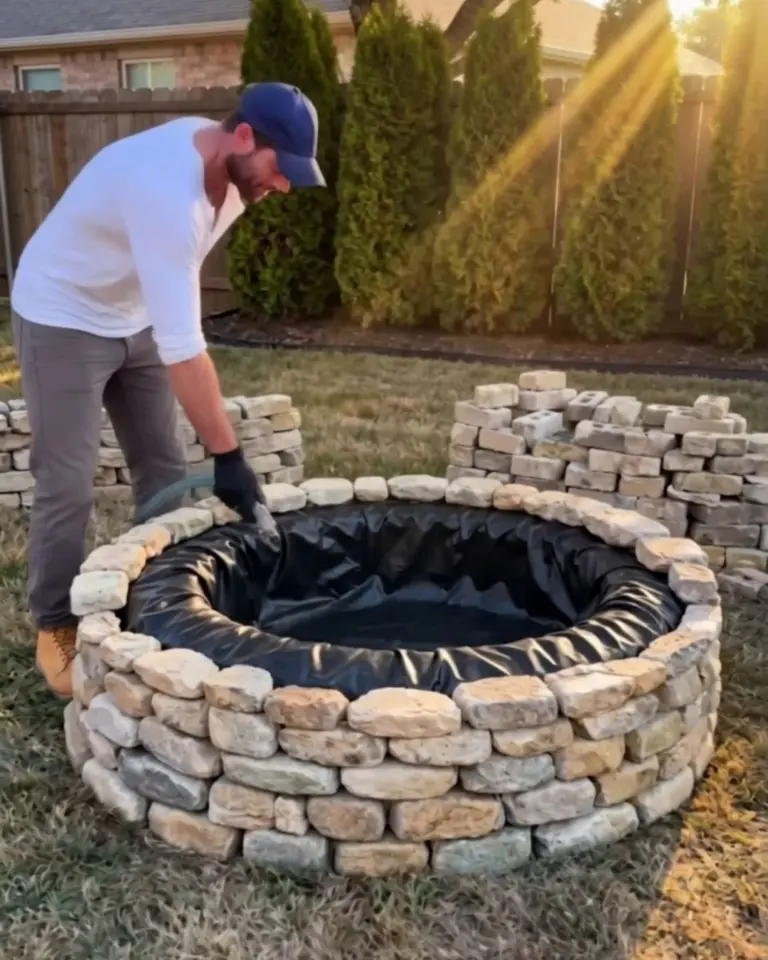
Step 7Build the shelf and fill
On one side, stack the flagstones inside the pond until the top one will sit 1 to 2 inches under the waterline. Then fill the pond with the hose to about 4 inches below the cap stones.
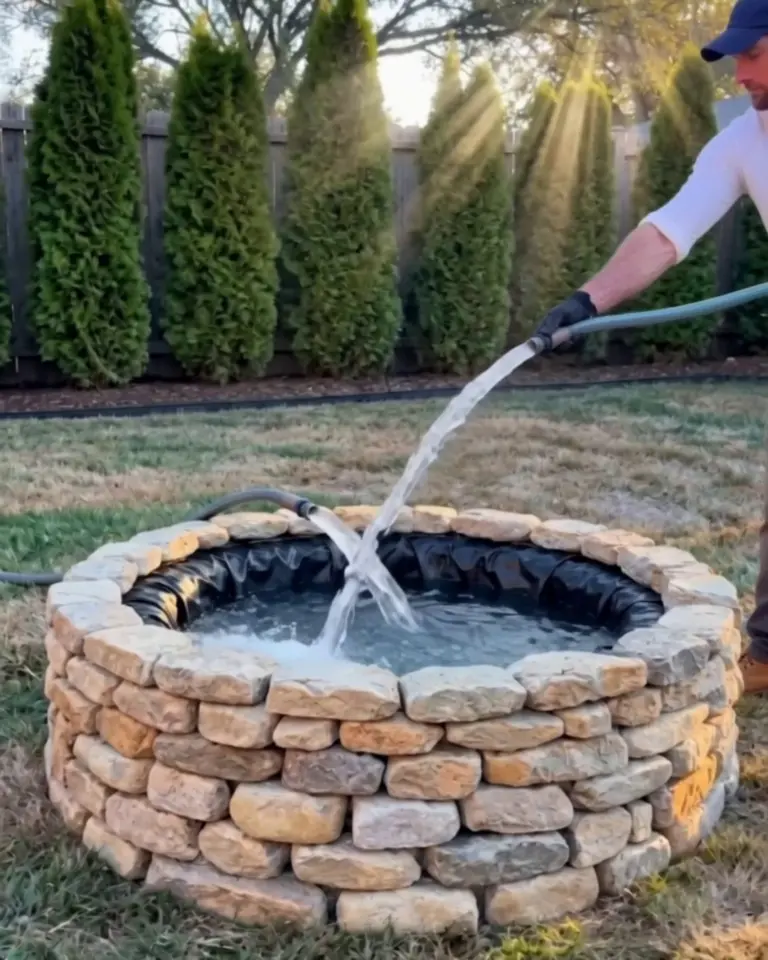
Step 8Add the fountain
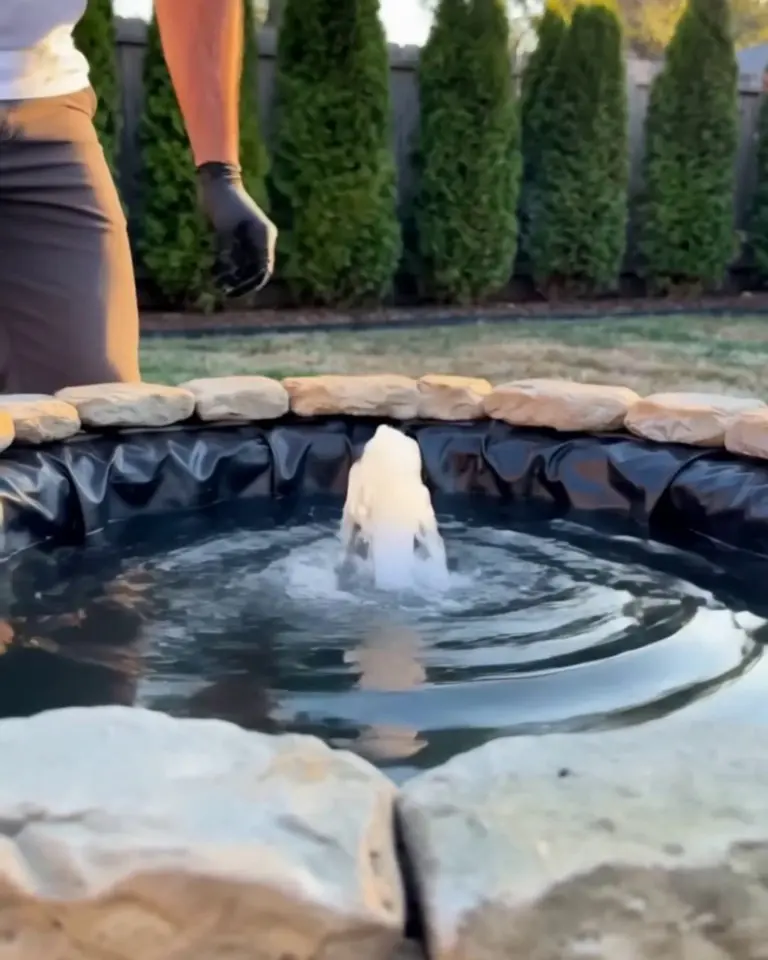
Float the solar fountain in the middle and set its panel, if separate, where it gets direct sun most of the day. Shade from the stone wall stops it more often than clouds do.
Solar fountains only run in sun, so the spray comes and goes. Birds don’t seem to mind.
Step 9Keep it fresh
Top it up as it evaporates and scrub the shelf stones every week or two, since that’s where birds leave their droppings. Drop in a mosquito dunk once a month in warm weather; it’s harmless to birds.
How the Tractor Tire Bird Bath Holds Up
The liner lasts for years as long as the cap stones keep it out of the sun. Leaves build up on the bottom; net them out each fall.
Where winters freeze hard, bring the fountain in and let the pond freeze; the tire flexes rather than cracks.
FAQ
The waterline is lopsided
The tire isn’t level. Drain it partway, lift the low side with a pry bar, and pack soil under it until the level reads true.
The water turned green
Algae likes sun and still water. Keep the fountain running, add a few floating plants for shade, and skim it more often; a full change every so often helps too.
Is a tire safe for birds?
The liner covers the rubber completely, and birds drink and bathe on the stone shelf, so they never touch the tire. The cap stones overhang the rim by an inch, too, so there’s no bare tire top to perch on.
Can I add fish?
A pond this size gets too warm in summer for most fish, and a solar fountain that stops in shade won’t keep the water aired day and night. We haven’t tried keeping any in it.
Do I need the fountain?
No, but birds find moving water faster, and it keeps mosquitoes down. Without it, change the water more often.
The teenager comes over most mornings now to see what’s on the shelf. Yesterday it was a blue jay and two sparrows, all at once.