A tape measure and one multiplication set the size of every frame here. Each square is about 0.7 times the one below, so when it’s turned 45°, its corners land right on the middle of the boards underneath.
You’ll also love: How to Build a Circular Garden Bed Around a Banana Tree, How to Build a Raised Garden Bed with a Pallet A-Frame Trellis, How to Build a Tilted Pot Flower Tower on a Wire Obelisk.
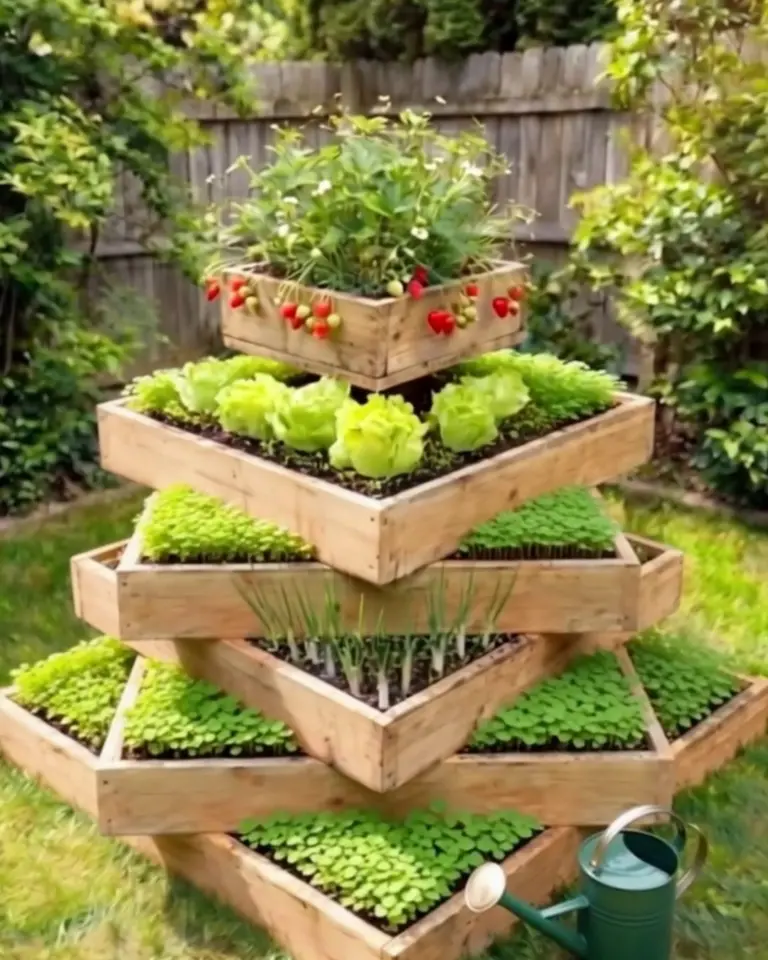
Our wooden pyramid raised bed is five cedar frames stacked that way, 60 inches square at the bottom and 15 at the top, about 28 inches tall and planted from strawberries down to beets.
We cut the second frame at 45 inches the first time. Its corners hung an inch and a half past the boards and rocked when we leaned on them.
Fresh-cut cedar smells like a pencil sharpener. A neighbor asked if it was a wedding cake, then wanted to know who’d be weeding the top.
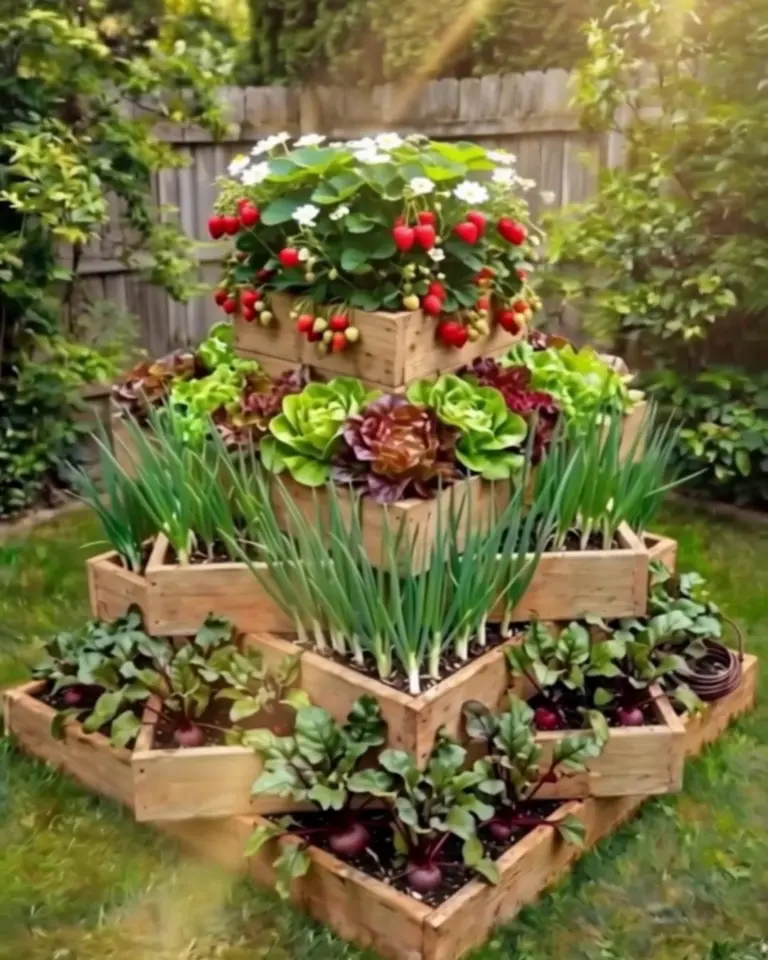
What Holds Each Tier Up
Every frame sits on two things: the soil in the tier below and, at its four corners, the boards of that tier. Turned 45°, a frame that’s 0.7 times as wide reaches exactly from board to board.
We expected to need stakes. The soil inside each frame weighs far more than the frame on top of it, and nothing has moved.
The four triangles left uncovered on each tier are the planting space.
Materials & Tools
Not in the $385: a saw, a drill, the speed square and level, and a watering can.
Same shape in block: our cinder block pyramid garden stacks four tiers the same way, heavier and permanent, where this one comes apart again.
Cutting list: four boards at 60 inches, four at 42, four at 30, four at 21 and four at 15. The offcuts from the 60s make the 30s.
Watch the Build
Step by Step
Step 1Build five frames
Cut the 2×6s to the cutting list and screw each set of four into a square around 4½-inch corner blocks, two screws through each board end into the block. Check every corner with the speed square before the last screw goes in.
Drill a pilot hole for each screw near a board end. Cedar is soft, but it splits within an inch of the end.
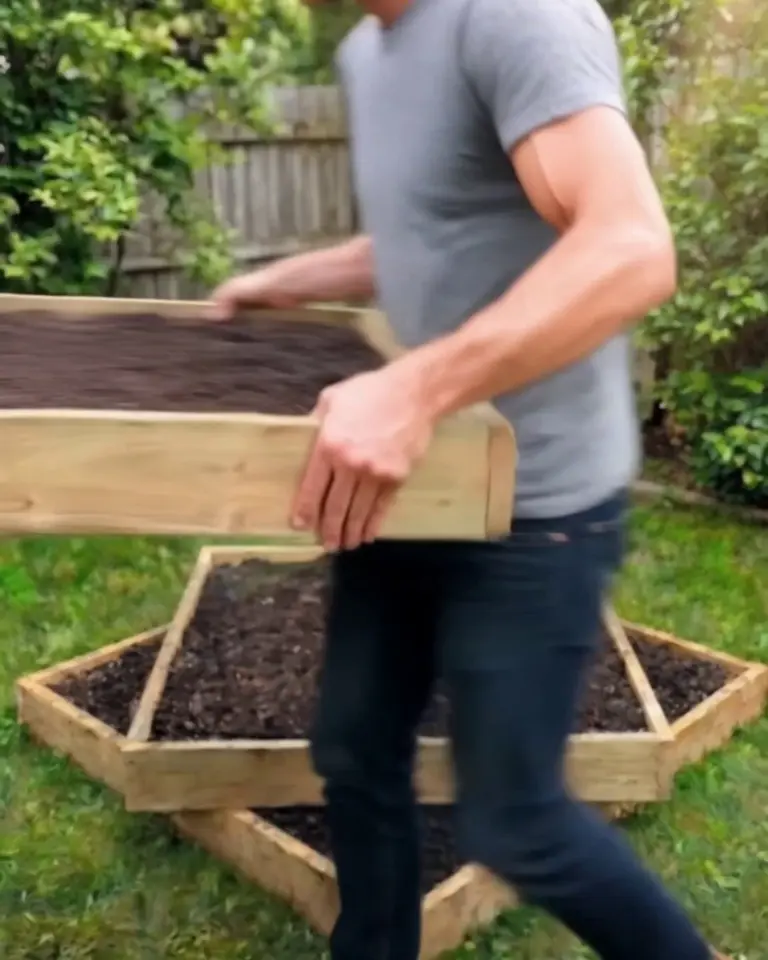
Step 2Set the base
Lay cardboard over the grass where the bed will go and soak it with the hose. Set the 60-inch frame on top and level it both ways, scraping out soil under the high side rather than shimming the low one.
Give it a spot with 6 hours of sun or more. The lower tiers get a little shade from the ones above, which lettuce and beets don’t mind.
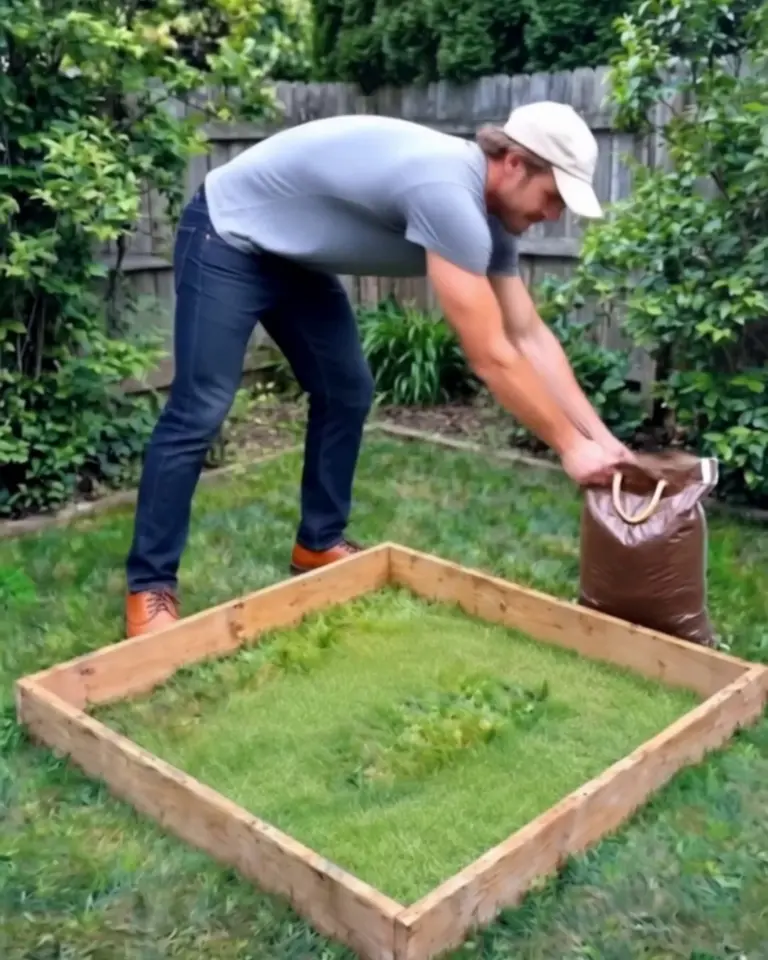
Step 3Fill the bottom tier
Pour in soil mix to the top of the boards and rake it level. Press it down lightly by hand; the next frame sits on it.
At 5½ inches deep, a 1.5-cubic-foot bag covers a little over 3 square feet, so the bottom tier alone takes about 7 bags.
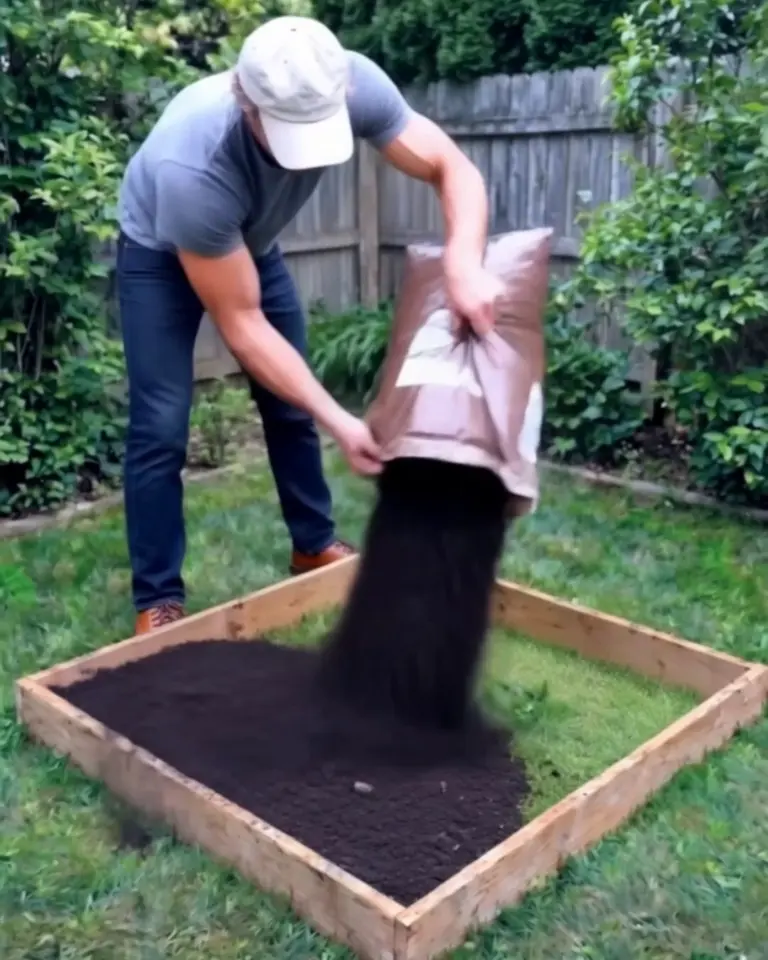
Step 4Set the second tier
Turn the 42-inch frame 45° to the one below and lower it so each corner rests on the middle of a bottom board. Measure from each corner to the outside edge; when all four match, it’s centered.
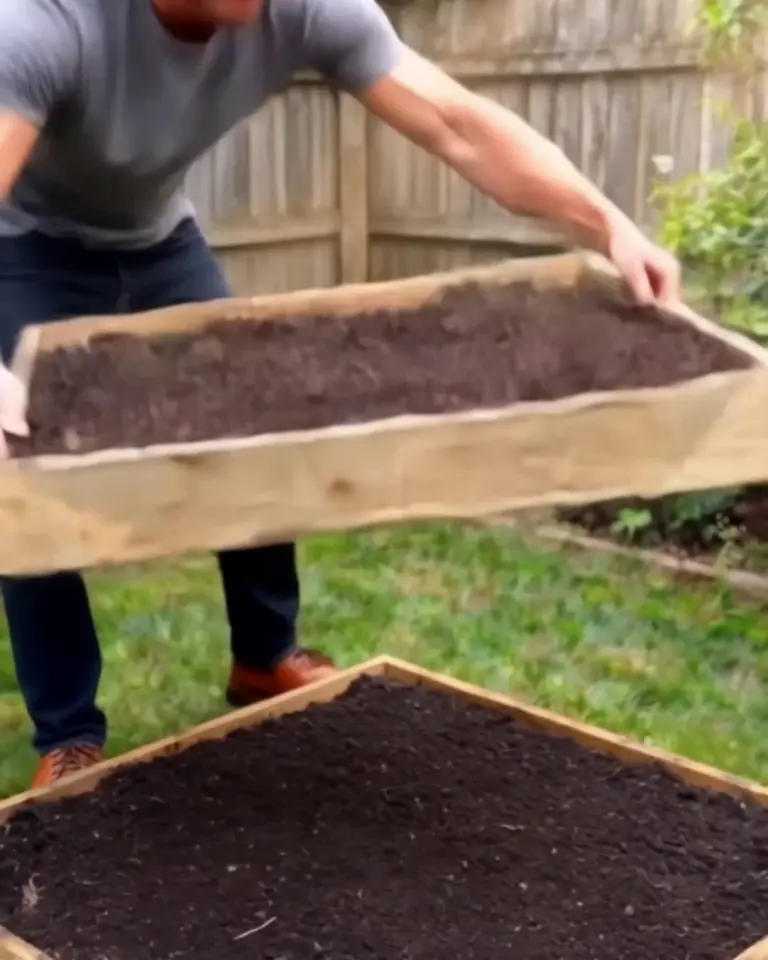
Step 5Fill and repeat
Fill the second tier, then set and fill the 30-inch and 21-inch frames the same way, each turned 45° to the one below.
Step back after each tier and look at it from two sides. A frame that’s off by an inch is easy to nudge now and hard to fix once the next one is on top.
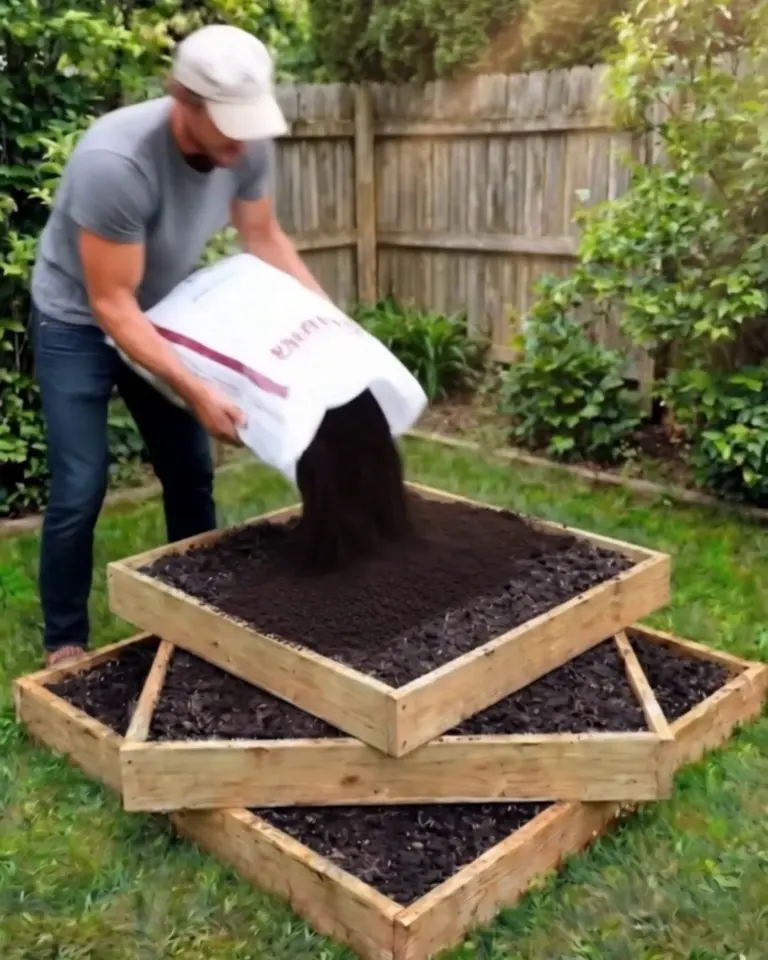
Step 6Top it off
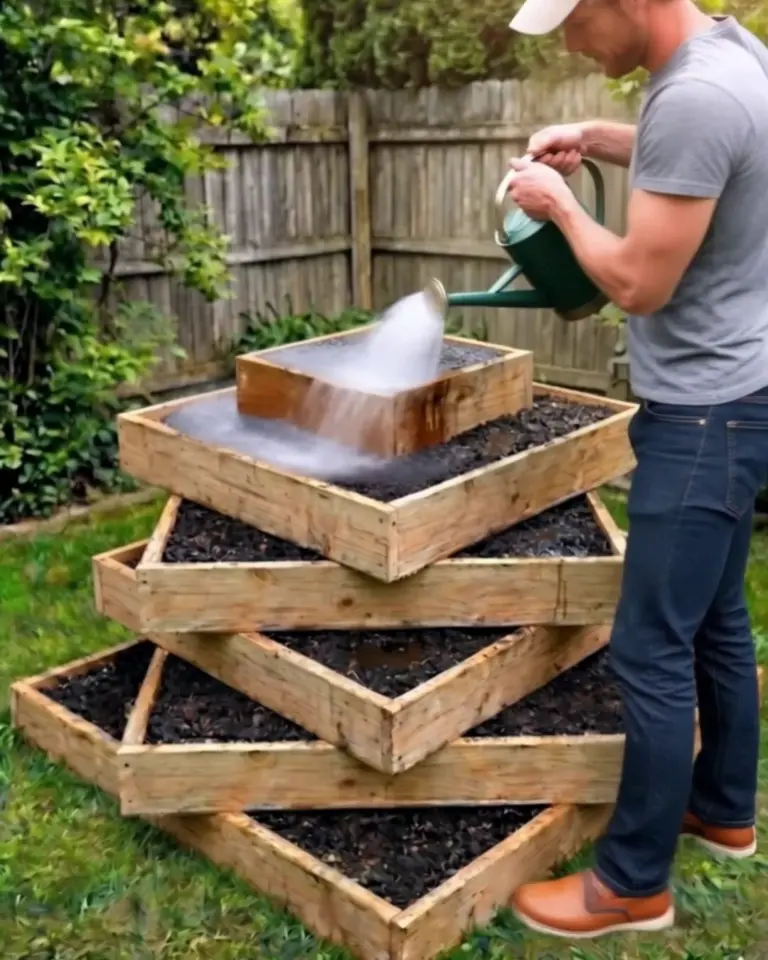
Set the 15-inch frame on top and fill it. Water the whole stack slowly; it settles an inch or so, and the low spots get topped up the next day.
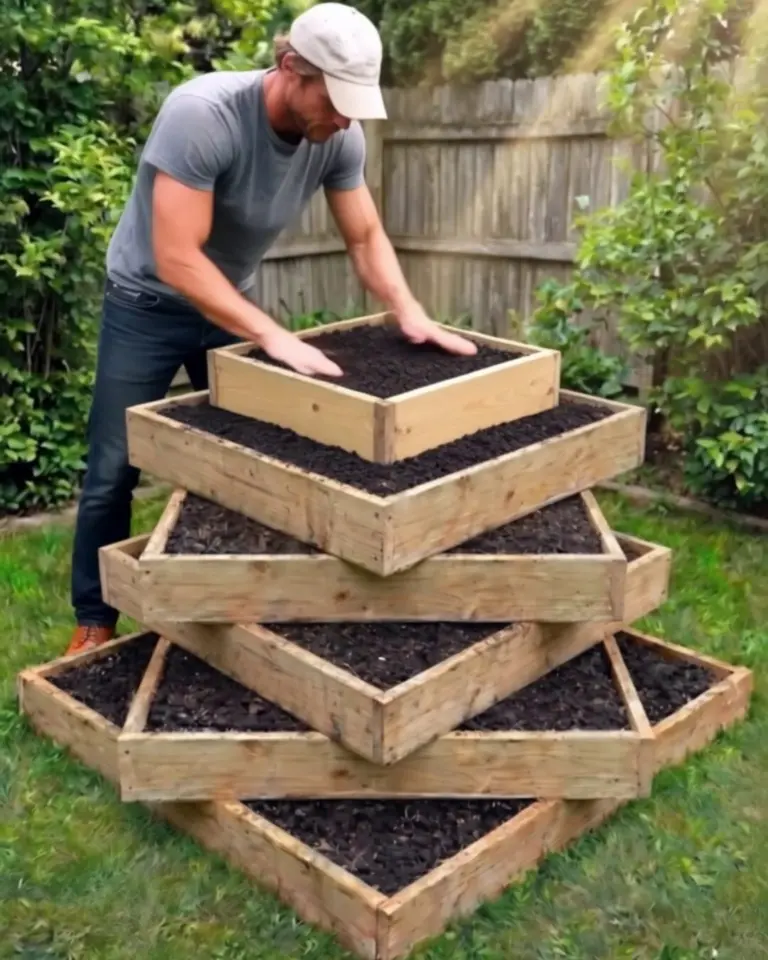
Step 7Sow by tier
Plant the three strawberries in the top frame. Sow lettuce on the fourth tier, green onions on the third, and beets and radishes on the two lowest, in short rows across each triangle.
Radishes go in ½ inch deep, about an inch apart; beets go about the same depth, an inch or two apart.
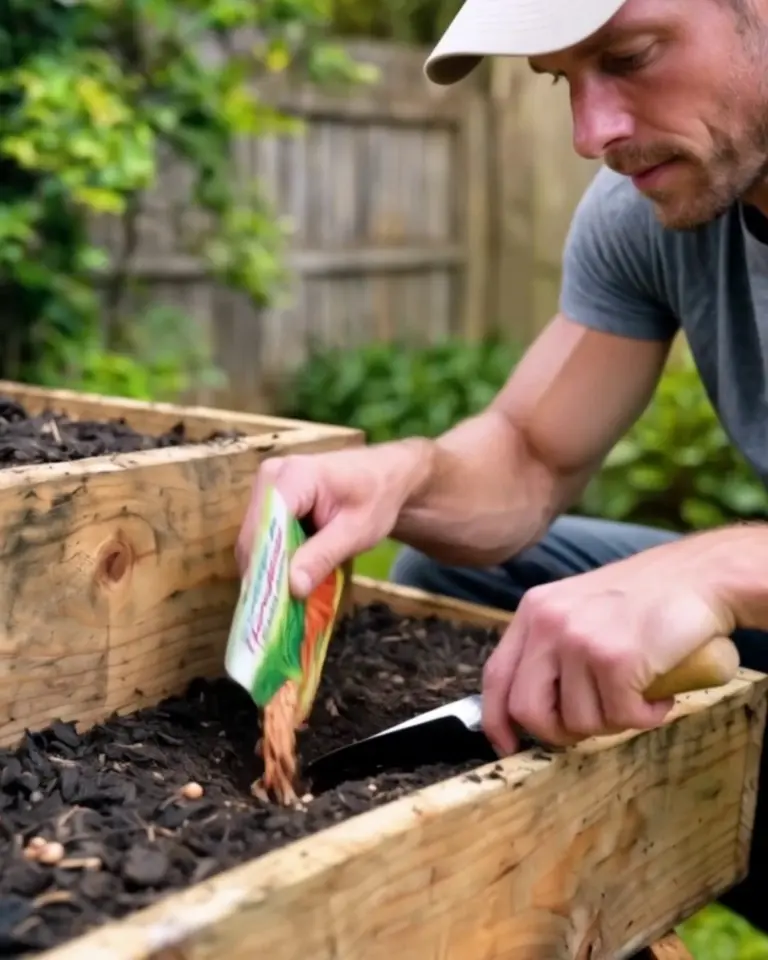
Step 8Water from the top
Water the top tier first and let it run down through the stack. The top dries out fastest, so check it daily in hot weather.
Step 9Thin and pick
Thin beets to 3 inches apart when they’re a couple of inches tall, and eat the thinnings. Start pulling radishes at 3 to 4 weeks, when they’re the size of a large marble.
Resow a short row of radishes every two weeks and the bottom tier never sits empty.
How the Wooden Pyramid Raised Bed Holds Up
The bottom frame rots first, since it sits in damp soil, and the corner blocks loosen as the cedar swells and shrinks. Snug the screws each spring.
Cedar goes silver in a season or two; that’s weathering, not rot. Top up each tier with an inch of compost every spring, since the soil settles and gets used up.
FAQ
The top tier keeps drying out
It holds the least soil and sits highest in the wind. Water it every day in hot spells, and spread a thin layer of straw around the strawberries.
Soil washed out at the corners
Rain finds the gap where a corner rests on the boards below. Pack a handful of soil back into each gap after a heavy storm; once roots fill in, it mostly stops.
Can I use pine instead of cedar?
Yes, and it costs less. Untreated pine rots sooner in wet soil, so expect to rebuild the bottom frames after a few seasons.
My yard slopes
Level the base frame by digging into the high side, not by building up the low side. Every tier above inherits whatever tilt the bottom has.
Can I take it apart in fall?
You can lift the frames off once the soil is shoveled out of each one. We haven’t tried moving it with the soil in, and we don’t plan to.
The 45-inch frame from the first cut sits beside the pyramid now, full of mint. The mint doesn’t mind the wobble.