The first stone got only the coarse diamond pad, and every piece of glass came out frosted, like sea glass. The shine takes four grits, worked wet.
You’ll also love: How to Make River Rock Stepping Stones Cast Face-Down, How to Make Mosaic Stepping Stones in a Bicycle Tire Mold, How to Build a Natural Stone Retaining Wall with Mortar.
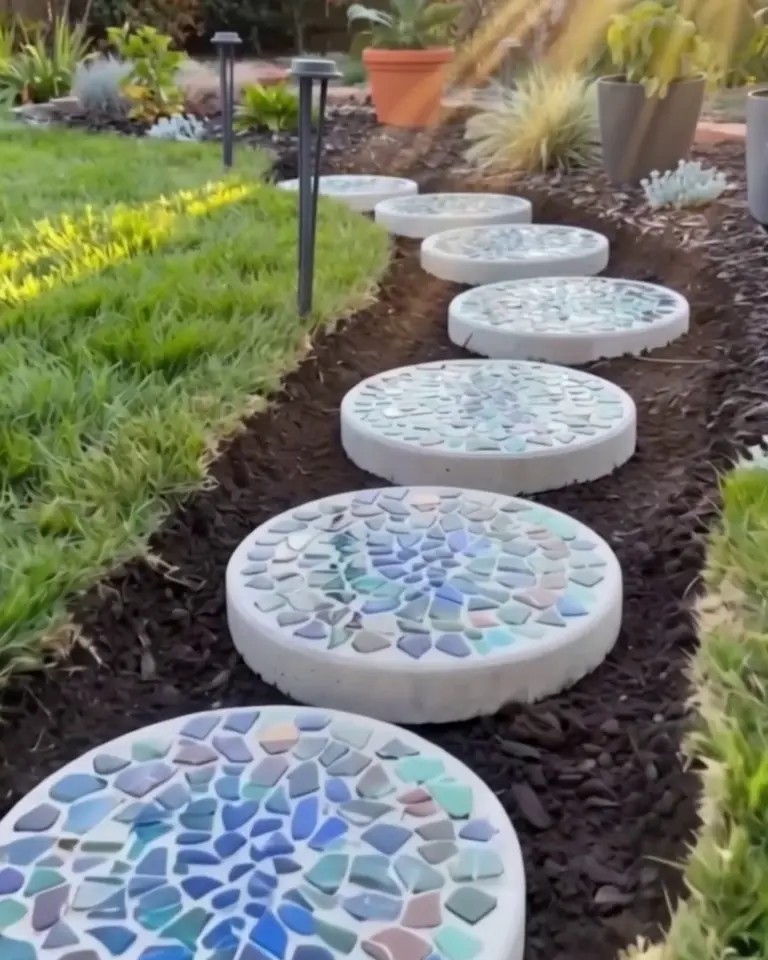
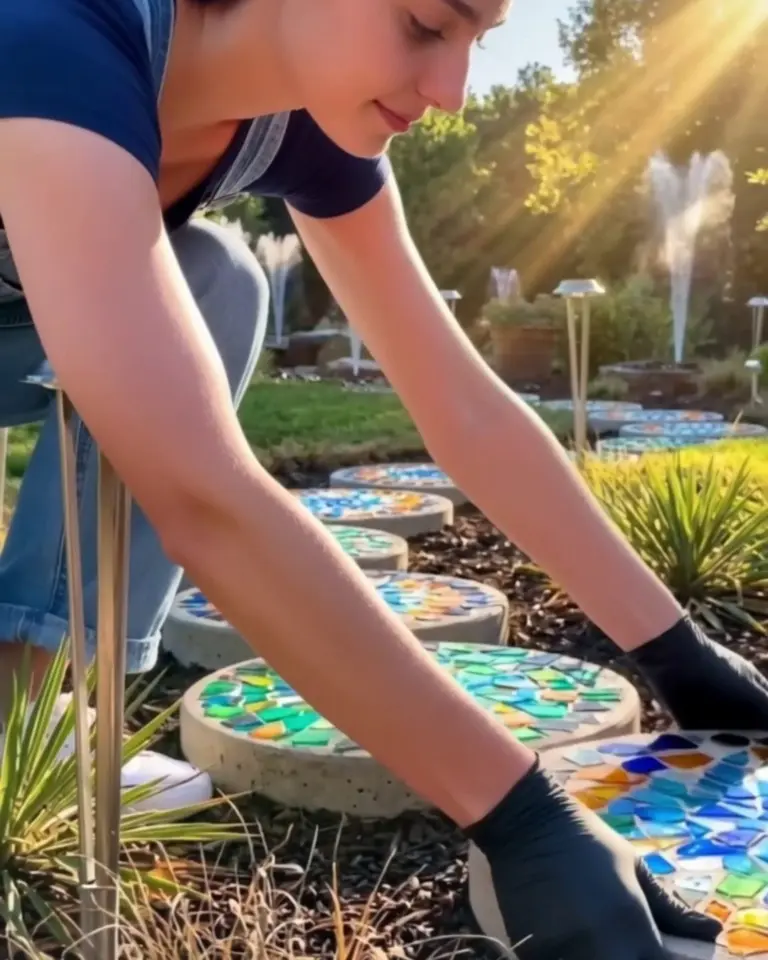
Our glass mosaic stepping stones are 18-inch rounds, 2½ inches thick, with tumbled cobalt, green, teal and amber glass ground flush with the concrete. Five of them make the path through the mulch bed.
A friend walked it after dark and said it looked like someone had dropped a jewelry box. She meant it kindly, mostly.
Wet grinding sounds like a dentist’s drill in a bucket, and the slurry runs off the table gray-green.
Why the Glass Gets Ground Instead of Set
Glass cast into concrete comes out with a skin of cement over it, and some pieces sit a little proud. Grinding the face takes off the skin and the high edges, so glass and concrete finish at one level.
We expected to polish the glass as far as it would go. On a path, a mirror shine turns slick in the rain, so ours stop at a medium grit that still grips.
Tumbled glass costs more than smashed bottles, and it comes without the sharp edges.
Materials & Tools
Not in the $230: a 4-inch angle grinder, a random orbit sander, a spray bottle and the path lights.
How much mix: each stone takes about 0.37 cubic feet, and one maker’s data sheet puts an 80-pound bag at about 0.66, so three bags make five stones with a little to spare.
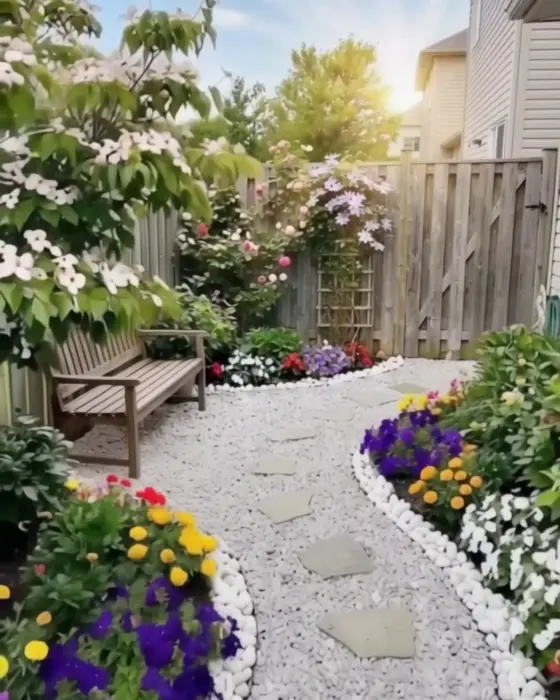
In gravel instead: the stones sit just as well in a bed of gravel, laid like our white gravel garden path, and they stay cleaner than in mulch.
Watch the Build
Step by Step
Step 1Set up the mold
Set the mold on a flat board, check it with a level, and give the inside a light coat of cooking spray.
With two molds going, you get two stones every couple of days, and five take about a week.
Step 2Pour a thin first layer
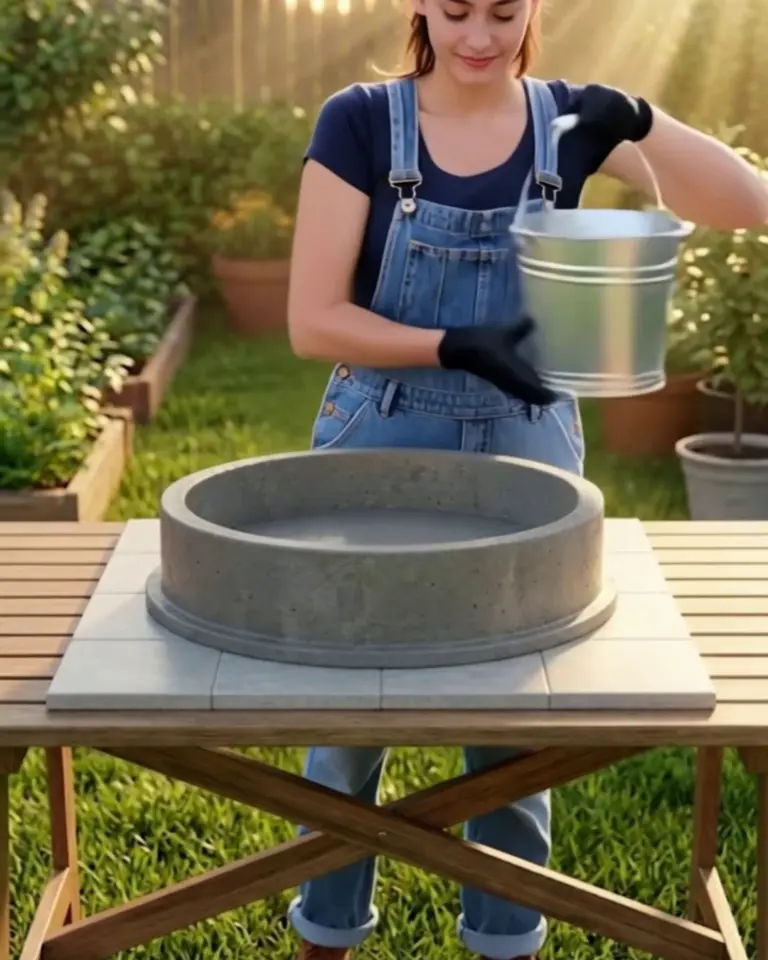
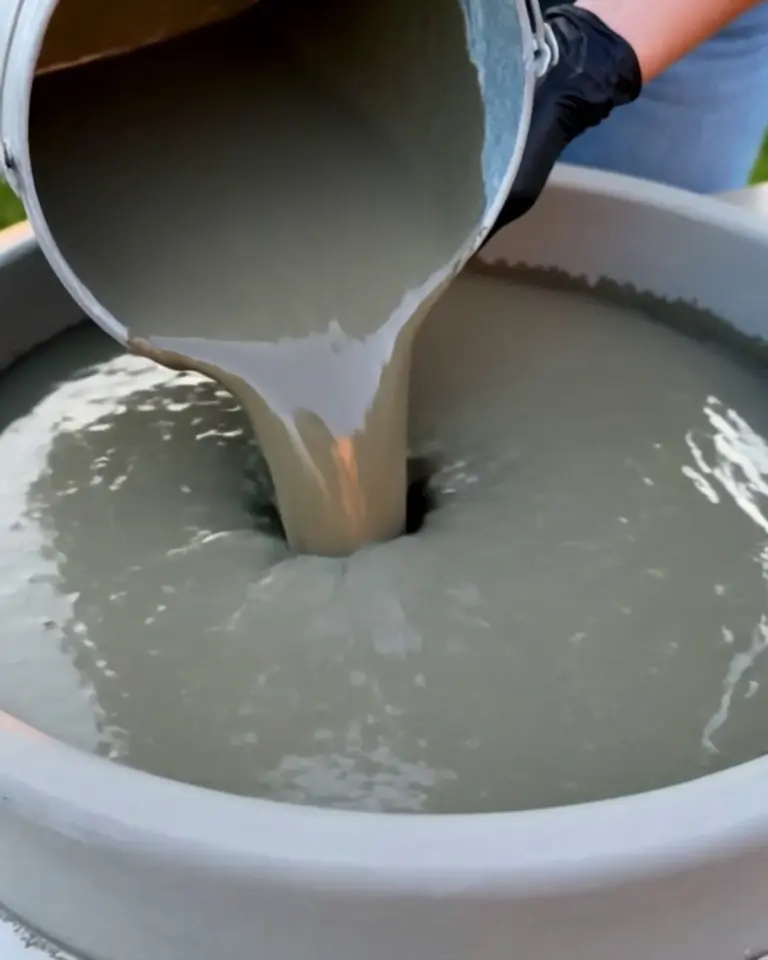
Mix about 45 pounds of sand mix with 5 to 6 pints of water, loose enough to level itself. Pour about ½ inch into the mold and tap the sides until it’s flat. Gloves on; wet cement burns skin.
Step 3Add the glass
Scatter about 7 pounds of tumbled glass over the wet layer, starting at the edge and working in. Mix the colors as you go rather than in patches.
Save a handful of the best pieces for the outer ring, where they show the most.
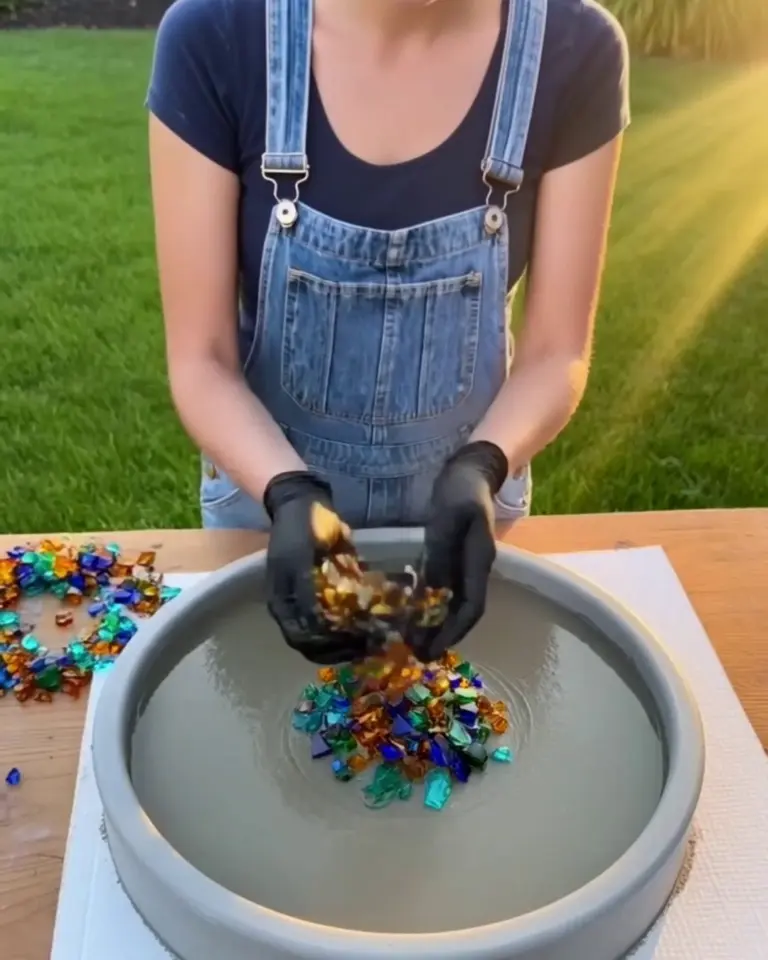
Step 4Press it flat
Spread the glass into one even layer, edge to edge, and press each piece down until it touches the bottom of the mold. Pieces left floating end up buried after grinding.
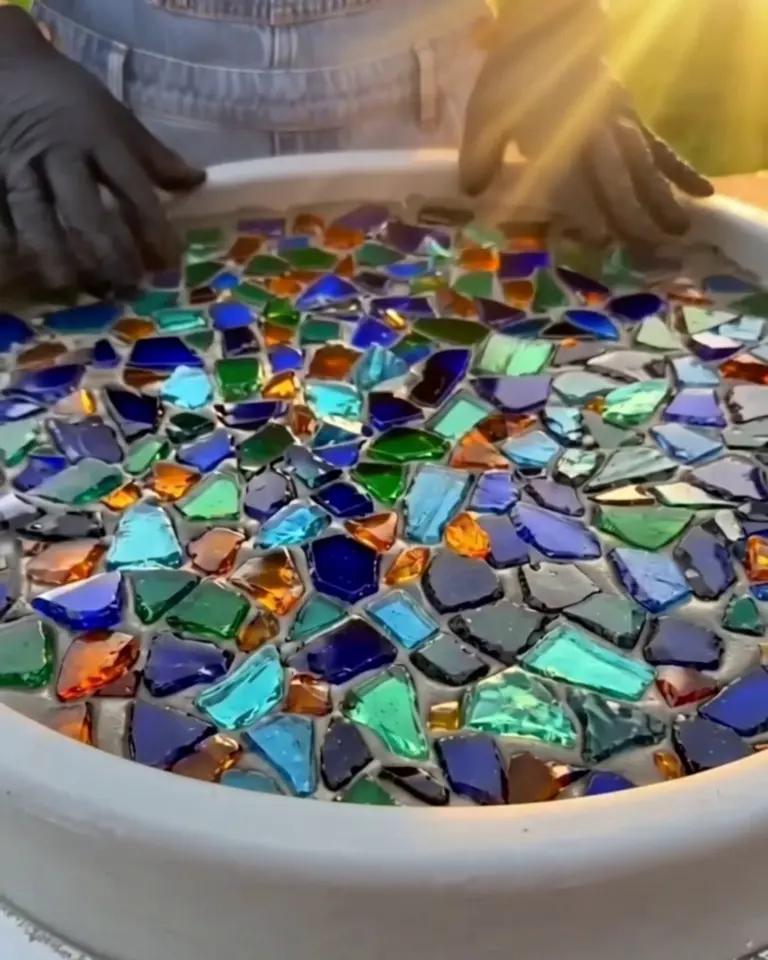
Step 5Cap it with concrete
Fill the rest of the mold with the remaining mix, working it down between the glass with the trowel tip, and screed the back flat. Tap the mold all around for a minute to bring the air up.
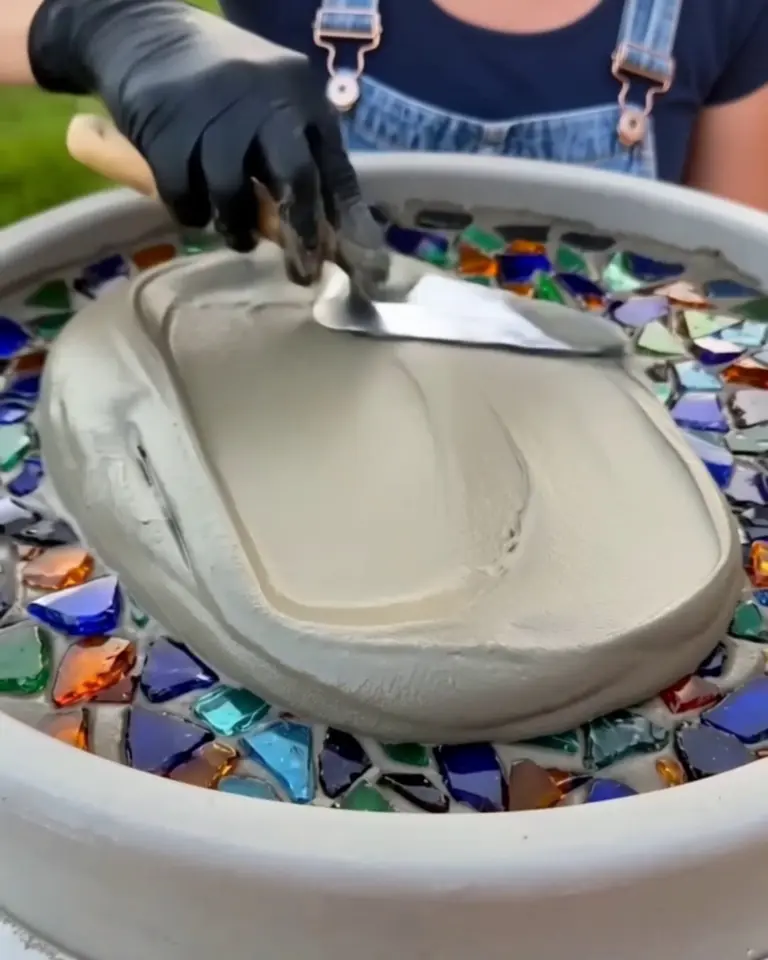
Step 6Cure and demold
Cover the mold with plastic for 2 days. Flip it onto a board, flex the mold off, and keep the stone damp under plastic for the rest of the week; the glass side is now facing up.
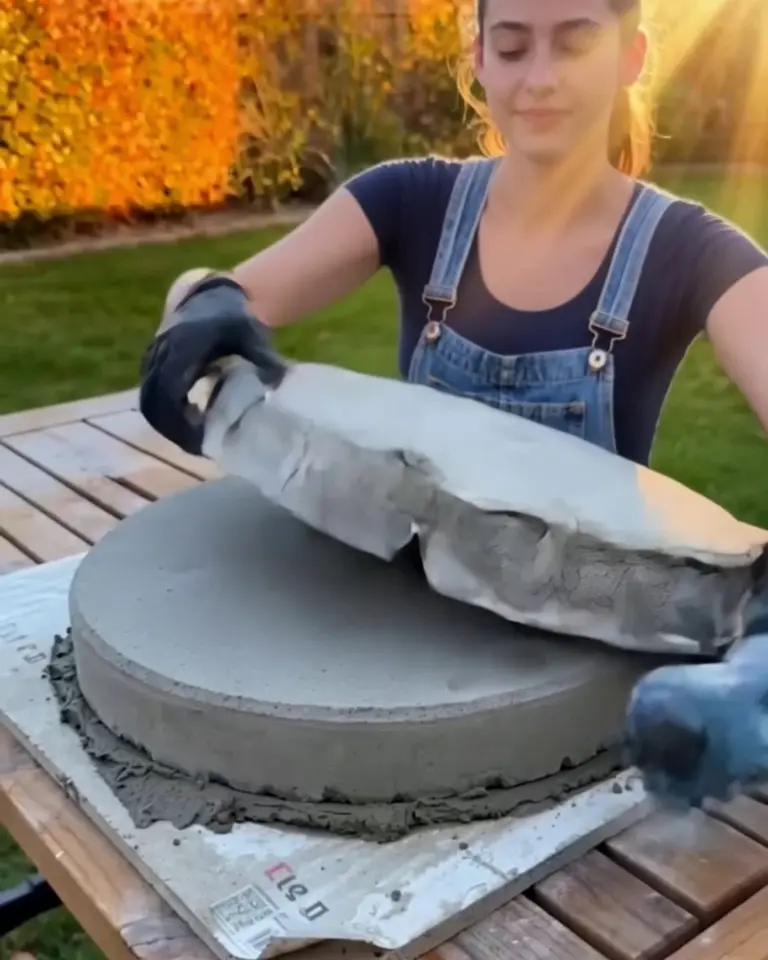
Step 7Knock down the skin
Run a random orbit sander with 80-grit paper over the face until the first glass shows through the gray. It’s faster than going straight to the grinder.
Do it outside with the respirator on. Dry dust from the sander is the worst part of the whole job.
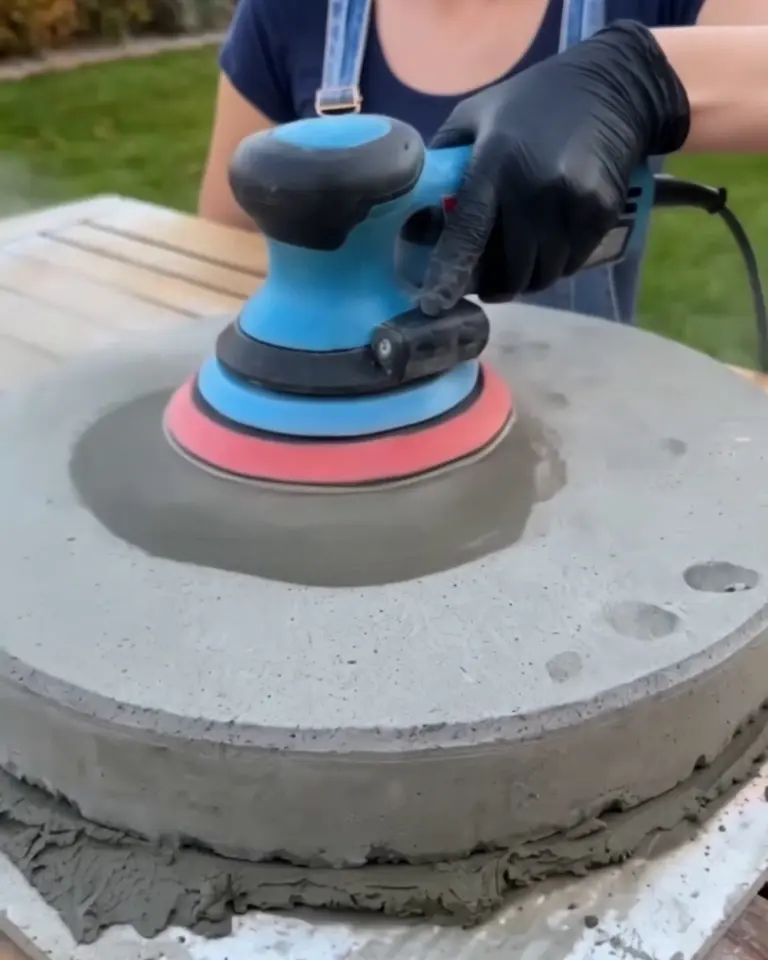
Step 8Grind the face wet
Plug the grinder into a GFCI outlet, keep the face wet with a spray bottle, and work through the diamond pads from 50 up to 400 grit, a few minutes per grit, in overlapping circles. Wear the respirator and the face shield even though it’s wet.
Rinse the face between grits; grit left from a coarse pad scratches the next one. Stop at 400, because higher grits look lovely and turn slippery in the rain.
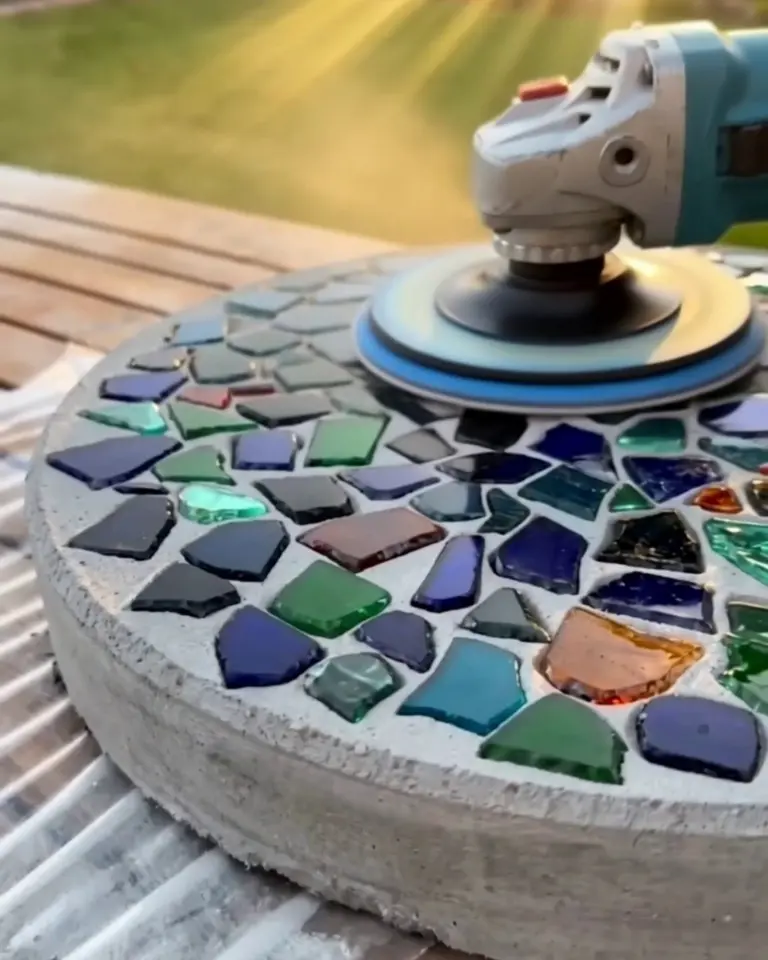
Step 9Seal and set them
Rinse the slurry off, let the stones dry for a few days, and brush on penetrating sealer. Set them 24 inches apart, center to center, bedded until they don’t rock.
Rake the mulch back so each stone sits on firm soil. Set on mulch, it tips whenever someone steps on an edge.
How Glass Mosaic Stepping Stones Hold Up
Glass doesn’t wear down, but the concrete around it does, slowly, so the glass edges start to stand up after a few years. A quick pass with the 200 and 400 pads brings them level again.
Re-seal every year, and keep salt and de-icer off them. The colors don’t fade; tumbled glass is colored all the way through.
FAQ
Some glass is still buried under concrete
Those pieces floated up from the bottom while the mix was wet. Grind a little deeper in that spot, or leave it; a few gray gaps read as part of the pattern.
The glass came out cloudy
You stopped at a coarse grit, or the pads ran dry. Go back through the grits in order with plenty of water.
Can I use broken bottles?
Yes, if you tumble or grind the edges first. Sharp bottle glass cuts gloves, and the curved pieces don’t sit flat in the mold.
Do they really glow at night?
No, glass doesn’t make light. Under low path lights it catches and throws color, and that’s what reads as a glow in photos.
Will they crack in winter?
We haven’t had them through a hard freeze. Water in the joints around each piece is the worry, which is why they get sealed every year.
The frosted first stone went at the end of the path, where it’s darkest. Nobody has noticed it’s different.