Spraying the circle freehand gave us an egg, 7 feet one way and 5 the other. Marking paint on grass hangs on through a few mowings, so the egg stayed visible long after the bed itself was round.
You’ll also love: How to Build a Raised Garden Bed with a Pallet A-Frame Trellis, How to Build a Tilted Pot Flower Tower on a Wire Obelisk, How to Plant Onions in Egg Cartons Along the House Foundation.
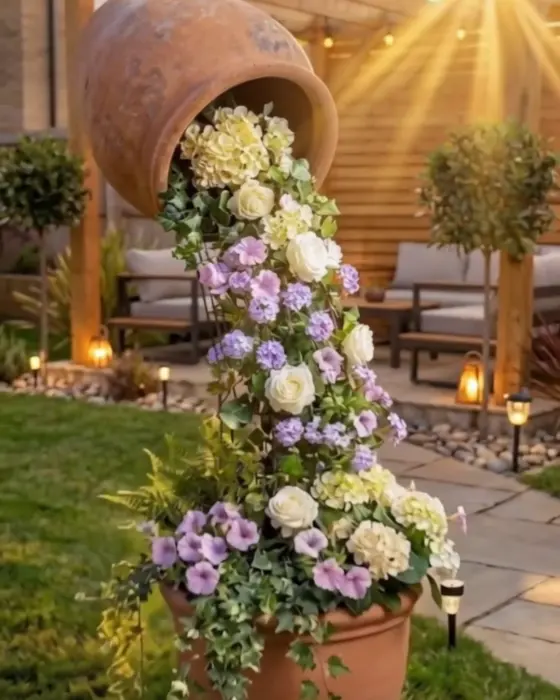
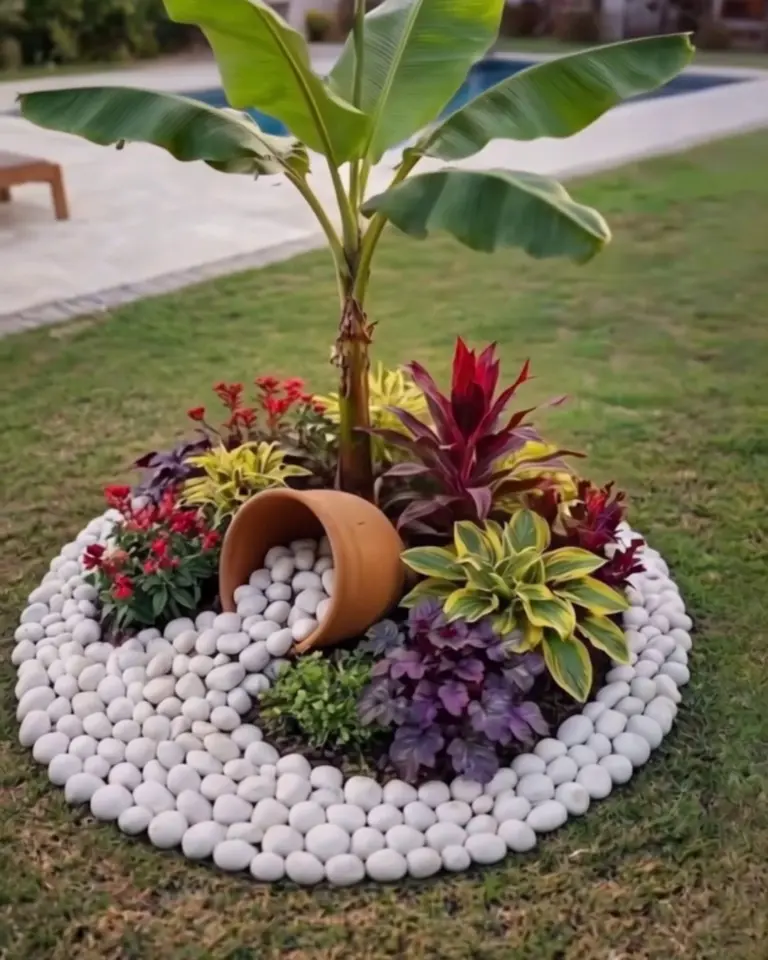
Our circular garden bed is a 6-foot ring around a banana tree, dug out of the lawn and filled with compost, with a band of white river pebbles spilling from a tipped clay pot and a dozen bright plants.
A neighbor said it looked like a resort, then asked if we’d be charging for parking.
Fresh compost steams a little on a cool morning, and the banana leaves rattle like paper when the wind gets into them.
Why a Ring Around the Tree Works
Mowers and string trimmers are the biggest danger to a banana’s soft trunk. A bed around it keeps both of them 3 feet away.
We expected the pebbles to be decoration and nothing else. They also give the mower a clean edge to follow, and they keep rain from splashing mud onto the low leaves.
Bananas drink and feed hard, and the compost puts both right where their roots are.
Materials & Tools
Not in the $215: the banana tree, a flat spade, a rake and a wheelbarrow.
Pick for your winter: cordylines and coleus are summer color in most places and need replacing each spring. Heucheras come back.
The pebble band: it’s laid the same way as our white gravel garden path, on fabric, so soil can’t work up between the stones.
Watch the Build
Step by Step
Step 1Mark the circle
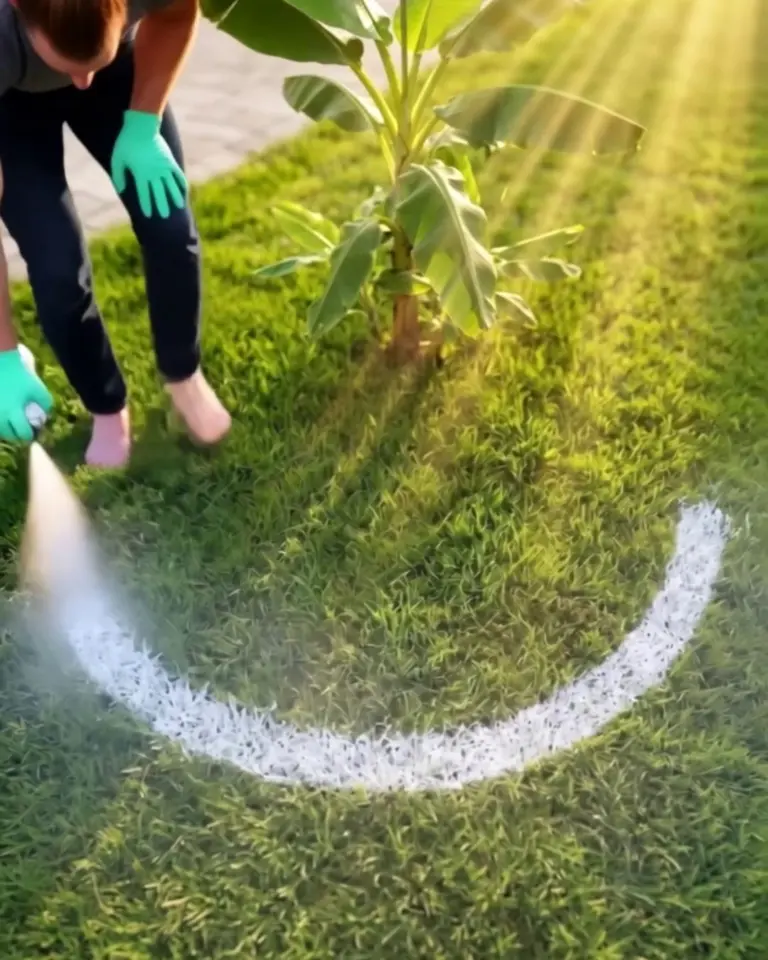
Push a stake in at the base of the banana, tie on a string, and walk it around 3 feet out, spraying the line as you go. Hold the can low and upside down, the way marking paint is meant to be used.
Six feet across leaves room for a dozen plants and still mows around in one easy pass. Much past 8 feet, you start needing a path through the middle.
Step 2Strip the sod
Cut along the line with a flat spade and slice the turf off about 2 inches deep, in strips. Within a foot of the trunk, just loosen the grass and pull it out by hand; banana roots run shallow.
Stack the turf upside down in a back corner. In a year it rots into good soil.
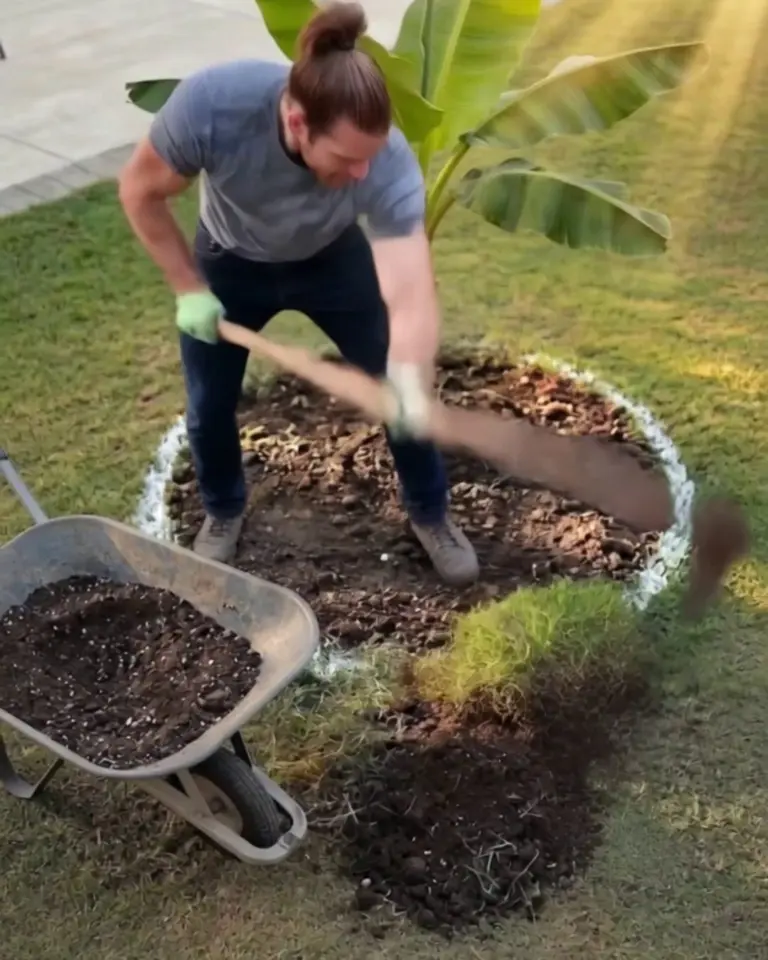
Step 3Spread the compost
Fill the circle with about 3 inches of compost, raking it level and slightly higher in the middle. Keep it a couple of inches back from the banana’s trunk.
Compost settles as it breaks down, so plan on adding an inch each spring.
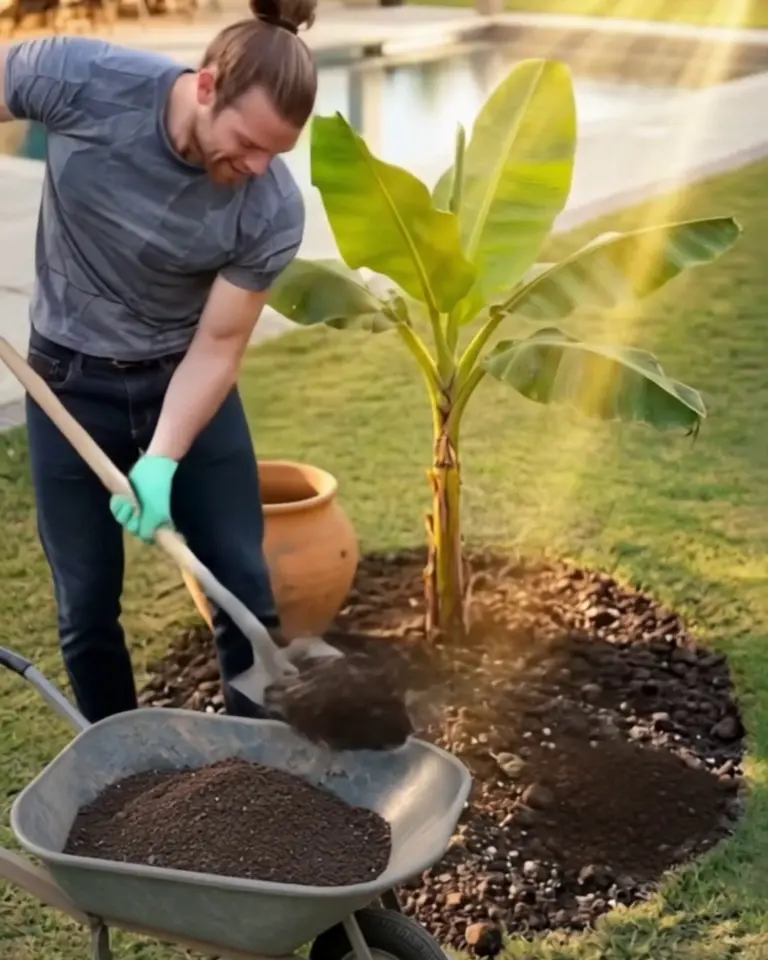
Step 4Tip the pot
Lay the clay pot on its side a foot from the trunk, mouth facing out, and press it a third of the way into the compost so it can’t roll. A pot with a chipped rim works fine here, maybe better.
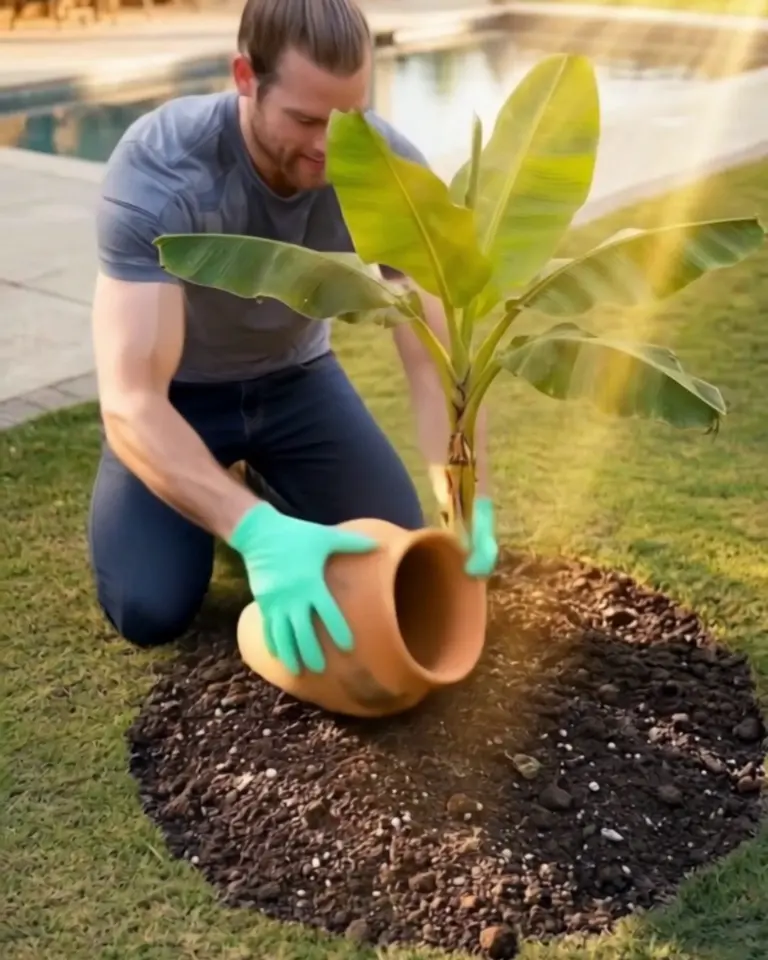
Step 5Lay the pebble band
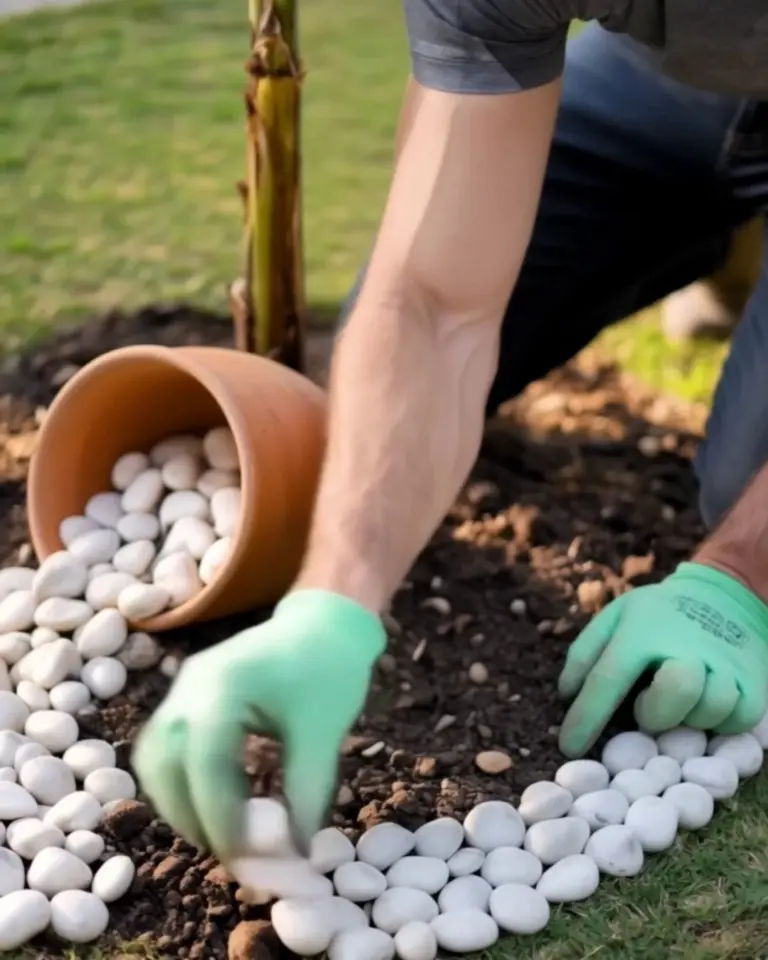
Cut landscape fabric into a band about 9 inches wide, run it from inside the pot’s mouth out and around the edge of the circle, and pin it down. Set the pebbles on it one at a time, packed tight, starting with a handful inside the pot.
Big pebbles look best set by hand. Poured from the bag, they pile up and leave bare fabric showing.
Seven bags make one tight layer around most of the ring, plus the spill from the pot. Fold the fabric edges under so no black shows at the sides.
Step 6Plant
Set the tallest plants, the cordylines, in a loose row behind the pot and closest to the banana. Fill in with heucheras and coleus about 12 inches apart, and tuck the flowering annuals along the pebble edge.
Water every plant in its nursery pot an hour before planting. A dry root ball sheds water for weeks once it’s in the ground.
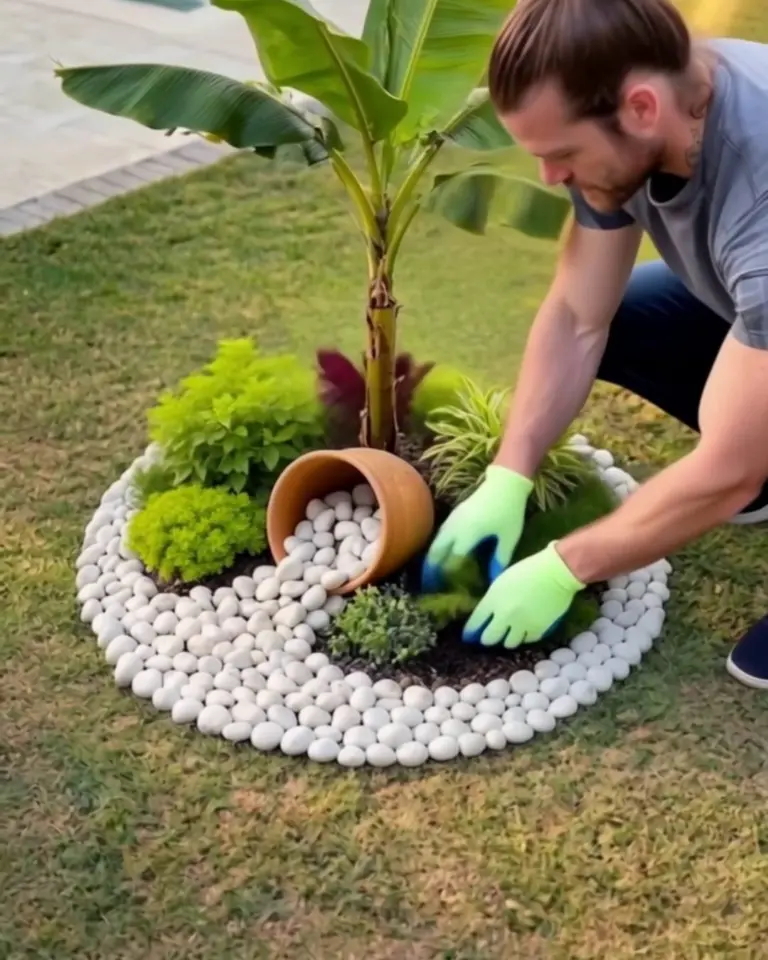
Step 7Water it in
Soak the whole bed slowly until the compost is dark all the way down. The banana wants that every few days in summer, whenever a finger pushed 2 inches in comes out dry; the others are happy with less.
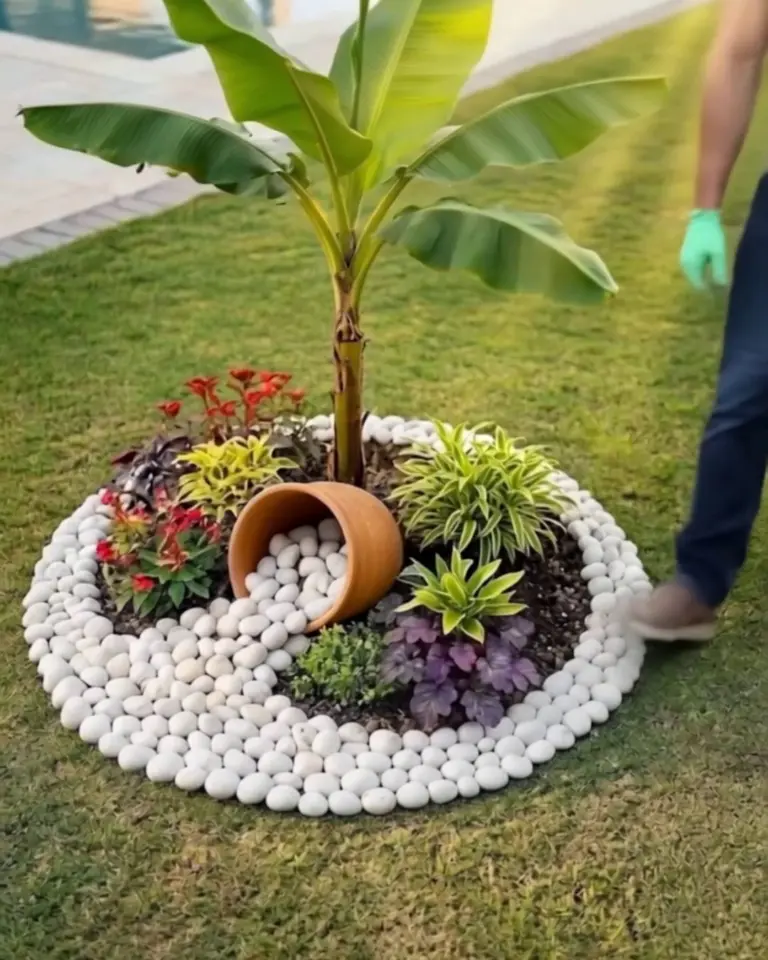
Step 8Mulch the gaps
Spread shredded bark 2 inches deep in the bare spots between plants, keeping it off the stems. It holds the water in and keeps weeds from finding the new soil.
Pull it back from the banana’s trunk too; wet mulch against the stem rots it.
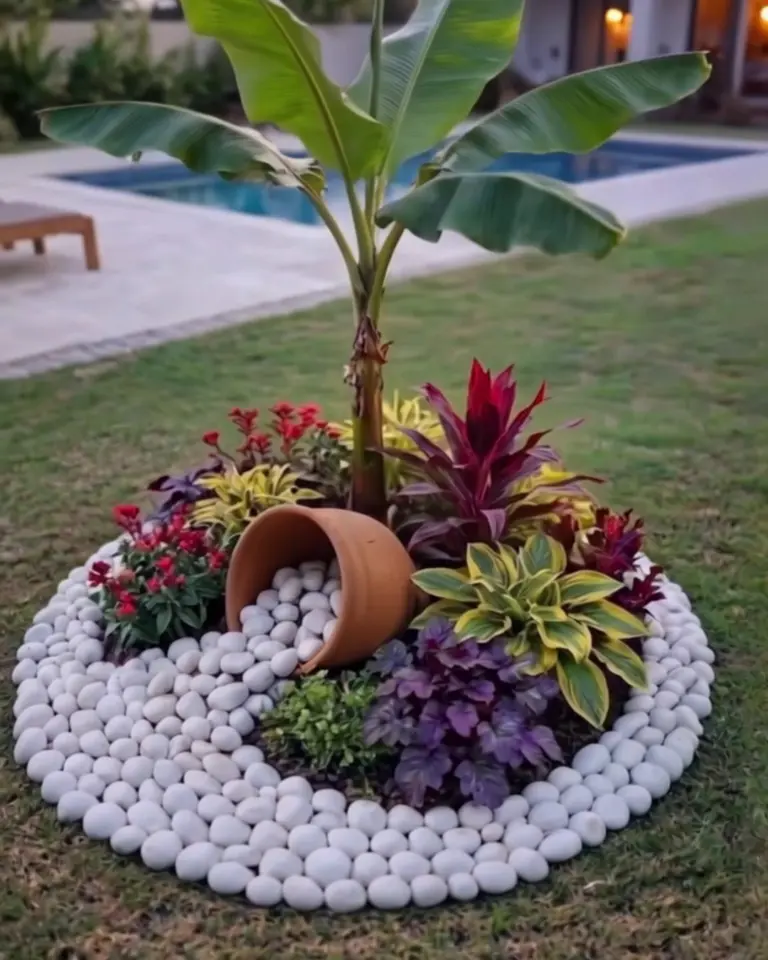
How the Circular Garden Bed Holds Up
The pebbles slowly pick up soil and leaves; a leaf blower on low clears them. Where winters freeze, a hardy banana dies back to the ground, and NC State Extension says its roots survive to about −10°F when they’re cut back and mulched.
The tender plants go when the frost does, and the bed gets replanted in spring. The pebbles and pot stay put all year.
FAQ
Grass keeps creeping back into the bed
Runners are getting under the edge. Cut a clean 3-inch-deep edge with the spade twice a year, or sink a strip of plastic edging along the line.
The banana leaves are turning yellow
Usually it’s hungry or thirsty. Feed it every few weeks through summer and water deeply; bananas use far more of both than the plants around them.
Can I do this around a different tree?
Yes, around almost any young tree. Keep the compost thin near the trunk and don’t pile soil against the bark.
Do the pebbles get hot in the sun?
White ones less than dark ones. They do warm up, and we haven’t seen it bother the plants at the edge.
Will my banana fruit?
Maybe, maybe not. Most bananas need a long, warm season to fruit, and a hardy one grown for its leaves might never get there in a short summer.
The egg-shaped paint line finally mowed away by midsummer. The neighbor still asks about parking.