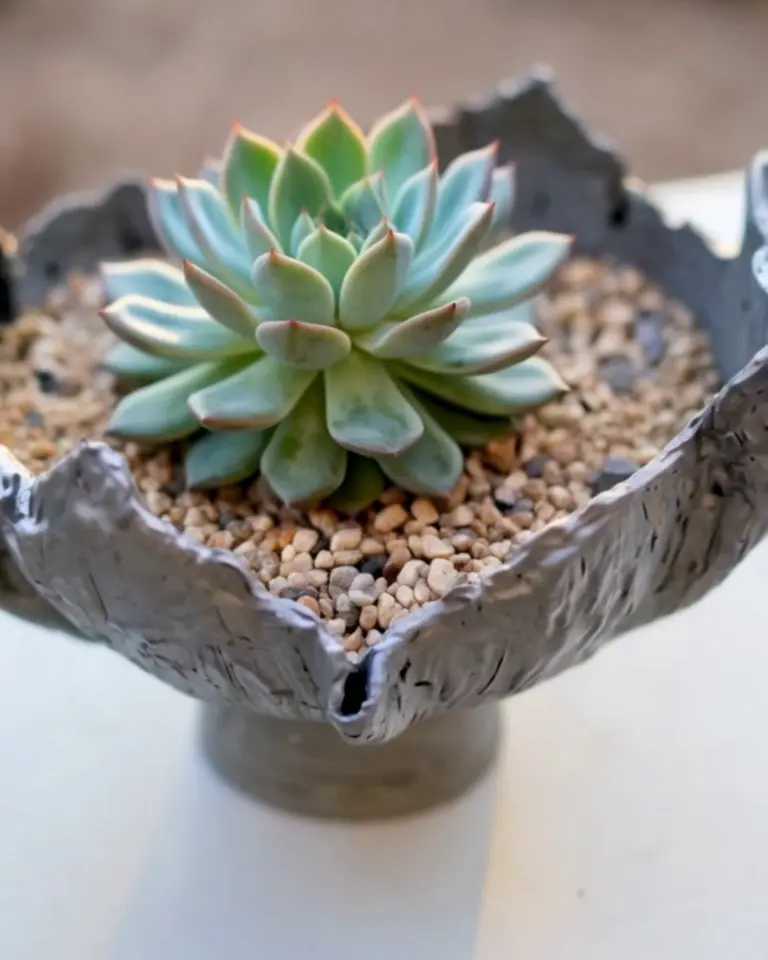
A balloon blown up to 11 inches across gives a bowl about the size of a mixing bowl, with a rim that breaks into ragged petals. Underinflated, it wrinkles as the concrete goes on, and every wrinkle shows inside the finished bowl.
You’ll also love: How to Make a Concrete Laundry Basket Planter with a Grid Texture, How to Make a Concrete Leaf Planter with Real Leaves, How to Make a Concrete Rope Lantern Over a Beach Ball.
Our concrete balloon planter is that bowl, about ½ inch thick, standing on a short foot cast in a plastic cup, with one echeveria in fine gravel.
We popped the first balloon the next morning. The rim was still soft and folded in on one side like a hat brim.
Stiff mix patted on by hand makes a dull slapping sound. A friend said the finished bowl looked like something from the bottom of a pond, then asked if she could keep it.
Why the Bowl Is Built Upside Down
A balloon can’t hold wet concrete inside it, but it can carry a shell on its back. The bowl gets built over the top half, upside down, and turned over once it’s hard.
We expected the foot to be the fiddly part. It’s just a cup with the bottom cut out, pressed into the wet crown and filled.
The sand under the balloon keeps it from rolling while you work.
Materials & Tools
Not in the $65: a mixing tub, a pin and some plastic sheeting.
The mix: a shell this thin needs to be sticky. One maker’s data sheet calls for acrylic fortifier in place of some of the water for anything under an inch thick.
Ball molds, bigger: a basketball does the same job for our concrete outdoor sink, with the concrete poured around it instead of patted over it.
Watch the Build
Step by Step
Step 1Seat the balloon
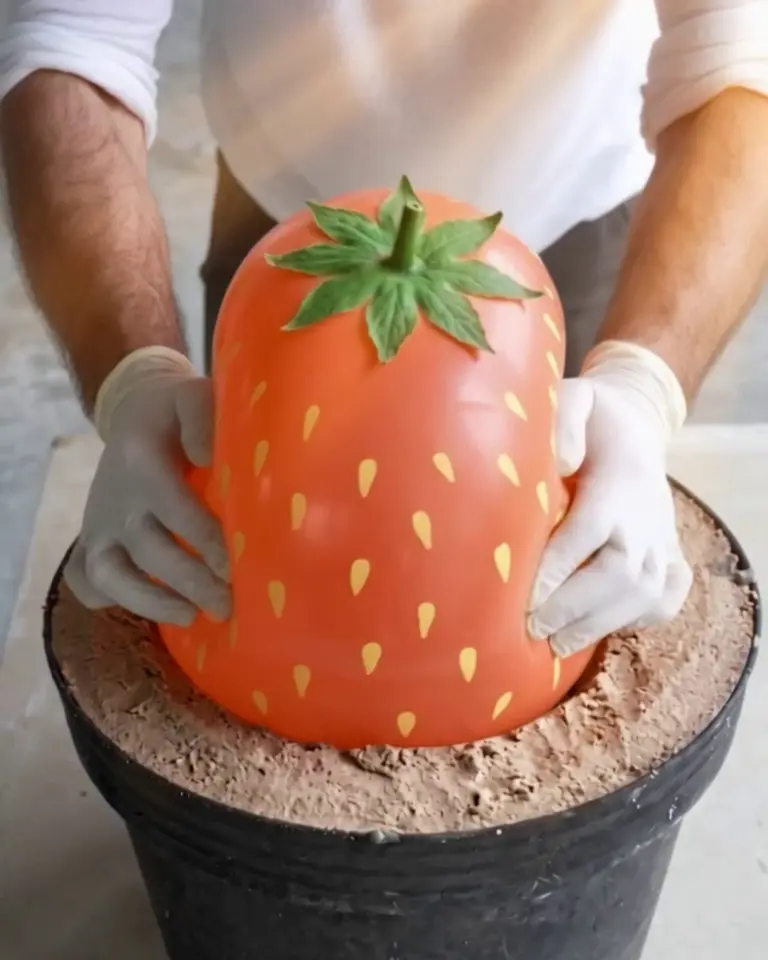
Fill the pot with damp sand and scoop a shallow hollow in the top. Blow the balloon up to 11 inches across, tie it, and set it knot-down in the hollow.
Measure across the middle with a tape held level; guessing by eye, we came up an inch short.
Work out of direct sun. A balloon that warms up swells, and one that cools shrinks away from the shell.
Step 2Mix it stiff
Mix about 10 pounds of sand mix with a cup of fortifier and just enough water to bring it together, roughly another cup. It’s right when a handful holds its shape like cookie dough, and gloves go on before you start patting.
Step 3Cover the top half
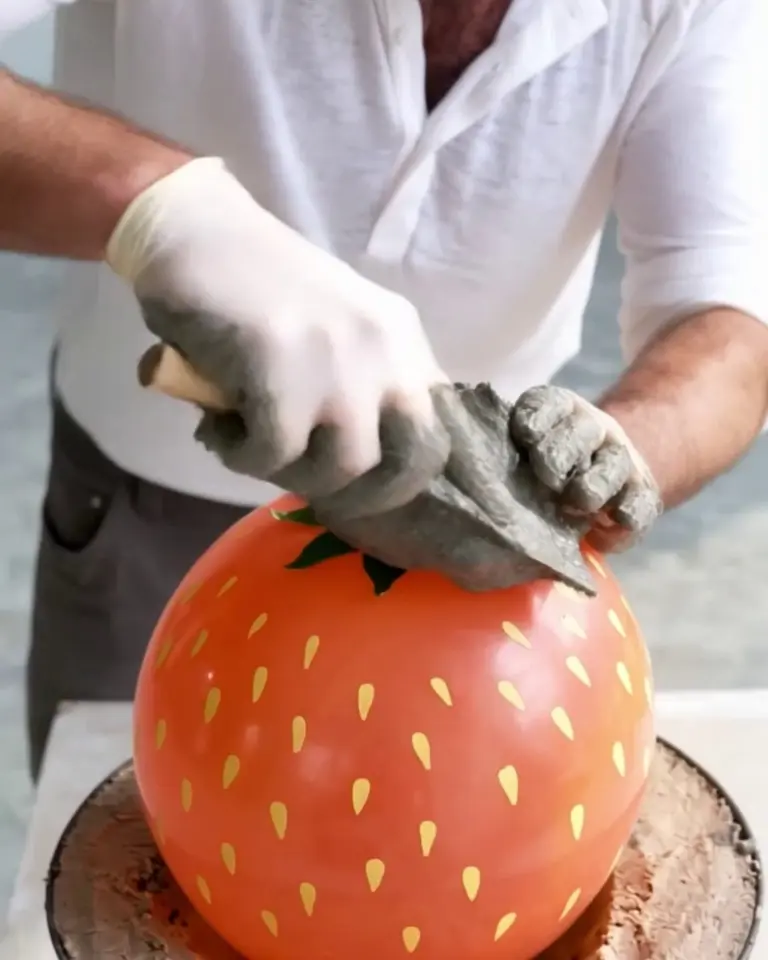
Press handfuls on from the top down, about ½ inch thick, overlapping each one into the last. Stop about halfway down the balloon; below that, the mix starts sliding.
Press each handful down firmly rather than smearing it. Smeared mix thins out over the top, and the thinnest spot is where a bowl cracks.
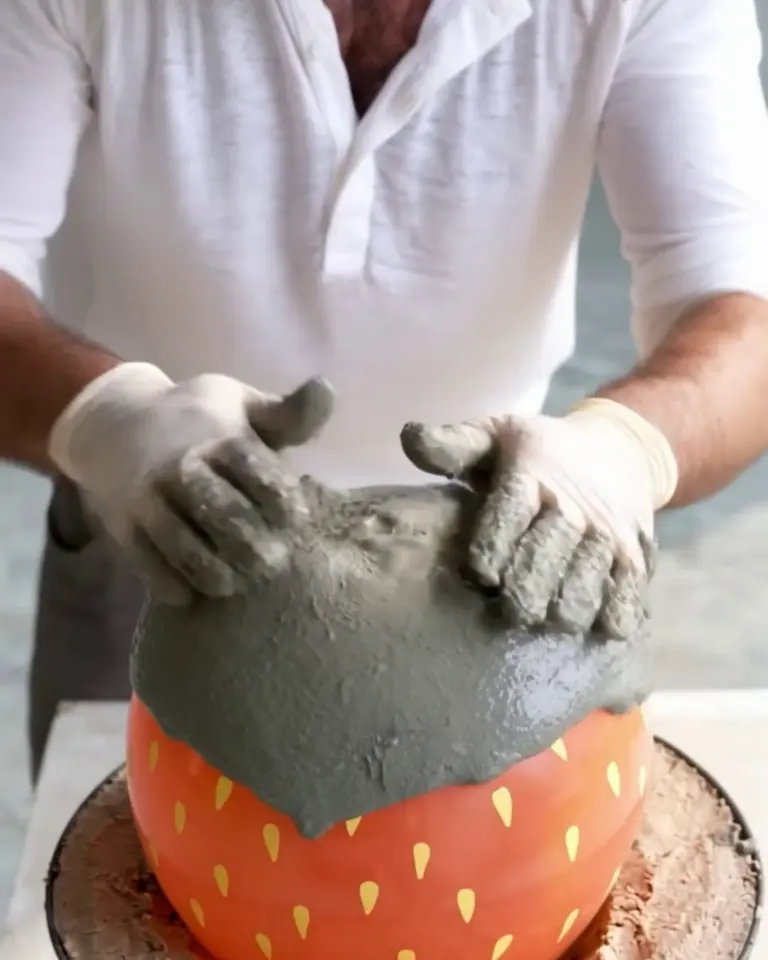
Step 4Shape the petals
Pinch the lower edge into six or eight points and push them out slightly, so they curl like petals once the bowl is turned over. Drag your fingertips down the shell for texture.
Keep the petals at least ½ inch thick at the tips. Thinner than that, they snap off when the bowl turns over.
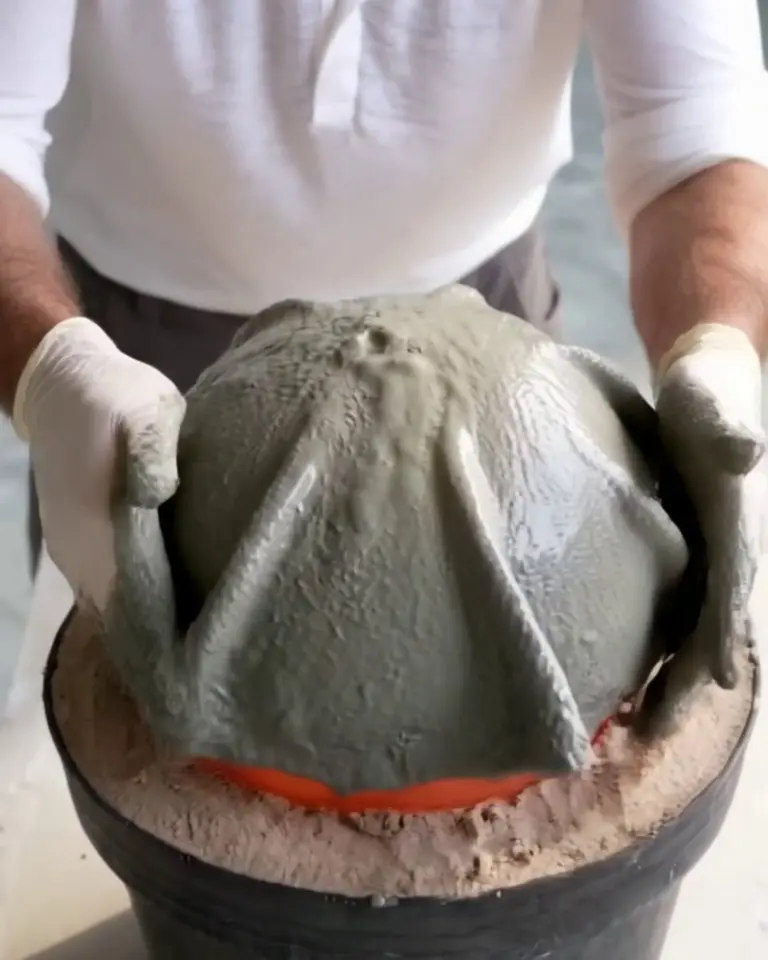
Step 5Cast the foot
Press the bottomless cup into the wet crown, ¼ inch deep. Push the greased dowel down through the middle of the cup until it touches the balloon, then pack the cup full of mix around it.
With the bottom left on, the cup would keep the foot from bonding to the bowl.
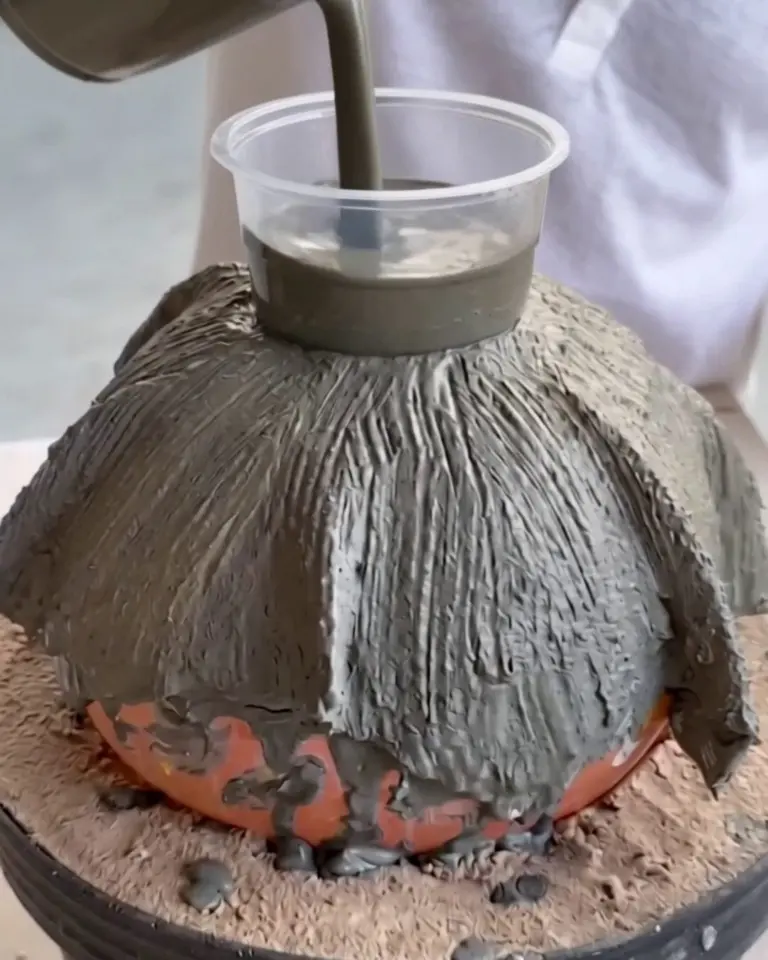
Step 6Let it cure
Cover everything loosely with plastic and leave it 2 days. Twist the dowel out and peel the cup away; the dowel leaves a clean drain hole through the foot.
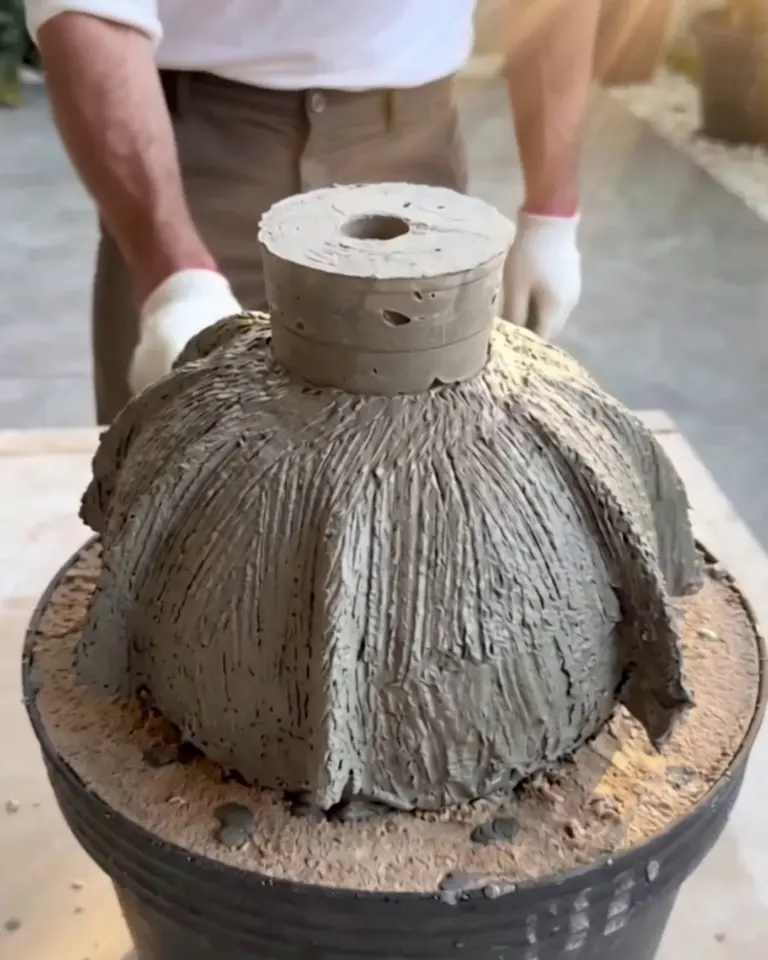
Step 7Turn it over and pop it
Lift the shell off the sand, balloon and all, and set it on its foot. Prick the balloon by the knot with a pin.
It lets go with a soft pop rather than a bang, since the shell holds it in.
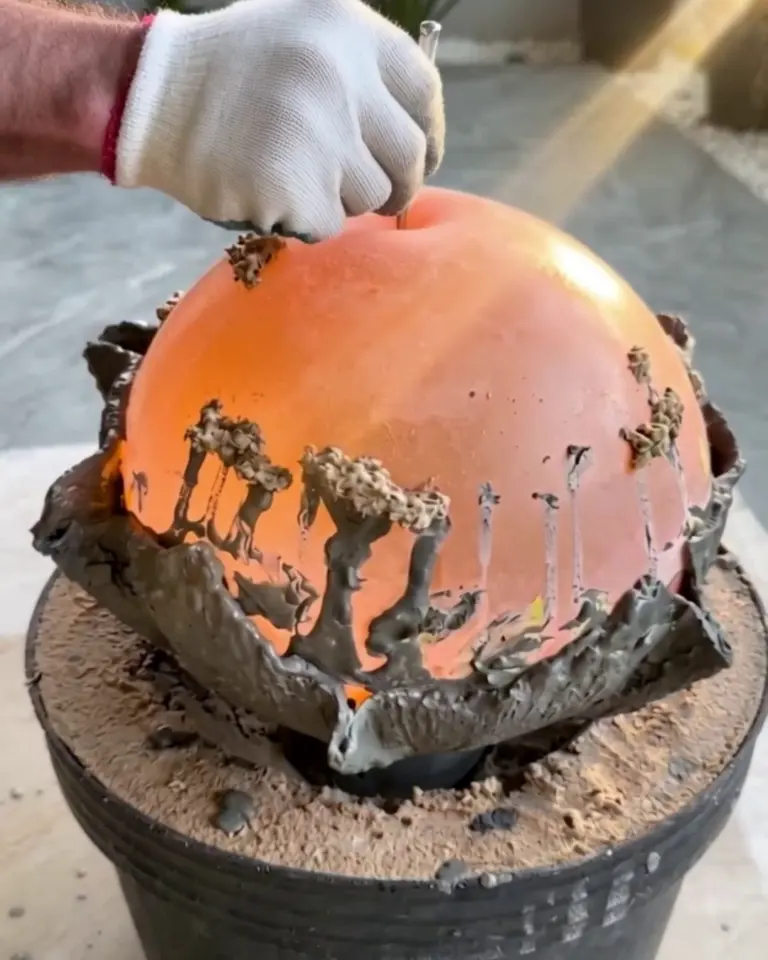
Step 8Pull out the balloon
Peel the balloon away from the inside and brush off any loose crumbs. Mist the bowl and keep it under plastic for the rest of the week.
Rinse it out a few times before planting. New concrete leaches lime for a while, and a quick rinse takes the worst of it.
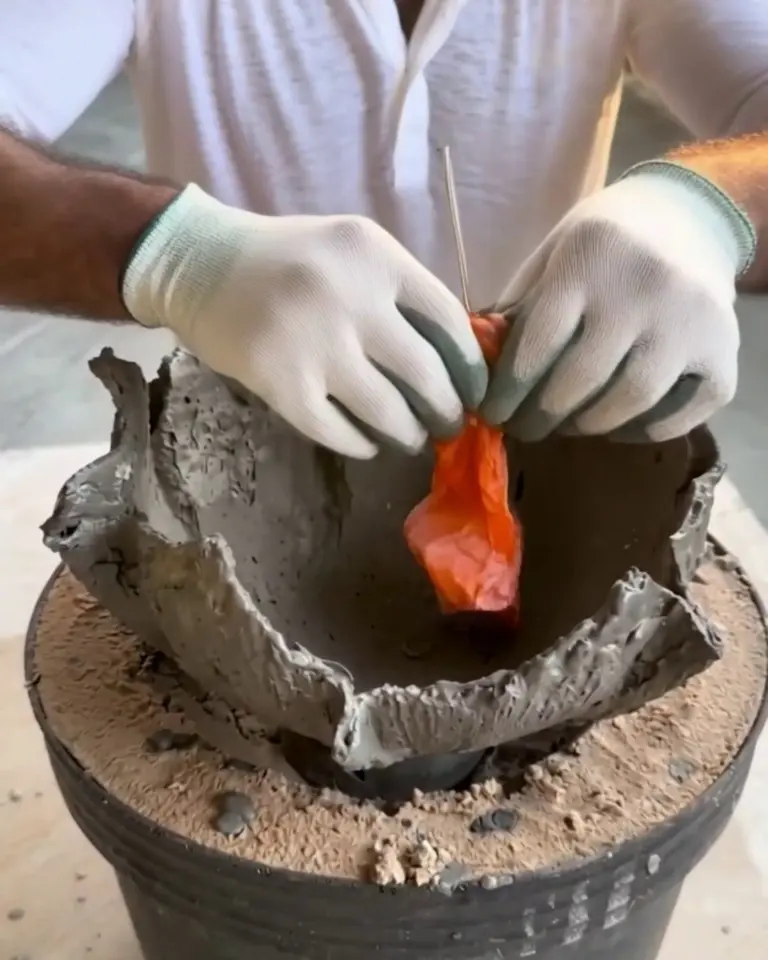
Step 9Plant it
Fill the bowl with cactus mix, set the echeveria in the middle at the depth it grew, and cover the surface with ½ inch of fine gravel.
Water it lightly, then wait until the mix dries out before watering again.
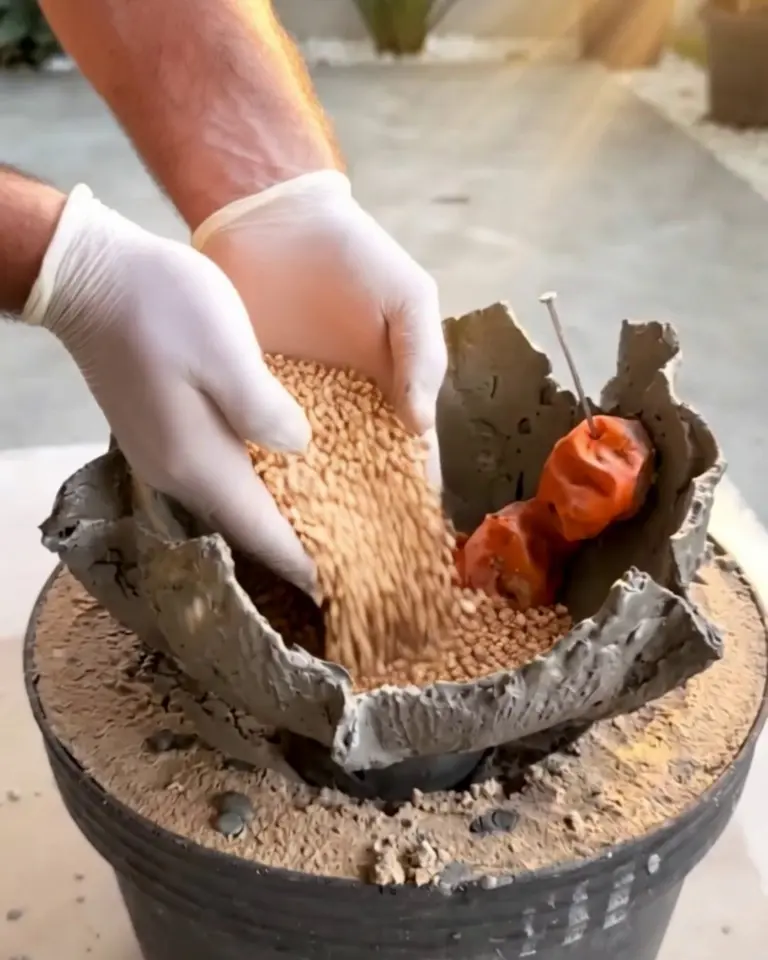
How a Concrete Balloon Planter Holds Up
The thin petal tips chip first, usually when the bowl gets moved. Lift it by the foot and the body, never by the rim.
A bowl this shallow dries out fast in summer, which suits succulents and not much else. Moss creeps into the texture on the shady side, which some people like.
FAQ
The balloon popped while I was working
Usually a sharp grain in the sand or a ring caught it. If the shell is still wet, scrape the mix back into the tub, blow up a fresh balloon and start again.
The concrete keeps sliding down the sides
The mix is too wet, or you’ve gone past the widest part of the balloon. Stiffen it with a little dry mix and stop at the halfway line.
Can I use a beach ball instead?
Yes, for a bigger bowl. A beach ball won’t pop, so let the air out through the valve and fold it out.
I forgot the dowel. How do I add a drain?
Drill through the middle of the foot with a ½-inch masonry bit, slowly, with the bowl upside down on a towel. Ease off as the bit breaks through, since the inside face tends to chip out around the hole.
Can it stay outside all winter?
We haven’t left one out through a hard freeze. A shell this thin full of wet soil is a likely candidate for cracking, so ours come in.
The hat-brim bowl from the first try sits on the workbench, full of screws. It holds them fine.