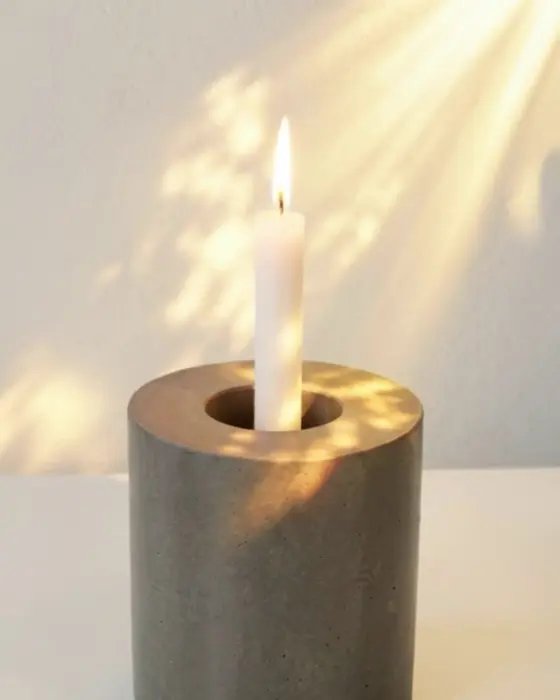
Holding a real candle was the first thing our neighbor asked about. The shell is concrete, but the jute inside it isn’t, and we’ve only ever lit ours with an LED.
You’ll also love: How to Make a Concrete Caterpillar with a Nylon Stocking Mold, How to Make a Concrete Flamingo Statue Around a Coconut, How to Make a Concrete Leaf Planter with Real Leaves.
Our concrete rope lantern is about 60 feet of ½-inch jute rope soaked in Portland cement and wound over a beach ball: a hollow globe 16 inches across, about 15 pounds.
The first ball went on without a coat of petroleum jelly. It came out in shreds, and some of the vinyl is still stuck inside.
Cement-soaked jute is heavy and cold, and it squeaks on the vinyl as you pull it tight. The same neighbor said the finished globe looked like a basket somebody forgot to finish.

What Makes Rope Hold Its Shape
Jute soaks up cement slurry all the way through. Once it cures, every strand is a thin rod of concrete with the fibers running inside it.
We expected the crossings to be the weak points. They turned out to be the strongest, because the brushed-on slurry fills each one into a solid knot; the long spans between them are what crack.
Synthetic rope only gets coated, not soaked, and the cement flakes off it within a week.
Materials & Tools
Not in the $90: the stone or paver the lantern sits on, and a tape measure.
Ball size: beach balls aren’t always sold by their blown-up size, and one sold as 24 inches can come out closer to 16. Inflate it until a tape around the middle reads 50 inches.
The cement: Portland cement comes in 47- and 94-pound bags, and the smaller one is plenty for two lanterns.
Same idea, other fabric: cloth soaked in the same kind of slurry is how our draped concrete planters get their folds.
Watch the Build
Step by Step
Step 1Grease the ball
Inflate the ball to 16 inches and set it in the mouth of the bucket. Rub a thin, even coat of petroleum jelly over everything above the rim.
Put the bucket on a workbench rather than the ground; you’ll be walking around it for the next hour.

Step 2Mix the slurry
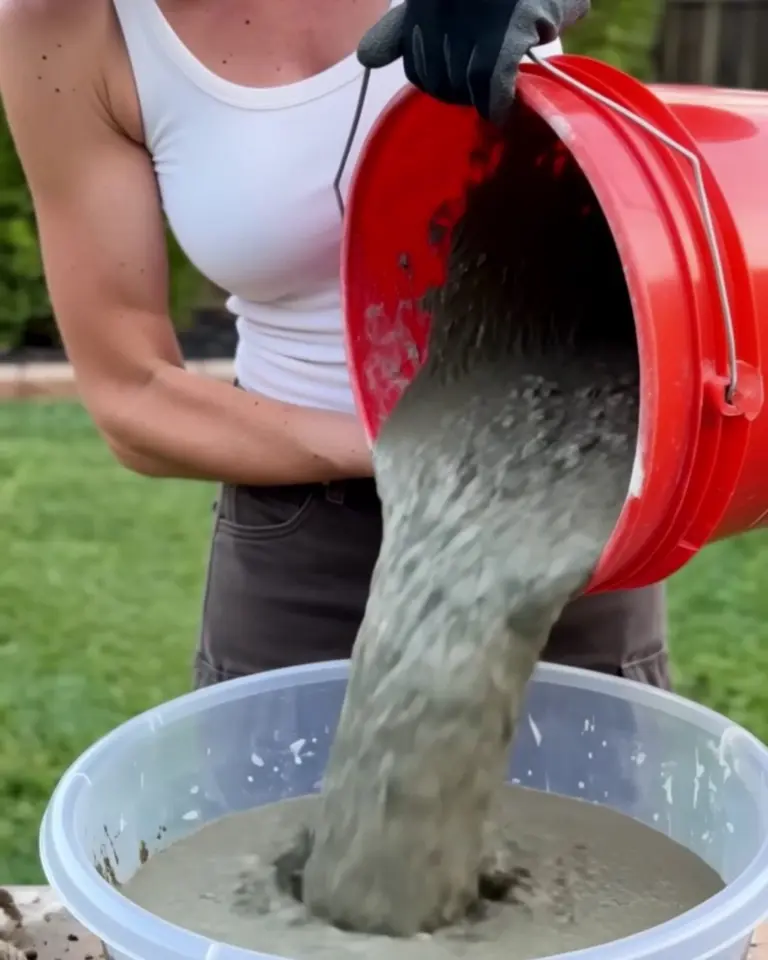
Stir about 8 pounds of Portland cement into roughly 2½ pints of water, two parts cement to one part water by volume. It should coat a gloved finger like pancake batter and drip off slowly.
Mix the second batch when the first runs low, rather than all at once; it starts to stiffen within the hour.
Step 3Soak the rope
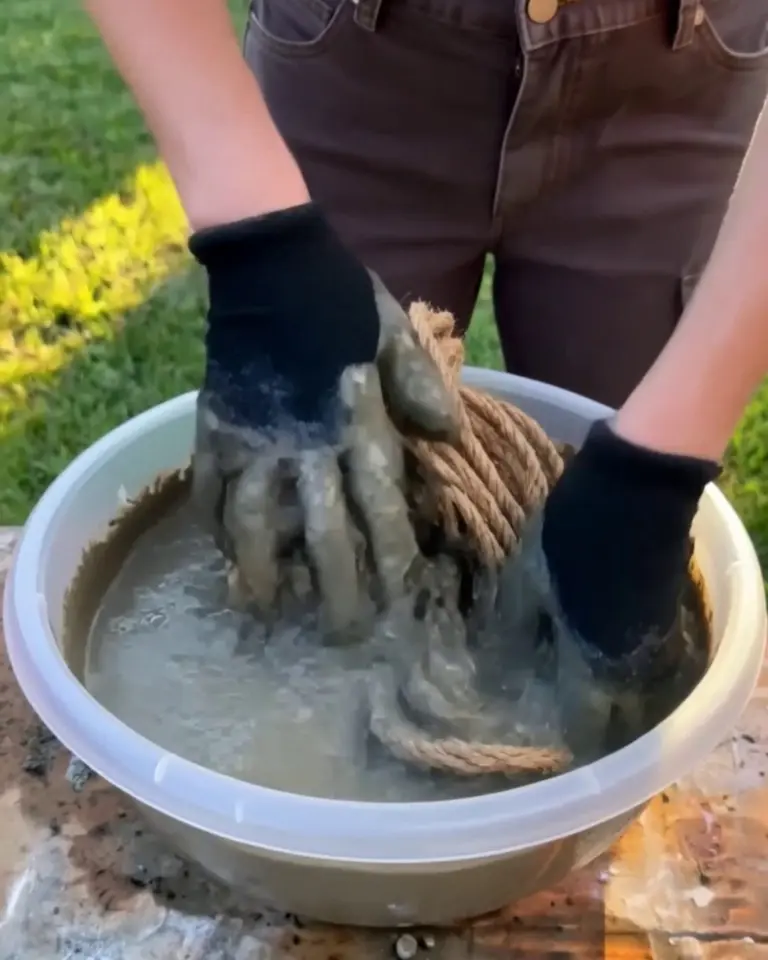
Push about 15 feet of rope into the slurry and squeeze it with both hands for a minute or two, until no dry, pale fibers show when you twist it open.
Pull it out through a loose fist to wipe off the extra. Slurry that drips down the ball pools in a thick crust at the bottom.
Step 4Start the wrap
Lay three loops around the ball first, crossing at the top like the seams on a basketball. Pull each one snug and press it down so it can’t slide on the jelly. Tuck each loose end under the nearest crossing so it can’t unwind.

Step 5Build the lattice
Keep soaking and winding in new directions, crossing a strand every 2 to 3 inches, until the gaps are no bigger than your palm. Leave a 6-inch opening at the top for the ball to come out and the candle to go in.
Wrap down as far as the bucket rim. The next day, once the rope has stiffened, turn the ball over onto a coffee can and fill in the bare circle underneath, leaving a 4-inch hole for rain to drain.

Step 6Brush the crossings
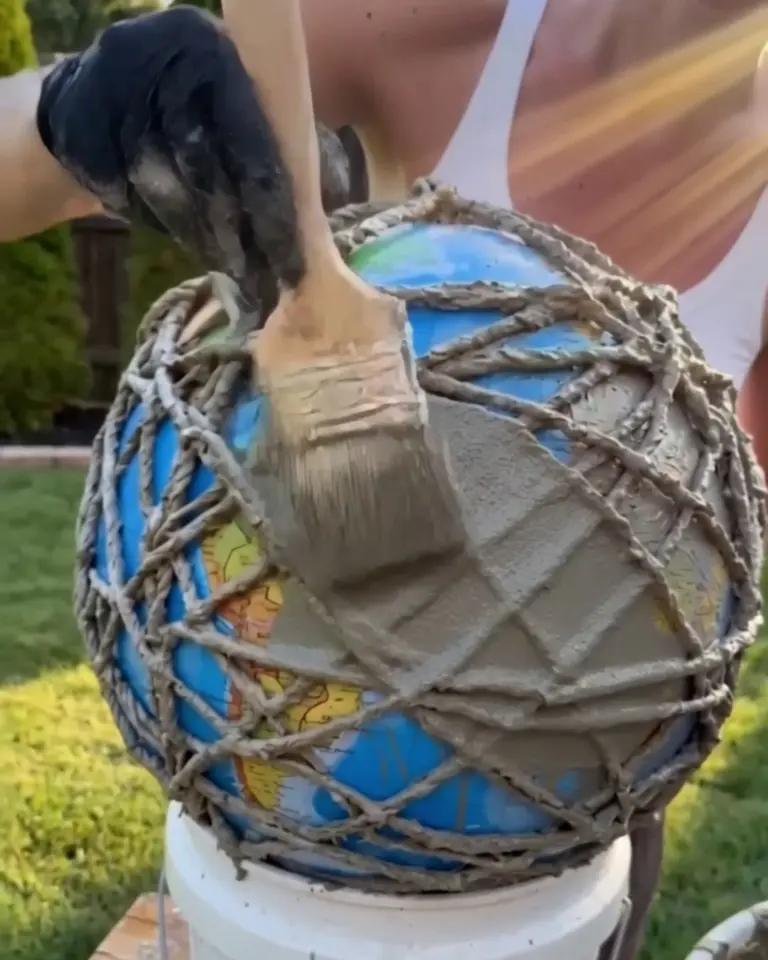
Dab slurry into every crossing with the chip brush, working it into the gaps between the strands. Drape plastic over the whole thing.
The brush coat also lays down the fuzz on the jute, which otherwise cures sticking out like hair.
Step 7Pull out the ball
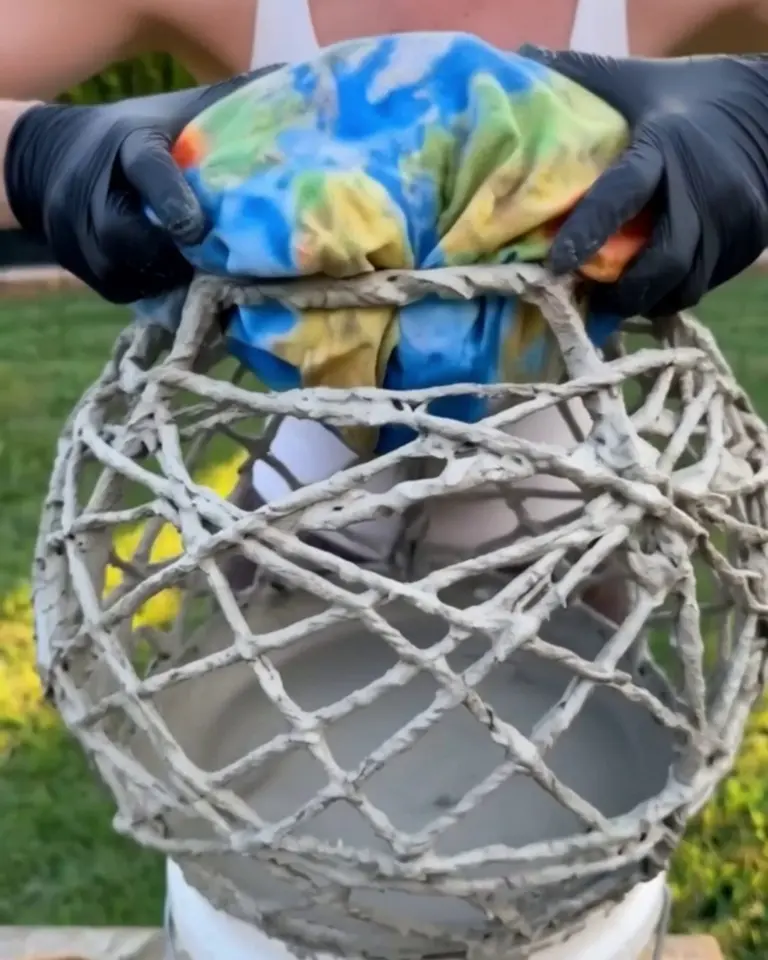
After 3 days, open the valve and let the ball go flat. Twist it as you draw it out through the top opening; the jelly lets it slide.
Mist the shell and keep it under plastic for another week before it goes outside.
Step 8Seal it and light it
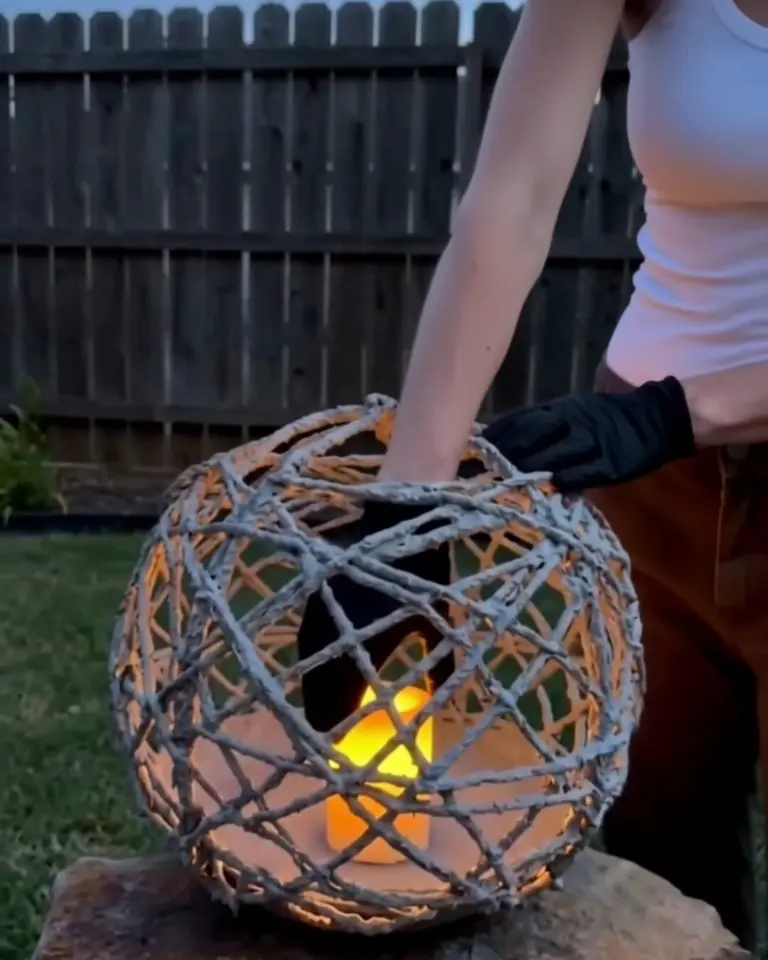
Spray two light coats of clear sealer, inside and out. Set the LED candle in through the top opening and set its timer for 6 hours, so it isn’t burning batteries at noon.
Step 9Set them out
Put each lantern on a flat stone or paver, so the drain hole stays clear of the soil. Three along a path, about 8 feet apart, are enough to see by.
A solar puck light works in place of the candle if the top opening gets a few hours of sun.

How a Concrete Rope Lantern Holds Up
The thin spans between crossings crack first, usually when the lantern gets knocked off its stone. A dab of slurry brushed into the crack hides it.
Seal it once a year so the rope inside soaks up less rain.
FAQ
The rope sagged off the ball before it set
The slurry was too thin, or the strands weren’t crossed often enough to hold each other up. Thicken the mix and cross every strand at least every 3 inches.
The ball won’t come out
Let all the air out and twist it as you pull. If a strand has caught it, cut the vinyl into pieces and pull them out one at a time.
Can I use cotton rope instead of jute?
Cotton soaks up slurry the same way and gives a smoother look. Skip anything synthetic; the cement only sits on the surface and flakes.
Could it hold a real candle?
We haven’t put a flame in one. The jute inside is still fiber, and we’d rather not find out what heat does to it.
Can it stay out in winter?
Where winters freeze, bring it in or keep it somewhere dry. Wet rope fibers inside the cement don’t like ice, and the thin spans are the first to go.
The neighbor walked past it lit one evening and took back the part about the unfinished basket. Mostly.