Filling a 4 × 8 raised bed with a 5-gallon bucket takes about 45 trips, at two-thirds of a cubic foot a trip. We made 19 of them before borrowing a wheelbarrow.
You’ll also love: How to Build a Tilted Pot Flower Tower on a Wire Obelisk, How to Plant Onions in Egg Cartons Along the House Foundation, How to Grow a Pallet Watermelon Garden in a Side Yard.
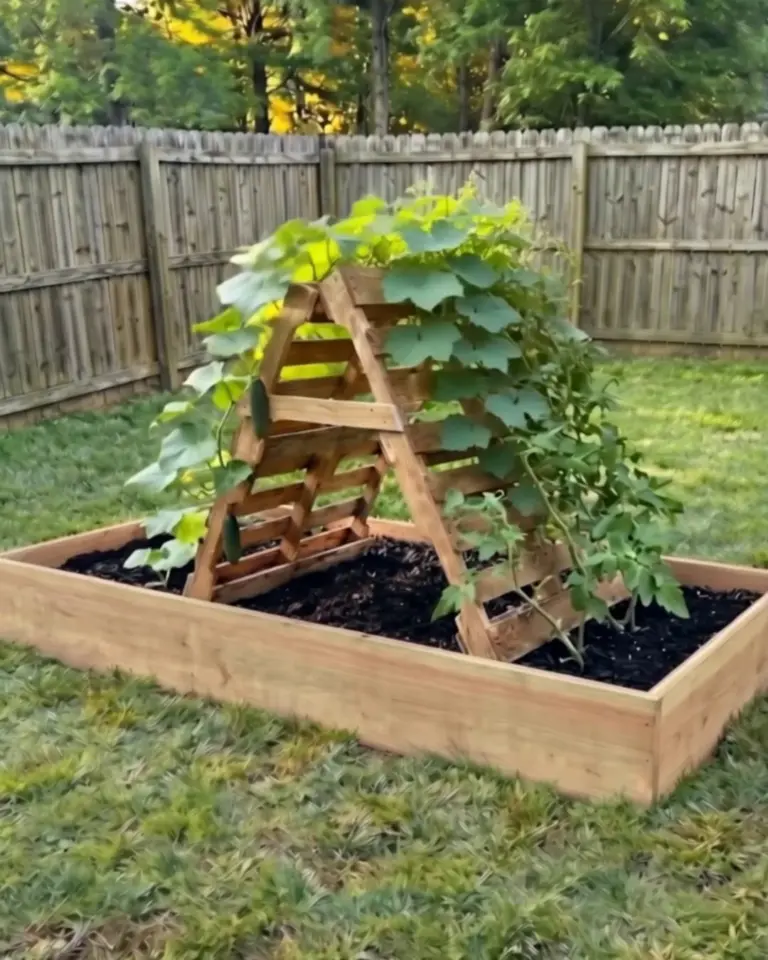
Our pallet A-frame trellis is two pallets leaned together and bolted at the peak, standing in a cedar bed 11 inches deep, with a cherry tomato at one end and two cucumbers at the other.
A neighbor said it looked like a tent for very small campers, then asked whether we’d have extra tomatoes.
Soil hits the bottom of an empty bed with a soft thud, and the cardboard underneath crackles under the first few loads.
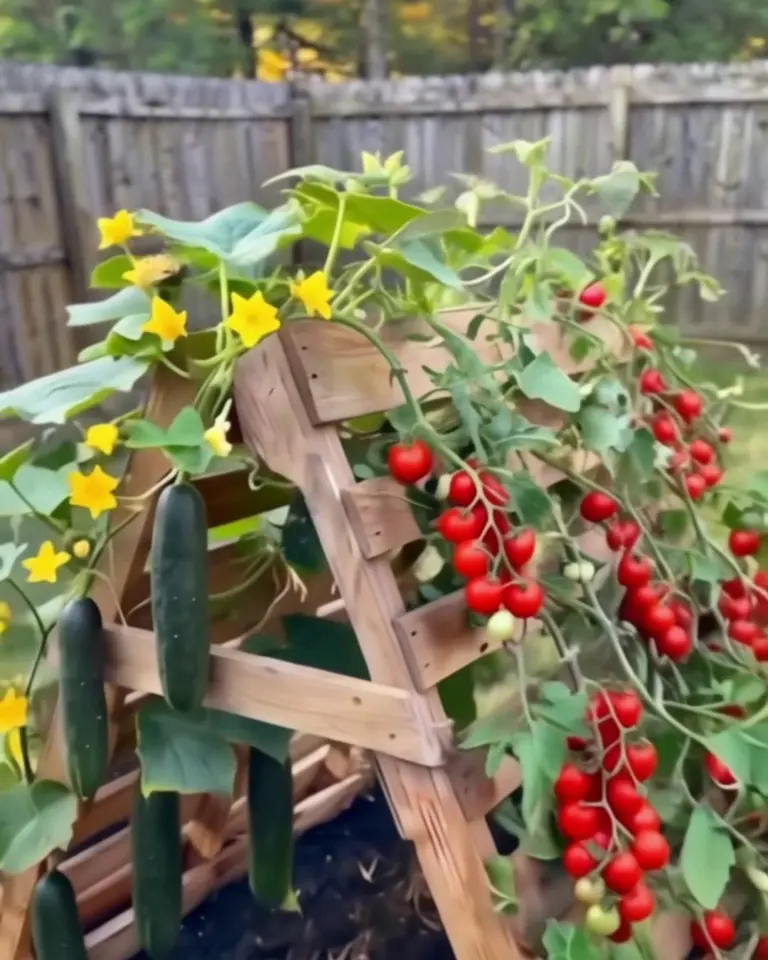
Why an A-Frame Suits a Raised Bed
Two leaning pallets brace each other, so the frame needs no posts. All it needs is feet that can’t slide apart, and the bed walls take care of that.
We expected the tomato to climb like the cucumbers. Cucumbers grab the slats with tendrils; the tomato just leans, and every foot of new growth has to be tied on.
Fruit hangs on the outside of the sloped faces, where it’s easy to see and pick.
Materials & Tools
Not in the $345: a drill, a saw, a wheelbarrow if you can borrow one, and soil delivery, which varies a lot by town.
The stamp: pallets in a vegetable bed should say HT, for heat-treated. Skip any marked MB, and any with no stamp at all.
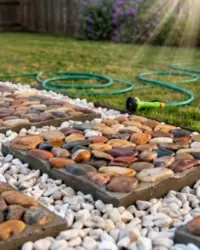
Around the bed: grass against a raised bed has to be trimmed by hand. A strip of gravel, laid like our white gravel garden path, saves the chore.
Watch the Build
Step by Step
Step 1Build the bed
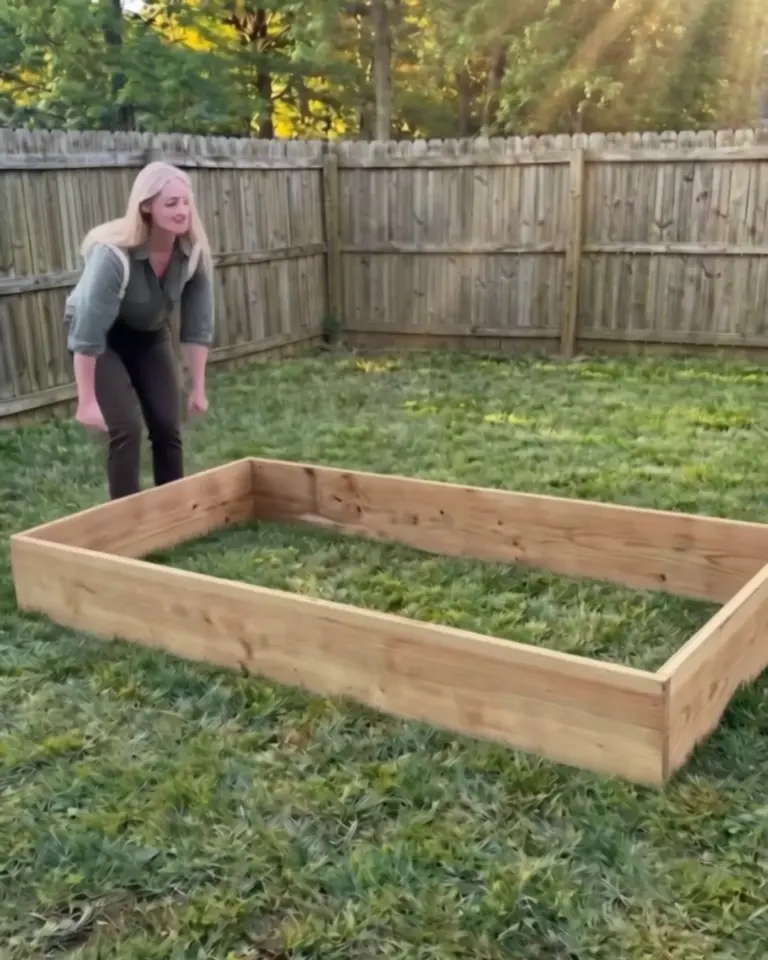
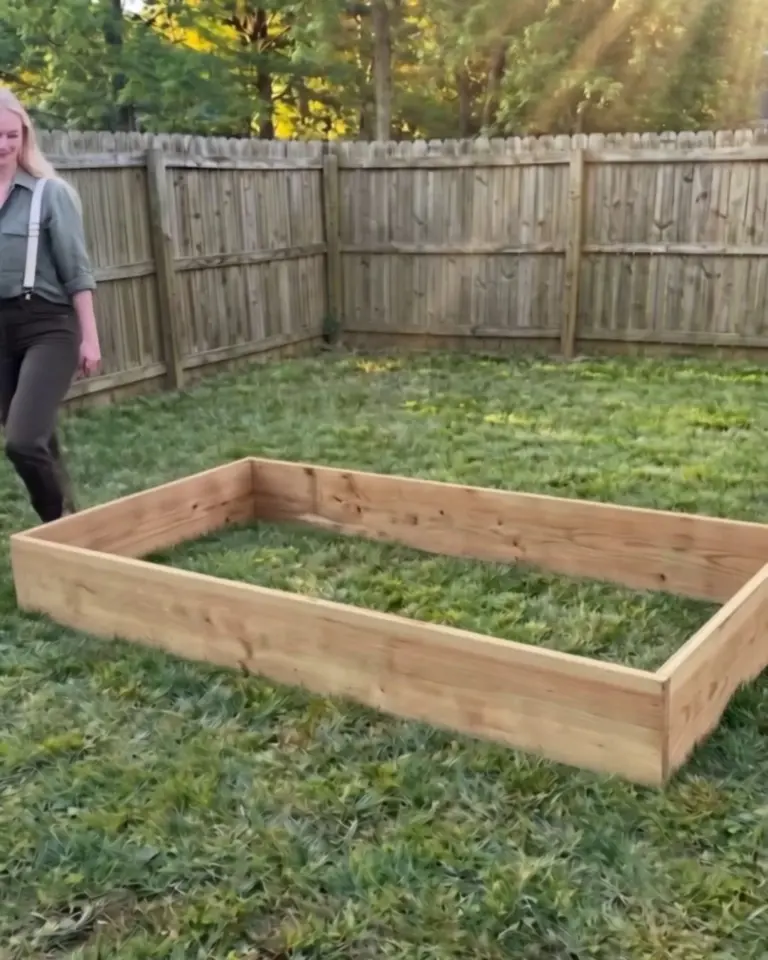
Stand a corner post inside each end of the two long boards and drive three screws through the board into each post. Screw the 4-foot end boards to the posts the same way, then check the corners with a tape: diagonals of equal length mean the bed is square.
Set it in a spot that gets 6 to 8 hours of sun, with the long sides running north to south so the trellis doesn’t shade half the bed.
Step 2Smother the grass
Lay plain cardboard over the grass inside the frame, overlapping the pieces by 6 inches, and soak it with the hose. The grass underneath dies back and the cardboard rots away by the end of the season.
Step 3Fill it
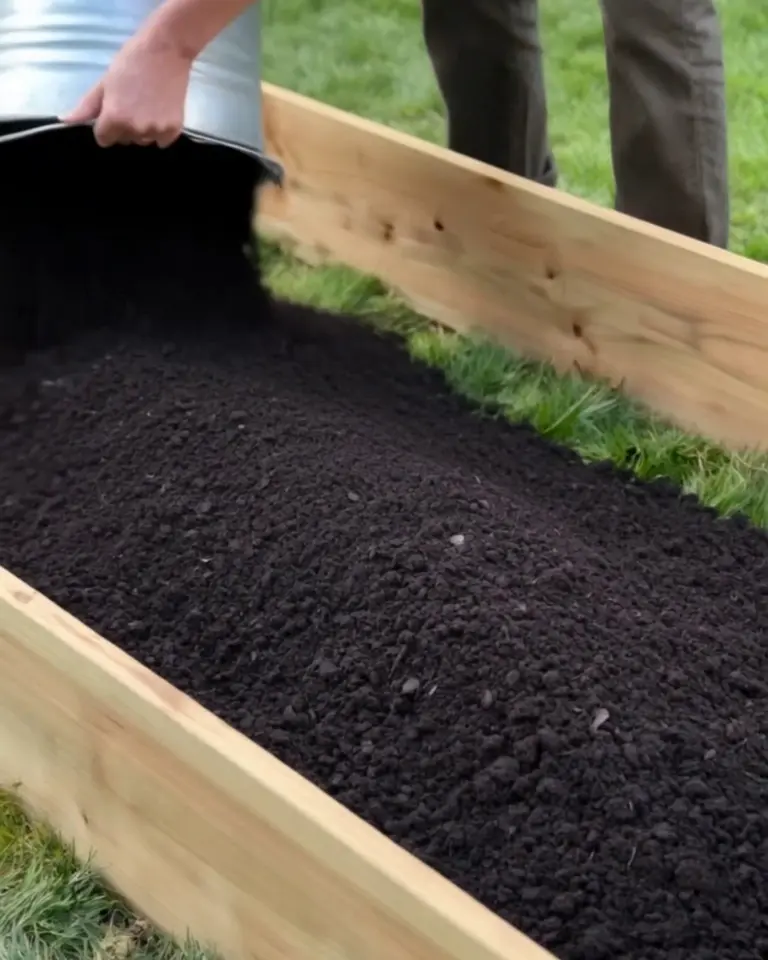
The bed holds about 27 cubic feet, and the mix settles, so plan on 30. Fill to an inch below the top, rake it level, and water it well; it drops about an inch overnight, so top it up the next day.
Bagged raised bed mix drains better than plain topsoil, which packs down hard in a bed this shallow.
Step 4Stand the first pallet
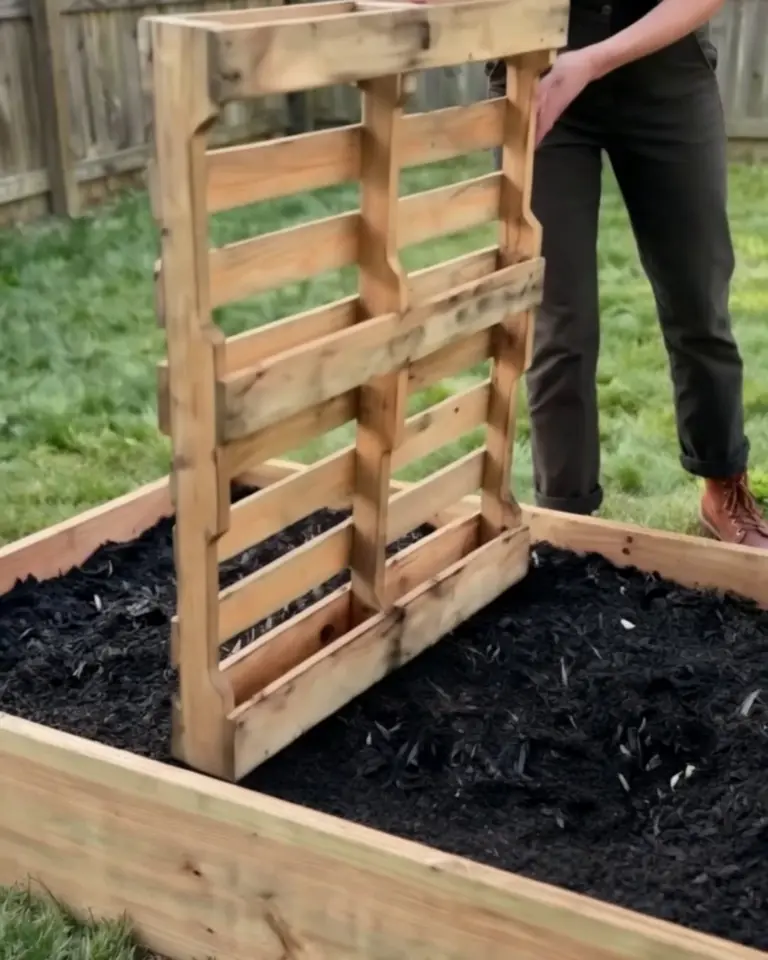
Stand a pallet on its 40-inch edge against one long side of the bed, halfway along, and push its bottom 2 inches into the soil. Two 3½-inch screws through its bottom board into the bed wall hold the foot in place.
Step 5Lean in the second and bolt the peak
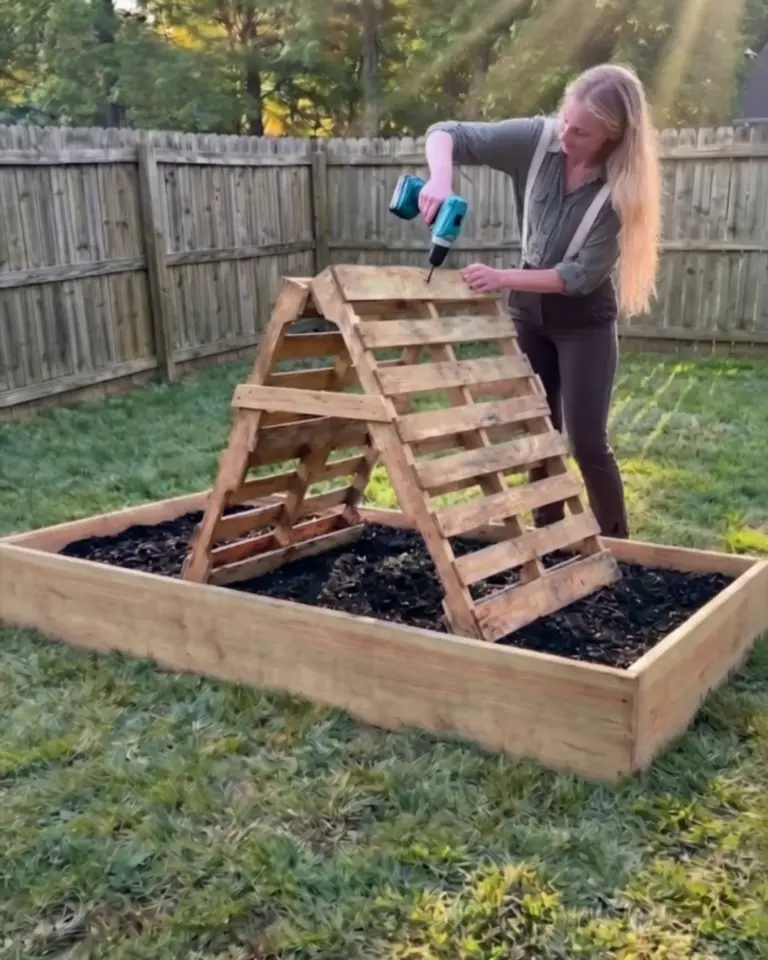
Set the second pallet against the opposite wall the same way, screw its foot down, and lean the two together until their top boards meet, about 43 inches above the soil. Drill two ⅜-inch holes through the meeting boards, near each end, and bolt them.
Drill slowly near board ends. Pallet wood is dry and splits easily.
Step 6Check it for wobble
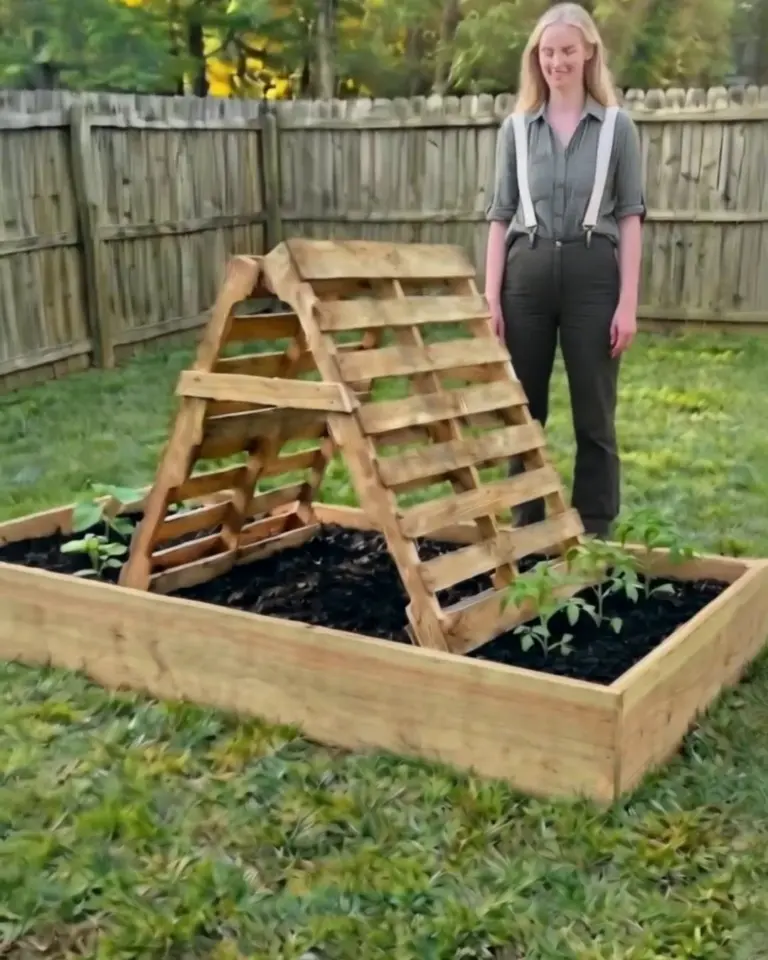
Push on the peak from each side. It shouldn’t move more than a little; if it does, add a third screw to each foot.
Step 7Plant both ends
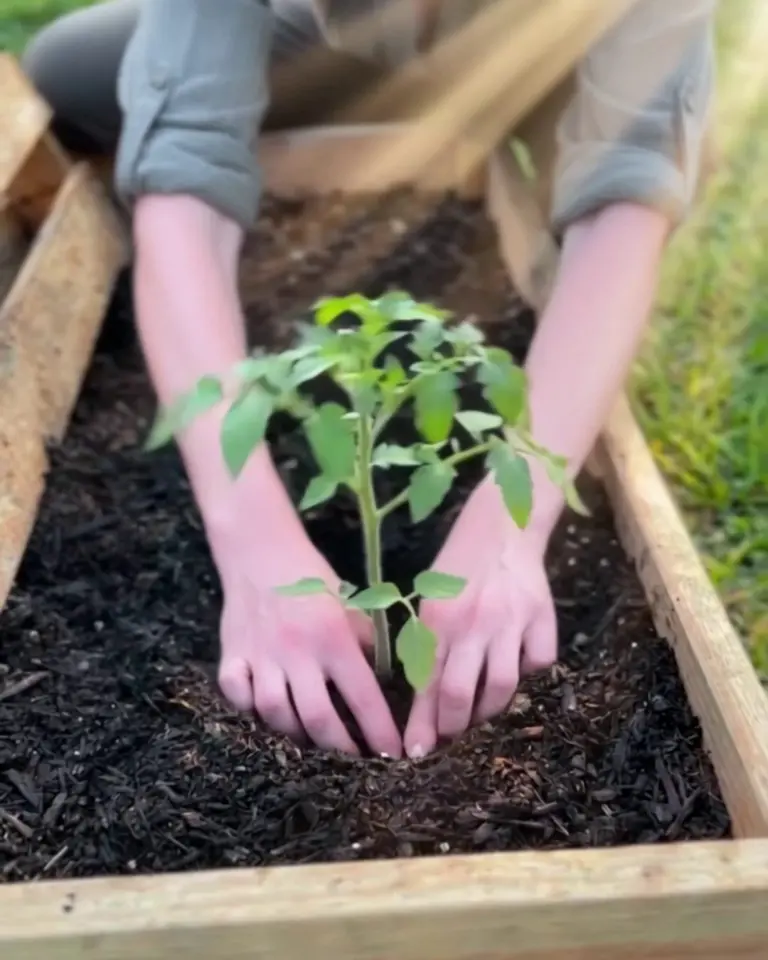
Set the cherry tomato at one end of the A, a little deeper than it sat in its pot, and the two cucumbers at the other end, 12 inches apart. Wait until the soil has warmed; cucumbers sulk in cold ground.
Each plant goes about 6 inches out from the slats, so the stems can reach them without being bent.
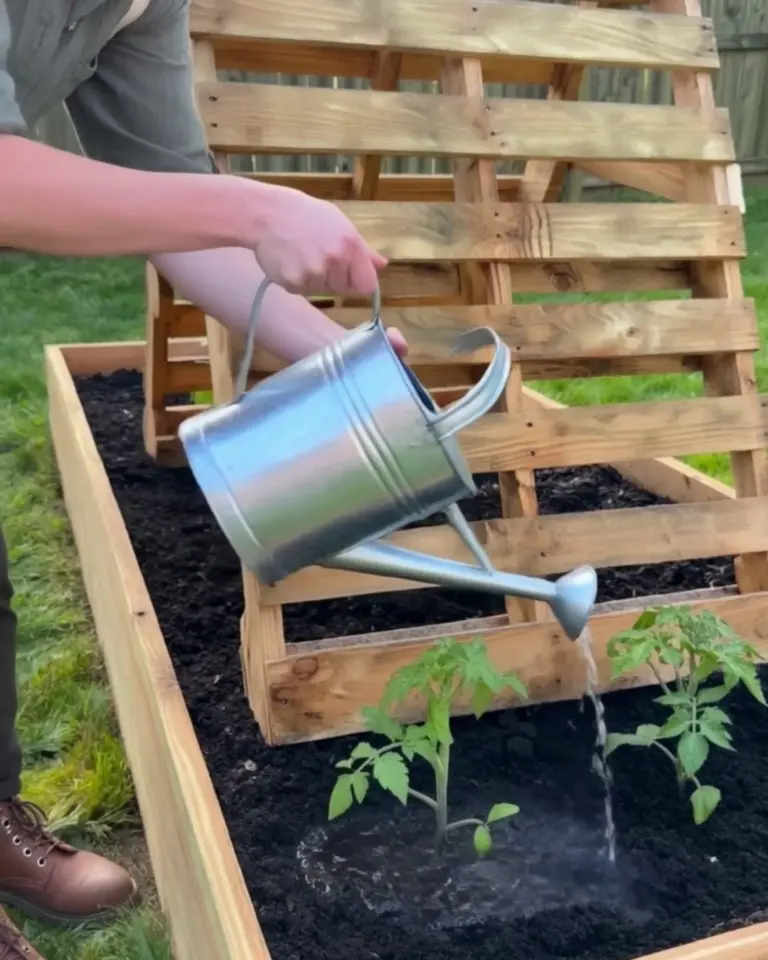
Step 8Water them in
Soak each plant with a full watering can, slowly, so it runs down to the roots instead of off the top. After that, the bed needs about an inch of water a week, more in a heat wave.
Water at the base in the morning. Tomato leaves that stay wet overnight pick up leaf spot.
Step 9Tie and train
Guide the cucumber tips onto the slats and let the tendrils take over. Tie the tomato to the pallet with soft ties every 8 to 10 inches as it grows, loosely, around the main stem.
Once the cucumbers start, pick them every day or two. Left on the vine, they turn yellow and seedy, and the plant slows down.
How the Pallet A-Frame Trellis Holds Up
Untreated pallet wood in wet soil rots first at the feet, usually within a few seasons. Lift the pallets out each fall and store them dry, and they last longer.
The cedar bed itself weathers to gray and keeps going.
FAQ
The trellis leans to one side
One foot has slipped. Pull the screws, push the foot back against the wall, and screw it down again; check that both bolts at the peak are tight.
The cucumbers are bitter
Usually from heat stress or uneven watering. Keep the soil evenly moist, mulch the surface, and pick them young.
Can I use cattle panel instead of pallets?
Yes, and it lasts far longer. Bend a 50-inch-wide panel into an arch between the long walls and fasten it with fence staples; it’s heavier to move and has no slats to tie to.
What else grows on it?
Pole beans, small melons in slings, and peas in cool weather. We haven’t tried squash on it; we suspect the vines would bury the frame.
Do the pallets need sealing?
Not for a season or two. Paint or sealer on wood next to vegetables is a choice we skipped, and the pallets are cheap to replace.
The neighbor got her tomatoes, about a quart a week by midsummer. She still calls it the tent.